








Why Does Kenya Coffee Processing Rely on Double Washing?
Kenyan coffee is known for clean, complex fruity flavors. High altitude and variety matter, but so does processing: most Kenyan beans are washed, and the country often uses double washing. The washed method removes skin and pectin before drying the seeds, giving the purest flavors with the fewest off-flavors and the most prominent fruit acidity.
Producers now add labels like double washed, K72 washed, and dry fermentation washed to highlight selling points. The differences lie in the fermentation stage: K72 refers to a long fermentation interval, while dry fermentation washing saves water. Wet processing itself originated in the West Indies in the 19th century and developed in Jamaica, and coffee processing choices shape the cup.
Kenyan coffee is renowned for its clean and complex fruity flavors. Behind this, in addition to the advantages of high altitude and varietals, lies sophisticated washed processing techniques. From traditional wet processing to double washing, K72 washing, and then to the water-saving dry fermentation washed method, how do the subtle differences in the fermentation stage affect the performance in the cup? Front Street Coffee guides you through the origins and differences of these processing methods, and recommends two representative beans—Kenya Little Tomato and Asalia—to experience the bright acidity reminiscent of cherry tomatoes, preserved plums, and smoked plums.

For more specialty coffee knowledge, please follow our WeChat official account: FrontStreet Coffee
Front Street Kenya coffee stands out with its clear fruity aroma and unique flavor—both clean and layered. So why is Kenyan coffee's flavor so distinctive?
Beyond the region's exceptional high-altitude conditions and varietal factors, another key reason lies in the meticulous coffee processing techniques. The vast majority of Kenyan coffee beans undergo washed processing, and the washed method is precisely the processing approach that specialty coffee relies on most. Generally speaking, washed coffees have the purest flavors, the fewest off-flavors, and the most outstanding fruity notes and fruit acidity. Kenya commonly uses a more distinctive approach—the double washing method.
As specialty coffee becomes increasingly popular, more and more consumers are paying attention to the traceability information of single-origin coffees. As a result, many producers, in order to highlight selling points, add modifiers before the processing method name, such as "double washed," "K72 washed," "dry fermentation washed," etc. So what exactly is the difference between these names and conventional washing?
Before understanding these "new-style" processing methods, Front Street believes it is necessary to first sort out the origins and development of traditional washing.
Washed Method
Also known as the wet process, English "Wet Process," refers to a green bean processing method in which the outer skin and pectin are removed before the seeds are dried.
According to information consulted by Front Street, this wet processing method originated in the West Indies in the 19th century and developed in Jamaica, where it was then called WIP (West Indian Process), mainly suited to humid and rainy regions. In contrast was OIB (Oost Indische Bereiding, East Indies Preparation), referring to the traditional sun-dried method.
Before the 1850s, people had always used the oldest natural sun-drying method to process coffee cherries. With the arrival of the Industrial Revolution, coffee processing technology that "removes the skin first" emerged. In the mid-19th century, Jamaica became one of the world's largest coffee-producing countries, producing about 70,000 tons of green beans annually. Because the local climate is insular, the fruit does not dry easily, and natural sun-drying was not well suited to this land.
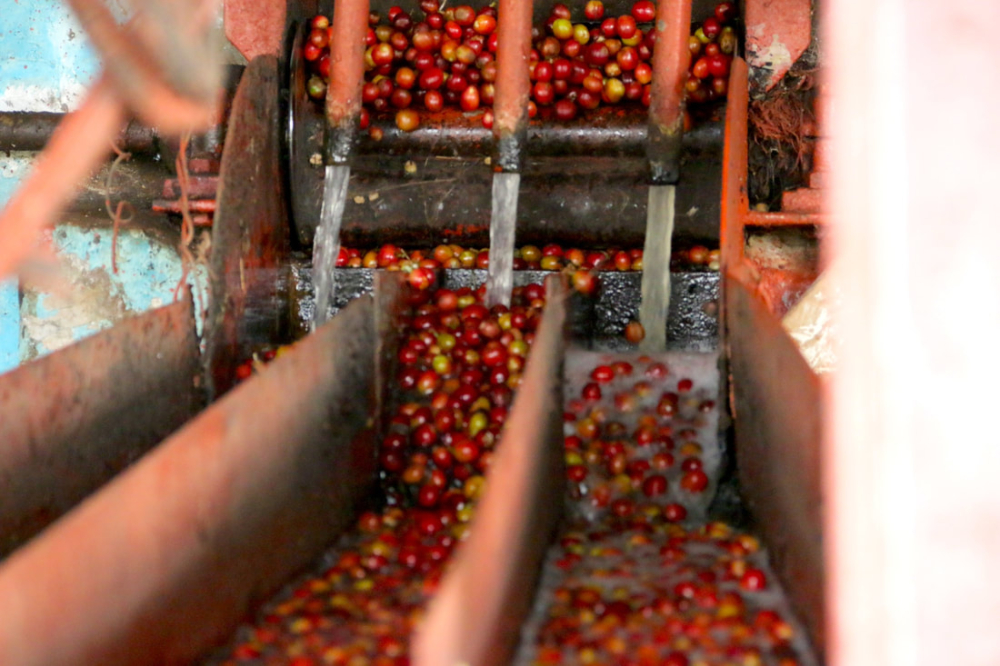
In 1845, James Meacock from Kingston, Jamaica, filed a patent for the world's first coffee pulper machine. This machine was used to strip the outer skin of coffee cherries and could also perform coffee screening. Thereafter, more and more inventions related to coffee pulpers emerged one after another, and the washed method formally entered coffee production.
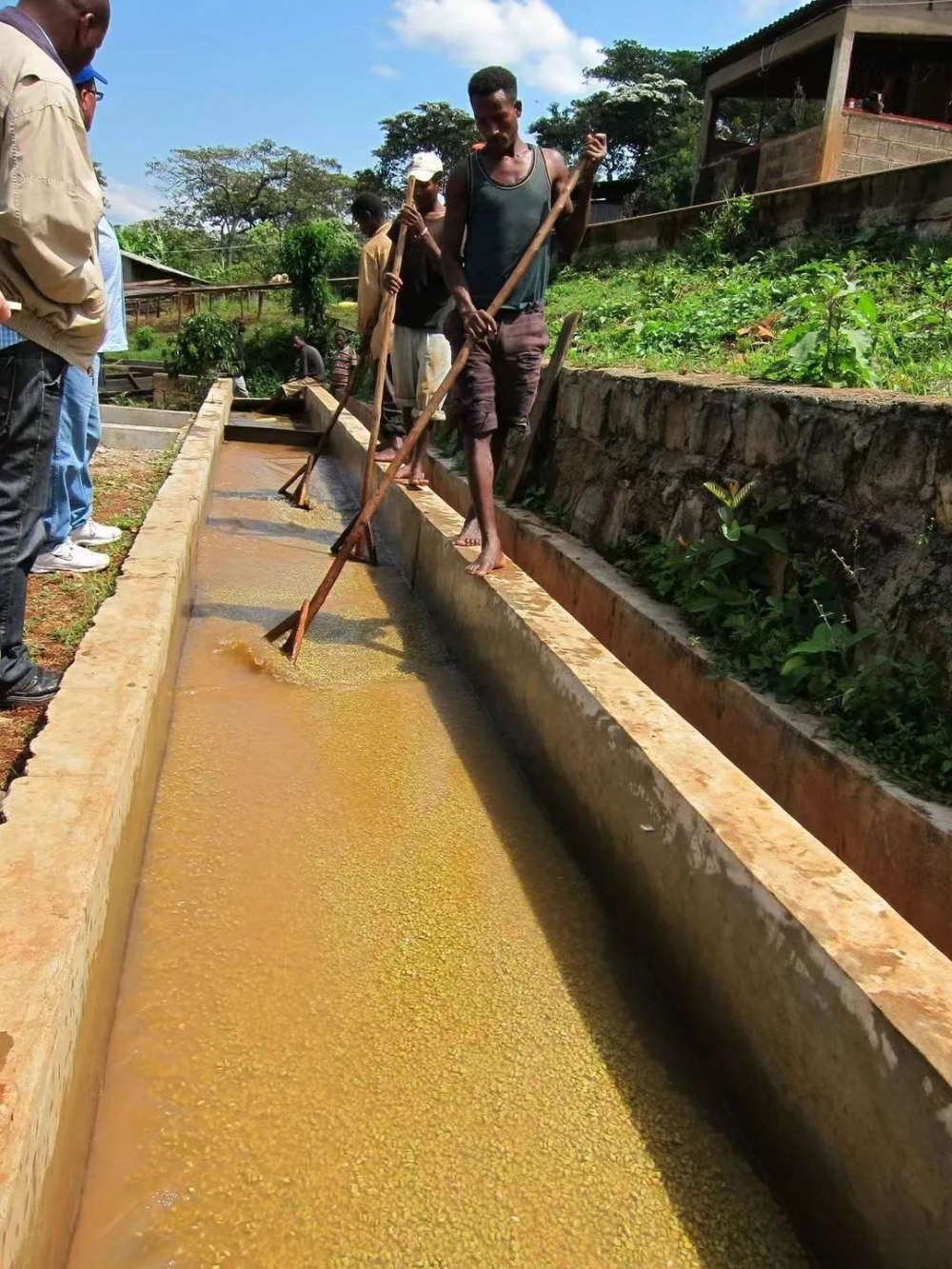
The traditional wet process is not complicated: flotation → pulping → fermentation → washing → drying → hulling → bagging. But its implementation requires an ample water supply and relies heavily on mechanical assistance, so producers adopting washing must also have sufficient funds to purchase equipment. The rise of the washed method happened to coincide with early American plantations built by capital—with enough operating funds and various pulping and hulling machine inventions that emerged to meet the needs of the times, so the washed method spread widely throughout the Americas.
Double Washing
The original wet process washes the fermented coffee beans once with clean water, rinses off the pectin, and then sends them directly to the drying beds to dry and be bagged. But in Kenya, coffee that has been washed once is re-immersed in a pool of clean water, then taken out and washed again, and only after that sent to the drying beds for dehydration.
The reason Kenya initially changed conventional washing to "secondary soaking" was actually not to pursue flavor, but rather due to limited local drying space. Kenya is a typical cooperative-operated model in Africa. During every harvest season, smallholders deliver freshly picked cherries to the processing station all day long. The pulping and fermentation steps are relatively simple and not time-consuming, but each batch of fermented beans needs at least 5 to 7 days to dry. Sometimes, when the processing volume is too large, there is nowhere to dry the washed beans. So people had no choice but to pour the wet beans back into the pool and let them "cool off" first, to avoid spoilage or contamination, until the drying yard was free, and only then take them out.
This form of washed processing with secondary soaking is called "Double Washed," and at origin it is also called "Fully Washed," "Double Fermentation," etc., meaning fully washed. Since Kenya was the earliest region where this processing method became popular, this type of washing is also called "Kenyan Process."
Later, people discovered that this twice-fermented washed bean, adapted to local conditions, not only helped stabilize quality control in production but also brought layered fruity acidity to the coffee. For example, Front Street Kenya Little Tomato uses double washing, and after brewing it often shows rich cherry tomato and preserved plum aromas, with a very distinctive flavor. Today, some coffees produced by estates in the Americas also use this Kenyan-style washing.
K72 Washed Method
That is, the Kenyan 72-hour washed processing method, which can be understood as an additional extension based on ordinary washing and double washing.
This washing process emphasizes control of fermentation time. First, a 24-hour water fermentation is carried out, then the loosened pectin is cleaned off, and it is fermented again in a clean water tank for another 24 hours. Then the residual components are cleaned off once more, and it is introduced into a tank filled with clean water for a final 24-hour fermentation, totaling 72 hours. This technique also gives Kenyan coffee a bright and clean high-quality fruit acidity. Asalia, which Front Street offers daily, precisely uses this washing technique, allowing the brewed coffee to present acidity like cherry tomatoes and smoked plums.
Dry Fermentation (Washed) Method
Because the earliest wet processing required large amounts of pure water, the wastewater after fermentation has already become acidified, and discharging it into rivers or soil can have an impact on the ecological environment. So, in order to respond to environmental protection and conserve water resources, the more water-saving dry fermentation washed method began to be advocated.
So-called "dry fermentation" means that the parchment beans after removing the skin are directly poured into a fermentation tank and left to rest, maintained for about 6–8 hours. This step is actually very similar to the more familiar honey process. The difference is that after dry fermentation is completed, the coffee still needs to be washed with water once to completely remove the sticky substances that have degraded and fallen off. In terms of flavor, conventional washing often has a brighter mouthfeel, while dry-fermented washed coffee usually has a rounder sweetness than wet processing (because it is similar to honey processing).
It is not difficult to see that fermentation is an essential step in washed processing. So no matter which washing method is used, it is ultimately just a difference in the soaking time and number of times during fermentation, high temperature or low temperature, aerobic or anaerobic, and whether there are additional additives involved, and so on.
The above content is compiled by CoffeeHunters, a coffee news website.


