







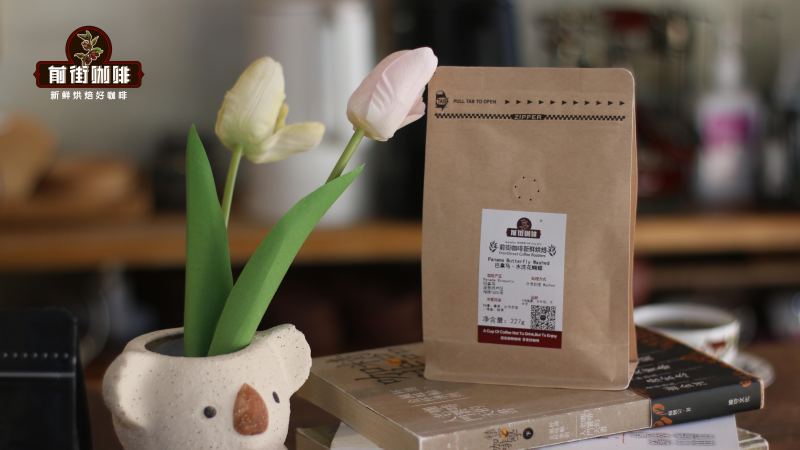
What Makes Panama Butterfly a Panamanian Geisha Blend?
Panama Butterfly from Front Street is a blend of Geisha, Caturra, and Catuai, with washed Geisha making up roughly 70 percent. It still qualifies as single-origin coffee because every component comes from Panama's Boquete region and receives the same washed processing. In the cup it shows a rich body, bright acidity, and floral notes with citrus-honey sweetness.
The washed and natural versions differ in brewing performance, flavor clarity, and tropical fruit character. Mixed-variety cultivation is common in producing regions; in Ethiopia, for instance, growers often do not separate varieties, and Gesha Village offers a mixed lot containing Geisha 1931 and Gori Geisha. The blend's high-altitude Boquete terroir supports the aroma associated with panamanian geisha.
Front Street Panama Butterfly earns the nickname "Geisha alternative" thanks to its roughly 70% Geisha composition and the high-altitude terroir of the Boquete region. It is a blend of three varieties—Geisha, Caturra, and Catuai—and although labeled as a Geisha blend, it qualifies as a single-origin coffee because all components come from the same region and undergo the same washed processing. This article will examine the blending logic and historical origins of Butterfly, compare the washed and natural versions in terms of brewing performance, flavor clarity, and tropical fruit character, and present a complete review of Front Street Natural Butterfly, helping coffee enthusiasts understand how mixed-variety harvesting and processing methods specifically influence the flavors in the cup.
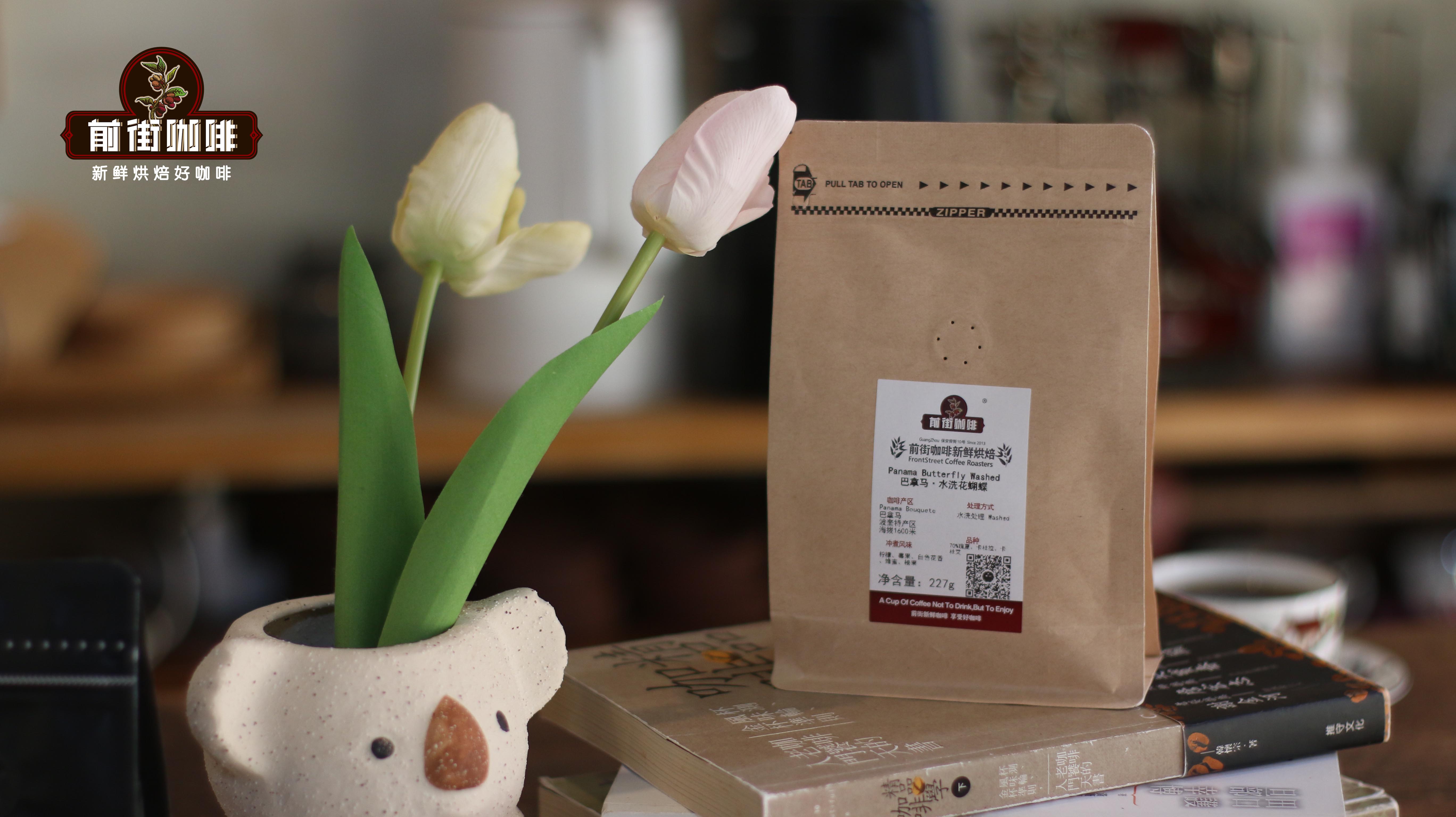
When it comes to Front Street Panama Butterfly, many coffee lovers know it as a Geisha blend composed of multiple varieties, and its exceptional value for money has firmly secured its place as the go-to Geisha alternative.
A Geisha blend, simply put, means the recipe includes both Geisha and other varieties. On the Front Street bean list, for example, Front Street Panama Washed Butterfly and Front Street Costa Rica Mirazu Strawberry Candy are both representative Geisha blends. Additionally, Gesha Village, as one of the few large-scale estates in Ethiopia, offers a mixed lot called Front Street Chaka CHAKA, which contains both Geisha 1931 and Gori Geisha—two Ethiopian Geisha varieties—and broadly speaking also falls under the category of Geisha blends.
Front Street Butterfly comes from Panama's Boquete region, where Geisha rose to fame, and is composed of three varieties: Geisha, Caturra, and Catuai. The highest proportion is the outstanding and widely renowned washed Geisha, accounting for about 70%. The superior growing environment combined with the 70% Geisha ratio gives this bean the full aroma of high-altitude Panamanian coffee, while also displaying in cupping a rich body, bright acidity, and floral notes with a citrus-honey sweetness.
In producing regions, this kind of mixed-variety cultivation is very common. Take Ethiopia, which everyone is most familiar with, as an example: whether coffee trees grow in farmers' backyards or in wild forests, growers typically do not specifically label or classify them, and basically make no distinction. Various coffee trees are interplanted with other local cash crops, harvested together when ripe, and after processing exported under the name Heirloom. This harvesting method gathers the simultaneous yields of many smallholders, and a single lot may contain dozens or even hundreds of undifferentiated varieties, yet it is still defined as single-origin coffee.
By the same logic, Front Street Panama Butterfly, marketed as a Geisha blend, contains three different varieties, but they all come from the small town of Boquete in Chiriquí Province, Panama, and all undergo washed processing, giving the coffee the fresh character of washed Panamanian Geisha. Therefore, it rightly belongs in the category of single-origin beans.
Recently, Front Street received Front Street Natural Butterfly from the factory, so let's do a review and see how the natural version differs from Front Street Washed Butterfly!
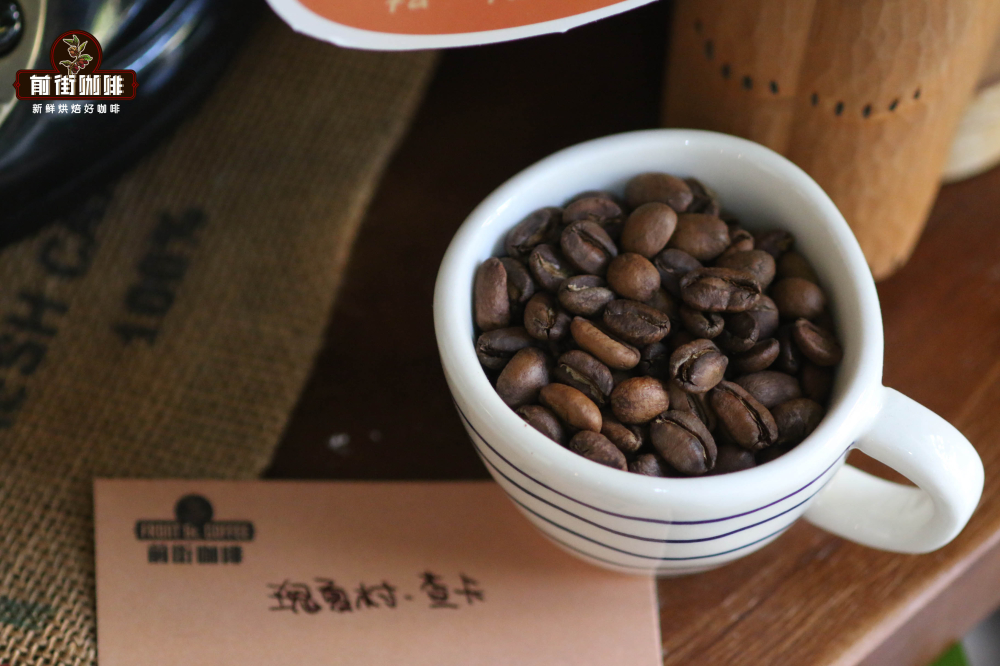
(Left: Washed Butterfly; Right: Natural Butterfly)
Front Street Panama Boquete Butterfly features 70% Geisha paired with 30% Caturra and Catuai! Mixed-variety harvesting is a common phenomenon everywhere. In Ethiopia, for instance, with its countless native species, farmers simply cannot tell which is which, so at harvest they just pick everything and send it to the processing station—this is mixed-variety harvesting caused by natural factors. The protagonist of this article, Front Street Butterfly, however, is mixed-variety harvesting caused by human factors.
In earlier years, to increase total yield, farmers would interplant Geisha with other varieties to reduce wasted land. But at harvest time, they found that picking a single variety separately was enormously costly in labor, resources, and time. So they simply picked everything at once, just like in Ethiopia—and thus the Geisha blend Front Street Panama Butterfly was born.
Although it is not pure Geisha, it is grown in Panama's Boquete, a region full of top-tier producers, and possesses most of Geisha's characteristics. Most importantly, the price is very friendly—regular Panamanian Geisha sells for at least twice as much as Front Street Panama Butterfly. That is why people often call it the Geisha alternative! Now let's see how the same bean expresses different flavors under different processing methods!
The natural method is called Natural in English, meaning a natural, non-technological processing method. Since humans discovered coffee in Ethiopia in the 6th century AD, the natural method had been the only processing technique for coffee circulating in the Arab world. Traditional natural processing requires no water at all, and the seed extraction process is simple: first dry the whole coffee cherries thoroughly, then use a machine to hull them and obtain the inner beans—it can be done anywhere there is sun. But the shortcomings of natural coffee are also obvious: it is heavily dependent on weather and requires a drying period of up to a month. During this time, if wind or rain comes, the effort is likely wasted. So this ancient processing method tends to be concentrated in tropical countries with distinct dry and rainy seasons.
The washed method, translated from Washed Process and also called the washing technique, is a traditional processing method that uses water to process coffee cherries. Typically, the washed steps include flotation, removal of pulp, soaking and fermentation followed by removal of pectin, washing or further soaking, and after drying, hulling to obtain the coffee beans we need.
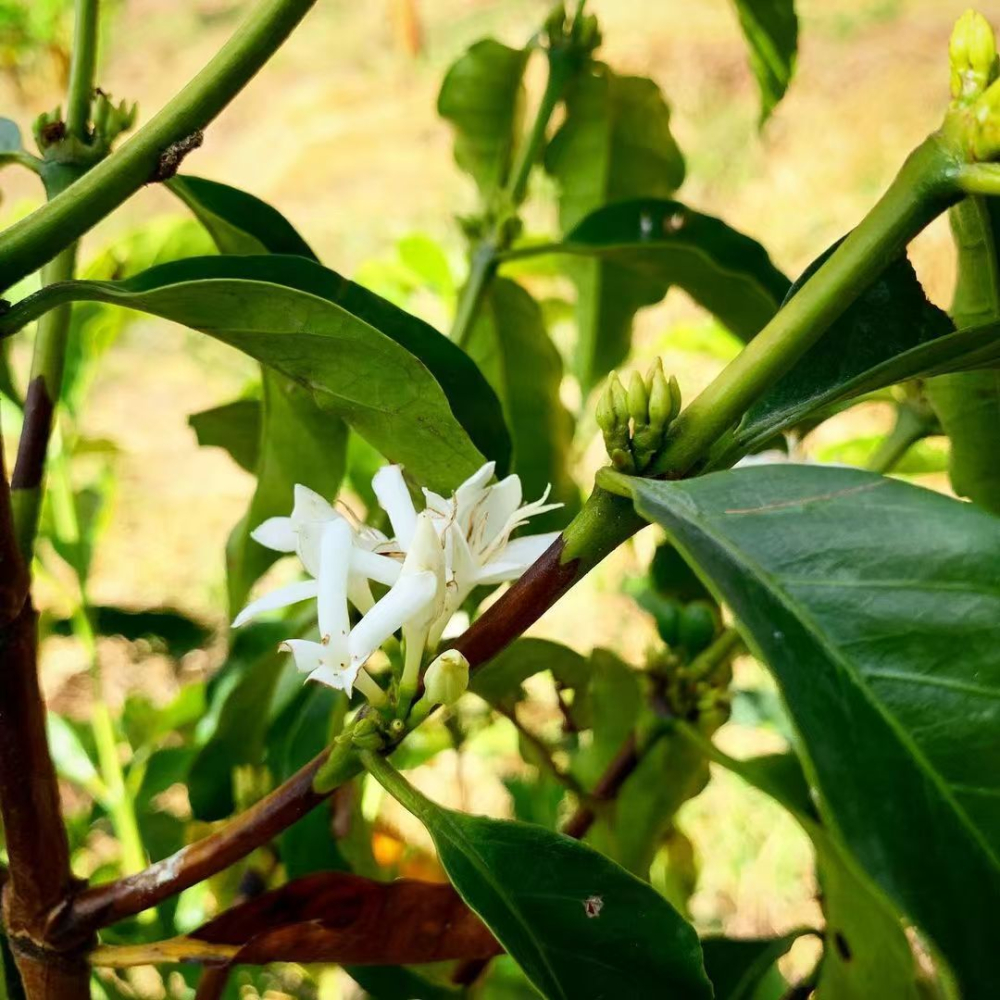
Compared with natural processing, farmers using the washed method must be equipped with a pulper, build washing channels, and have a continuous supply of fresh water, so it is not applicable everywhere. It is generally most common in Colombia, Costa Rica, Panama, Kenya, and similar places. But washed processing does have many advantages: on one hand, it reduces the defect rate of green beans, thereby stabilizing quality; on the other hand, it greatly shortens drying time, making production more efficient; and of course, there is what we will discuss today—allowing coffee to retain the washed taste.
Brewing Experiment
Beans used: Front Street Panama Natural Butterfly, Front Street Panama Washed Butterfly
Dose: 15g
Coffee-to-water ratio: 1:15
Brewing temperature: 92°C
Grind setting: Ek43 setting 10 (80% pass-through rate on No. 20 sieve)
Brewing method: three-pour
Dripper: V60
Use twice the coffee dose in water (30ml) for blooming. After 30 seconds, slowly pour 120ml of hot water in large circles. When the water level is nearly at the bottom, pour the remaining 75ml of hot water in slow small circles! Wait for the drip to finish~
Front Street Washed Butterfly took 2 minutes 10 seconds in total. The flavors identified were white floral notes and black tea, with a soft, rounded citrus acidity that drinks very much like juice! The clarity is relatively high.
Front Street Natural Butterfly took exactly 2 minutes in total. The tasting impression leans more toward a red wine made from tropical fruits like citrus and pineapple, with delicate white floral notes! But by comparison, it is not as clean as the washed version.
Although it is the same bean, the difference between natural and washed is still quite obvious. Washed processing removes the coffee skin and pulp before fermentation, leaving only a small amount of pulp and pectin to ferment together with the green beans. This step gives washed Butterfly a cleaner, fresher flavor!
Natural processing, by contrast, lets the whole coffee cherry participate directly in fermentation. The large amount of pulp and pectin in the fruit intensifies the fermentation degree of the green beans, so Natural Butterfly presents a flavor full of tropical character!
The above content is compiled by CoffeeHunters, a coffee news website.


