







Tracing Bourbon Coffee from Yemen to Brazil's Cerrado
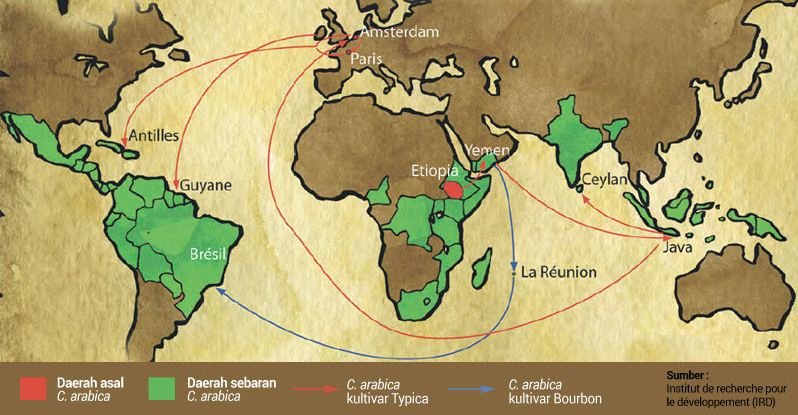
Bourbon coffee is among the oldest cultivated varieties and the genetic source of many popular types today. It takes its name from the island of Bourbon, now Réunion, where it was planted after being brought from Yemen. From there it spread to Brazil and across Central and South America, giving rise to Red Bourbon, Yellow Bourbon, Pink Bourbon, Caturra, and Catimor.
On modern coffee farms, these variants are distinguished mainly by fruit color. Red Bourbon is the most common and shows pronounced sweetness, while Yellow Bourbon is rarer and tends to be more acidic. Brazil's Bourbon coffee is especially well known; after 1860, round-bean Bourbon was introduced to replace the lower-yielding Typica, shaping the country's coffee landscape.
Bourbon coffee is one of the oldest coffee varieties in the world and the genetic source of many popular varieties today. It is named after the island of Bourbon where it was cultivated, later introduced to Brazil and rapidly spread across Central and South America, giving rise to numerous variants such as Red Bourbon, Yellow Bourbon, Pink Bourbon, Caturra, and Catimor. From the perspective of Front Street Coffee, this article traces the spread history and varietal evolution of Bourbon coffee, introduces the flavor profiles of Red Bourbon, Yellow Bourbon, Pink Bourbon, and Tanzanian Bourbon one by one, and shares Front Street's cupping details and brewing parameters for beans such as Brazil Queen Estate Yellow Bourbon and Colombia Huila Pink Bourbon.
To learn more about specialty coffee, welcome to follow our WeChat official account: Front Street Coffee (FrontStreet Coffee).
Coffee, along with tea and cocoa, ranks as one of the world's three major beverages, occupying an important place in people's daily consumption. As an agricultural product, coffee's cultivation and harvest also follow natural rhythms. Coffee trees require continuous care, and varieties constantly undergo mutation and differentiation during reproduction.
Most of the coffee varieties commonly found on the market today can be traced back to the two ancient lineages of Bourbon and Typica, which not only have a long history but also deliver outstanding flavor performance. Today Front Street will talk about the spread history of Bourbon coffee.
Bourbon coffee gets its name from where it was cultivated—because it was planted on the island of Bourbon, the island's name was adopted as the variety's name, and that island is today's Réunion. However, the island of Bourbon was not the original homeland of Bourbon coffee; it was initially transported there from Yemen and only then took root and multiplied on the island of Bourbon.
After a long process of evolution, the flavor of Bourbon coffee has changed noticeably. In today's coffee farms, you may see Red Bourbon, Yellow Bourbon, and Pink Bourbon—which is determined by the recessive genes of both Yellow Bourbon and Red Bourbon—all distinguished by fruit color. Among them, Red Bourbon is the most common, with notably pronounced sweetness; Yellow Bourbon is rarer and relatively more acidic.
Brazil's Bourbon coffee is especially well known. After 1860, Brazil introduced round-bean Bourbon from the island of Bourbon to replace the lower-yielding Typica. Since South America's Typica all originated from the "European mother plant," their genetics were uniform, and once hit by pests or diseases they were prone to widespread crop failure. This was also the first time Bourbon coffee entered Central and South America, subsequently spreading northward from Brazil as a starting point to other parts of South America and Central America. Once Bourbon adapted to the climate of Central and South America, it gave rise to numerous variants, such as the aforementioned Yellow Bourbon and Pink Bourbon, as well as Caturra and Pacas. Below, Front Street will briefly introduce several variants of Bourbon coffee.
First, Red Bourbon. Its fruit turns wine-red when ripe, and the green beans are relatively round in shape. Bourbon grown at higher altitudes usually has better aroma and bright acidity, with a wine-like flavor on the palate. Among the coffee beans Front Street offers, besides the Brazil Red Fruit, which is a Bourbon variety used as an everyday bean, there is also a bean from Guatemala's Huehuetenango region that includes Bourbon—though it is also blended with the Bourbon variants Caturra and Catuai.
Yunnan, a region whose reputation has continued to rise in recent years, most commonly grows Catimor coffee, which is a hybrid of the Bourbon variant Caturra and Timor coffee. Yunnan coffee was originally planted with Typica, but Typica has extremely low yields and limited economic returns, so coffee farmers tend to prefer growing the higher-yielding Catimor. Although Catimor has considerable yields, its flavor falls short of Typica, with both aroma and taste somewhat lacking.
According to Front Street's understanding, southern Tanzania also grows Bourbon coffee. Common local varieties include Bourbon, Typica, and Kent. This coffee bean from southern Tanzania, like Kilimanjaro coffee beans, uses the washed processing method common in Central America, but the variety is Bourbon. Bourbon coffee has pronounced sweetness and bright acidity, and yields higher than Typica, though it is likewise susceptible to leaf rust.
Front Street Coffee (FrontStreet Coffee) has cupped Tanzanian Bourbon coffee beans. To highlight the flavor of the southern production area, a medium-light roast is used. Front Street found that this Tanzanian Bourbon has a very intense floral aroma, with berry and citrus acidity, and a slightly nutty flavor in the finish. Coffee from the southern region has rich floral and wine-like notes with soft acidity; coffee from the Kilimanjaro production area has bright acidity and a full body, and thanks to fertile volcanic soil, carries a mineral-water-like sweetness. It is precisely because Tanzanian coffee combines a full body, suitable acidity, and intense aroma that Europeans once called it the "coffee gentleman."
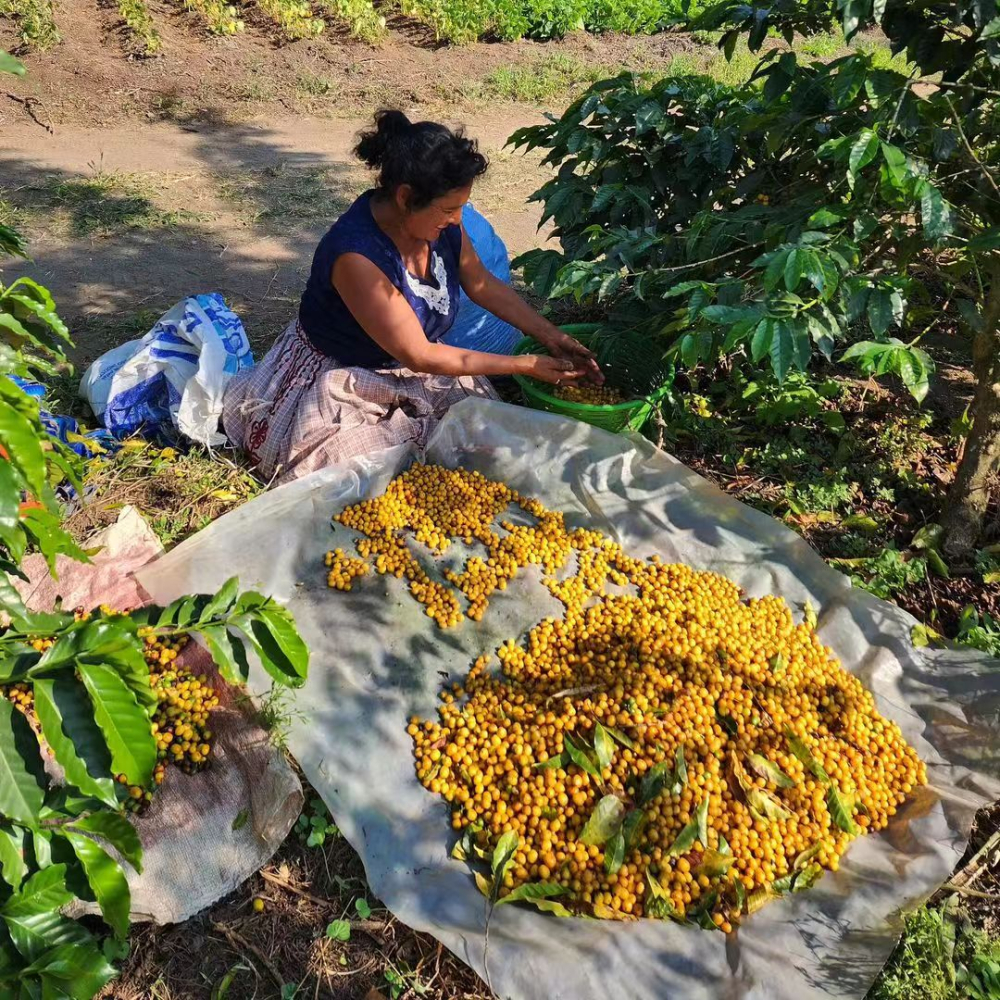
Yellow Bourbon is a Bourbon variant unique to Brazil's São Paulo state; its fruit does not turn red when ripe but instead shows an orange-yellow color. Because Yellow Bourbon is extremely rare, Front Street has listed only one—coffee beans from Brazil's Queen Estate. Although yields are low, when grown at high altitudes Yellow Bourbon can display an excellent flavor. When tasting this Yellow Bourbon from Front Street Coffee (FrontStreet Coffee), you will experience the nutty flavor and intense chocolate aroma characteristic of American beans, along with a bright, refreshing mouthfeel.
When it comes to Pink Bourbon, Front Street believes Colombia's Pink Bourbon must be mentioned. One Pink Bourbon Front Street acquired comes from Colombia's Huila region. Coffee beans from Huila have always been renowned for their high quality. Front Street Coffee (FrontStreet Coffee) has cupped many beans from the Huila production area; they usually have gentle fruit acidity in the front, good sweetness in the back, and excellent overall balance, making one feel that beans from this region have extremely strong potential. Therefore Front Street believes that using different green bean processing methods for beans from this production area will bring different surprises to the palate.
Pink Bourbon was first discovered in the town of Palestine in Colombia's Huila Department, and is currently mainly grown in the Huila region; it is a natural hybrid of Yellow Bourbon and Red Bourbon. Front Street has conducted cupping and brewing experiments on this Pink Bourbon. During roasting, to highlight its unique flavor, Front Street Coffee (FrontStreet Coffee) uses a medium-light roast. The Front Street Coffee (FrontStreet Coffee) barista used a standard 200ml cupping bowl, with a grind size based on a 70%-75% pass rate through a No. 20 standard sieve, a dose of 11.1g, and a water temperature of 94 degrees Celsius.
First grind and smell the dry aroma. This Pink Bourbon's dry aroma carries a fresh floral note; then pour water to fill the bowl and confirm the wet aroma, which presents a blueberry-like freshness. After 4 minutes, break the crust and skim, then conduct the flavor assessment. Front Street's cupping result was: overall a fresh floral aroma, juicy sweetness of blueberry and green grape, a cherry note emerging in the middle, a brown-sugar-like sweetness in the finish, and in terms of acidity, more of a compound expression of citrus and berries.
The above content is compiled by CoffeeHunters, a coffee news website.


