








Does adding ice first change iced pour-over coffee?
Two iced pour-over methods produce clearly different cups. Placing ice cubes in the carafe under the dripper during brewing yields a flatter, less layered drink, while finishing a hot pour-over and then pouring the coffee over ice gives a fuller body with fruit and honey sweetness. The comparison used Ethiopian Yirgacheffe Red Cherry natural beans.
The article records water temperature, coffee-to-water ratio, grind size, and staged pouring for both versions, and explains how the coffee maker uses the V60 dripper's spiral ribs to lengthen the water path and extend contact time between grounds and water. That structure shapes how hot drop coffee meets the ice and how much extraction layering survives in the finished cup.
While the north is still in the grip of winter, Guangdong's January weather has quietly turned warm, and many coffee lovers are beginning to turn their attention to iced pour-over. In this article, Front Street Coffee selects Ethiopian Yirgacheffe Red Cherry natural beans and conducts a hands-on comparison of two iced pour-over methods: one where ice cubes are placed directly in the carafe beneath the dripper, and another where the coffee liquid is mixed with ice only after the hot pour-over is complete. The two methods differ noticeably in flavor expression—the former tastes flat with insufficient layers, while the latter delivers a full-bodied fruity feel and honeyed sweetness. The article documents water temperature, coffee-to-water ratio, grind size, and staged pouring details in detail, and explains how the V60 dripper's structure affects extraction layering, helping readers understand the extraction logic behind adding ice first versus adding ice later.

For more specialty coffee knowledge, please follow: Front Street Coffee (Frontsteet Coffee)
In January in Guangdong, while other provinces are still in the season of heavy snow, this place has already stepped into the rhythm of spring. Temperatures are gradually rising, vegetation is beginning to sprout, and friends who are used to drinking hot pour-over are also turning their minds to the taste of iced pour-over. In this article, Front Street will share two methods for making iced pour-over, comparing the differences between placing ice cubes directly in the dripper for extraction and first completing a hot pour-over before pouring the coffee liquid into ice cubes.
This time, Front Street selects Front Street Yirgacheffe Red Cherry Natural coffee beans from Ethiopia and makes iced pour-over in two ways.
Front Street Coffee (FrontStreet Coffee) · Ethiopia Natural Red Cherry Coffee Beans
Region: Yirgacheffe, Ethiopia
Estate: Aletalend Estate
Altitude: 1700-2200m
Variety: Ethiopian heirloom varieties
Processing method: Natural processing
This Front Street iced pour-over comparison uses the Hario V60 dripper
Compared with drippers that have a straight water flow path (such as the Kono dripper), the Hario V60 dripper's spiral rib design noticeably lengthens the water flow path. The spiral ridges not only increase the contact time between coffee grounds and water, but also guide the water along the spiral ridges toward the center of the dripper as the water level drops, using the gravity of the falling water to press the coffee grounds, thereby bringing a richer sense of layering.
Iced pour-over brewing water temperature
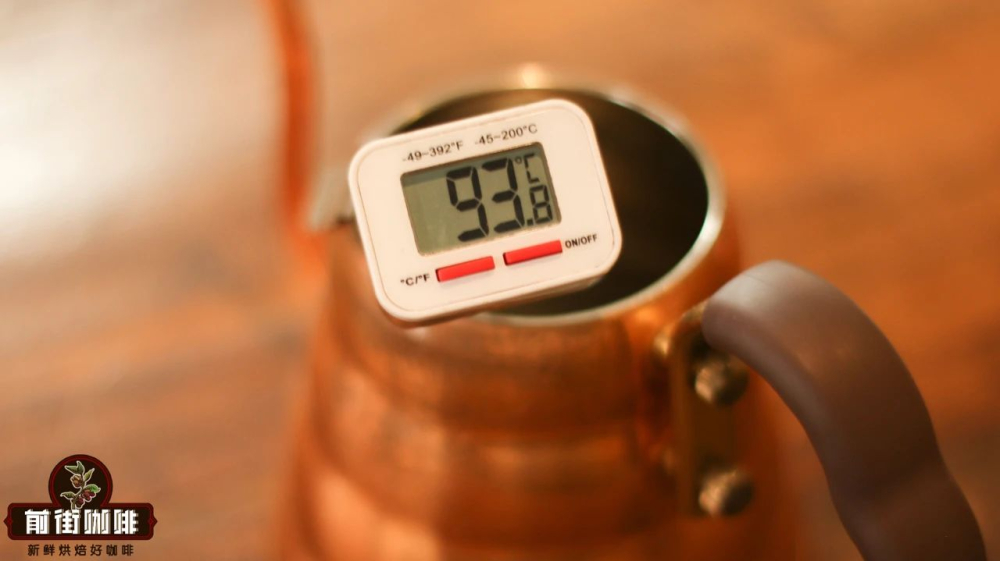
When the water temperature is on the low side, the brewing result often shows only acidity and lacks body; when the water temperature is too high, over-extraction easily occurs and brings out bitterness. This Front Street Ethiopian natural Red Cherry has prominent sweetness. In order to more fully extract the sweet substances, Front Street uses a water temperature of 91–92°C for this comparison. This temperature is suitable for medium-light roasted coffee beans; for medium-dark roasts, 88–89°C is recommended.

Iced pour-over coffee-to-water ratio
Because ice cubes need to be added for dilution, Front Street uses a 1:10 coffee-to-water ratio when making iced pour-over, plus 100g of ice cubes, with 15g of coffee grounds. Iced pour-over grind size
According to SCAA cupping standards, the cupping grind size is 70-75% passing a No. 20 standard sieve. When Front Street Coffee (FrontStreet Coffee) brews hot pour-over light-roast coffee, the grind size is usually controlled in the 75-80% range, while for medium-dark roasts it is between 70%-75%; for iced pour-over, the medium-light roast grind size is generally 80%, and medium-dark roast is 75%.
Iced pour-over brewing method one : First place 100g of ice cubes into the carafe, then without preheating the dripper or rinsing the filter paper, pour the coffee grounds directly into the dripper fitted with filter paper, pour in 30g of hot water to fully wet the coffee bed so that it forms a hamburger shape, and wait 30 seconds before beginning the second stage of extraction. Pour in circles from the center outward, keeping the stream steady and vertical. When the water column hits the coffee bed, foam will form. This stage lets the coffee foam release and cover the entire surface of the coffee bed, with the liquid level rising to the base of the short ribs; pour until the water amount reaches 90g, at which point the timer shows 50 seconds.
When the water level drops to 1/2 of the coffee bed, proceed to the third stage of pouring. Likewise, pour from the center outward in an “aroma-seeking” manner until 150g. The originally dark brown foam gradually turns pale yellow, and the liquid level also returns to the height of the second pour. After all the coffee liquid has flowed into the lower carafe, remove the dripper and end extraction. Total time is 1 minute 40 seconds. After extraction is complete, fully stir the coffee liquid and ice cubes in the carafe to mix, then taste. Flavor of iced pour-over brewing method one: Slight berry acidity, almond-nut-like flavor, smooth mouthfeel, honey-like finish, overall lacking in layering, feels flat. Iced pour-over brewing method two: Preheat the dripper and carafe and rinse the filter paper, pour the coffee grounds into the preheated dripper fitted with filter paper, add 30g of hot water to fully wet the coffee bed into a hamburger shape, and wait 30 seconds before performing the second stage of extraction. Pour in circles from the center outward, keeping the stream steady and vertical. When the water column hits the coffee bed, foam will appear. This brewing stage lets the coffee foam release and spread across the entire surface of the coffee bed, with the liquid level raised to the base of the short ribs; pour until the water amount reaches 90g, at which point the timer is at 50 seconds.
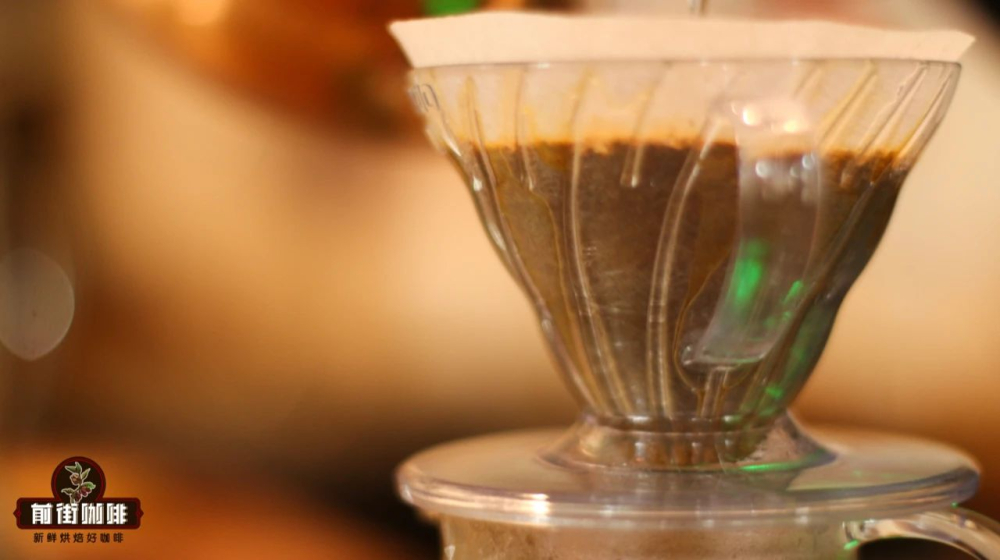
When the water level drops to 1/2 of the coffee bed, proceed to the third stage of pouring. In this stage, likewise pour from the center outward in an “aroma-seeking” manner until 150g. The originally dark brown foam turns into pale yellow coffee foam, and the liquid level also returns to the height of the second pour. After all the coffee liquid has flowed into the lower carafe, remove the dripper and end extraction. The time is 1 minute 40 seconds. Take another carafe, add ice cubes to fully pre-chill it, then pour out the ice cubes in the carafe, add 100g of ice cubes again, then shake the coffee liquid in the first carafe evenly and pour it into the second carafe with ice cubes and stir. After the ice cubes are fully mixed, taste it.
Flavor of iced pour-over brewing method two: full-bodied berry juiciness, prominent acidity, smooth mouthfeel, honey-like sweetness roaming in the mouth, with rich overall layering. Why is there such a big difference in flavor expression between iced pour-over coffee with ice added first and ice added later?
When mentioning the V60 dripper, Front Street has emphasized that the V60 dripper's design allows the brewed coffee to have a higher sense of layering, which means each dripping stage extracts different flavor molecules. For example, the first stage “awakens” the flavor molecules, the second stage mainly extracts acidity and sweetness, and the third stage extracts body-giving substances.
If ice is added first, no matter which stage's coffee extract drips onto the ice surface, it will be immediately diluted and cannot achieve a clearly layered effect. But by allowing the coffee liquid to complete full extraction under uniform temperature conditions, then shaking it, and after the coffee liquid is completely uniform pouring it into ice cubes for dilution, this ensures that the coffee molecules contact the ice cubes evenly and better showcases the strengths of each flavor molecule.
For more specialty coffee beans, please add private WeChat Front Street Coffee (FrontStreet Coffee), WeChat ID: kaixinguoguo0925
The above content is compiled by CoffeeHunters, a coffee news website.


