







How Much Force Should Tamping Use on an Espresso Machine?
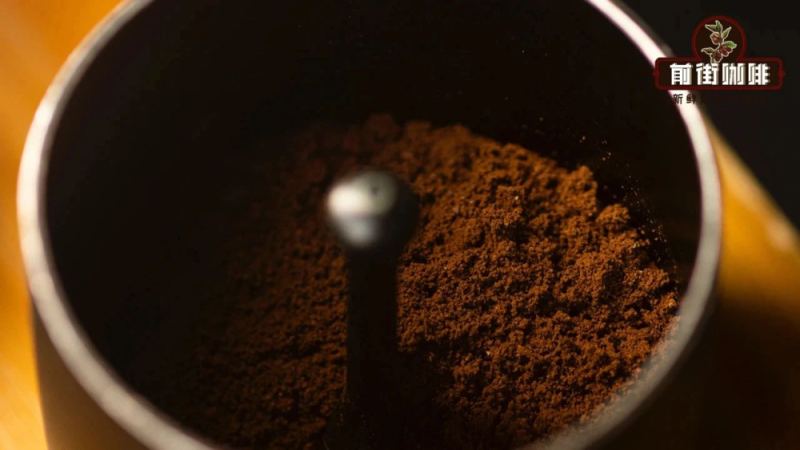
Tamping espresso takes roughly 10 to 15 kilograms of force, just enough to level the bed of grounds without compacting it so hard that water channels form. A comparison using 20 grams of grounds and 40 grams of liquid showed a tamped shot finishing in 27 seconds with a steady flow, while an untamped shot sprayed early and finished about 8 seconds faster with a watery texture.
The goal is a flat, even puck rather than maximum pressure. Uneven or tilted tamping pushes water through the shallow side first, so part of the coffee is over-extracted and part under-extracted. An espresso machine works by forcing water through that bed under pressure, which is why puck preparation matters as much as grind size and dose.
Making espresso may seem simple, but many coffee enthusiasts still find the flavor unsatisfactory after following the parameters. Front Street Coffee believes the problem often lies in the tamping step—this unremarkable step directly affects the even extraction of the coffee grounds. This article uses comparative experiments to explain the necessity of tamping, explain the principles behind distribution and tamping, and explain in detail the correct tamping posture, force, and angle, helping to solve common problems such as uneven or tilted tamping. It also shares the complete parameters for extracting espresso at Front Street's store, as well as the flavor characteristics of the espresso blend beans used, for coffee enthusiasts to reference and practice.
For more specialty coffee knowledge, please follow: Front Street Coffee (Frontsteet Coffee)
The process of extracting a shot of espresso is not complicated, but many coffee enthusiasts follow the established parameters and still end up with a result that does not meet expectations. Front Street Coffee (FrontStreet Coffee) analyzes that the crux is likely that the tamping step was not done properly. Although this step is easily overlooked, it plays a key role in whether the coffee grounds can be extracted evenly. Next, Front Street Coffee (FrontStreet Coffee) will explain what range the tamping force should be controlled within when making espresso, and how to press the puck surface flat.
Why tamp?
When making espresso, everyone knows to first grind the coffee beans into a very fine powder, then distribute the grounds, then tamp, and only then begin extraction. So what exactly is tamping for? What operation does it specifically refer to? Why is it always uneven when doing it yourself? Below, Front Street Coffee (FrontStreet Coffee) will explain one by one through actual comparisons.
Front Street Coffee (FrontStreet Coffee) prepared two groups of espresso for comparison, with the only variable being whether to tamp: one group was tamped normally as a reference, and the other group skipped tamping as the experiment, with all other conditions completely identical. Both groups used 20 grams of grounds and extracted 40 grams of coffee liquid.
The group with normal tamping extracted smoothly, with a steady flow rate, taking 27 seconds in total. The group without tamping immediately sprayed out liquid at the start of extraction, the flow rate was generally fast, the texture was close to watery, and it was unstable. The extraction time was 8 seconds less than the reference group, and the taste was also noticeably more watery and thinner.
This shows that only by tamping the coffee grounds firmly and evenly can the espresso machine fully extract. If not tamped, the extraction speed will increase, the coffee grounds will not be fully extracted, and the flavor of the espresso will naturally be affected. Therefore, Front Street Coffee (FrontStreet Coffee) recommends that the first step in making espresso is to grind the coffee beans and load the coffee grounds evenly into the portafilter basket.
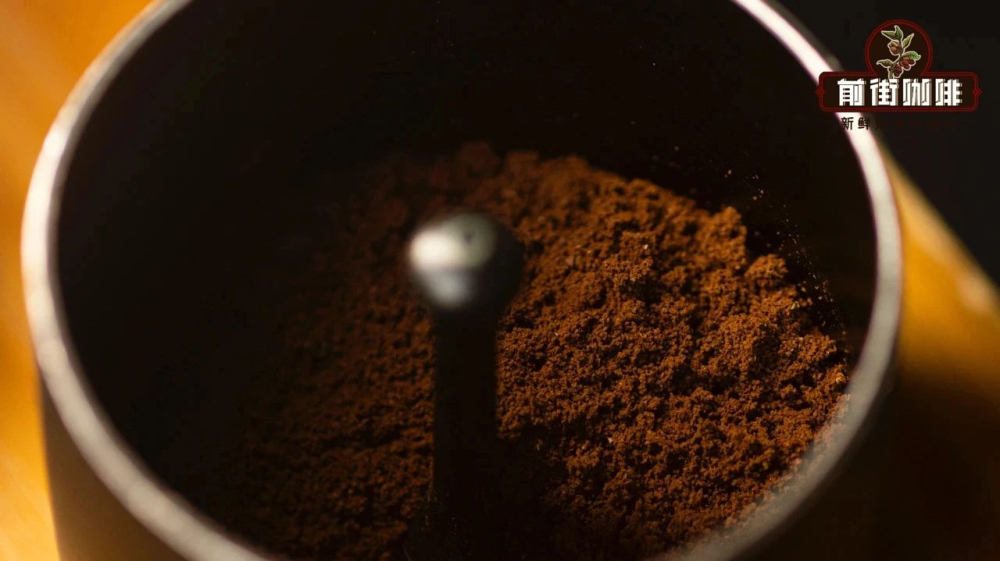
The purpose of distribution is to make the scattered coffee grounds evenly distributed in the portafilter basket. At this point, the coffee bed is still loose, and the gaps between particles vary in size. If extraction is carried out directly without tamping, under the machine's high pressure of 9 bar, the water flow will quickly pass through the coffee bed, scattering the loose coffee grounds, and will preferentially flow through paths with less resistance, causing those areas to be over-extracted, which is what is commonly called channeling.
The purpose of tamping is precisely to compact the coffee grounds and reduce the gaps between particles, so that during extraction enough resistance is created to counter the water flow, thereby allowing the water to pass evenly through the coffee grounds.
So when making espresso, how much tamping force is actually correct for proper tamping?
Enthusiasts who have just started paying attention to tamping often use all their strength, thinking that the harder they press, the more compact it will be. In fact, only a skillful amount of force is needed to press the grounds flat and firm, and the key lies in the method and angle. Next, Front Street Coffee (FrontStreet Coffee) will demonstrate the specific operation of tamping.
When tamping, Front Street Coffee's (FrontStreet Coffee) baristas first place the portafilter basket flat, grip the end of the tamper handle with the palm, with the web of the hand facing down, and use the thumb and index finger to hold the tamper end. At the moment of tamping, the elbow joint, forearm, tamper, and portafilter basket should remain on the same vertical line, applying force vertically downward to compact the coffee grounds in one go.
It should be emphasized that when tamping, the portafilter handle must remain level, and the tamper must apply force vertically downward. On many coffee machine handles on the market, the portafilter basket and the handle are not in a horizontal relationship, so it is necessary to find a suitable angle to ensure that a perfect downward force can be produced when tamping.
If the tamping direction is tilted, the puck will become uneven in thickness, with the higher side being looser in density and the lower side being tighter in density, which will also cause uneven water flow extraction.
For situations where tilting is easy, Front Street Coffee (FrontStreet Coffee) recommends two solutions: first, use three fingers to hold the tamper, which makes it easier to sense the overall downward direction and reduces mistakes; second, switch to a tamper with a calibrated downward press, using the tool as assistance, which can basically solve the problem of directional deviation.
The above is Front Street Coffee's (FrontStreet Coffee) answer regarding how much tamping force should be used for espresso, and we hope it can help enthusiasts who are troubled by how to make a delicious cup of espresso. Next, Front Street Coffee (FrontStreet Coffee) will also share a set of in-store espresso extraction parameters for everyone's reference.
Front Street Coffee (FrontStreet Coffee) espresso extraction parameters shared:
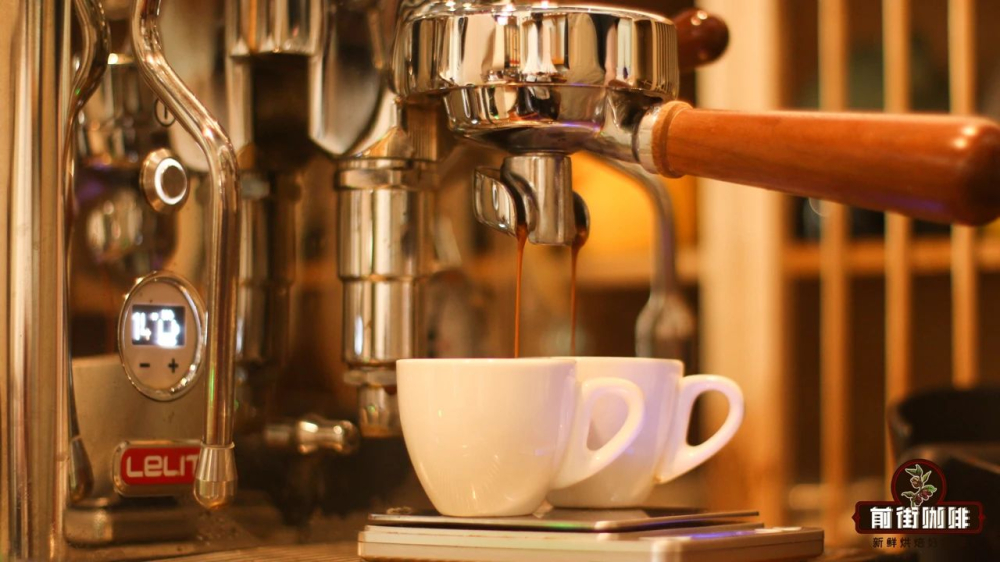
The brand and model of the espresso machine used at Front Street is the Feima E98 espresso machine.
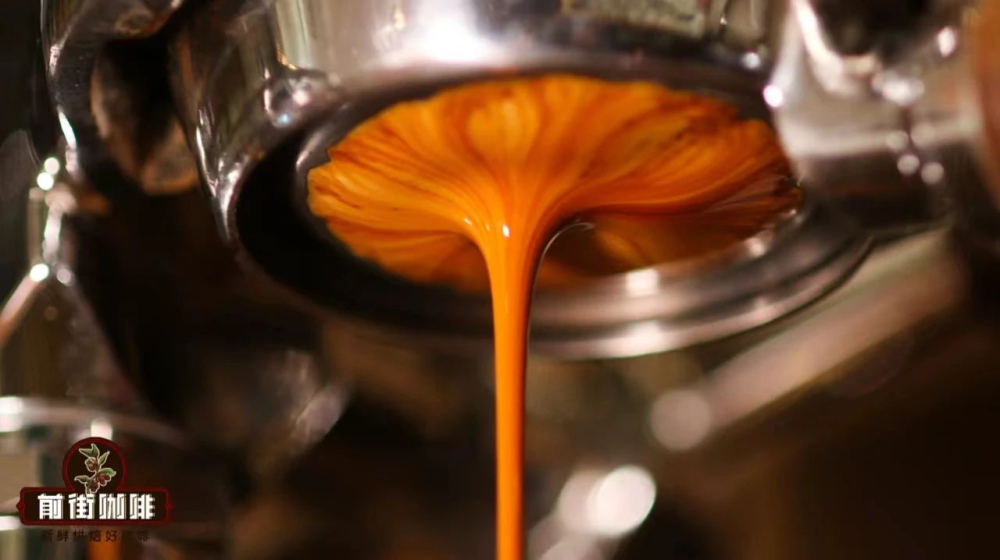
Pressure: 9 bar
Temperature: 90.5~96 degrees Celsius
Time: 20~30 sec
Coffee-to-water ratio: 1:1.7~1:2
Dose: 10g (single espresso) 20g (double espresso)
Extraction yield: 20ml (single) 40ml (double)
To make a delicious cup of espresso, the espresso beans chosen must also be excellent so that the espresso's flavor can perform well. Front Street Coffee (FrontStreet Coffee) currently uses its own blend in-store—Front Street Sunflower Warm Sun Espresso Blend Coffee Beans. This blend is Front Street's proudest work so far, made by blending Front Street Honduras Sherry Coffee and Front Street Yirgacheffe Natural Red Cherry Coffee. Its flavor characteristics are as follows:
Front Street Sunflower Warm Sun Espresso Blend Coffee Beans
Flavor: Noticeable fruit acidity, a faint berry aroma, wine aroma, rich chocolate flavor, with a clear sweet aftertaste. Recipe: Front Street Honduras Sherry: Front Street Ethiopia Yirga Red Cherry
This blend is made by blending Front Street Yirgacheffe Natural Red Cherry and Front Street Honduras Sherry. Front Street's design positioning for this Front Street Sunflower Warm Sun Espresso Blend Coffee Bean is that it can be used for both espresso and pour-over. When used to make espresso, it gives off a noticeable fermented wine aroma; after entering the mouth, the acidity of citrus and berries immediately emerges, accompanied by the aroma of whiskey, and the finish is dark chocolate.
The above are the espresso blend coffee beans and extraction parameters used by Front Street Coffee (FrontStreet Coffee) when making espresso, and we hope they can help everyone.
For more specialty coffee beans, please add the private WeChat Front Street Coffee (FrontStreet Coffee), WeChat ID: kaixinguoguo0925
The above content is compiled by CoffeeHunters, a coffee news website.


