







What separates Lintong, Golden, Tiger and Aged Mandheling?
Mandheling is an umbrella name for Indonesian coffee, and it covers several distinct flavor paths rather than one bean. Lintong Mandheling delivers a thick body with herbal notes, while Golden Mandheling, Tiger Mandheling, Aged Mandheling and Natural Mandheling each differ in origin, variety, processing and cup character. Knowing which path a bag follows explains most of the flavor differences.
The wet-hulling process, known locally as Giling Basah, shapes much of that character by removing parchment while the beans still hold moisture. Mandheling labels also reflect supplier and regional distinctions rather than a single variety. Tasting across the range, from heavier herbal styles to aged and natural versions, is the clearest way to understand how Mandheling is built.
Mandheling is the calling card of Indonesian coffee, and behind it there are actually several distinct flavor paths. In the Front Street daily-bean series, Lintong Mandheling wins over those who favor a heavy, intense mouthfeel with its thick body and herbal notes. Many people are skeptical about the positioning of "daily beans," wondering whether a low price means compromised quality. In fact, when Front Street selects daily beans, it picks the most distinctive and representative beans from each region, offering them in 100g small packs so everyone can get to know a region's basic flavors at low cost. This article will systematically sort through the origins, varieties, processing methods, and flavor characteristics of Lintong Mandheling, Golden Mandheling, Tiger Mandheling, Aged Mandheling, and Natural Mandheling, guiding you through how the wet-hulling process shapes Mandheling's unique character.
For more specialty coffee knowledge, please follow our WeChat official account: Front Street Coffee (FrontStreet Coffee)
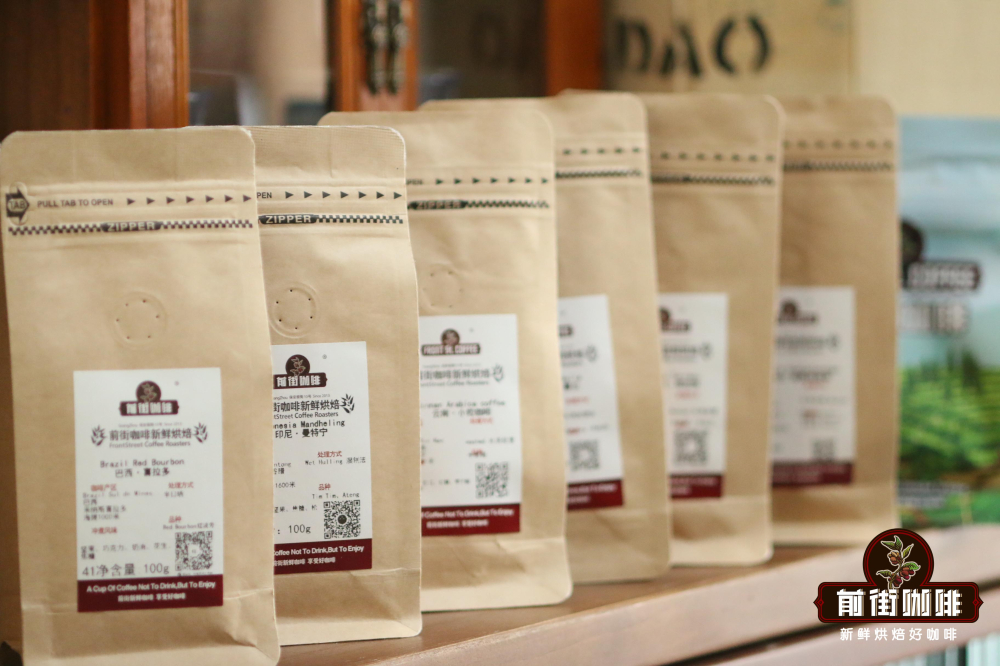
Mandheling coffee beans are one of Indonesia's most representative coffee beans. The Front Street daily-bean series includes a Lintong Mandheling coffee bean, loved by many coffee enthusiasts who enjoy rich flavors for its full-bodied mouthfeel and herbal aroma. Many friends who are unfamiliar with Front Street may have some misunderstandings about the Front Street daily-bean series, perhaps thinking that the reason it's called a "daily bean" or sometimes priced at just 9.9 during promotions is that the coffee bean quality isn't good. Front Street daily beans are the "face" of regional coffee beans, because their regional basic flavors are more recognizable, and they are also low-priced, high-value coffee beans.
When Front Street Coffee (FrontStreet Coffee) selects a "daily bean" to list, it carefully chooses the beans most representative of each major region's original flavors. For packaging, Front Street uses 100g trial-size packs to introduce them to everyone. The meaning of Front Street daily beans is that everyone can identify the basic flavors of major regions at a low price, such as Yirgacheffe's citric acidity, Mandheling's herbal taste, Brazil and Colombia's nutty chocolate flavors, and so on.
Many friends who are just getting into coffee are very confused about choosing coffee beans, not knowing what flavor suits them, and also worried about stepping on landmines. Front Street believes that choosing "daily beans" is most appropriate at this time—starting from the most classic regional flavors, without spending too much "wasted money" on trial and error, killing two birds with one stone.
Sumatra Coffee Beans
Indonesia is located in Southeast Asia, and its coffee-growing history can be traced back to 1696. At that time, Dutch plantation owners, seeking to expand coffee-growing areas, searched around and settled on the island of Java. Three decades later, Indonesia had already established a solid foundation in the coffee market.
However, as things developed, Indonesia's coffee calling card became Mandheling from Sumatra. This is no accident, because a large portion of the Java coffee shipped to Europe in the early days actually came from the Sumatra region, and Mandheling is a product of Sumatra. Therefore, Sumatra can be considered a pivotal coffee-producing region in Indonesia.
The Story of Mandheling Coffee
Mandheling was originally the name of an Indonesian tribe, and later, through a twist of fate, it became the name of a coffee bean. There's an anecdote in between. After the Japanese army ended its colonial occupation of Indonesia and withdrew home, they always remembered the deliciousness of the local coffee. So, through the introduction of trade partners, they commissioned locals to purchase quality coffee beans on their behalf, including this Mandheling. The Japanese were very fond of these beans and asked what they were called. Since the commercial channels could not be disclosed, the locals casually answered "Mandheling," and so this name, by mistake, became the appellation of this coffee bean.
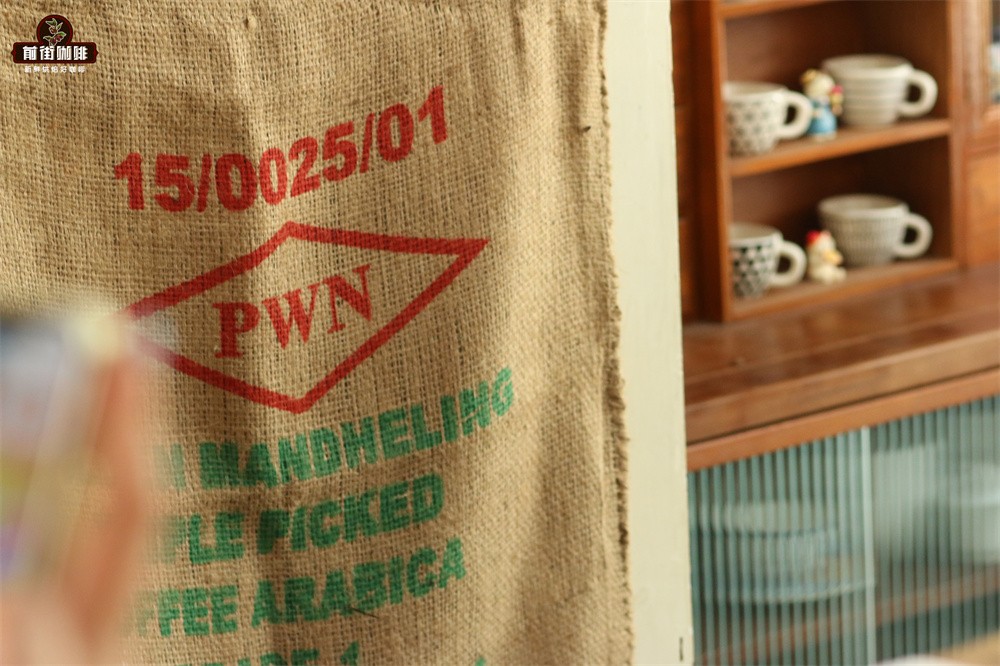
The locals mentioned earlier are actually the owner of the Indonesian PWN company (Pwani Coffee Company), which will be discussed later.
Sumatra Coffee Beans' Unique Processing Method — Wet Hulling
Mandheling mostly uses Sumatra's unique wet-hulling process. The region has year-round rain and frequent typhoons, lacking the good weather needed for natural drying; combined with limited economic conditions, they also couldn't afford the higher cost of the washed method, so this highly regional wet-hulling process evolved.
In the first stage, a wooden depulper is used to remove the skin and pulp, then after 3 hours of fermentation, the beans are spread out to dry, reducing the moisture content to a semi-dry, semi-wet 30% to 50%.
In the second stage, the mucilage and parchment layer are removed, followed by completing the later stage of drying. The entire drying process takes 2 to 4 days, and the moisture content finally drops to 12% to 13%.
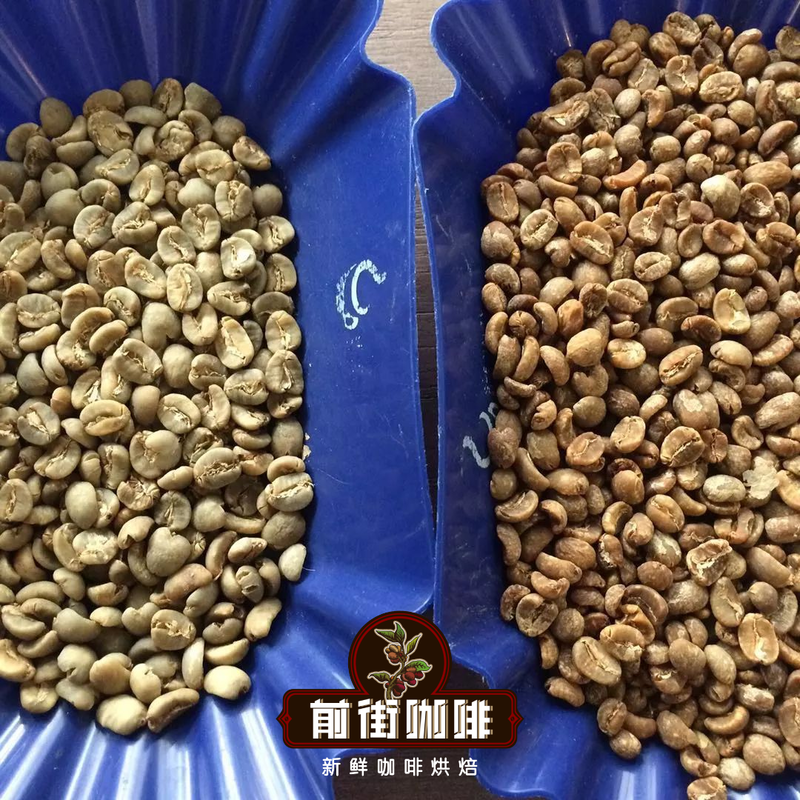
Apart from the regular wet-hulling method, there is also an aged wet-hulling method. The coffee beans are first processed by the ordinary wet-hulling method, then sealed and stored in a warehouse for 2 to 3 years. The warehouse must be kept cool and ventilated, and the beans must be turned regularly to prevent mold and spoilage. During this period, the coffee beans' acidity gradually weakens and converts into sugar, and the color deepens accordingly, mostly appearing yellowish-brown or dark brown. Mandheling processed this way is called Aged Mandheling coffee beans.
The wet-hulling method gives Mandheling its unique flavor; it can be said that Mandheling and wet hulling are bound together. But today's coffee market is no longer satisfied with a single style. Even though wet hulling is Mandheling's signature, some have tried other processing methods, such as the natural Mandheling from Wahana Estate. There is also a prerequisite for changing the processing method: on the basis of preserving the coffee beans' original flavor, layering on new flavor dimensions.
Lintong Mandheling
Region: Lintong region, Sumatra
Altitude: 1100-1600 meters
Variety: Typica, Caturra
Processing method: Wet hulling
Flavor: Baked toast, nuts, caramel, pine, herbs
Lintong Mandheling comes from the Lintong highlands in north-central Sumatra, near Lake Toba. In Front Street's view, Lintong Mandheling is the regular version of Mandheling. Lintong Mandheling uses the locally common wet-hulling method, creating its low acidity and high body. What happens with the wet-hulling method is that, because the semi-hard, semi-soft wet raw beans are easily crushed when the mucilage and parchment layer are removed, the beans get damaged and split open like a goat's hoof, commonly known as goat-hoof beans. This is not a defective bean; it can be said to be a very notable characteristic of Mandheling.
Lintong Mandheling does not put much effort into screening; the lack of refinement in processing easily leads to instability in the coffee beans' output, but it does not diminish the world's love for Lintong Mandheling's rich flavor.
Typica has bronze-colored tips, oval or slender-pointed beans, and an elegant flavor, but it is weak in constitution, has poor disease resistance, and low yield. Besides Mandheling coffee beans, several other Front Street coffee beans, such as Jamaica Blue Mountain and Hawaii Kona, are also Typica.
Caturra is a natural mutation of the Arabica variety Bourbon, discovered in Brazil in 1937. Its tree is not as tall as Bourbon, being shorter. Because it inherits Bourbon's bloodline, its disease resistance is relatively weak, but its yield is higher than Bourbon's.
Front Street Golden Mandheling Coffee Beans
Region: Gayo Mountain, Aceh, Sumatra
Altitude: 1100-1600 meters
Variety: Ateng
Grade: G1, 3 times hand-sorted
Processing method: Wet hulling
Flavor: Spices, herbs, caramel, pine, nuts, chocolate
Since discovering Mandheling, the Japanese have always been very attentive to this coffee bean. In the course of cooperating with local green bean merchants, they established a strict screening system. After processing, the green beans undergo density and color sorting, and then are hand-picked multiple times, finally presenting Mandheling with uniform color and uniform bean shape. It is said that when processing the green beans, Mandheling under sunlight gives off a golden sheen, hence the name Golden Mandheling.
The specification for Golden Mandheling is 18 mesh and above, with fewer than 3 defective beans (in a 300g green bean sample), belonging to the highest grade G1. The color is on the darker green side, and the shape is neat flat beans. After strict screening, Golden Mandheling not only loses the earthy, miscellaneous taste unique to ordinary Mandheling, but drinks cleaner and more transparent, with a stronger sweetness.
However, the company that registered Golden Mandheling as a trademark is not a Japanese company, but the local Indonesian company that cooperated with Japanese companies in exporting Mandheling coffee beans in the early days — PWN Company (Pwani Coffee Company). The Japanese company registered "Gold Top Mandheling," that is, Ding Shang Golden Mandheling. In terms of flavor expression, the two are actually not very different, but due to different brands and different merchant marketing strategies, it is possible that public opinion ended up differing. So which of the two Golden Mandhelings is better is a matter of opinion. Ateng is a hybrid between Arabica and Robusta, with several subtypes, widely planted in Sumatra and other Indonesian islands. To put it plainly, it is a branch of Catimor (Catimor), and Ateng is the local name.
Front Street Tiger Mandheling Coffee Beans
Region: Sumatra
Altitude: 1500 meters
Variety: Caturra, Typica, Sidikalong Processing method: Wet hulling
Flavor: Nuts, cream, dark chocolate, caramel, pine
Front Street Aged Mandheling Coffee Beans
Region: Sumatra
Altitude: 1500 meters
Variety: Caturra, Typica
Processing method: Wet hulling
Flavor: Ripe pu'er, caramel, herbs, chocolate, lower acidity
When it comes to liquor, everyone thinks the longer it's aged, the better, hence the name aged liquor. The same goes for aged coffee. Among aged coffees, Aged Mandheling is the finest. In fact, this unique flavor was not intentionally created. Indonesia was once a Dutch colony. During the colonial period, Indonesia continuously shipped coffee beans to Europe. To ensure an uninterrupted supply, coffee beans were appropriately stored. But due to external factors such as the long transportation distance, the shipping time became too long, and the beans were also eroded by sea breezes. By the time the coffee beans reached Europe, another flavor had already formed — this was the originator of the aged flavor. Fortunately, at the time, the European colonists were amazed by this taste and quickly accepted and promoted this processing method.
Now the aging process for Aged Mandheling is quite mature. The coffee beans first undergo wet hulling (wet hulling is the process of washing normally, sun-drying with the parchment for 2-3 days to a moisture content of 20-24%, and finally removing the parchment to dry the green beans to a moisture content of 12-13%), then are sealed and stored in a warehouse. The warehouse environment must be cool and ventilated, and the beans must be turned regularly to prevent mold and spoilage. They are stored for 2-3 years, during which the coffee beans' acidity slowly weakens and converts into sugar, and the color becomes deeper, mostly yellowish-brown or dark brown, very recognizable.
The special processing method of Aged Mandheling gives it a more rounded, profound flavor, as intoxicating as pu'er.
Front Street Natural Mandheling Coffee Beans
Region: Sumatra Lake Toba Estate: Wahana Estate
Altitude: 1000-1700 meters
Variety: Bourbon, Typica
Processing method: Natural
Flavor: Melon, fermented aroma, mango, tropical fruit, peach
Wahana Estate was established in 2005, located near LeaMungkur village in the Sidikalang district of North Sumatra, Indonesia. Sidikalang has been one of Indonesia's famous coffee-producing regions since ancient times. The area where Wahana Estate is located has an altitude between 1200-1500 meters, annual rainfall of 2000-3000 mm, and additionally this region has a relatively cool climate and a day-night temperature difference of more than 10°C. Based on the above conditions, the red cherries produced by Wahana all have a sugar content above 13%.
Wahana Estate is still a relatively young estate that continues to develop year by year. The estate covers an area of about 500 hectares. The estate owner plans to expand the estate's coffee planting area as much as possible in the coming years. Wahana Estate isolates different coffee varieties by plot and harvests them separately to unleash the potential of each variety. In addition, only red cherries can be harvested, and then processed separately. Roast Comparison
Front Street Coffee (FrontStreet Coffee) Golden Mandheling Roast Record Sheet
Front Street Coffee (FrontStreet Coffee) Lintong Mandheling Roast Record Sheet
Front Street Coffee (FrontStreet Coffee) Tiger Mandheling Roast Record Sheet
Front Street Coffee (FrontStreet Coffee) Aged Mandheling Roast Record Sheet
Front Street Coffee (FrontStreet Coffee) Natural Mandheling Roast Record Sheet
Pour-over Flavor Comparison
When Front Street brews Mandheling coffee beans, it tries to keep the brewing parameters as uniform as possible. Since Natural Mandheling uses a medium-light roast, while the other four Mandhelings use a medium-dark roast, coffee beans with different roasts will use different brewing parameters.
Medium-light roast coffee bean brewing parameters: V60 dripper, 1:15 coffee-to-water ratio, 15g dose, 90°C water temperature, grind size (80% passing through a No. 20 standard sieve)
Medium-dark roast coffee bean brewing parameters: Kono dripper, 1:15 coffee-to-water ratio, 15g dose, 88°C water temperature, grind size (70-75% passing through a No. 20 standard sieve)
Front Street uses staged extraction: bloom with 30g of water for 30 seconds, then pour in a small stream in circles until 125g for the stage break; when the water level drops and is about to expose the coffee bed, continue pouring until 225g and stop; when the water level drops and is about to expose the coffee bed, remove the dripper. (Timing starts from the beginning of the bloom.) The V60 dripper's extraction time is 2'00", and the Kono dripper's extraction time is slightly longer, at 2'10".
【Flavor Description】
Golden Mandheling: Layered and ever-changing, rich and clean, highly balanced, with intense nutty and caramel aromas, chocolate notes, and a lingering finish. Lintong Mandheling : Herbal, medicinal plant notes on entry, dark chocolate, caramel, sweet aftertaste.
Tiger Mandheling: Pine and spice aromas, a relatively balanced mouthfeel, with obvious cream, dark chocolate, and nut flavors.
Aged Mandheling: Aromas of wood, malt, and caramel rush forth. On the palate, it lacks the wildness of traditional Mandheling, gaining instead some richness and finesse, with a sense of mature steadiness. Acidity is lower. On entry there are flavors of ripe pu'er, caramel, herbs, and chocolate, with abundant sweetness. Natural Mandheling: Tropical fruit, fermented notes, moderate acidity, smooth mouthfeel, obvious sweetness.
The above content is compiled by CoffeeHunters, a coffee news website.


