







Why Do Coffee Bean Grades Matter for Brazil Queen Farm?
The pulped natural beans from Brazil's Queen Estate (Fazenda Rainha) stand out for rounded sweetness and mild acidity rather than the sharp brightness of Kenyan or Ethiopian coffee. Part of the Carvalho Dias family, the estate has collected more than a dozen awards since Brazil's first COE competition in 1999, including the championship in 2004.
Brazil's growing terrain splits into plateaus above 500 meters and plains below 200 meters, and the low elevation means Caturra coffee arabica trees often sit in direct sunlight. Specialty standards usually place ideal Arabica elevation at 1,200 meters, yet the estate's cup still shows nutty, lemon and dark chocolate notes. Cupping and a three-stage pour-over bring out that sweetness.
The semi-washed coffee beans from Brazil's Queen Estate on Front Street Coffee's bean list have always had a high click-through rate. This bean has a prominent sweetness, and although its acidity is not as bright as that of Kenya or Ethiopia, it is a typical representative of Brazilian coffee. This article will explore the background of Queen Estate, Brazil's coffee-growing terrain and varieties, the unique aspects of the semi-washed processing method, and Front Street's cupping and three-stage brewing details for this bean, giving you a comprehensive understanding of why this bean is worth listing and why it presents nutty, lemon, dark chocolate, and rounded sweetness notes.
On Front Street Coffee's bean list, coffee beans from producing regions around the world are gathered, among which a semi-washed bean from Brazil's Queen Estate has a particularly outstanding order rate. This bean has a clear sweetness, and although its acidity is not as sharp and bright as that of Kenya or Ethiopia, it is still a highly recognizable Brazilian coffee.
If you often drink Front Street Brazilian coffee beans and have some knowledge of the history of Brazilian coffee, you will notice that Brazil's coffee-growing terrain is roughly divided into two categories: one is the Brazilian plateau at an elevation of more than 500 meters, and the other is the Brazilian plains below 200 meters. Because the overall elevation is low and sunshine is abundant, the local Caturra coffee trees are often directly exposed to sunlight. Front Street believes that this sun-drying condition plays a key role in shaping Brazil's distinctive coffee flavor. Usually the specialty coffee industry sets the ideal elevation for Arabica at 1,200 meters, and Brazilian coffee clearly does not meet this standard, so some people may wonder why Front Street still lists this bean.
This Front Street Brazilian coffee bean purchased by Front Street comes from Brazil's Queen Estate, which once won the championship in Brazil's COE competition. Queen Estate (Fazenda Rainha) belongs to the prestigious Carvalho Dias family. The four estates under this family have won awards every year since the first Brazil COE competition in 1999, accumulating more than 12 awards in seven years. In 2004, they even took the championship, ninth place, eleventh place, and other positions. Many large and small estates in Brazil regard entering this competition as an honor, yet Queen Estate has been able to achieve excellent results year after year, which shows that its quality is far higher than ordinary Brazilian coffee beans.
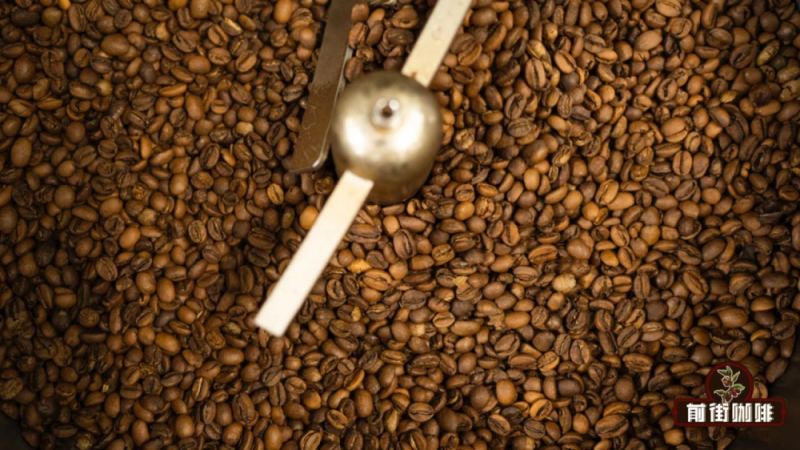
This is also one of the reasons why Front Street Coffee decided to list this Front Street Brazilian coffee bean. Before that, Front Street also carried out corresponding cupping and brewing tests. After Front Street received this batch of Front Street Brazilian green coffee beans, it found that the beans had low moisture content and a firm texture, and therefore had a strong heat absorption capacity, so time control during roasting had to be steady and not rushed. In order to bring out good flavor expression and aroma, a medium roast was ultimately chosen.
Usually at Front Street Coffee, cupping is arranged between eight and twenty-four hours after the coffee beans are roasted. Front Street Coffee's baristas use a 200 ml standard cupping bowl, with a grind size referencing a 70%-75% pass rate on a No. 20 standard sieve, 11.3 g of coffee grounds, and a water temperature of 94°C. First grind and smell the dry aroma. The dry aroma of this semi-washed Front Street Brazilian coffee bean gives off nutty notes, then water is poured to fill the bowl to confirm the wet aroma. After four minutes, break the crust and skim it, then conduct the flavor evaluation. Before that, hand-brewing can already be started.
Front Street uses a three-stage method to brew this Front Street Brazilian coffee bean. First use 30 grams of hot water to fully wet the coffee grounds. The second pour begins when the electronic scale shows 30 seconds. Starting from the center position, pour a small stream of water into the bottom of the coffee bed. In order to concentrate the penetration force of the water stream, the circling movement should be small, and then circle outward. Throughout the process, try to keep the water flow speed steady, not suddenly large and then small, and try not to interrupt the flow. Because too little poured water will lead to incomplete saturation of the coffee grounds, and the sip will easily show obvious rough and astringent sensations, with a short finish as well; if there is too much water, the hot water in the initial blooming stage fails to extract enough coffee substances, and the brewed coffee will taste relatively thin, while the acidity in the front section will be especially prominent and cover other flavors. Front Street believes that a stable circling range can follow personal habits; pouring from inside to outside, from outside to inside, or spreading from the center are all acceptable. When entering the third pour, Front Street Coffee suggests paying attention to the drop in water level and beginning the third pour just before the coffee bed is about to be exposed. Likewise, start circling from the center to add water, and do not let the water level rise above the coffee bed. Stop pouring at 1 minute 50 seconds, and finish dripping by 2 minutes.
In terms of flavor, it has an obvious sweetness, accompanied by a faint lemon aroma, a rich nutty taste, and a clear dark chocolate note in the finish. The overall mouthfeel is relatively rounded. It is a bean that can represent the general characteristics of Brazilian coffee while also showing its own lively personality. This is exactly why Front Street ultimately decided to list this Front Street Brazilian coffee bean.
In addition, Brazil is also quite rich in coffee varieties, with the main varieties including Red Bourbon, Yellow Bourbon, Mundo Novo, and Catuai. Yellow Catuai was produced by crossing Mundo Novo and Caturra, and was first successfully cultivated by the Brazilian agricultural research institute. Like Red Catuai, Yellow Catuai has extremely strong disease resistance and is suitable for planting in high-altitude areas. Both varieties have a delicate and clean acidity.
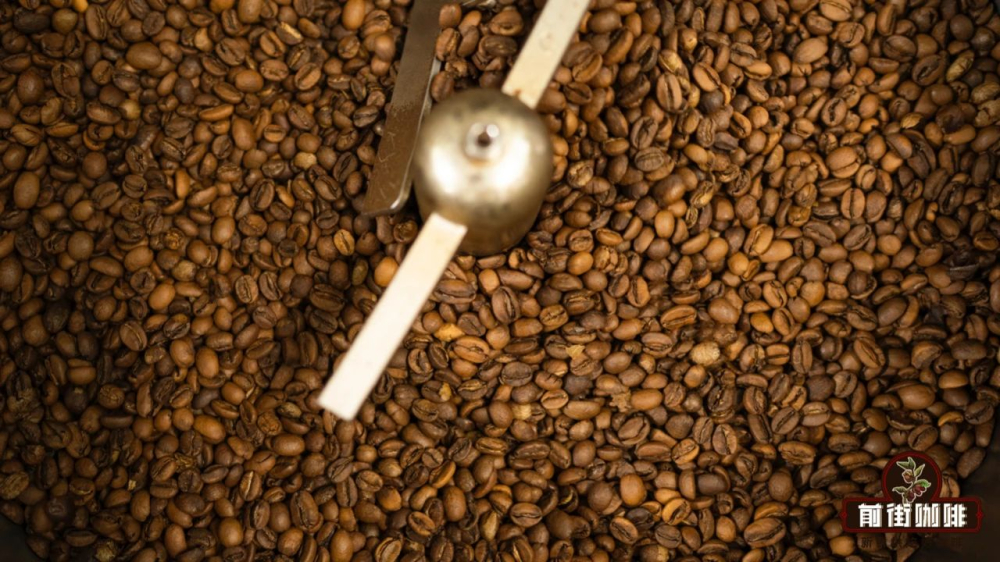
The coffee cherries from Queen Estate are still entirely hand-picked, so the quality of the coffee beans produced is also quite high. This Front Street Brazil Queen Estate bean uses the semi-washed processing method. Because Brazil's local climate is relatively dry, it uniquely developed a semi-washed method with local characteristics to process green coffee beans. Semi-washing can control the degree of fermentation of mucilage-covered beans after removing the skin and pulp. This method does not have the "tank fermentation, clean water rinsing" steps of the tank processing method. Without this fermentation step, the flavor of the coffee beans is completely different.
According to Front Street's understanding, Brazil's coffee grading method is different from Kenya's classification by bean size. Of course, because Brazil's elevation is low, it is also not suitable to grade by altitude like Colombia. Brazil classifies coffee bean grades according to four factors: bean size, defect rate, cupping score, and flavor.
For more specialty coffee beans, please add the private WeChat Front Street Coffee, WeChat ID: kaixinguoguo0925
The above content is compiled by CoffeeHunters, a coffee news website.


