







How Coffee Processing and Plot Separation Define the Esmeralda Geisha Grades
Hacienda La Esmeralda splits its Geisha into three grades defined by altitude and plot attribution. Red Label comes from plots between 1,600 and 1,800 meters with clear plot identity. Green Label sits in the same altitude band but is blended from several plots, while Blue Label is grown lower, between 1,400 and 1,500 meters.
The grading logic helps buyers match a lot to its origin and price. Coffee processing and plot separation determine whether a bean stays a single-plot Red Label or becomes part of a Green Label blend, and Blue Label offers the entry point to the estate's Geisha. The 2020 new-crop Blue Label is a recent example of that lower-altitude tier.
Panama's Hacienda Esmeralda, with its refined Geisha grading system, has become a model for many coffee estates to learn from. This article will systematically sort out the core differences among Esmeralda's three Geisha grades—Red Label, Green Label, and Blue Label—covering planting altitude, plot information, and blending patterns, while also providing an in-depth introduction to the estate's history, plot divisions, roasting suggestions, and brewing parameters. Front Street Coffee recently purchased the 2020 new-crop Blue Label Geisha, and by combining cupping performance of the Red Label and Green Label, we will guide you through a comprehensive understanding of the unique flavors and purchasing points of these three grades.
For more specialty coffee knowledge, please follow our WeChat public account: Front Street Coffee
When it comes to Geisha, one cannot help but mention the Geisha series from Panama's Hacienda Esmeralda. Front Street Coffee has just received a batch of the 2020 new-crop Esmeralda Blue Label Geisha. Esmeralda's approach to Geisha grading has long been regarded by many estates as a benchmark—it divides just the Geisha variety alone into three grades, each with different cupping flavors. Many friends often cannot tell these three grades apart. Front Street Coffee believes that as long as you sort out the logic behind Hacienda Esmeralda's grading, you will no longer confuse them. To put it simply, the core differences among Red Label, Green Label, and Blue Label Geisha lie in planting altitude and whether blending is used: those grown between 1,600 and 1,800 meters with a clear plot attribution are Red Label Geisha; those in the same altitude range as Red Label but blended from beans of different plots are Green Label Geisha; and those produced at the relatively lower altitude range of 1,400 to 1,500 meters are Blue Label Geisha.
Panama's Hacienda Esmeralda Panama is located in Central America, connecting North America and South America, and bordering Costa Rica and Colombia. Panama's coffee industry can be said to have been born with a silver spoon in its mouth from the very beginning.
Everyone knows that the Panama Canal was built by the United States, and after completion it was once exclusively managed by the U.S. Because of the canal's construction, a large number of American elites moved south at the end of the twentieth century—partly for work and partly to seek business opportunities. Hacienda Esmeralda was a product of that era. In 1964, American banker Rudolph Peterson retired and moved to Panama, buying Hacienda Esmeralda in Boquete, initially focusing on dairy operations. Later, his son Price gave up his medical career to help his father manage the farm. In 1987, they introduced two coffee varieties, Caturra and Catuai, and in 1994 built a wet mill, thereby gaining their own coffee processing capability. In 1996, they also bought the nearby Hacienda Jaramillo, which had superior geographical conditions and original coffee varieties with outstanding flavor, and merged it into Hacienda Esmeralda.
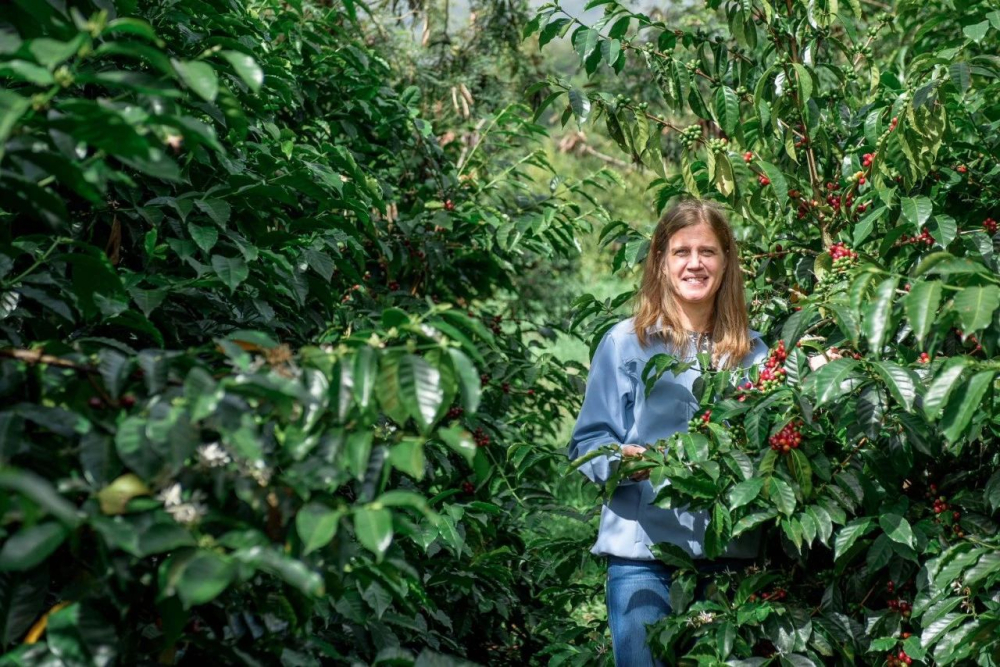
The reason Hacienda Jaramillo was favored by the Petersons was precisely that the original coffee beans in the estate carried a pleasant orange aroma and floral-fruity notes, completely different from the traditional flavor of Panamanian coffee. After cupping different areas of the estate, they discovered that the aroma came from a patch of unidentified coffee trees growing at the estate's highest point. Because of its low yield, the previous owner had only used it as a windbreak, but the Petersons uncovered it and decided to plant and cultivate the coffee trees in that area separately. After winning the 2004 Panama Best of Panama (BOP) competition, this bean performed astonishingly all the way, and experts later identified it as the Ethiopian Geisha variety. Afterward, the Peterson family devoted most of their energy to infrastructure construction to support better batch separation and refined processing.
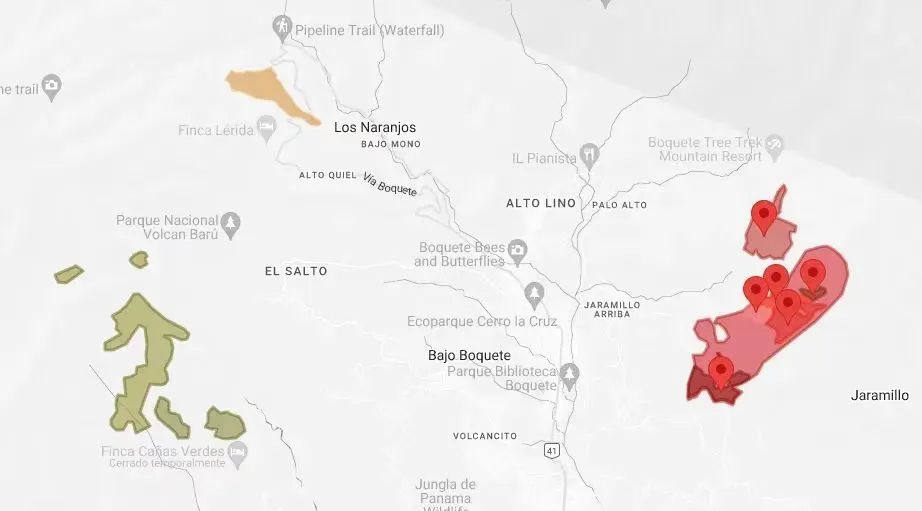
Hacienda Esmeralda's Plot Divisions Hacienda Esmeralda is located in Panama's Boquete production area, an important coffee region in Panama where many well-known estates originate, such as Hacienda Elida and Hacienda Kotowa. Hacienda Esmeralda is extremely meticulous in dividing its Geisha plots, mainly into three major plots: Jaramillo, Cañas Verdes, and El Velo. Each plot is further subdivided into smaller plots. High-quality Geisha mainly comes from the two plots Jaramillo and Cañas Verdes.
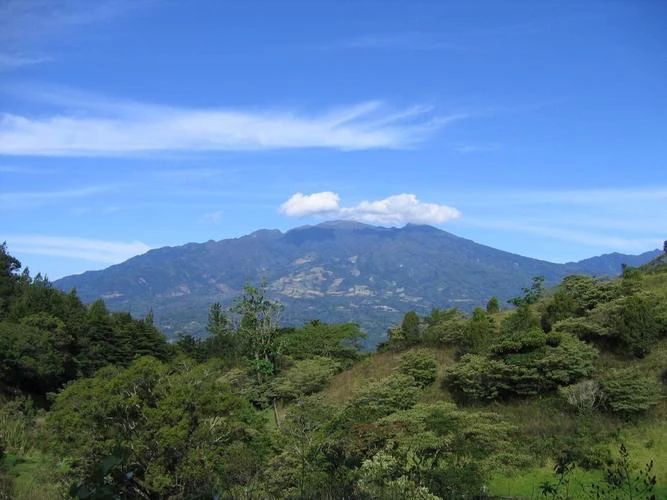
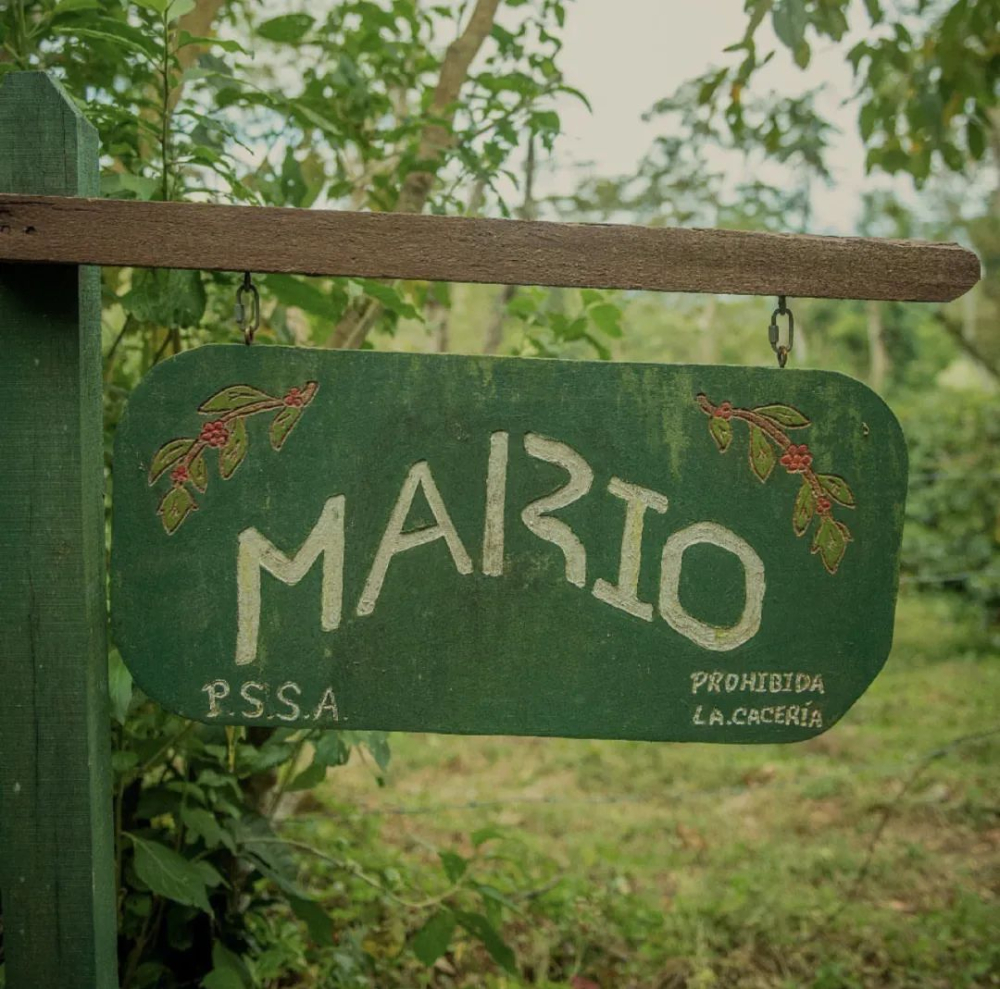
Jaramillo has annual rainfall of 4,000 ml, average daytime temperature of 19–25°C, average nighttime temperature of 11–15°C, and average altitude of 1,600–1,700 m. The Jaramillo plot is subdivided into 5 small plots: Mario, Noria, Reina, Bosque, and Buenos Aires. Cañas Verdes has annual rainfall of 3,500 ml, average daytime temperature of 16–23°C, average nighttime temperature of 10–15°C, and average altitude of 1,600–1,800 m. Cañas Verdes includes 9 small plots in total: Lino, Coronado, Fundador, Leon, Montaña, Trapiche, Chinta, Cabaña, and Tumaco. El Velo is the most recently purchased plot of Hacienda Esmeralda, with an average altitude of 1,700–1,900 m. In addition to Geisha and Catuai, this plot also has a small number of other introduced varieties, such as Laurina, Pacamara, Mocha, and SL28. El Velo is divided into 7 small plots in total: Guabo, Porton, Durazno, Higueren, Higo, Buena Vista, and Águila.
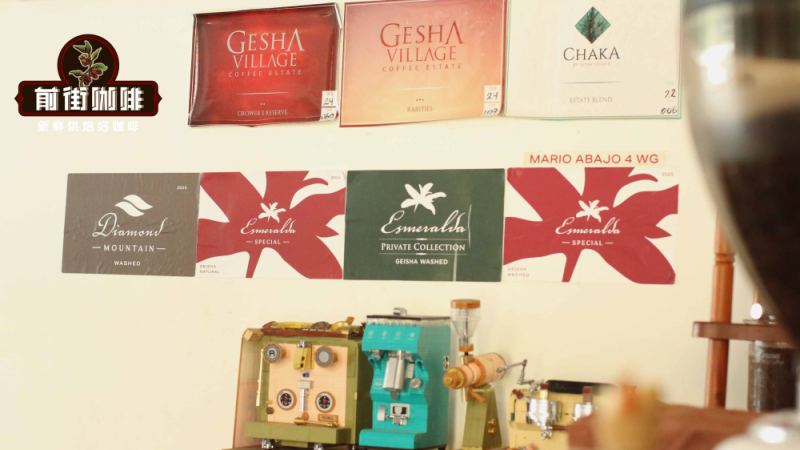
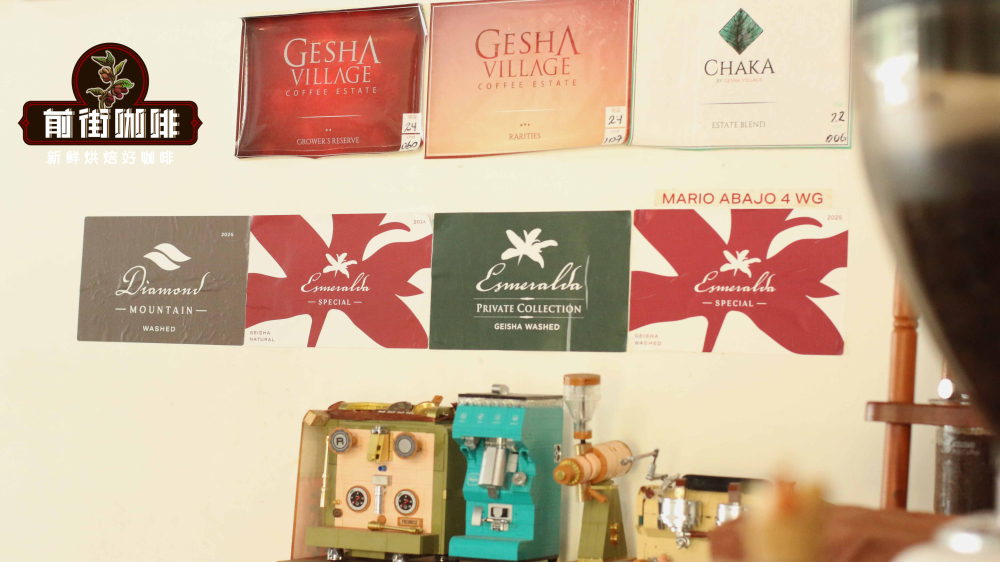
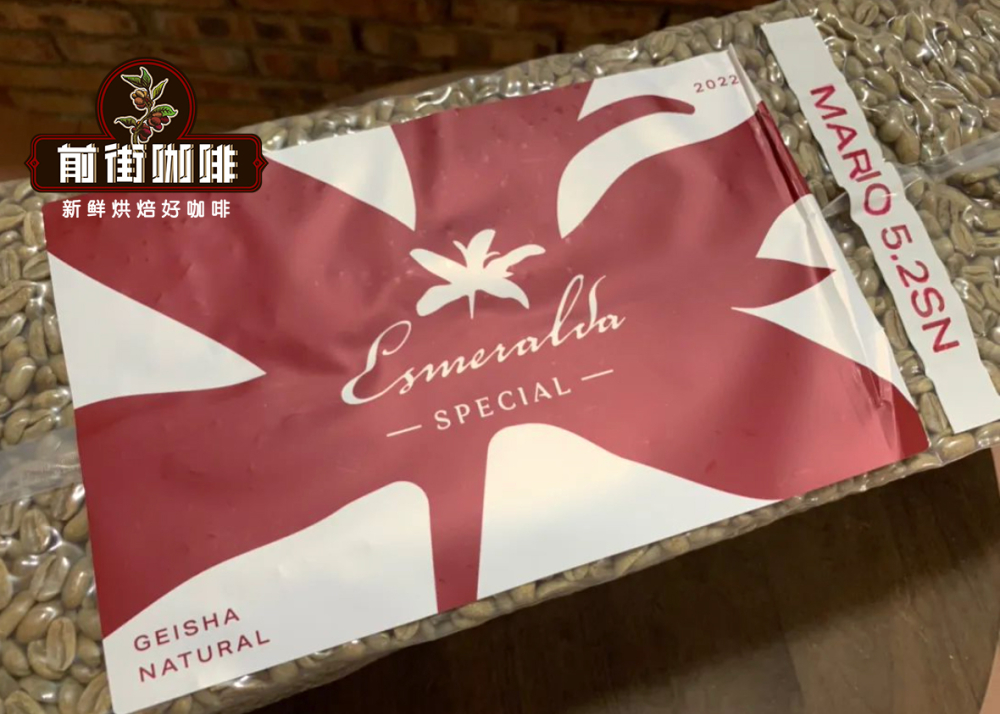
Geisha Red Label, Green Label, and Blue Label Hacienda Esmeralda's marketing strategy differs from other estates. Based on cupping performance as well as planted variety and plot, it is divided into five major brands. Under the Geisha variety there are three brands: Esmeralda Special, Private Collection, and Geisha 1500. Under the Catuai variety there are two brands: Diamond Mountain grows and Palmyra.
Red Label Geisha The Geisha produced under Esmeralda Special is what everyone commonly calls Red Label. It is made from Geisha beans grown at an altitude of 1,600–1,800 meters, scoring above 90 in cupping, and originating from the two production areas Jaramillo and Cañas Verdes.
In Hacienda Esmeralda's own independent auction, only the Geisha lots put up for auction from the divided plots are auction Red Label, and the prices are extremely high. Front Street Coffee often encounters customers asking whether the Red Label in the shop is auction Red Label. As mentioned earlier, auction prices are high and quantities are scarce, so if a 75-yuan cup of Red Label in the shop were auction level, that would truly be a treasure find. That said, the Red Label circulating on the market is actually Geisha selected from the same plot that did not participate in the auction and then entered the market. The variety quality is consistent; only the selling price differs. This grade of Geisha uses natural or washed processing, and its flavor carries special and bright floral aromas and citrus notes.
Green Label Geisha Private Collection, commonly known as Green Label, is not an independent competition lot. It is a Geisha variety that does not participate in the auction but still has excellent quality. It is made from micro-lot blends grown at an altitude of 1,600–1,800 meters and originating from different plots such as Jaramillo and Cañas Verdes.
Because it uses a blending model, no detailed plot labeling is provided. Front Street Coffee once found in a certain batch that the Green Label and Red Label had a very high flavor similarity, but this performance cannot be guaranteed every time, and the next production may differ again. Although Green Label is not as high-grade as Red Label, it still carries the classic flavor of Geisha: floral aroma, fruity notes, citrus acidity, and a rich, juicy mouthfeel. Green Label Geisha is likewise available in washed or natural processing.
Blue Label Geisha The Geisha 1500 brand is the commonly seen Blue Label Geisha. It is made from blended beans grown at an altitude of 1,400–1,500 meters and originating from three different plots: Jaramillo, Cañas Verdes, and El Velo. Its flavor has faint floral notes, fruity acidity, and sweetness, with a less rich mouthfeel. Blue Label Geisha previously was only available in washed processing, but in 2020 a naturally processed coffee bean was added.
Recently, Front Street Coffee purchased 2020-crop Blue Label green beans. In order to confirm whether the flavor differed from previous batches, Front Street Coffee carried out multiple roasting adjustments and cupping as well as pour-over tests.
Taking [Front Street Coffee Esmeralda Red Label, Green Label, and Blue Label] as an example
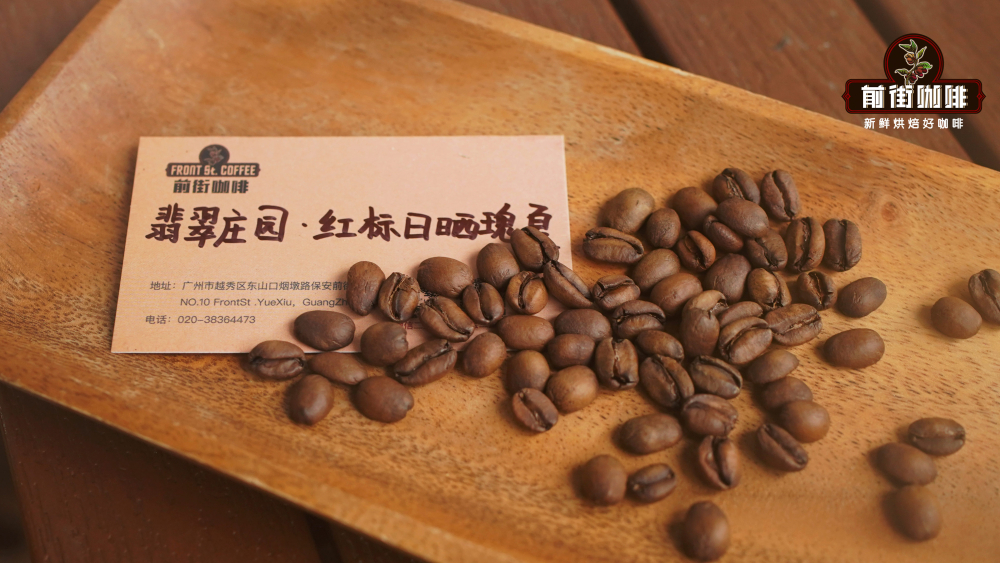
Roasting Suggestions Hacienda Esmeralda Geisha has a plump shape, with a thick and relatively long bean body and slightly pointed ends. In order to highlight its floral-fruity profile and bright acidity, Front Street Coffee uses a light roast. However, note that even though they are all Geisha varieties, Front Street Coffee's roasting parameters for Red Label, Green Label, and Blue Label are all different. This requires a roaster's accumulated experience over time to judge the uniqueness of each bean.
Front Street Coffee Panama Hacienda Esmeralda Red Label Geisha Coffee Bean Roast Curve
Front Street Coffee Panama Hacienda Esmeralda Green Label Geisha Coffee Bean Roast Curve
Front Street Coffee Panama Hacienda Esmeralda Blue Label Geisha Coffee Bean Roast Curve
Brewing Suggestions The brewing parameters recommended by Front Street Coffee are: Hario V60 dripper, 90°C water temperature, 15 g coffee dose, 1:15 coffee-to-water ratio, grind size like fine granulated sugar (80% passing through a Chinese standard No. 20 sieve). Here Front Street Coffee should mention one point: why sieve before determining grind size? This is actually the grinding recommendation provided by the Specialty Coffee Association of America (SCA) for pour-over coffee. Through extensive verification, Front Street Coffee has found that brewing with different grind sizes produces clearly different results, and the grind size for each coffee bean will differ somewhat—this is the significance of sieving. If you do not have a sieve at home, Front Street Coffee suggests judging by observing the flow rate: if the flow is too fast, the grind is too coarse; if the flow is too slow, the grind is too fine.
Brewing Technique Front Street Coffee uses staged extraction, also called three-stage brewing: use 30 g of water for a 30-second bloom, then pour in a small circular stream until 125 g for the first stage; when the water level is about to expose the coffee bed, continue pouring until 225 g and stop; when the water level is about to expose the coffee bed again, remove the dripper. The extraction time is 2'00" (starting from the beginning of the bloom).
Flavor Description [Red Label] Bright rose and citrus aromas, brown rice, berries, apricot, complex fruit, honey; a rich juice-like mouthfeel, layered flavor, and pronounced sweetness. [Green Label] On the palate, intense jasmine floral aroma and high sweetness, with citrus, berries, juice-like texture, cream, green tea, orange peel, and cantaloupe; the overall flavor is layered and rich, with a lingering finish of floral and citrus notes. [Blue Label] On the palate, soft acidity of lemon and grapefruit; as it cools slightly, oolong tea, honey, and sucrose sweetness return; the mouthfeel is relatively clean and bright.
For more specialty coffee beans, please add the private WeChat of Front Street Coffee: kaixinguoguo0925
The above content is compiled by CoffeeHunters, a coffee news website.


