







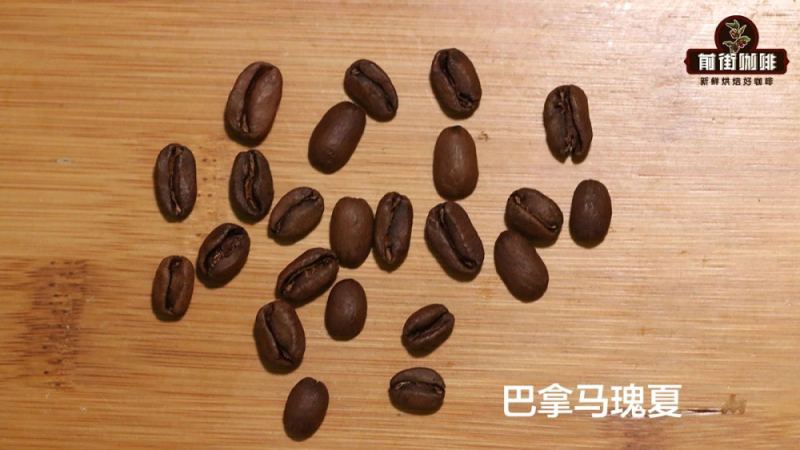
Where Do Geisha Coffee Beans Come From Before Panama?
Geisha coffee beans trace back to the wild forests of the Bench-Maji region in southwestern Ethiopia, near South Sudan. Gesha Village Coffee Estate was founded there by documentary filmmaker Adam Overton and photographer Rachel Samuel, who collected seed from wild geisha trees and built a 500-hectare farm that grows only geisha varieties.
In 2007 the couple met Willem Boot, owner of Finca La Mula and a BOP judge, while filming a coffee documentary for the Ethiopian government. He urged them to return to Ethiopia and search for the birthplace of geisha. They settled in Bench-Maji in 2011, divided the estate into 8 blocks by microclimate, and their sun-dried Red Label lots are known for sweetness.
Geisha coffee made Panama famous worldwide, but the origin of it all must be traced back to the primitive forests of Ethiopia. Located in the Bench-Maji region, Gesha Village Coffee Estate was founded by documentary filmmaker Adam Overton and his photographer wife Rachel Samuel. They collected seeds from wild Geisha forests and eventually built this 500-hectare farm that grows only Geisha varieties. The estate divides its land into 8 blocks, selecting the most suitable variety for each block based on microclimate differences. The Red Label Geisha produced here is sun-dried and stands out for its sweetness. In this article, Front Street Coffee will provide a detailed interpretation of the history of Gesha Village Coffee Estate, the differences among its three main varieties, and the roasting and brewing methods for Front Street Red Label Geisha.
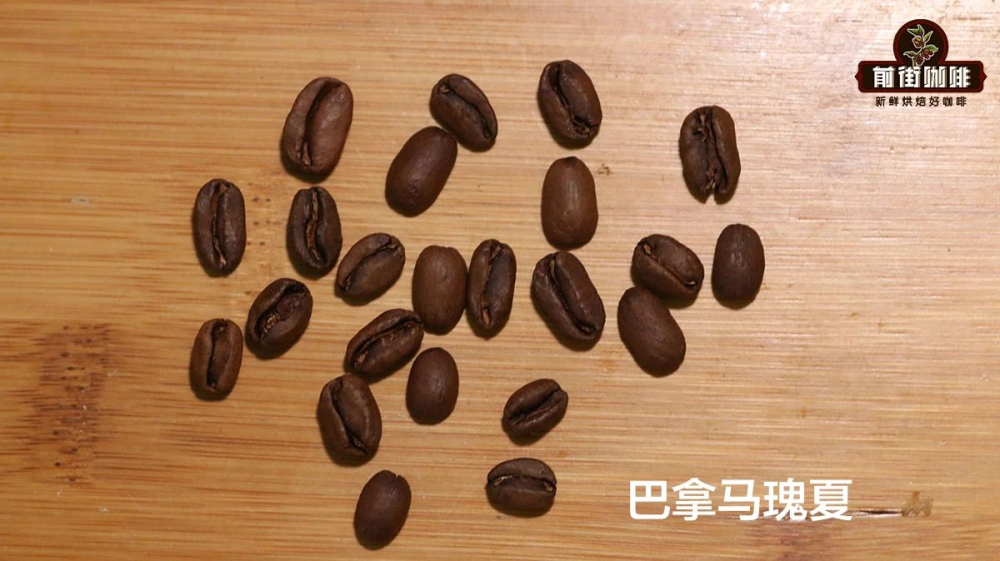
After Panamanian Geisha made a name for itself globally, many coffee enthusiasts developed a strong interest in this variety. Today, Front Street wants to talk about the owner of Gesha Village Coffee Estate, who plunged headlong into the coffee-growing business precisely because of his obsession with Geisha.
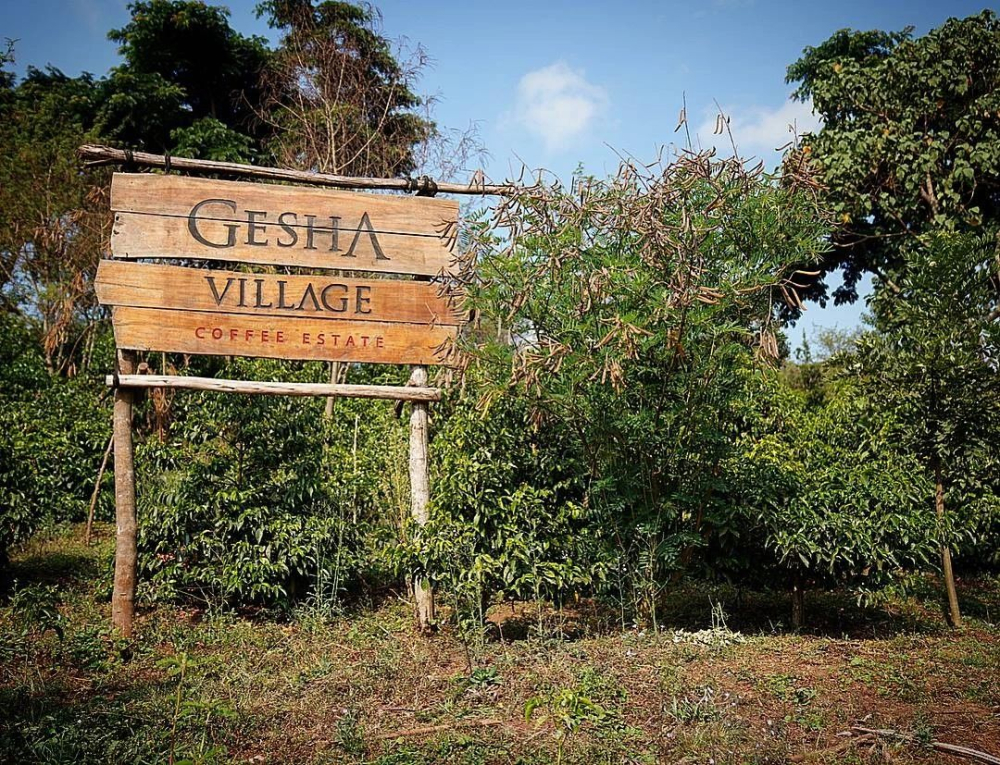
Gesha Village Coffee Estate
In 2007, documentary filmmaker Adam Overton and his photographer wife Rachel Samuel were filming a coffee-themed documentary for the Ethiopian government when they came into contact with the Gera coffee forest in the Bench-Maji region. This experience not only gave them a completely new understanding of the land of Ethiopia, but also planted the idea of creating their own coffee estate and brand.
In 2009, they had the good fortune to meet Willem Boot, the owner of Finca La Mula and a BOP judge. One suggestion from Willem Boot opened up a new way of thinking for the Overton couple: return to Ethiopia and search for the birthplace of Geisha.
In the end, they settled in Bench-Maji—an area in southwestern Ethiopia near South Sudan. Many places there are called Geisha Village and are also considered the areas most likely to contain original Geisha. When they first arrived in 2011, the estate's location was still a blank slate.
Adam followed Willem Boot to explore the forests around the estate. In a woodland magically shrouded by dense jungle, they discovered multiple wild tree species, and what excited them most was the presence of wild Geisha. Only later did they learn that this was the Gori Geisha forest—the very place where the Geisha variety was first discovered. They collected seeds from native Geisha trees, selected them, and planted them at Gesha Village, then decided to establish an estate there named Geisha Village Coffee Estate, located about 12 miles from the Gori Gesha forest and covering 475 hectares.
Gesha Village Coffee Estate is completely different from the vast majority of farms in Ethiopia. It is not a smallholder operation, but a 500-hectare large farm equipped with its own washing station and laboratory, located in the southwest near the Sudanese border. What is most special is that the entire farm grows only Geisha varieties, rather than the usual Ethiopian heirloom varieties whose specific varieties are difficult to determine. The estate divides the farm into 8 blocks and grows 3 main Geisha varieties, with all seeds collected from nearby forests.
The farm broke ground in October 2011 and welcomed its first harvest in 2015. Because of the enthusiastic response from all sides, with the help of Panamanian estate owner Willem Boot, the estate held its first international auction on May 31, 2017, offering 21 micro-lots, of which 19 were 120 kilograms and the remaining lots were slightly smaller. Bidders from Europe, North America, Asia, and Australia participated with far greater enthusiasm than expected, and the top lot finally sold for 85 USD per pound, setting a new record in the history of African coffee auctions.
The western part of Gesha Village Coffee Estate is relatively high in elevation, the SHEWA-JIBABU block is slightly higher in altitude, the southern side has a greater proportion of shade, and the northern side has longer sunlight hours. Among the eight blocks, the estate managers match the most suitable variety to each block based on microclimatic conditions such as altitude, soil, and shade, ensuring that each block can develop distinct flavor characteristics.
Front Street Geisha coffee usually uses the sun-dried processing method, because the estate owner believes that Ethiopia's hot and dry climate is very suitable for sun drying, and sun-dried coffee beans can display a very sweet flavor.
During processing, floating matter and impurities are first removed, then the coffee is sun-dried in thin layers on African raised beds covered with plastic sheeting. During the drying process on the sun-drying beds, it is sorted again to remove insect-damaged beans and greenish beans. The total drying time is 18 to 30 days.
Coffee varieties grown on the estate
Gesha Village has three varieties in total, each named after members of the expedition team when the coffee was discovered: Gesha1931, Gori Gesha, and Illubabor, which was provided by the Ethiopian Coffee Research Center.
Gesha1931 was confirmed by observing plant morphology, bean shape, size, and cupping performance, and it is the variety closest to the mother tree of Panamanian Geisha. The Gori Gesha heirloom variety, on the other hand, was collected by the estate owner during a personal expedition in 2011 from the wild Gori Geisha coffee forest 20 kilometers from the current Gesha Village farm, and no duplicate samples have been found elsewhere.
Here, Front Street wants to specifically clarify: the Geisha grown at Gesha Village was all separated from among the many native coffee varieties of Ethiopia. Although Panamanian Geisha can be traced back to Ethiopia, after decades of taking root in Panama, it has adapted to the local soil and climate, so the performance of Ethiopian Geisha differs considerably from that of Panamanian Geisha.
FrontStreet Coffee Roasting Analysis
Roaster Yangjia 800N (300g batch size)
When the drum temperature rose to 160°C, the beans were charged, the damper was adjusted to 3, and the gas was set to 130. The turning point appeared at 1'40". When the drum temperature reached 140°C, the damper was adjusted to 4 and the gas was raised to 150. When the drum temperature reached 148.1°C, the bean surface turned yellow, the grassy smell completely dissipated, and the coffee entered the dehydration stage. When the drum temperature reached 166°C, the gas was lowered to 120 and the damper remained unchanged; when the drum temperature reached 176°C, the gas was lowered to 90 and the damper still remained unchanged.
At 8'03", wrinkles and dark streaks appeared on the bean surface, and the toasted bread aroma clearly turned into coffee aroma, which can be regarded as the prelude to first crack. At this point, it is necessary to carefully catch the sound of the first crack. First crack began at 8'25"; the damper was adjusted to 5 (be very cautious when adjusting the gas, and do not reduce it so much that there is no cracking sound). After first crack, development lasted 1'45", and the beans were dropped at 197.5°C.
FrontStreet Coffee Brewing Recommendation
Front Street Geisha coffee has very distinctive characteristics and is also relatively expensive. If the flavors of the Geisha are not fully extracted, it would be a pity. Therefore, a dedicated brewing recipe can be developed specifically for Geisha.
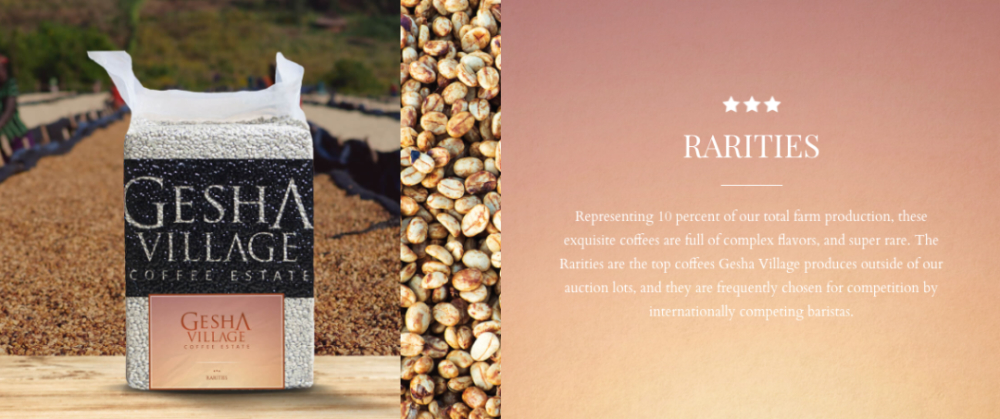
This brewing session uses Front Street Gesha Village Red Label Geisha coffee beans for the demonstration. Note here that Front Street Gesha Village Red Label should be distinguished from Front Street Panama Hacienda La Esmeralda Red Label. For the dose, Front Street still chooses 15g, paired with a small Hario V60 dripper. The grind size will be slightly coarser than Front Street's previous offerings, with a 78% pass rate on a No. 20 sieve, mainly because Geisha beans are relatively hard and tend to sink and clog the drainage holes.
The coffee-to-water ratio is adjusted accordingly to 1:16. On the one hand, more water is used to maintain the extraction yield; on the other hand, the coffee concentration is controlled between 1.15% and 1.25%. This concentration range allows the best flavors of the coffee to be experienced most fully. For water temperature, maintain 91 degrees Celsius.
The above content is compiled by CoffeeHunters, a coffee news website.


