







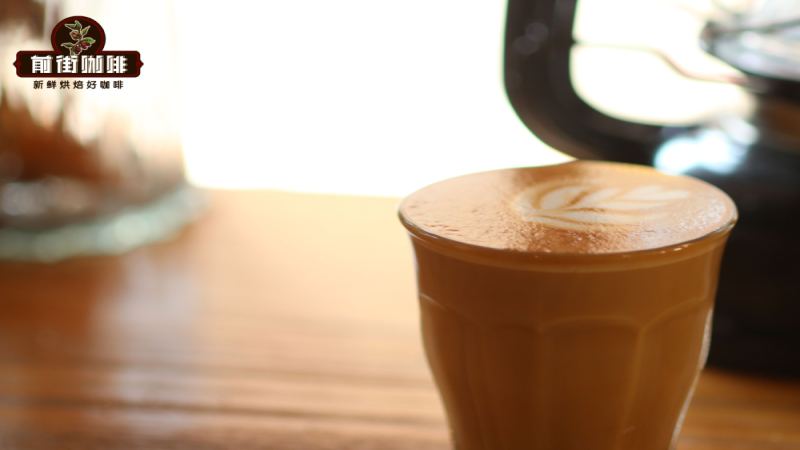
Why Is It Called Cappuccino and How Does It Differ from Flat White?
A flat white is a milk coffee with less milk, thinner foam, and a more prominent coffee flavor, made with either a double ristretto or a single espresso depending on the barista's home country. New Zealand baristas tend to pull a double ristretto, while Australian baristas usually use a single espresso. Cup size stays small, so the coffee still leads.
Foam thickness separates the three drinks. Cappuccino carries the thickest, densest milk foam, which is where the cappuccino name meaning comes from; latte sits in the middle with a large amount of milk; flat white has the thinnest foam, so it reads like coffee with milk added. Flat white has grown steadily through the specialty coffee wave.
Flat White has many translated names in China, such as Furui White, Little White Coffee, and Chuyi White, and there has always been much debate about its origin and preparation. Along with latte and cappuccino, it is a milk coffee, yet it has its own distinct characteristics in cup size, milk foam thickness, espresso base, and flavor expression. This article will start from the definition of Flat White and the controversy over its origin, sort out its differences from other milk coffees, analyze why it has continued to rise in popularity during the specialty coffee wave, and attach Front Street Coffee's specific preparation parameters and serving suggestions for Flat White and Piccolo Latte, to help coffee lovers make a cup of Flat White at home that highlights the flavor of the beans.

What exactly is Flat White?
"Flat white" is translated as Flat White in Chinese, and some people in China also call it Little White Coffee, Furui White, Chuyi White, or Aorui White. It is a coffee drink originating from Australia, although some believe its true birthplace is New Zealand.
Not only is the origin controversial, but there is also no unified standard for how to make Flat White. Overall, it is a milk coffee with less milk, thinner milk foam, and a more prominent coffee flavor.
In the choice of espresso base, New Zealand baristas are accustomed to using a double ristretto to make Flat White, while Australian baristas prefer a single espresso.
How is Flat White different from other milk coffees?
When talking about Flat White, it is always inevitably compared with latte and cappuccino. They are all milk coffees, so where exactly is the difference?
As mentioned above, Flat White is a drink that emphasizes coffee flavor; latte is a coffee with a large amount of milk; cappuccino is characterized by thick milk foam.
In terms of milk foam thickness, cappuccino is the thickest, latte is in the middle, and Flat White is the thinnest. Therefore, Flat White feels more like a cup of coffee with milk added; latte is like a cup of milk with coffee flavor; cappuccino is like a cup of dense, velvety milk foam coffee.
Why has Flat White become popular?
Think about it: why has Flat White gained such great popularity in China and around the world? Nowadays, it can be seen on the menu of almost every cafe.
As mentioned earlier, compared with latte and cappuccino, Flat White has thinner milk foam, less milk, and a more prominent coffee flavor, which places higher demands on the quality of the coffee beans.
If a coffee bean of good quality is chosen as the base for Flat White, the coffee flavor of the final product will be more distinct.
Conversely, if beans of poor quality are used as the base, Flat White can also easily expose the defects of the beans themselves.
For this reason, Flat White can better reflect the quality of coffee beans than latte, and is also more suitable for showing the flavor characteristics of the region where the beans come from. This is consistent with the current popular idea of SOE (single-origin espresso) and fits the trend of the third wave of coffee, which emphasizes origin traceability.
Of course, in the end, as long as the quality of the beans and milk is good enough, whether it is made into Flat White, latte, or cappuccino, it will be a delicious cup of coffee.
1
Since everyone has at least some experience with these three milk coffees, Front Street Coffee will briefly talk about their origins.
Modern latte and cappuccino both come from Italy, and are the most common and popular milk coffees in Italian coffee. Latte is a transliteration of the Italian word "latte," which originally means "milk." Latte coffee is milk coffee, a drink combining espresso and milk.
Cappuccino comes from the transliteration of "Cappuccino." "Capuchin" refers to the small white hood on the robe of the Franciscan Order. Because the layer of white milk foam on the surface of the coffee resembles the friar's hood, cappuccino got its name.
The original name of Flat White, "Flat White," is more widely known. Furui White, Aorui White, Flat White Coffee, and Little White Coffee are all different translations of Flat White.
Flat White originated in Oceania (whether it was specifically Australia or New Zealand is still disputed), and it can be seen as the Australian version of latte.
2
In order to distinguish latte, cappuccino, and Flat White, Front Street Coffee plans to compare them in terms of ingredient composition, cup size, milk foam thickness, and flavor and mouthfeel.
First, cup size. Front Street Coffee's serving standards are: latte uses a 300ml wide-mouth ceramic cup, cappuccino uses a 180ml narrow-mouth ceramic cup, and Flat White uses a 210ml glass cup.
Next, composition. Latte is 2 shots of espresso (40g) plus 260ml steamed milk and milk foam; cappuccino is 1 shot of espresso (20g) plus 160ml steamed milk and milk foam; Flat White is 2 shots of ristretto (30g) plus 180ml steamed milk and milk foam. Among these, ristretto is taken from the front and middle sections of the espresso extraction, giving it a richer and more intense flavor.
Milk foam thickness has always been an important feature distinguishing these three coffees.
Among the three, cappuccino has the thickest milk foam (about 1–1.5cm), and its most obvious sign is being "11 out of 10 full," with the milk foam rising above the rim of the cup in a hamburger-like dome;
Flat White has the thinnest milk foam (about 0.3cm). Because the milk foam is thin, the liquid surface is basically level with the rim of the cup, so it is also called "Flat White Coffee";
The milk foam thickness of latte is between the two (0.5cm), and it is very suitable for latte art. One of the reasons for choosing a wide-mouth cup is precisely to make it easier to create latte art patterns.
In terms of taste and mouthfeel, latte has the most milk, so the milky flavor is more prominent; Flat White uses ristretto plus less milk, so the rich aroma of coffee is more obvious; cappuccino is somewhere in between.
In terms of mouthfeel, cappuccino is the fullest, thanks to the smooth, velvety sensation brought by the fusion of fine, generous milk foam and coffee crema; next is Flat White, and finally latte.
One more point: only latte can be offered as both an iced and a hot drink. Traditional cappuccino and Flat White are not served iced.
3
Piccolo Latte and Flat White are both rich hot milk coffees, and they often appear on everyone's "must-try list." What exactly is the difference between the two?
What is Piccolo Latte?
The original name of Piccolo Latte is "piccolo latte." In Italian, "piccolo" means small, and "latte" means milk. In English, "piccolo" means piccolo, and "latte" refers to milk coffee latte. So the original meaning of Piccolo Latte can be understood as small latte. How small? Traditional piccolo coffee is made with 15–20 milliliters of espresso plus steamed milk, and today people are used to pouring it into a 100ml specialty cup to drink.
How to make Flat White?
When making the Flat White base, Front Street Coffee uses the Sunflower Warm Sun blend beans to extract a double ristretto, with the parameters being 20g coffee grounds extracting 35g coffee liquid, with an extraction time of 26 seconds.
(Front Street Coffee reminds you here that the extraction plan for each coffee bean will have slight differences, and the final plan needs to be adjusted according to the actual situation.)
Milk steaming part:
The milk foam thickness of Flat White is about 1cm. Besides being rich, its soul also lies in the silky smoothness of the milk foam when it enters the mouth.
Steam the milk to 55°C–65°C. If the temperature is too high, it will not only destroy the nutritional value of the milk but also bring a grainy texture.
Front Street Coffee uses a milk-to-coffee ratio of 1:5 for Flat White, so a 200ml cup is chosen as the serving vessel.
Finally, evenly mix the steamed milk with the extracted espresso liquid.

How to make Piccolo Latte?
The traditional serving size of Piccolo Latte is 3–4 ounces. When Sasa, the 2015 World Coffee Championship winner, made piccolo coffee, he used a 3-ounce cup and combined it at a milk-to-coffee ratio of 1:2,
then topped it with a layer of light milk foam. A reasonable ratio of coffee to milk allows the coffee flavor to come through without being too strong.
The base for making Piccolo Latte also uses the Sunflower Warm Sun blend beans, extracting a single espresso.
Front Street Coffee's extraction parameters are 12g coffee grounds extracting 30g coffee liquid, with an extraction time of 23 seconds. (This also needs to be adjusted according to the actual situation.)
Milk steaming part:
Front Street Coffee uses a 350ml milk pitcher and pours in 100ml of milk for steaming (too little milk makes it difficult to steam). The milk foam of Piccolo Latte is thinner than that of Flat White, about 0.5cm thick, and the steaming temperature is also controlled between 55°C and 65°C.
This time, Front Street Coffee uses a 100ml cup to make Piccolo Latte: after steaming the milk, first pour in 60ml to fully blend with the coffee liquid, then top with a layer of light milk foam, or pour in the milk, blend, and then create latte art.
For professional coffee knowledge exchange and more coffee bean information, please follow Coffee Workshop (WeChat public account: cafe_style)
For more specialty coffee beans, please add the private WeChat of Front Street Coffee (FrontStreet Coffee), WeChat ID: kaixinguoguo0925
The above content is compiled by CoffeeHunters, a coffee news website.


