







Why is Golden Mandheling graded and sorted so strictly?
Mandheling is not a region, port or variety name but a mistransliteration of the Mandailing people, a story that begins with a Japanese soldier in a wartime cafe. Golden Mandheling from PWN represents the top grade: 18 mesh and above, G1, fewer than three defective beans in a 300-gram sample, one mechanical and three hand sorts.
The wet-hulling process behind Mandheling coffee shapes its herbal and spicy notes. Sumatra's growing areas around Lake Tawar and Lake Toba supply the cherries, and the article adds pour-over parameters and a three-stage pouring method for brewing a clean, rich cup.
The names for Mandheling are all over the place—Lintong, Ding Shang, Tiger, Horse Face, Emerald... What exactly is the difference? This article starts from the origin of the name Mandheling, tells the story of Japanese soldiers and PWN (Pawani Company) during World War II, and analyzes the coffee-growing layout around Lake Tawar and Lake Toba in Sumatra's two major producing regions, Aceh and North Sumatra. It focuses on why PWN Golden Mandheling has become the top representative: 18 mesh and above, G1 grade, fewer than 3 defective beans in a 300-gram sample, 1 mechanical sorting plus 3 rounds of hand sorting, and the story behind its exclusive registered trademark. It also explains how the wet-hulling process shapes Mandheling's signature herbal and spicy notes, and includes Front Street's complete pour-over parameters and three-stage pouring approach for PWN Golden Mandheling to help coffee lovers brew a clean, rich classic flavor.
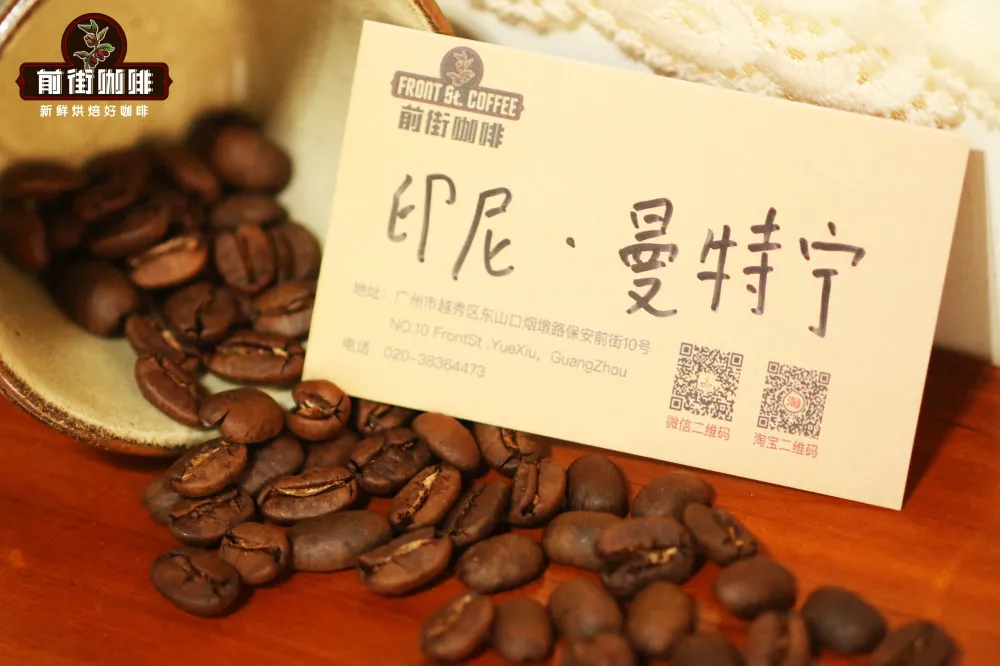
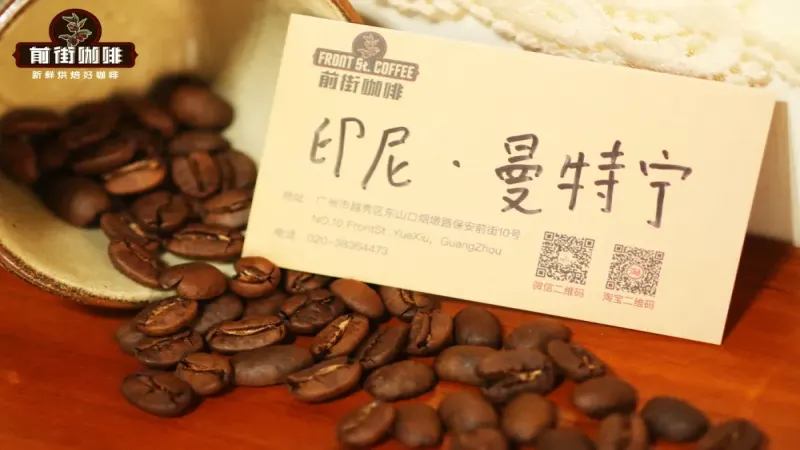
In the coffee market, the name Mandheling comes in a dazzling variety—Lintong Mandheling, Front Street PWN Golden Mandheling, Ding Shang Mandheling, Tiger Mandheling, Horse Face Mandheling, Emerald Mandheling... a bewildering array that often leaves consumers completely confused. But according to Front Street's research, Mandheling is neither a producing region name, nor a place name or port name, nor even a coffee variety name; it is actually a mistransliteration of the name of Indonesia's Mandailing people. There are already many online introductions about the origin of the name "Mandheling," and considering that newcomers may not know it yet, Front Street will tell the story once more here.
During World War II, a Japanese soldier happened to drink a cup of rich, aromatic coffee in a local café. The soldier was deeply impressed, so he asked the shop owner the name of the coffee. However, because of the language barrier, the owner mistakenly thought the soldier was asking about his own ethnicity, so he answered "Mandailing," the Mandailing people. After the war, the Japanese soldier entrusted this Indonesian middleman to ship 15 tons of "Mandheling coffee" to Japan, and unexpectedly it became hugely popular. Because of this, it can be said that this middleman made Mandheling, and Mandheling also made him the founder of what is now the renowned PWN (N.V. Pawani Medan company).
In fact, Mandheling coffee mostly refers to higher-quality Arabica beans produced on the Indonesian island of Sumatra. Sumatra is located in western Indonesia and has eight provinces in total. The high-quality coffee-growing areas are all in the north of the island, namely the northernmost Aceh province and the neighboring North Sumatra province (Sumatera Utara). Each of the two provinces has a relatively large lake: in Aceh it is Lake Tawar, and in North Sumatra it is Lake Toba. The important coffee-growing areas in the provinces are also all around these two lakes.
Sumatra has a very complex system locally for distinguishing the Mandheling coffee it produces. The previously mentioned Lintong Mandheling, Tiger Mandheling, Golden Mandheling, Aged Mandheling... are precisely Mandheling varieties named and distinguished according to different regions, green bean traders, and processing methods. On Front Street's bean list, one regular "Lintong Mandheling" and one top-tier "Front Street PWN Golden Mandheling" are kept year-round for everyone to choose from.
Front Street Coffee: Front Street PWN Golden Mandheling coffee beans
Region: Sumatra, Indonesia
Grade: G1, triple hand-sorted
Altitude: 1100m-1600m
Variety: Ateng
Processing method: Wet-hulled
Flavor: Spices, dark chocolate, nuts, caramel, cedar
PWN mainly purchases high-quality local batches of Mandheling green beans and produces only specialty-grade Mandheling. "Golden Mandheling" is its signature product. At the time, the Japanese took a liking to Sumatran coffee and bought it long term, gradually discovering that the local beans often varied greatly in quality. Therefore, they paid more attention to Mandheling production and began setting strict standards and methods for screening defects, starting with values such as bean density, specification, shape, and color. The Mandheling produced needed multiple rounds of hand sorting to remove defects, ensuring the beans were complete, uniform, large, and translucent, while also reducing Mandheling's earthy and grassy notes. It is said that under the sun they looked golden and radiant, which is how the name "Golden Mandheling" came about.
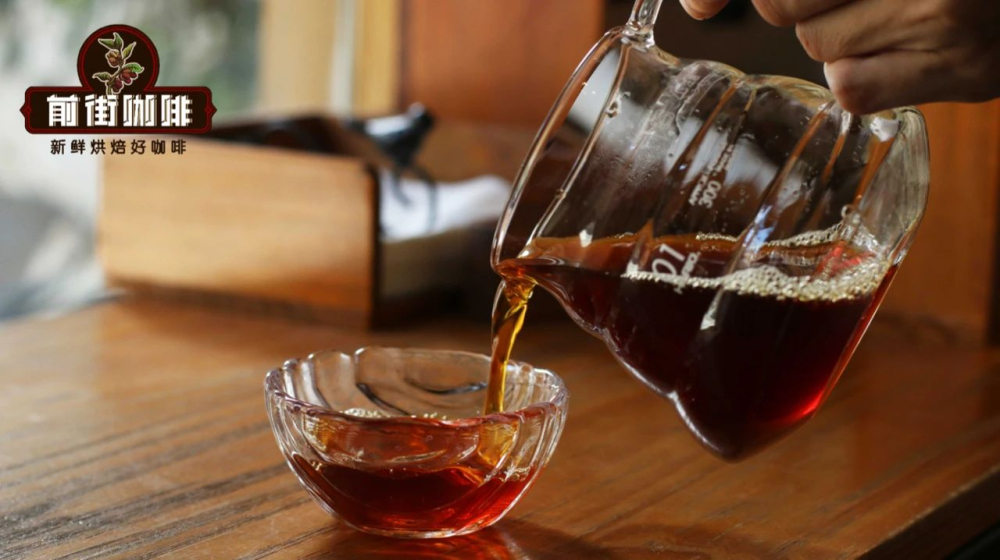
PWN purchases Mandheling green beans of 18 mesh and above, at G1 grade with fewer than 3 defective beans in a 300g sample, which is the highest grade for Indonesian green beans. Afterward, defects are removed strictly according to standards through 1 mechanical sorting plus 3 rounds of hand sorting, ensuring the color, shape, and size of the Mandheling coffee beans are uniform. Therefore, compared with other regular Mandheling coffees, Front Street PWN Golden Mandheling tastes cleaner and more transparent, with more pronounced body and sweetness.
As the specialty Mandheling coffee market grew larger, PWN also realized the importance of trademarks and registered the English name "Golden Mandheling" as an exclusive trademark one step ahead of the Japanese. Therefore, only Golden Mandheling produced by PWN can be considered真正的 "Golden Mandheling," while what the Japanese produce can only be renamed "Ding Shang Mandheling." The Golden Mandheling obtained by Front Street is of course the genuine product from PWN. You can identify authentic Golden Mandheling by the green bean burlap sack bearing the PWN logo and a certificate of origin signed by PWN. Front Street displays both of these identifiers in its Dongshankou store.
Friends who often drink Mandheling should know about Sumatra's wet-hulling method. Before the final drying stage, wet-hulled beans are poured into a huller, where greater friction is used to tear open the semi-dry parchment layer clinging tightly to the green beans. Through the friction and agitation, the green beans are easily crushed or bruised. The "naked beans" that have lost their parchment layer dry very quickly, while also being directly exposed to a humid environment and affected by the growth of various microorganisms.
Although wet hulling indeed forms Mandheling's unique herbal, woody, and spicy notes, it also causes a higher defect rate in green beans, and deep roasting can perfectly mask this flaw. In addition, Mandheling's fame mainly came from the Japanese discovering it early on, roasting it according to their taste preferences, and most of all favoring Japanese-style dark roast. This is why most Mandheling coffee beans are roasted so dark.
For this reason, Front Street hopes everyone can taste the classic Mandheling flavor, so the two Mandheling coffees Front Street sells daily are both medium-dark roasted, including the Lintong region Mandheling everyday beans and the Aceh region Front Street PWN Golden Mandheling coffee. However, to brew the best aroma from Mandheling coffee still requires some technique. Here Front Street will use the store's most popular PWN Golden Mandheling coffee beans as an example to talk about the extraction approach!
For coffees with a rich mouthfeel such as Indonesian Mandheling coffee, Brazil Queen's Estate coffee, and Jamaican Blue Mountain coffee, Front Street Coffee baristas prefer to use the KONO dripper for brewing. Compared with the V60, the KONO dripper has a smooth curved surface. This design is actually meant to ensure the filter paper clings tightly to the dripper wall after wetting, while the flow-guiding ribs, only one quarter the height of the dripper, restrict airflow upward so water can only pass through the bottom into the server. This increases the time for coffee grounds to absorb water, allowing the coffee bed and hot water to form an immersion extraction, making the coffee taste rounder, richer, and more concentrated.
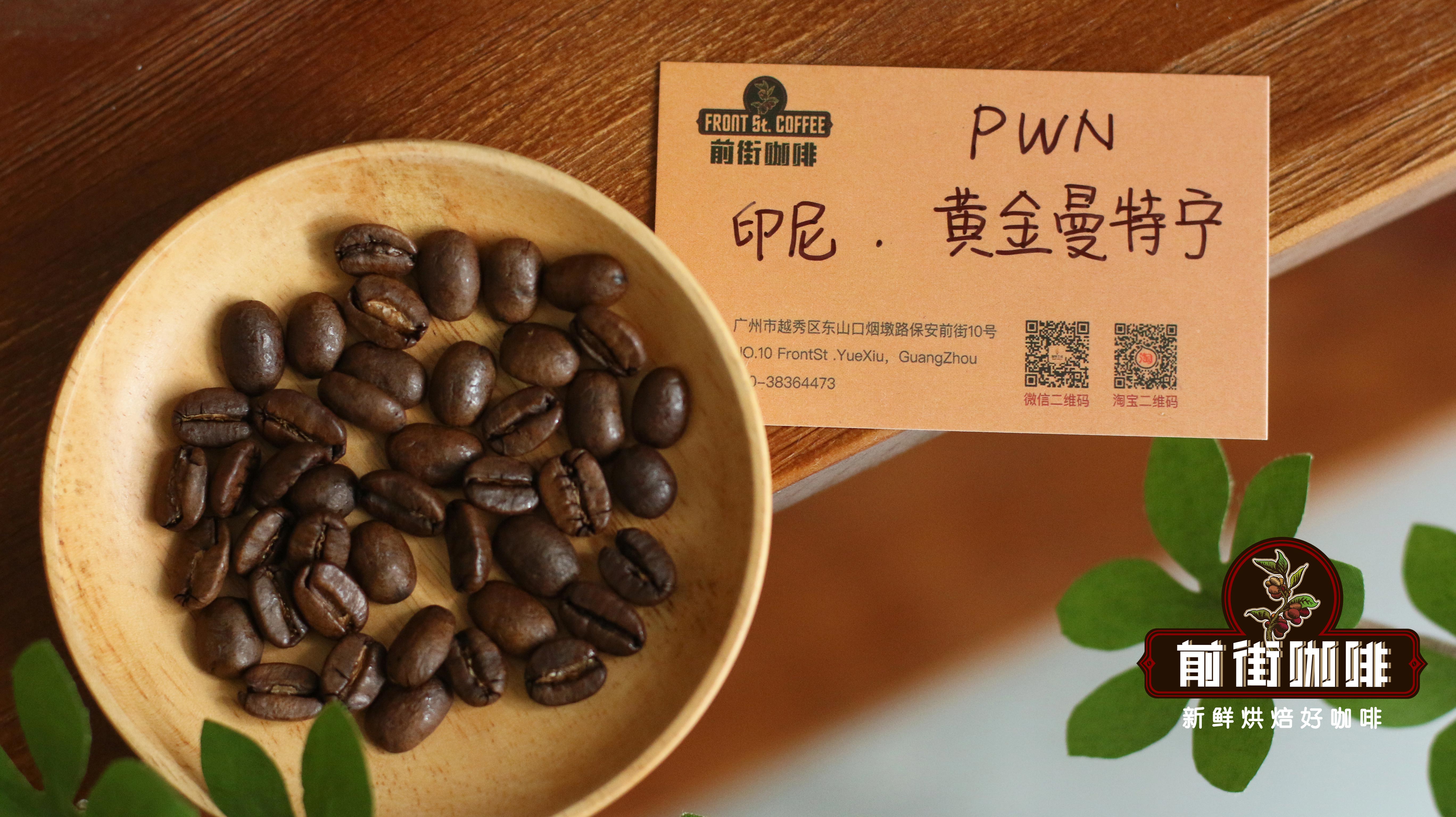
Medium-dark roasted coffee beans greatly change the internal structure of the beans, making them porous, and once ground into coffee grounds they absorb water more strongly. If the brewing parameters are not adjusted well, the coffee can easily over-extract and become bitter. To get enough aroma without over-extraction, the extraction rate needs to be lowered. Front Street uses a lower water temperature and a coarse-sugar grind size to reduce the release of bitter large molecules in the coffee.
Dripper: KONO
Water temperature: 87°C
Dose: 15 grams
Coffee-to-water ratio: 1:15
Grind size: coarse sugar ( 70% passing through China standard No. 20 sieve)
Pouring method: three-stage pouring
For the first stage, pour 30g of water to bloom for 30 seconds. Start timing as you pour, using a small stream at the center point and then spiraling outward. Be careful to wet the entire coffee bed.
After 30 seconds, begin pouring the second stage with a slightly larger but steady stream, adding 95g of water. The purpose is to raise the entire coffee bed. The stream should be poured vertically and evenly. At this point the scale shows 125g, and the pour is finished in about 55 seconds.
When the liquid level drops to halfway, begin using a small stream to pour the third stage in a small spiral, adding 100 grams. Try to keep the stream from spiraling too widely, as it can easily disturb the coffee bed and cause under-extraction. The final total poured amount is 225 grams, and the drip finishes in about 2 minutes. After removing the dripper, swirl the coffee liquid in the server to even it out and it is ready to taste.
Pour-over Front Street PWN Golden Mandheling coffee: A rich dark chocolate aroma, with roasted hazelnut, caramel, and melon flavors blending very well. There is an obvious spice note in the mouth, a rich and clean mouthfeel, and a long finish.
For professional coffee knowledge exchange and more coffee bean information, please follow Coffee Workshop (WeChat public account: cafe_style)
For more specialty coffee beans, please add the private WeChat of Front Street Coffee: qjcoffeex
The above content is compiled by CoffeeHunters, a coffee news website.


