







What are the core variables in specialty coffee brewing?
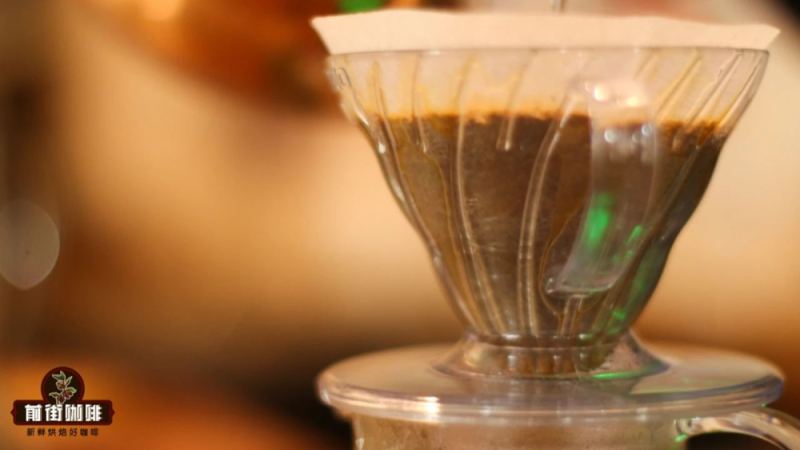
Pour-over brewing comes down to four variables: grind, water temperature, weight and time. Front Street treats extraction within the Golden Cup range as the baseline, then adjusts to taste. Blooming releases gas before the main pours, and the three-pour sequence moves the bed through wetting, dissolution and diffusion.
Front Street uses SCA standards as a reference point and revises them from its own brewing practice, since over-extraction above the Golden Cup range and under-extraction below it both flatten the cup. Equipment is simple, but feel and technique matter, so beginners are advised to hold the variables steady and change only one at a time.
Pour-over coffee, with its simple equipment and emphasis on hands-on technique, has been favored by coffee enthusiasts and lifestyle aficionados since the third wave of coffee. The key to an excellent cup of pour-over lies in precisely controlling four major variables: grind, water temperature, weight, and time. This article, starting from Front Street Coffee's conservative brewing philosophy, systematically covers the basic concepts of pour-over coffee, the differences in golden cup extraction standards across countries, the required equipment list, and detailed operational points on water temperature, grind size, coffee-to-water ratio, and brewing technique. It also provides an in-depth analysis of the principles of blooming and degassing, the three-pour steps, and the three stages of coffee extraction—wetting, dissolution, and diffusion—helping beginners establish a standardized operational framework, adjust flexibly on the basis of understanding the principles, and make good coffee with their own style.
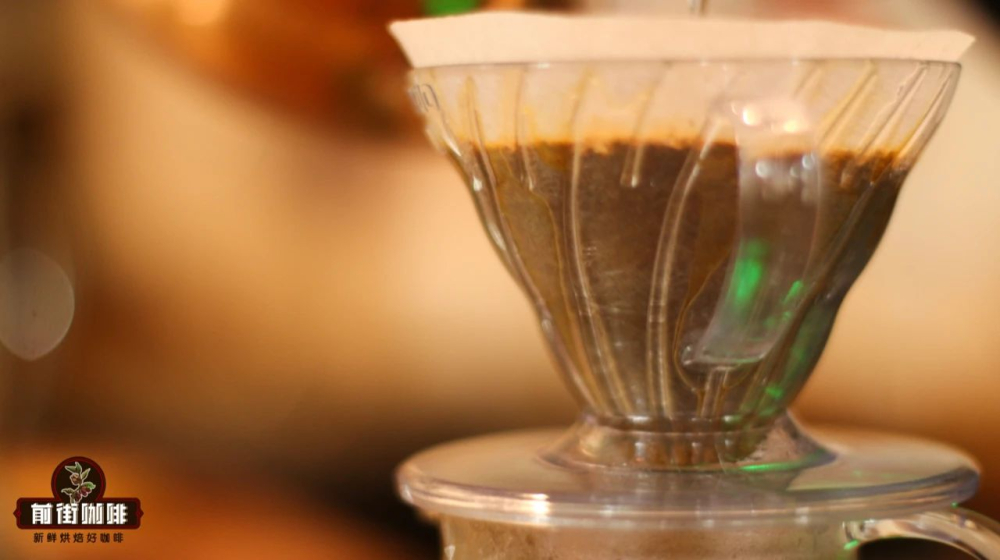
Since the rise of the third wave of coffee, pour-over coffee has gradually entered everyday life. This brewing method, simple in equipment yet highly demanding in feel and technique, is like a clear stream returning to authenticity; it developed and spread from Japan's coffee culture that pursues refinement, captivating countless coffee connoisseurs and lifestyle aficionados. What exactly is the charm of pour-over coffee? And what are the core elements of an excellent cup of pour-over?
Front Street Coffee advocates a steady brewing approach—completing full extraction under precise conditions of grind, temperature, weight, and time, thereby ensuring stable presentation of coffee flavor as the foundation. The precise parameters mentioned by Front Street Coffee refer to SCA standards as a reference, then revised in combination with its own practical experience. So-called over-extraction means the extraction yield exceeds the golden cup range; under-extraction means it falls below the golden cup requirement. This brewing system provides enthusiasts with a reference standard framework, on which everyone can flexibly fine-tune according to personal preference.
Q: What is the definition of pour-over coffee?
Front Street Coffee's answer:
Pour-over coffee refers to the process of placing appropriately ground coffee powder into a dripper with filter paper under one atmosphere of pressure, and the brewer pouring water at a suitable temperature and volume over the coffee powder with a steady pouring technique, thereby completing the extraction of coffee liquid. Because grind coarseness, water temperature, pouring method, and brewing duration all affect the extraction result of flavor, this is a brewing method that places relatively high demands on technique and coffee expertise.
Q: What does golden cup extraction refer to?
Front Street Coffee's answer:
Among golden cup extraction standards, the one by SCA (formed by the merger of SCAA and SCAE in 2017) is the most influential. In short, when making pour-over coffee, maintaining concentration between 1.15% and 1.45% and extraction yield within the range of 18% to 22% can be regarded as reaching the golden cup extraction standard.
The most widely known part of the golden cup extraction standards is undoubtedly the golden cup extraction chart. The horizontal axis represents the extraction yield of coffee powder, the vertical axis represents the concentration of the coffee liquid, and the diagonal lines in the chart correspond to the coffee-to-water ratio (the ratio of coffee dose to water volume).
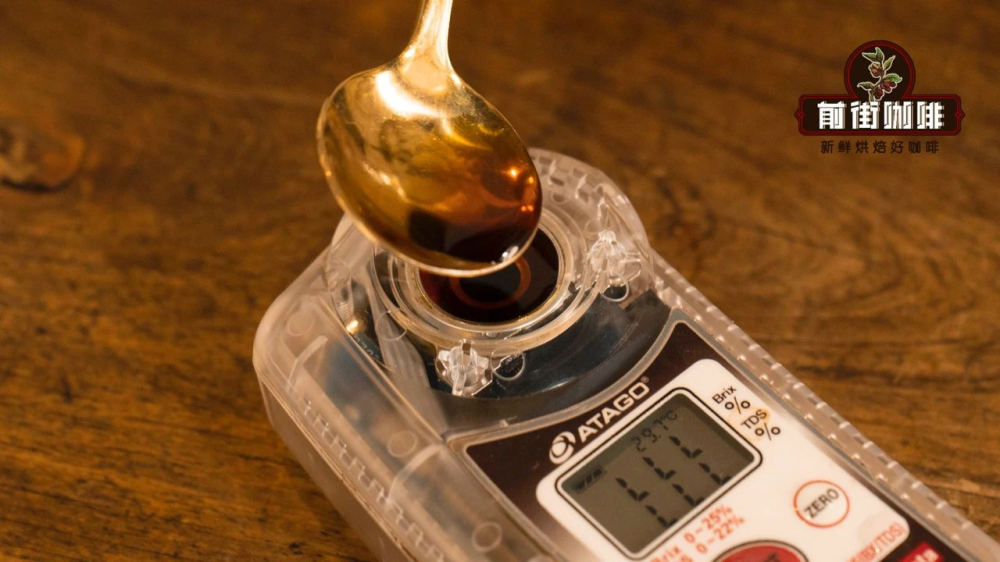
After measuring the concentration of the coffee liquid, the extraction yield can be conveniently calculated.
Pour-over coffee extraction yield formula:
Extraction yield = coffee liquid volume × coffee concentration / coffee powder dose
Differences in golden cup standards across countries
Specialty Coffee Association of America (SCAA): Extraction yield [18%-22%], concentration [1.15%-1.35%]
Specialty Coffee Association of Europe (SCAE): Extraction yield [18%-22%], concentration [1.2%-1.45%]
Norwegian Coffee Association (NCA): Extraction yield [18%-22%], concentration [1.3%-1.55%]
Brazilian Coffee Association (ABIC): Extraction yield [18%-22%], concentration [2%-2.4%]
It can thus be seen that different countries define golden cup standards differently, and preferences for coffee concentration also vary by region. But one point is universally recognized: the industry currently generally believes that when the extraction yield is between 18% and 22%, the substances released in coffee can bring a relatively wonderful flavor performance.
The golden cup standard has undoubtedly made important contributions. It has set a reference standard for specialty coffee and moved the extraction process toward scientificization, but it is not the only truth. It is more like giving coffee enthusiasts who are new to coffee a reference baseline. Coffee that meets golden cup values is not necessarily delicious, and coffee that deviates from the golden cup range is not necessarily undrinkable. The key is to understand the internal relationship among ratio, concentration, and extraction yield in the golden cup standard, rather than blindly chasing those cold numbers.
Q: What equipment is needed to make a cup of pour-over coffee?
Front Street Coffee's answer:
1. Pour-over kettle: Pour-over kettles on the market offer abundant choices in capacity and material, and can be purchased according to need. What has a greater impact on the brewing result is the spout diameter, because it directly relates to control of the water flow. Beginners are usually advised to choose a narrow-spout kettle, which makes the water flow easier to control. In addition, different pour-over kettles are suitable for different heating methods (induction cooktop or gas stove), so special attention is needed when purchasing.
2. Dripper: Drippers also vary widely in size and material, and in shape are mainly divided into three types: fan-shaped, conical, and wavy. The size of the dripper's bottom opening changes the flow rate of coffee extraction, thereby affecting the flavor direction. Fan-shaped drippers have a smaller opening and slower flow, giving a fuller body; conical drippers have a larger opening and faster flow, giving a lighter body; wavy drippers have a flat bottom and, with special wavy filter paper, produce the most even-tasting coffee. More special are metal mesh drippers, which require no filter paper and can retain more coffee oils, giving a richer taste, but some fines may not be intercepted.
3. Filter paper: Filter paper is divided into bleached and unbleached types. Bleached filter paper looks whiter, while unbleached filter paper tends toward light brown. The function of filter paper is to intercept the ground coffee powder with fine fibers, allowing the extracted coffee liquid to filter into the cup. When purchasing filter paper, it is necessary to match the corresponding specification according to one's dripper model.
4. Grinder: A good cup of pour-over coffee is inseparable from a good grinder. There are three common types of grinders on the market.
1) Ghost tooth grinder
2) Flat burr grinder
3) Conical burr grinder
4. Thermometer
A thermometer is used to measure brewing water temperature. Common brands on the market include Tiamo thermometer, Hero thermometer, and Cafede Kona thermometer.
5. Electronic scale
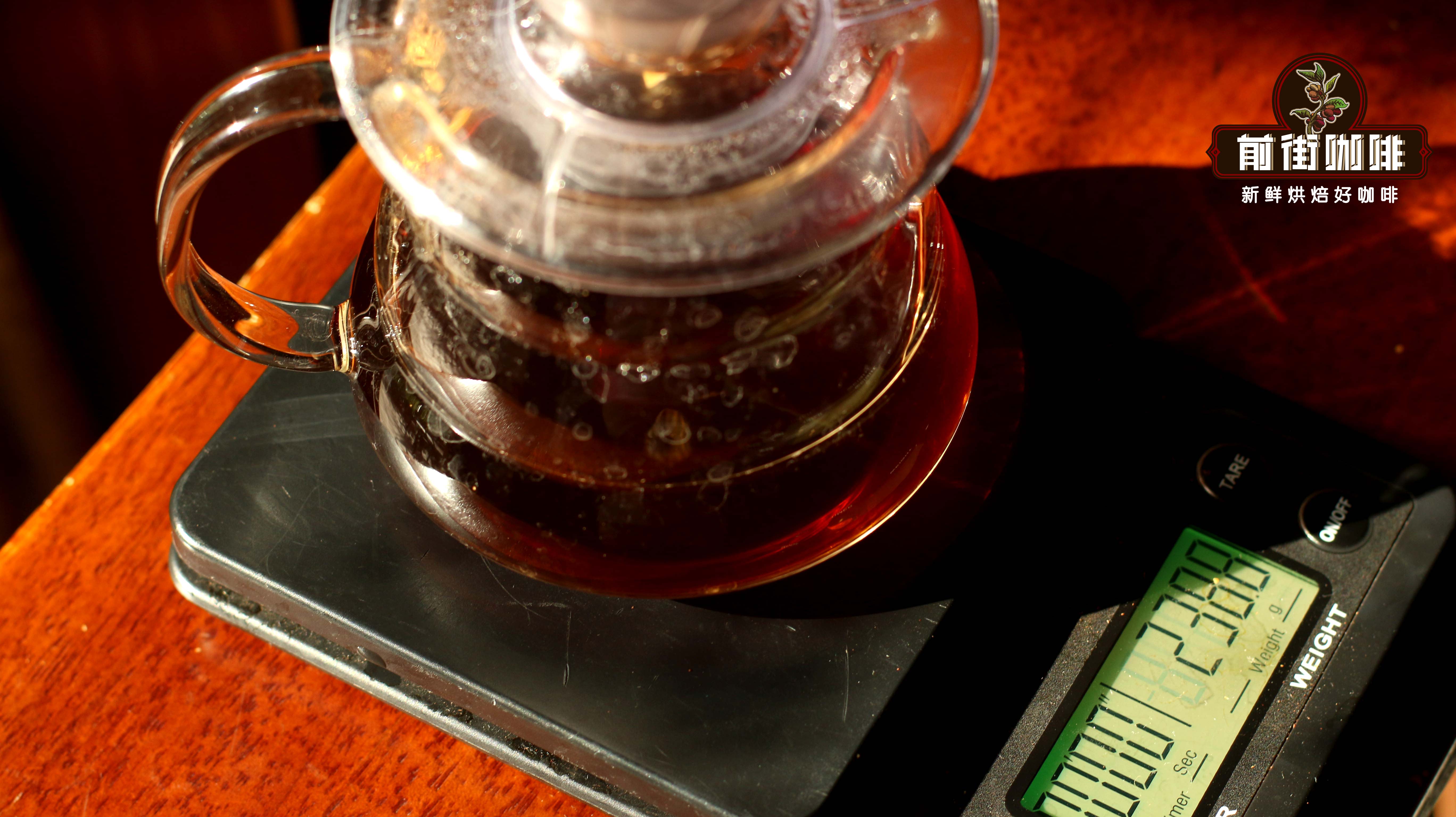
An electronic scale helps us control the coffee-to-water ratio during brewing more precisely, reducing unstable factors and increasing tolerance for error. Electronic scales range in price from a few dozen yuan to several hundred yuan. Common ones include Yami electronic scale, Hero smart scale, and Timemore electronic scale.
6. Sieve
The sieve is mainly used to judge whether the grind size is appropriate. The grind size suitable for pour-over differs for each coffee bean. After repeated testing, Front Street Coffee determined that passing 80% through the Chinese standard No. 20 sieve serves as the grind size baseline for pour-over.
7. Server
If serving only one person, the server can be omitted, and the dripper can be placed directly over a mug to drip. When extracting coffee for multiple people, a server is needed. With its own scale markings and transparent material, the server also makes it more convenient to observe and control the extraction process, so its role is not limited to dividing cups. Front Street Coffee recommends the HARIO V60 Cloud server and the Kalita server.
Q: What are the specific operational steps for pour-over coffee?
Front Street Coffee's answer:
To brew a good pot of coffee, one must start from four aspects: water temperature, grind coarseness, coffee-to-water ratio, and brewing technique.
1. Water temperature
The higher the water temperature, the stronger the extraction ability, and the coffee tends toward bitterness with a strong mouthfeel; the lower the water temperature, the weaker the extraction ability, and the coffee easily tends toward acidity with a mild, light mouthfeel. Pour-over water temperature should be adjusted according to the roast level of the coffee beans. Beans roasted light to medium are advised to use 90 to 91°C, and beans roasted medium-dark are advised to use 85 to 87°C. Front Street Coffee basically adjusts within this range. A customer once questioned this brewing temperature, so Front Street Coffee brewed the dark-roasted Golden Mandheling at 90°C, and the result was a mouthfeel almost comparable to espresso.
2. Grind size
Grind size refers to the size of coffee particles, and it directly affects the contact time between coffee and water. The finer the coffee powder, the more substances water can extract in the same amount of time, but it is also prone to over-extraction; conversely, the coarser the grind, the fewer substances are extracted in the same amount of time, but under-extraction easily occurs. Front Street Coffee recommends using an 80% pass rate through the Chinese standard No. 20 sieve as the pour-over grind size; this is a taste conclusion drawn from many tests. Note that the suitable grind size differs for different coffee beans, so when the pour-over flavor deviates, it is worth checking whether there is a problem with the grind size.
3. Coffee-to-water ratio
The coffee-to-water ratio is the ratio of coffee powder to brewing water, determining the strength of the coffee. Common ratios include 1:10, 1:13, 1:15, and 1:16. Front Street Coffee recommends a 1:15 coffee-to-water ratio, which is relatively moderate in both concentration and mouthfeel. Of course, everyone seeks a different coffee mouthfeel, so during extraction the coffee-to-water ratio can be adjusted according to the strength preference one wants.
Q: How can one make a good cup of pour-over coffee at home? What suggestions are there for brewing technique?
Front Street Coffee's answer:
There are many brewing techniques, such as the three-stage method, one-cut pouring, and drip method, and so on. Front Street Coffee recommends that beginners use the three-pour method to brew. This technique is suitable for light-roasted, medium-light roasted, and medium-roasted coffee beans. The staged extraction method of three pours can clearly present the flavor layers of the coffee's beginning, middle, and end, and better ensures the complete expression of coffee flavor.
First pour: bloom (helps degassing)
During the roasting process in which coffee beans change from green beans to roasted beans, they undergo a series of chemical reactions and physical changes. When roasting reaches a certain degree, a large amount of gas (most of which is carbon dioxide) accumulates inside the coffee beans.
Generally speaking, the fresher the coffee beans and the closer to the roast date, the more obvious the bubbling during blooming. Dark-roasted beans also release more gas during blooming than light-roasted beans. Front Street Coffee's coffee beans are all freshly roasted, so customers are generally advised to rest the beans for three days first, allowing the coffee beans to release carbon dioxide first, so that problems of instability and under-extraction can be avoided during brewing.
After the blooming releases gas, the coffee particles can absorb water evenly, which helps the uniformity of subsequent extraction. A good bloom allows the coffee powder to degas quickly and fully, while also allowing the coffee powder to contact water quickly and evenly, helping the coffee powder obtain even extraction.
During blooming, pay attention to the following four points:
1. Before pouring water for the bloom, first level the coffee powder.
2. During blooming, pour water gently.
3. During blooming, as little extracted liquid as possible should drip down. When too much extracted liquid appears in the lower pot, reduce the amount of water poured, or check whether the grind size is appropriate. (If the bloom water is too much and a large amount of coffee liquid drips down, the falling water does not stay but directly carries out substances from the outside of the coffee powder, and the off-flavors and astringency in the outer layer of the coffee powder also begin to dissolve out. The coffee brewed this way is both weak and has off-flavors from over-extraction. If the bloom water is insufficient and no water drips down at all, it means the coffee powder has not absorbed enough water, and some coffee has not degassed sufficiently, causing under-extraction.) In response to this situation, after many bloom tests, Front Street Coffee found that pouring water at twice the coffee powder dose during blooming is relatively appropriate.
4. Blooming time is about 30 seconds to 40 seconds. When the expansion on the surface of the coffee powder ends and the coffee surface is seen to shrink, it means blooming is complete and pouring can begin. (If the blooming time is too long, the coffee easily develops bitterness and astringency; if the time is too short, soaking is insufficient, and the coffee may be under-extracted or the flavor may not be fully expressed.) Generally speaking, the end time of blooming differs for each bean, but Front Street Coffee found that this is not conducive to beginners' operation—what beginners value is standardization and ease of use. Therefore, on the premise of ensuring that the coffee beans are still freshly roasted, Front Street Coffee recommends setting the blooming time at 30 seconds; experienced people can adjust it themselves.
Second pour
The second pour starts from the center, with a small stream poured into the bottom of the coffee bed. To concentrate the penetrating force of the stream, the circular movement range should be small, about the size of a one-yuan coin, and then spiral outward. From the second pour onward, pay attention to the water volume, and try not to exceed the height of the coffee bed. That is, when the stream circles to near the filter paper, pouring can stop.
Third pour
As the originally thicker coffee bed near the edge of the filter paper becomes heavier from absorbing water, it slides down and becomes thinner as the water level drops. When the water level drops by half, the third pour can be carried out.
From the third pour onward, observe the extent of the water level drop, and likewise start circular pouring from the center, with the water amount not exceeding the height of the coffee bed. At this time, the proportion of foam can also be seen to have covered the entire surface. The third pour should increase the tumbling of coffee particles, causing all deposited particles to turn over, thereby dissolving out soluble substances.
The tumbling particles will gradually come to rest as water addition stops. At this point, one must rely on the flow rate brought by the dropping water level to create friction among the coffee particles. Therefore, once water addition stops, the coffee particles will sink downward, causing clogging, so special attention must be paid to the rhythm of water addition. If pouring is interrupted too many times, it is equivalent to letting the coffee particles remain soaked in water, which will cause astringency and off-flavors in the final stage of extraction.
Q: What exactly is the principle of pour-over coffee?
Front Street Coffee's answer:
So-called coffee brewing is essentially the process of extracting molecules from coffee cells. This process includes three steps: wetting, dissolution, and release. The three occur in sequence and influence one another, ultimately creating coffee's special flavor.
Step one: Wetting
As the name suggests, it means the coffee powder becomes wet after contacting water. This is the starting point for coffee cells to begin releasing molecules.
Note that roasted coffee beans are filled with carbon dioxide inside, and the fresher the coffee beans, the more carbon dioxide they contain. When hot water contacts the coffee powder, carbon dioxide escapes first, forming a layer of bubbles on the surface, and during pour-over one will see the coffee powder in the dripper begin to expand. At this time, the coffee cells are like a supermarket packed with people, and people outside simply cannot get in—similarly, the hot water outside the cells cannot enter the interior of the cells. Therefore, after wetting the coffee powder, we pause pouring, wait for carbon dioxide to be fully released and for the coffee powder to stop expanding, and then continue pouring hot water. Only in this way can a relatively good extraction result be obtained.
Step two: Dissolution
This refers to the process in which soluble molecules in coffee cells dissolve into the hot water. It is also the most critical step and determines the flavor finally extracted from the coffee.
About two-thirds of a coffee bean consists of insoluble cellulose, and the other one-third is various soluble aroma molecules, which dissolve out in order according to molecular size when encountering water. The first to dissolve out are small-molecule substances, including acidity and aroma; next are medium-molecule sweetness; and finally large-molecule burnt bitterness. The different layers of coffee taste come from this. Therefore, if you prefer a sweeter, more fragrant flavor, the extraction time should be shorter, because the longer the hot water stays on the coffee powder, the more bitter molecules dissolve out.
Step three: Diffusion
After aroma molecules dissolve, they leave the coffee cells by osmosis. This process is called diffusion. After aroma molecules diffuse into the hot water, the final coffee extract is formed.
For more specialty coffee beans, please add the private WeChat Front Street Coffee, WeChat ID: kaixinguoguo0925
The above content is compiled by CoffeeHunters, a coffee news website.


