







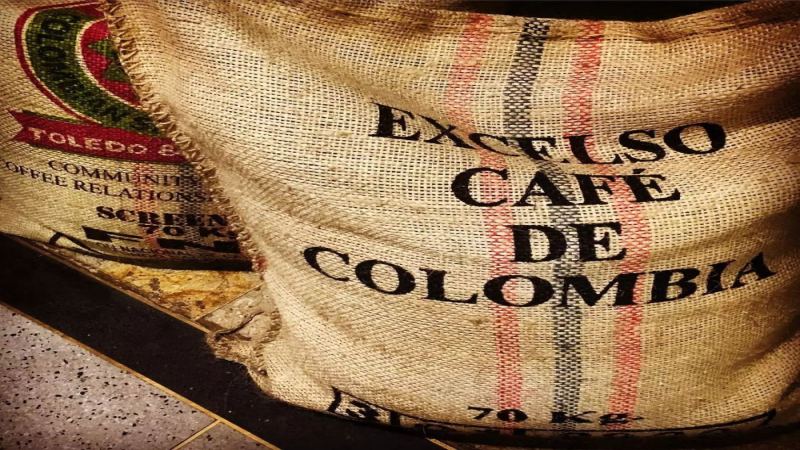
What defines Huila coffee and other Colombian regions?
Colombia's coffee regions follow the Andes, where terrain and microclimates give each area its own character. Huila, Cauca, Nariño and Santander are the representative names. The Colombian Coffee Growers Federation, founded in 1927, is the country's largest producer institution and its largest green coffee exporter.
The FNC supports growers with technical guidance and help in optimizing production costs, which underpins the quality assurance behind Colombian beans. Coffee is part of daily life locally, brewed fresh rather than instant and served throughout the day. For Huila everyday beans, a pour-over with medium grind and moderate water temperature reproduces the region's rich, balanced profile.
As an important coffee-producing country in northern South America, Colombia, with its unique terrain and microclimates along the Andes Mountains, nurtures coffee beans of outstanding quality. From the Colombian Coffee Growers Federation (FNC), established in 1927, to representative regions such as Huila, Cauca, Nariño, and Santander, each place displays a different terroir personality. In this article, Front Street will take you through the core coffee-growing regions of Colombia, help you understand the historical background of the local coffee industry and its quality assurance mechanisms, and include a pour-over extraction suggestion for Huila everyday beans, from grind size and water temperature to dripper choice, step by step recreating a cup of rich, balanced Colombian flavor.
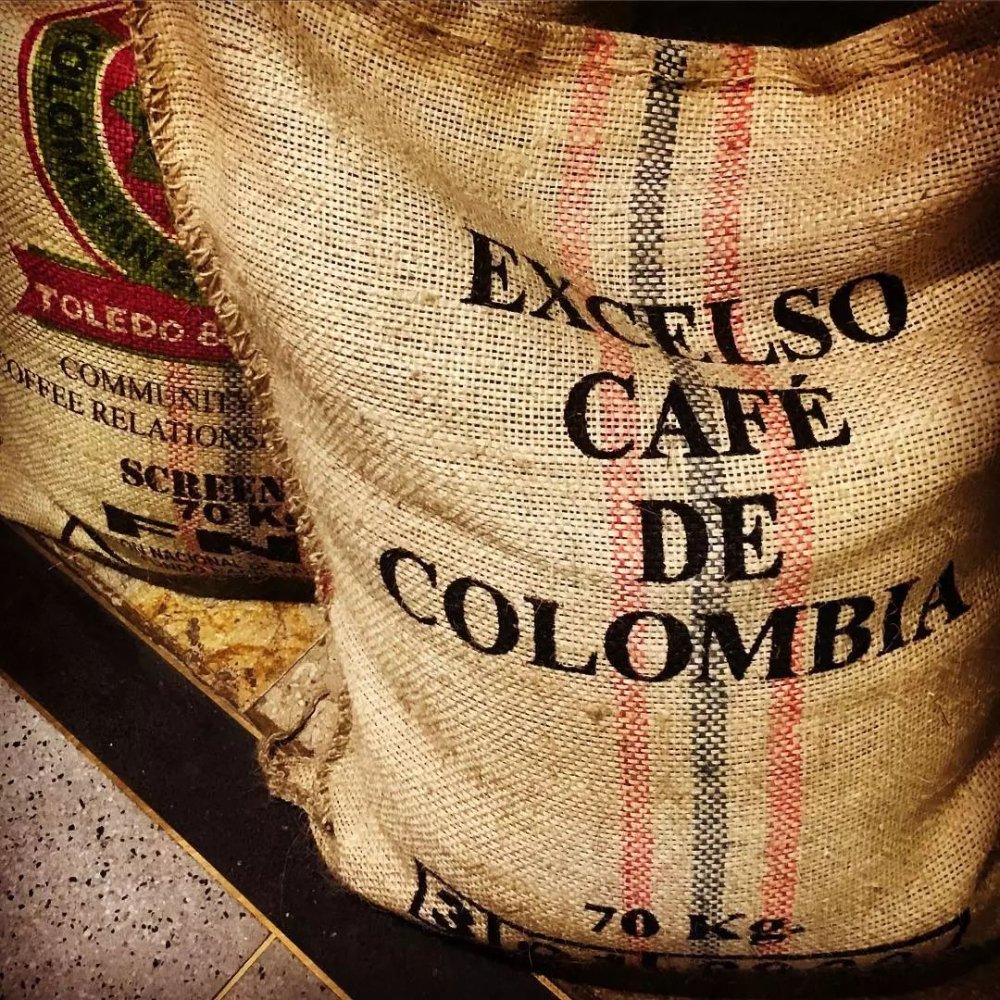
Coffee holds an extraordinary place in the hearts of Colombians. Among the topics local residents are eager to discuss, apart from the national team that once ranked among the world's best in football, coffee is what makes them proudest. Tasting coffee in Colombia can be called a way of life—drinking it three times a day is the basic rhythm, and cafes are densely packed along streets and alleys, filled with customers from early morning until late at night. These shops never use instant products; everything is brewed on the spot, and the server will serve it in an exquisite porcelain cup and bring it to the customer, with the amount of sugar adjusted by oneself. The room is filled with a rich aroma, the cup tastes sweet and smooth, and after savoring it carefully, the finish is long—no wonder locals are so addicted to coffee. To explain the ins and outs of Colombian coffee, Front Street must first start with the local influential coffee association.
Colombian Coffee Growers Federation (FNC)
The FNC is Colombia's largest official institution of coffee producers. Its full name is the National Federation of Coffee Growers of Colombia, also translated into Chinese as the Colombian Coffee Growers Alliance, and it was established in 1927.
The FNC's responsibility is to serve Colombia's coffee growers, and it is also the country's largest exporter of green coffee. The association has long improved the living standards of coffee producers through various measures, such as providing technical guidance to growers and helping optimize production costs, thereby safeguarding the long-term interests of coffee farmers and keeping the quality of the entire industry stable.
Through the FNC's promotional efforts in the international market, a character image named "Juan Valdez" successfully reached the world—Juan Valdez, who represents all Colombian coffee farmers. The logo formed by this character and his mule, with the Andes Mountains in the background, also became the official symbol of the National Federation of Coffee Growers of Colombia and often appears in various advertisements. Through such promotion, Colombian coffee gained worldwide fame, and the country became the world's third-largest coffee exporter, which makes Colombians deeply proud.
Colombian Coffee Cultivation
Colombia is located in northern South America. On a map, the coffee-growing areas are distributed along the Andes Mountains, extending from south to north, with production areas mainly concentrated in the western part of the country. Because the growing belt spans a large area, geographical conditions and climatic characteristics vary from place to place, forming several different coffee production seasons, so it can be said that Colombia harvests coffee year-round.
Colombia's cultivation altitude is relatively high, ranging between 1,000 and 2,500 meters. The complex terrain of the Andes brings abundant microclimates, sufficient rainfall, and temperatures maintained around 18 degrees Celsius year-round, which is extremely favorable for the growth of coffee trees. This is also the primary factor behind the outstanding quality of Colombian coffee. Locally, 30% to 40% of the rural population depends on coffee production for their livelihood, and agricultural operations are mainly small farms; coffee cultivation is no exception. Farm size is usually not large, generally only about two hectares. The owners carefully tend the plants on their plots and plant tall trees or banana trees around the coffee trees to provide shade.
Geographically, Colombia's coffee-growing regions can be divided into three major zones: north, central, and south. If judged by coffee bean quality, they are mainly concentrated in the south. Below, Front Street introduces several relatively representative production regions: Huila, Cauca, Nariño, and Santander.
The Huila production region is located in southwestern Colombia and is one of the important specialty coffee origins there, accounting for 12% of Colombia's total coffee output. The area is surrounded by rolling hills, with an altitude exceeding 1,500 meters, and the Colombian River converges here, providing abundant water for coffee trees. Unlike the classic rich style people associate with Colombian coffee, Huila is mostly dominated by micro-lot coffees supplied by small farmers. Varying microclimates and different green bean processing methods give the coffee distinctive flavors. Front Street believes that washed Huila coffee best reflects the basic flavor of Colombian coffee, so it has included it in the everyday beans series.
FrontStreet Coffee: Colombia Huila Coffee Beans
Region: Huila
Altitude: 1,500-1,800 meters
Processing Method: Washed
Variety: Caturra
Flavor: Nuts, dark chocolate, caramel, soft fruit acidity
Cauca
The Cauca production region is known for its high-altitude mountainous terrain, with altitudes reaching 2,100 meters. Suitable rainfall, a large temperature difference between day and night, and volcanic soil are all very suitable for coffee tree growth. The significant diurnal temperature difference formed by high altitude is the biggest difference between Cauca and other Colombian production regions. Coffee beans have a longer maturation cycle, allowing them to fully accumulate nutrients, which also creates the pleasant sweet-and-sour characteristics of Cauca coffee.

Nariño
The Andes Mountains run through the entire province of Nariño. Coffee trees are grown in a high-mountain cloud-and-mist environment at altitudes of 1,600 to 2,300 meters. Volcanic soil brings abundant nutrients, and the coffee produced is relatively excellent in quality. Although Nariño's output is not high, thanks to the special microclimate formed by factors such as altitude, terrain, and soil, the coffee in this region has outstanding acidity and a unique flavor, with a relatively high taste grade and excellent texture. In recent years, it has been favored by coffee lovers around the world.
Santander
FrontStreet Coffee has learned that Santander is the earliest province in Colombia to begin growing coffee. Although it is not often mentioned, it is also a very important production region in Colombia, with coffee output already accounting for 5% of the national total. The local climate is dry, and the altitude is relatively low, about 1,400 to 1,600 meters. A large number of Typica trees are planted there. Most coffee trees are grown in forests with appropriate shade, which makes the coffee cherries take longer to mature. Fertile soil and significant temperature differences make the coffee flavor richer, with a round and balanced mouthfeel. For example, the Rose Valley coffee beans sold by Front Street are produced here.
Pour-Over Reference Suggestions for Colombian Huila Coffee Beans
To brew a good cup of coffee, Front Street believes suitable extraction parameters are indispensable. Here, taking Huila everyday beans as an example, we demonstrate how to make a delicious cup of Colombian coffee. Considering that Huila everyday beans use a medium-dark roast, with a flavor profile leaning toward rich, mellow notes of nuts and chocolate, the deeper roast makes the coffee beans more porous and the coffee grounds more absorbent, so a medium grind size is chosen. To avoid extracting too many off-flavors, Front Street appropriately lowers the water temperature, using a medium 90 degrees Celsius, paired with a KONO dripper for extraction.
Unlike the V60 dripper, the only exhaust part of the KONO dripper is that quarter of the ribs. When the water level rises above the rib area, the amount of water in the dripper continuously increases, increasing pressure through the weight of the water. Because the outlet is relatively small, it can extend the contact time between coffee particles and water. As water is poured in, soluble substances are brought out more effectively, thereby enhancing the coffee's rich and mellow mouthfeel.
Brewing parameters: KONO dripper, 90 degrees Celsius water temperature, grind size with a 75% passing rate on a No. 20 standard sieve, 1:15 coffee-to-water ratio, dose: 15 grams, three-stage extraction
Pour the coffee grounds into the V60 dripper, wet the coffee bed with twice the amount of water as the coffee grounds, forming a dome and blooming for 30s, then pour in a thin stream in circles from the inside out until 125g, pause, wait until the coffee bed drops to half the height of the dripper, continue pouring the third stage with the same thin stream until 225g, and after all the coffee liquid has filtered through, remove the dripper. The time is about 2 minutes.
This Colombian Huila everyday bean has obvious roasted aromas of chocolate, nuts, and caramel on the palate, smooth and sweet, with moderate body and a clean mouthfeel. As the temperature drops, you can feel a pleasant soft acidity.
For professional coffee knowledge exchange and more coffee bean information, please follow Coffee Workshop (WeChat public account cafe_style)
For more specialty coffee beans, please add the private WeChat of FrontStreet Coffee, WeChat ID: qjcoffeex
The above content is compiled by CoffeeHunters, a coffee news website.


