







What Shaped Venezuela Coffee Production Over Time?
Venezuela coffee production began in 1730, when the monk Jose Gumilla introduced the crop. Large-scale planting only started in 1793. Output later collapsed as oil became the main export, pulling farmers and young workers into the cities. In recent years plantations have recovered, mainly with Typica and Bourbon trees, and exports have restarted.
The country has four main coffee producing regions: western, central-western, central-northern and eastern. Each differs in altitude, varieties grown and harvest period. The cup tends to be mild and comfortable with relatively low acidity. Most current export volume goes to Russia and Colombia, where it is repackaged, while smaller estates now ship directly.
Venezuelan coffee has a long history. Since its introduction in 1730, it once declined with the rise of the oil industry, but in recent years it has gradually revived. This article traces its development, details the altitude, varieties, and harvest periods of the four major producing regions—western, central-western, central-northern, and eastern—and analyzes its comfortable, mild flavor profile with relatively low acidity. It also mentions Front Street Coffee's attention to the producing regions, offering coffee enthusiasts a comprehensive understanding.
In 1730, a Christian monk named José Gumilla introduced coffee to Venezuela. The country was known for tobacco and cacao cultivation, and plantation labor relied mainly on slavery. It was not until 1793 that coffee began to be planted on a large scale in the region.
Venezuela
Front Street Coffee (FrontStreet Coffee) has learned that Venezuela once relied on oil as its main export. Although coffee cultivation had been introduced as early as the 17th century, the prosperity of the oil industry left coffee production almost abandoned.
By the mid-18th century, coffee had spread throughout the country. Soon afterward, however, the nation's attention was drawn once again to oil. Between 1929 and 1938, the Great Depression in the United States caused the dollar to depreciate, and the price of coffee exported under Venezuela's currency soared. As coffee demand fell, the military government recognized the value of oil and shifted to oil extraction. Agriculture was quickly forgotten, and farmers and young people left the countryside in droves, flocking to cities in search of oil-related work. As one can imagine, the urban population grew extremely rapidly at the time, exceeding the capacity of urban planning to respond.
In other words, during that period the urban population surged sharply, and urban planning struggled to keep pace. At the same time, oil extraction intensified the loss of rural population, and agriculture was gradually marginalized.
Fortunately, in recent years coffee plantations have seen some recovery, mainly with Typica and Bourbon coffee trees, laying a solid foundation for coffee exports. At present, most of Venezuela's coffee is exported to Russia and Colombia, where it is repackaged. At the same time, many emerging small and medium-sized plantations have also begun exporting coffee themselves. Although the coffee industry is not prominent among Venezuela's many industries, the country's best coffee-producing region is located in Táchira State in the southwest. However, the name Táchira is widely used for coffee beans throughout the country, causing its uniqueness to gradually fade.
Venezuelan Coffee Producing Regions
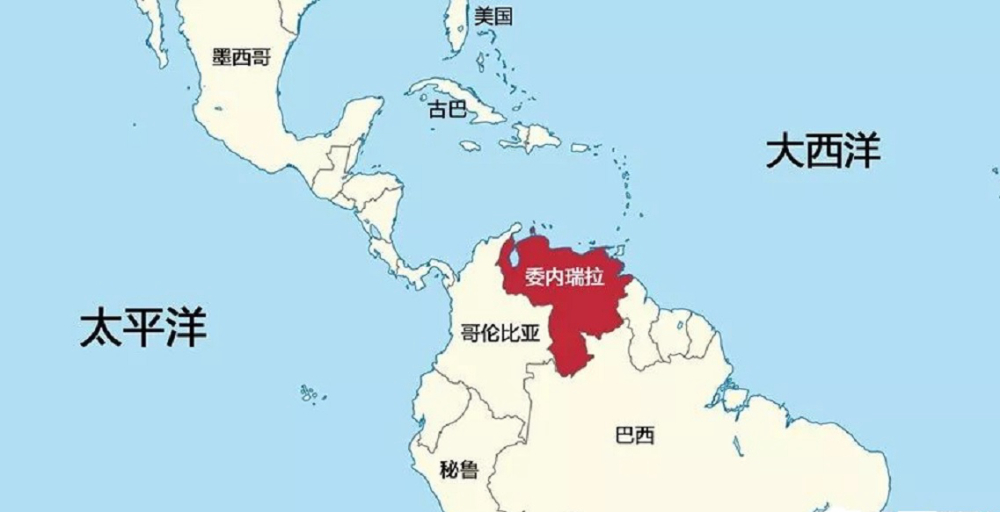
Venezuelan coffee is mainly distributed across four producing regions: western, central-western, central-northern, and eastern. The main cultivated varieties are Typica, Bourbon, Mundo Novo, and Caturra.
Western Producing Region
Most coffee from this region is exported under state names such as Táchira, Mérida, or Zulia, rather than specific producing region names. Some also compare it to Colombian coffee. Altitude: 1,000–1,200 meters; Harvest period: September to March of the following year; Varieties: Typica, Bourbon, Mundo Novo, Caturra.
Central-Western Producing Region
This region covers the states of Portuguesa and Lara and is one of Venezuela's top coffee-producing regions. In addition, Falcón and Yaracuy also belong to this area. The coffee produced here is of excellent quality and is considered on par with Colombia's. These high-quality coffee beans are usually called Maracaibos, named after the export port. Altitude: 1,000–1,200 meters; Harvest period: September to March of the following year; Varieties: Typica, Bourbon, Mundo Novo, Caturra.
Central-Northern Producing Region
A small amount of coffee from this region comes from Venezuelan states such as Aragua, Carabobo, Miranda, and Cojedes, as well as the Federal Dependencies. Altitude: 1,000–1,200 meters; Harvest period: September to March of the following year; Varieties: Typica, Bourbon, Mundo Novo, Caturra.
Eastern Producing Region
This area is located within the states of Sucre, Monagas, Anzoátegui, and Bolívar. Sometimes a unique coffee variety called "Caracas" can also be found. Altitude: 1,000–1,200 meters; Harvest period: September to March of the following year; Varieties: Typica, Bourbon, Mundo Novo, Caturra.
Venezuelan Coffee Flavor
Because Venezuelan coffee tastes different from coffee from other continents, it is comfortable and mild, with less acidity than traditional coffee, which allows it to stand on its own rather than being limited to blends.
For professional coffee knowledge exchange and more coffee bean information, please follow Coffee Workshop (WeChat public account: cafe_style).
For more specialty coffee beans, please add the private WeChat of Front Street Coffee (FrontStreet Coffee), WeChat ID: qjcoffeex.
The above content is compiled by CoffeeHunters, a coffee news website.


