







How does Blue Mountain coffee differ from Green Mountain?
The names differ by one word, but the products do not. Blue Mountain Coffee is a top-grade Arabica grown in Jamaica's Blue Mountains, known for a balanced, elegant flavor. Green Mountain Coffee is a brand founded in Vermont in 1981 that sells affordable Arabica beans and built its business on the K-Cup single-serve system, going public in 1993.
Green Mountain has sold certified Fair Trade coffee since 2002, all of it organic, with the certification setting a floor price for farmers and supporting organic growing. Blue Mountain's high price comes from limited growing area and yield in Jamaica. The article closes with brewing suggestions for Front Street Blue Mountain No. 1.
Green Mountain Coffee and Blue Mountain Coffee differ by only one character in name, but they are completely different in essence, origin, and positioning. Green Mountain Coffee is a commercial brand founded in Vermont, USA, focusing on a convenient and affordable K-Cup single-serve system; Blue Mountain Coffee is a top-grade Arabica coffee produced in the Blue Mountains of Jamaica, famous for its balanced and elegant flavor. This article will analyze in detail the characteristics and flavor differences of the two, as well as the history and yield factors behind the high price of Blue Mountain Coffee, and bring Front Street Coffee's brewing suggestions for Blue Mountain No. 1.
Green Mountain Coffee and Blue Mountain Coffee differ by only one character in name, but the actual differences are far more than one or two points. Below, Front Street will introduce these two coffees one by one and analyze their respective characteristics.
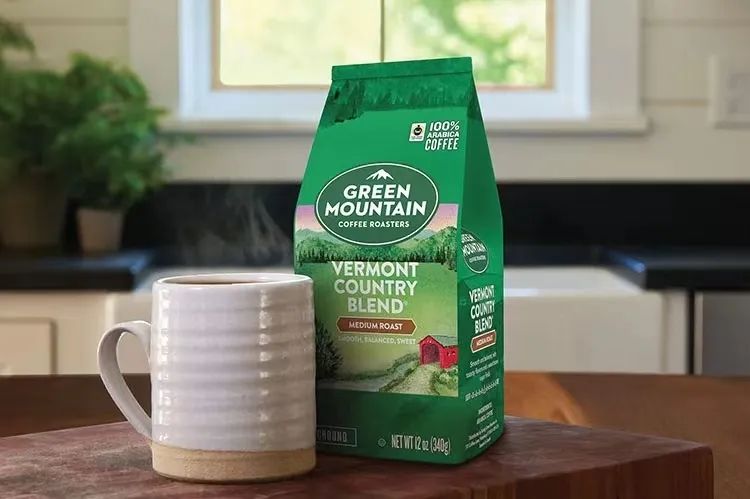
Green Mountain Coffee from the United States
Green Mountain is not a coffee-producing region, but a brand. Green Mountain Coffee was born in Vermont, USA, in 1981 and successfully went public in 1993.
Unlike Starbucks, which focuses on a "premium taste" and high-price strategy, Green Mountain Coffee takes a low-price, high-quality route, selling specialty Arabica coffee beans at more affordable prices. At the same time, Green Mountain has also made notable achievements in environmental protection: since 2002, it has sold certified Fair Trade coffee, all of which is organic coffee. (Fair Trade certification requires coffee merchants to pay coffee farmers no less than US$1.26 per pound and provide technical support to help coffee farmers adopt organic cultivation methods, which is a farming approach pursuing sustainability, environmental protection, and health.)
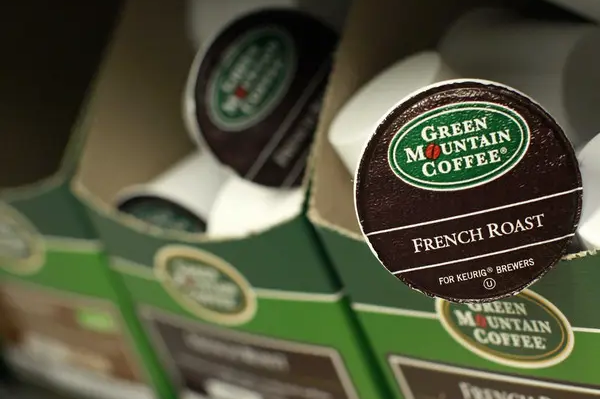
In recent years, the coffee market has flourished with a hundred flowers blooming, and single-origin coffees have emerged one after another, but Green Mountain Coffee still sticks to its environmentally friendly and practical positioning. Among its many products, the K-Cup can be called a model of practicality. According to the original design intention of Keurig founders Peter Dragone and John Sylvan—"No need to brew a whole pot, one cup each time is enough"—they invented the Keurig K-Cup that brews only one cup at a time, with single-serving packaging, and later also developed a dedicated single-serve coffee machine.
The advertising scenario of the K-Cup: put the K-Cup into the coffee machine, and in one minute you get a cup of fragrant hot coffee, with no need to grind beans, weigh, clean, or deal with residue. Most importantly, a single K-Cup sells for only 50 cents, just one-tenth of the price of a cup of Starbucks coffee. The K-Cup concept caused Green Mountain Coffee's sales to rise sharply, and Green Mountain therefore applied for multiple K-Cup-related patents. Other manufacturers must pay royalties to Green Mountain when using K-Cup packaging.
Blue Mountain Coffee from Jamaica
On the map, Jamaica is an island country located in the Caribbean region of North America and has a tropical climate. To the north is Cuba, and nearby is Central America. Coffee-growing areas are mainly concentrated around the Blue Mountains in eastern Jamaica. On sunny days, the sun shines directly on the blue sea, and the mountain reflects blue, hence the name Blue Mountain. The Blue Mountains have the highest mountain range in the area, with the main peak at about 2,256 meters. Only areas below 1,700 meters can grow coffee trees; above that is protected forest.
The high-altitude Blue Mountain growing area is shrouded in mist and clouds, with fertile volcanic soil, humid and rainy conditions throughout the year, an average temperature of about 27°C, and almost no industrial pollution. These conditions are all conducive to producing Blue Mountain coffee beans of excellent quality. At this point, I believe everyone already understands that the commercial brand Green Mountain Coffee has no connection with the excellent-quality Blue Mountain Coffee. Next, Front Street will talk about why Blue Mountain Coffee is expensive.
The Jamaica Coffee Industry Board CIB has set strict standards: only Arabica coffee grown in the specific area from 910 meters to 1,700 meters can be called Jamaica Blue Mountain Coffee, divided into four producing areas: St. Mary, St. Thomas, St. Andrew, and Portland. The total area accounts for only 1/3 of the entire Blue Mountain growing region; the other 2/3 of the land is used to grow Jamaica High Mountain Coffee and Jamaica Prime Coffee. In addition, the slopes are steep, making manual harvesting difficult, further restricting yield. In recent years, Jamaican coffee beans that can bear the Blue Mountain coffee label account for less than 15%.
We often hear that in the early days the Jamaican Blue Mountain coffee market was almost monopolized by Japan. In 1969, Jamaica suffered a storm disaster, and the growing areas suffered heavy losses. Japan's UCC Coffee Group provided substantial assistance to help it get through the crisis and continued to invest in Jamaica's coffee industry afterward. In 1972, Jamaica signed an agreement with Japan for about 30 years, promising Japan the priority purchasing right to Blue Mountain coffee. During that period, 90% of Blue Mountain production was supplied to Japan, and the remaining 10% was allocated in small quotas to Europe, the United States, Asia, and other countries. This is also the reason Blue Mountain coffee was expensive in that era. In earlier years, it was difficult to drink authentic Blue Mountain coffee in China, or the price was too high for ordinary people to afford, so many low-priced "Blue Mountain flavor instant coffees" and lower-quality "Blue Mountain blends" appeared on the market.
As the agreement between Jamaica and Japan expired, Jamaica hoped to expand its buyer market and allocate more Blue Mountain quotas to other coffee markets. China imported its first batch of Blue Mountain coffee green beans in 2010, and Front Street also added the highest-grade Blue Mountain No. 1 coffee to its daily bean list for everyone to taste.
The so-called Blue Mountain No. 1 coffee is Jamaica's national treasure-level Blue Mountain coffee bean. The green beans are above 17 screen size, with a defect rate below 3% and a moisture content of 10-12.5%. It has a balanced flavor with just the right acidity, sweetness, bitterness, body, and aroma. The green beans have a uniform color and neat particles, belonging to a very rare top-grade batch.
Front Street Coffee (FrontStreet Coffee): Jamaica Blue Mountain No. 1 Coffee Beans
Region: Jamaica Blue Mountain
Estate: Clifton Estate
Altitude: 1310m
Processing method: Washed
Variety: Typica
Flavor: Chocolate, Nuts, Cream, Cocoa, Toffee
Blue Mountain Coffee Brewing Suggestions
To drink coffee with a full, rich aroma, Front Street recommends using freshly roasted coffee beans for brewing. After roasting, coffee needs a 4-7 day resting period. The coffee beans shipped by Front Street Coffee (FrontStreet Coffee) are all roasted within 5 days, ensuring that when everyone receives them, they are at their best tasting period. If you do not have a grinder at home, Front Street Coffee (FrontStreet Coffee) provides a grinding service, but ground coffee powder loses aroma more quickly. Therefore, if conditions permit, Front Street recommends preparing your own grinding equipment so you can better taste the coffee aroma.
Front Street believes that the excellent flavor of Blue Mountain No. 1 coffee lies in its balance of acidity, sweetness, and bitterness, high body, and full aroma. In roasting, Front Street chooses a medium-dark roast to highlight nutty and cocoa aromas. Using a KONO dripper can bring better body.
First wet the KONO dripper to make the filter paper fit the dripper better, pour out the water in the server, and at the same time add 15g of coffee grounds. Use 30g of water to bloom for 30 seconds, then pour in a small stream in circles from the center until reaching 125g, then begin stages. Wait until the coffee bed drops to the halfway point of the dripper, then pour the second stage in the same way until 225g. After all dripping is complete, remove the dripper.
After Blue Mountain No. 1 coffee is ground, you can smell a very rich aroma. During brewing, it carries a caramel sweetness. On the palate, it has the richness of nuts and chocolate, moderate acidity and sweetness, a clean mouthfeel, and a lasting finish.
For professional coffee knowledge exchange and more coffee bean information, please follow Coffee Workshop (WeChat public account cafe_style)
For more specialty coffee beans, please add the private WeChat Front Street Coffee (FrontStreet Coffee), WeChat ID: qjcoffeex
The above content is compiled by CoffeeHunters, a coffee news website.


