







What makes Blue Mountain coffee so expensive?
Blue Mountain coffee is expensive because its legal growing zone is tiny and tightly controlled. Jamaica's Blue Mountains rise above 2,100 meters, but coffee is only cultivated between 910 and 1,700 meters, since higher ground is a nature reserve. Cool mist, steady rain, fertile volcanic soil, and the old Typica variety together produce a balanced, clean cup.
Panama geisha coffee and Indonesian kopi luwak reach high prices through different routes: geisha for its distinct floral and fruit character and limited lots, luwak for its rarity and civet processing. Terroir, variety, and processing, not one single factor, explain the price gap between these three coffees.
Jamaica Blue Mountain, Panama Geisha, and Indonesian Kopi Luwak are arguably the three most talked-about coffee beans in the coffee world. Each has a completely different terroir story and processing method, resulting in distinct differences in flavor expression and market price. This article will examine the origin environment, variety characteristics, and processing techniques to break down one by one why these three coffees are so expensive and what makes their flavors unique, while combining Front Street Coffee's cupping experience and product recommendations to provide coffee lovers with a reference guide that is both informative and practical.
For coffee enthusiasts, the names Jamaica Blue Mountain, Panama Geisha, and Indonesian Kopi Luwak are surely familiar. They each represent different flavor directions and market positions. Today, Front Street will sort through these three coffees all at once, analyzing the reasons behind their prices and their flavor characteristics from multiple dimensions.
Jamaica Blue Mountain Coffee
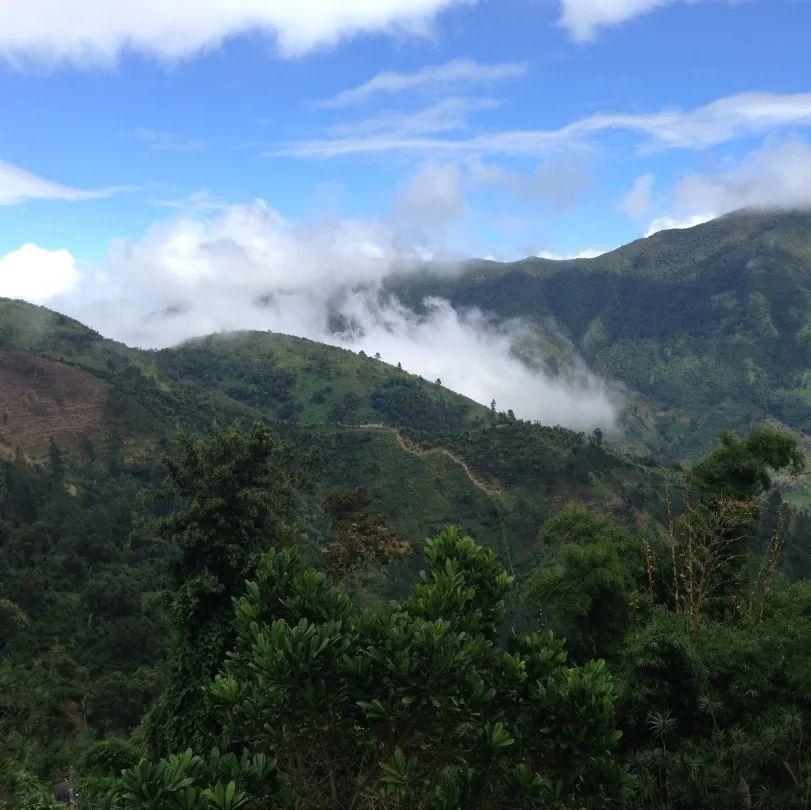
Blue Mountain Coffee The reason Blue Mountain Coffee can rank among high-quality coffees is inseparable from the unique climate, geological structure, and topographical conditions of Jamaica's Blue Mountains.
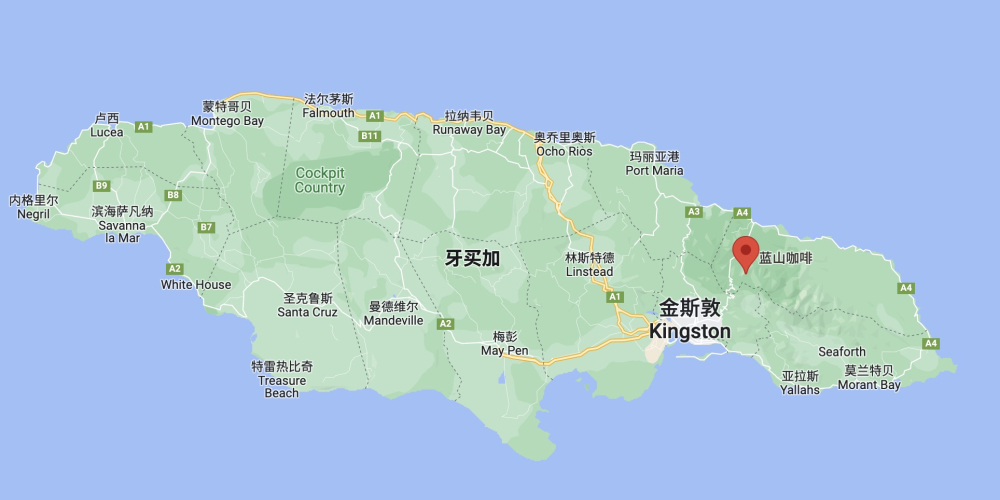
The Blue Mountain range runs across Jamaica, extending eastward to the eastern tip of the island, with the highest point exceeding 2,100 meters. However, the cultivation area for Blue Mountain Coffee is limited to between 910 and 1,700 meters, as areas above 1,700 meters are nature reserves. This elevation range has a cool climate, frequent mist, and abundant rainfall, which, combined with the fertile local soil, provides superior growing conditions for coffee trees. In addition, local farms use a mixed planting model, with coffee trees growing alongside banana trees and avocado trees on terraces, naturally forming a shade environment.
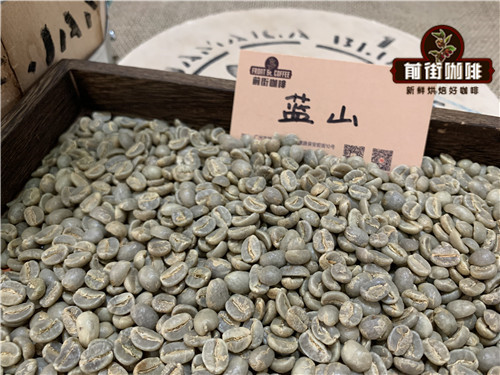
Superior growing conditions, fertile volcanic soil, and the ancient Typica variety together give Blue Mountain Coffee an extremely balanced and clean flavor. A Blue Mountain coffee bean currently sold by Front Street Coffee comes from Jamaica's oldest Clifton Estate, grown at 1,310 meters and processed by washing. After medium-dark roasting and cupping comparison, this Blue Mountain coffee shows a good balance among acidity, sweetness, and bitterness, with a rich dark cocoa body carrying a hint of lively fruit acidity, and a very obvious sweet aftertaste, leaving a deep impression on anyone who has tasted it.
Why is Blue Mountain Coffee so expensive?
On one hand, Jamaica's coffee industry faces many challenges, including hurricanes, rising labor costs, and the difficulty of mechanizing terraced terrain. Many small estates and farms struggle to achieve rationalized cultivation, resulting in limited annual production of Blue Mountain Coffee.
On the other hand, Japan has long invested in Jamaica's coffee industry. Before 2012, most distribution rights for Blue Mountain Coffee were held by Japan, and Japan also enjoyed priority purchasing rights. Data from 1992 shows that Jamaica exported 688 tons of Blue Mountain Coffee to Japan, while the United States received only 75 tons and the United Kingdom 59 tons. Today, Japan still buys about 90% of Blue Mountain Coffee. Because the rest of the world can only get the remaining 10%, Blue Mountain Coffee has always been in short supply, and its price naturally remains high.
It was not until 2012 that the Jamaican government canceled Japan's priority purchasing rights, giving other countries more opportunities to import Blue Mountain Coffee. The harvest period for Jamaican Blue Mountain Coffee is usually from June to November each year, mainly hand-picked, and then processed through washing, pulping, fermentation, dewatering, drying, hulling, and roasting in sequence before finally obtaining a roasted Blue Mountain bean.
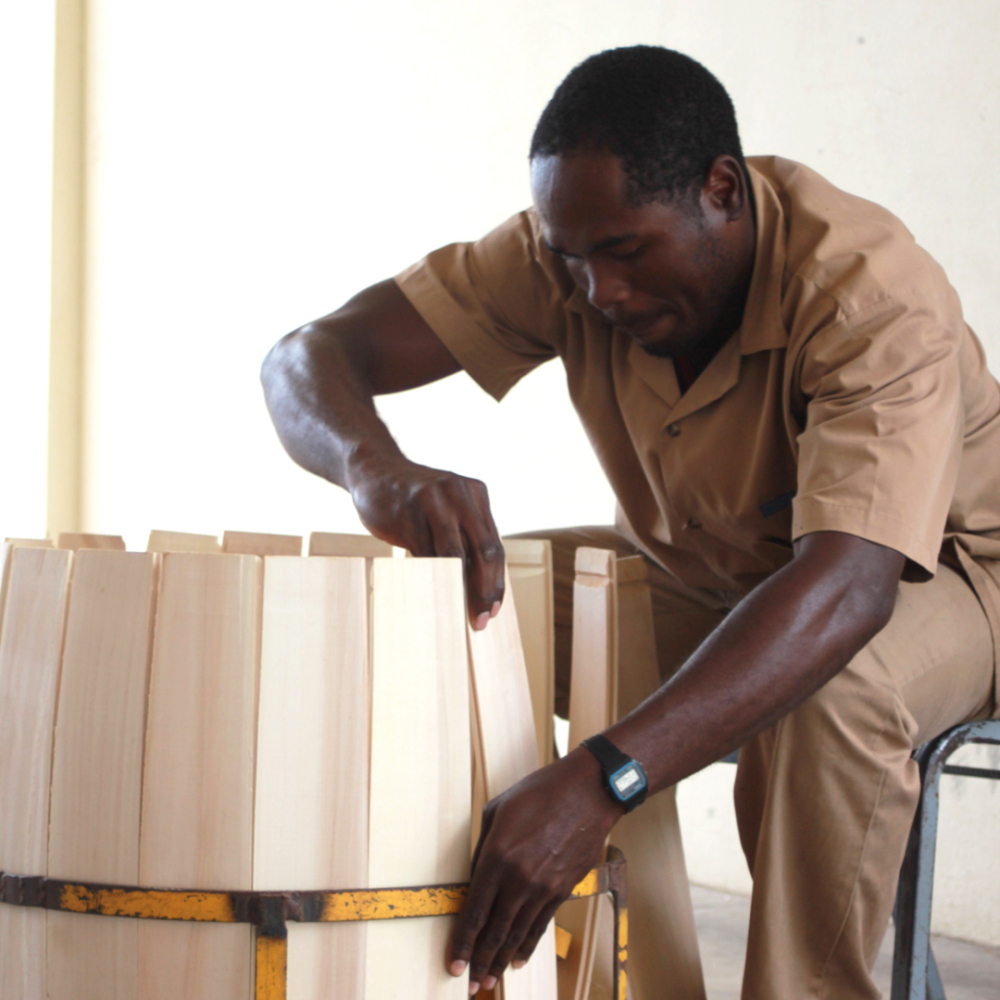
At every stage of green bean processing, dedicated personnel are responsible for quality control. For precious Blue Mountain Coffee, the Jamaican government also uses special packaging and transport methods. Unlike most coffee shipped in 60-kilogram burlap sacks, Blue Mountain Coffee is packaged and transported in wooden barrels, available in 15-kilogram, 30-kilogram, and 70-kilogram specifications.
Jamaica is also a country that still insists on using traditional wooden barrels to package coffee today. Every batch of Blue Mountain coffee beans must obtain a quality certification certificate issued by the Jamaica Coffee Industry Board, the only institution in Jamaica authorized to issue such certificates. Before export, professional quality supervisors sample, roast, grind, and brew each batch of beans to ultimately determine whether they meet standards.
Although the price of Blue Mountain Coffee is still higher than that of many producing regions today, it has fallen somewhat compared with ten years ago. Front Street Jamaica Blue Mountain No. 1 is priced at 158 yuan/100 grams and can be ordered at Front Street stores and the Front Street Tmall flagship store.
Panama Geisha Coffee
How much do you know about Geisha coffee? Actually, Geisha is just the name of a coffee variety, transliterated from Geisha, and belongs to the same category of variety names as Typica and Bourbon. Geisha originated in the forests of Ethiopia. In 1931, it was introduced from Geisha Mountain in southwestern Ethiopia to coffee research institutes in Kenya and Tanzania, then later moved to Uganda and Costa Rica, and finally in the 1960s and 1970s was introduced from Costa Rica to Panama for cultivation by Don Pachi Estate.
At the time, because of low yield, tall plants, and difficult harvesting, Geisha was far less favored than Caturra and Catuai varieties, and was even used as a windbreak tree. It was not until Panama Geisha Hacienda La Esmeralda separated it from other varieties in 2003 and won the BOP competition in 2004 that the Geisha variety truly entered the public eye.
In fact, Geisha coffee trees are quite demanding about their growing environment, requiring high altitude, cloud cover or abundant shade trees, and fertile soil to grow rich floral aromas, delicate fruit acidity, and a tea-like sweet aftertaste.
Panama's climate conditions happen to be very suitable for Geisha coffee. Panama borders Costa Rica and Colombia, and its east-west topography causes cold air to flow through the central mountain range and converge above 1,900 meters, creating a unique microclimate around Boquete and Piedra de Candela, with temperatures and rainfall suitable for plant growth. This area is precisely Panama's main coffee-producing region. In addition to climate, the surrounding land in this region is nutrient-rich, and the fertile soil provides ideal conditions for coffee cultivation, creating a large number of unique and high-quality coffees. Front Street believes that it is precisely the various natural factors of the Panama region that allow Geisha coffee beans to present delicate and elegant fruit acidity and obvious floral aroma, and it is also because of this that Panama Geisha can become popular worldwide.
Since Geisha became famous in Panama, countries around the world have begun planting Geisha, even including Yunnan, China. Although Ethiopia, Colombia, Guatemala, Costa Rica, and even Yunnan all grow Geisha, factors such as climate, altitude, temperature and humidity, sunshine duration and intensity, soil fertility, irrigation water, and growers all affect coffee flavor. Geisha from these producing areas does not perform as well in flavor as Panama Geisha. Therefore, Geisha presents a diverse situation with its own characteristics. The mainstream is still Panama, but Front Street believes that Geisha from other producing countries and regions is also worth trying.
In addition to Panama, Front Street's Geisha coffees also include Ethiopia Gesha Village Red Label, Colombia Hanami Coffee, and Costa Rica Mirazu Coffee, all of which are very popular single-origin coffees.
As the "talent scout" of Geisha, Hacienda La Esmeralda divided the estate into plots very early and formulated a series of product positioning. In the early period, it consisted of three Geisha brands and two non-Geisha brands — Esmeralda Special, Private Collection, and Geisha1500. The Catuai variety had two brands: Diamond Mountain grows and Palmyra.
Later, due to changes in the international market, Geisha's continued global popularity, and other Panamanian estates constantly pushing Geisha's upper limits, Hacienda La Esmeralda adjusted its product line between 2020 and 2022, separating auction lots from the Red Label to establish an independent product line — auction lots. Red Label retained the attribute of traceable fine plots and is the highest-grade product in non-auction sales. Green Label does not emphasize detailed plots and is a blend harvested from various plots at 1,600 to 1,800 meters, still retaining the typical flavor of Esmeralda Geisha. The most cost-effective Blue Label series was discontinued.
The flavor of Geisha coffee is characterized by floral aroma, fruit aroma, honey sweetness, and a clean, bright texture, so it is usually roasted at a medium-light level. In terms of price, it is also relatively accessible. If you want to taste the highest-grade Geisha from a single plot, Front Street Esmeralda Red Label is recommended at 350 RMB/100 grams; if you are after high-quality Geisha, you can buy Front Street Esmeralda Green Label at 168 RMB/100 grams. Both can be ordered at Front Street stores and the Front Street Tmall flagship store.
Indonesian Kopi Luwak
Kopi Luwak, also known as cat poop coffee, is a name everyone is surely familiar with. As is well known, Kopi Luwak is one of the most expensive coffees in the world and also one of the least produced, with limited annual output. Because the coffee beans undergo in-vivo fermentation, the flavor carries a special herbal aroma, and the body is also excellent, making it sought after by the wealthy, so the price is naturally high. However, in terms of the variety quality of the beans themselves, it is usually quite ordinary.
Civets mainly inhabit hills, mountains, tropical rainforests, and subtropical evergreen broad-leaved forest edge shrublands below 2,100 meters, preferring rock caves, earthen holes, or tree holes as resting spots. These coffee beans are mainly of the Robusta variety, because civets' range of activity is concentrated in low- and medium-altitude areas, so most coffee varieties are Robusta. High-altitude Arabica Kopi Luwak is extremely rare.
What does Kopi Luwak taste like? Civets have an omnivorous diet. Animal foods include small mammals and birds, while plant foods include the stems and leaves of Solanaceae plants, various fig seeds, and fruits such as rambutan and sour berries. However, civets have weak digestive capacity for plants, so eating berries is more like their dessert after a meal, while their staple food is still meat. Because civets have poor plant digestion and are mainly distributed in the broad-leaved forests, shrublands, and agricultural areas of South and Southeast Asia, these areas happen to be suitable for coffee trees to grow, so many of the sour berries that civets eat are coffee cherries. Civets can only digest the skin and pulp of the berries, and the pit inside the berry, which is the coffee bean, is eventually excreted.
Because civets live in low-altitude areas of Indonesia, and the coffee variety is the lower-quality Robusta, Kopi Luwak often carries the earthy and herbal flavors typical of Robusta beans. Combined with the special processing method, the coffee has high viscosity and a syrupy mouthfeel, rich and solid.
The special processing method of Kopi Luwak — in-vivo fermentation
In the early days, locals picked up the feces of wild civets in the forest and extracted the undigested coffee seeds to process into green beans. Because production was scarce and the in-vivo fermentation method was unique, many merchants later saw a business opportunity and began capturing civets on a large scale for cage farming. Civets, which should eat meat, were forced to eat only coffee cherries. However, the nutrients in coffee cherries simply cannot sustain a civet's health.
Some people believe that although the coffee beans are not digested in the civet's digestive tract, the highly corrosive digestive fluid has already corroded the surface of the beans. This digestive fluid contains a special protease that can break the original protein chains of the coffee beans, decomposing long-chain proteins into small molecules and forming short-chain peptides and amino acids. But in fact, because they eat only coffee cherries for a long time, the time for civets to excrete coffee beans may be only one or two hours later. With coffee beans staying in the stomach for such a short time, there is not enough time to produce the series of changes described above. The bean is still the same bean as when it was eaten, and even if the flavor changes, it is only minimal.
Front Street's neutral view on Kopi Luwak
Front Street Coffee believes that there is nothing inherently wrong with the formation of Kopi Luwak itself. Civets identify ripe coffee cherries by smell, which is essentially the same as the Ethiopian practice of harvesting fully ripe coffee cherries for red cherry selection. What is truly problematic is the people who lock up civets and force them to eat coffee cherries regardless of whether they are ripe, all just to increase Kopi Luwak production, which has given rise to these cruel practices. That is no longer within the scope of coffee as we discuss it.
Imagine, if passing through the digestive tract could make coffee taste better, then feeding a large pile of coffee beans regardless of ripeness would also make it taste good. That is why there are so many farmed Vietnamese Kopi Luwak, Yunnan Kopi Luwak, and Indonesian Kopi Luwak. Front Street Coffee believes that only coffee beans produced from ripe coffee cherries will taste good. Therefore, even if Kopi Luwak continues to be produced, a sufficiently large activity area should be established to allow civets to choose for themselves the coffee cherries they deem suitable to eat, while also providing other nutritional food sources.
Can the in-vivo processing method of Kopi Luwak be replaced by technology?
The excessive pursuit of this kind of coffee and its extremely high price may lead to the consequences of wild animals being forcibly imprisoned and forced to produce coffee beans. Persecuting wild animals for the sake of appetite is really unnecessary.
According to online reports, with the development of microbial technology, people are also trying to ferment green coffee beans in more environmentally friendly ways. For example, some people are committed to researching the use of modern technology and microbial techniques to simulate the civet's digestive tract and process coffee cherries. If the research succeeds, this simulated Kopi Luwak will neither threaten wild animals nor fail to produce high-quality coffee.
Considering its scarcity and high price, Front Street does not recommend drinking Kopi Luwak. Although real Kopi Luwak has a good flavor, coffee from other producing countries is equally excellent. For friends who like floral flavors, Front Street Panama Geisha Coffee is recommended, one of the most expensive coffees in the world; for friends who like fresh coffee with acidity, Front Street Ethiopia Huakui coffee beans are recommended, with notes of black tea and berries; for coffee lovers who like a balanced nutty and caramel flavor that is neither sour nor bitter, Front Street Brazil coffee beans are recommended; if you still love the solid, rich mouthfeel of Indonesian coffee, it is recommended to buy the highest-grade Front Street Golden Mandheling coffee, which undergoes multiple rounds of hand sorting to minimize the defect rate of the coffee beans, thereby making the coffee aroma clearer and the sweet aftertaste better. All the above coffee beans can be purchased and ordered at Front Street stores and the Front Street Tmall flagship store.
The above content is compiled by CoffeeHunters, a coffee news website.


