







Where does kopi luwak coffee actually come from?
Kopi luwak comes from Indonesia. It is made from coffee cherries eaten by the civet, a small omnivorous mammal, whose undigested beans are collected from its droppings, then washed, dried, and roasted. Long ago it was a drink of local poor farmers; merchants later marketed it as rare and pushed it into high-end markets.
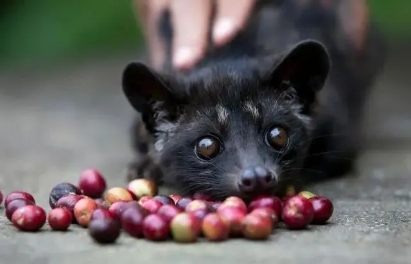
Civets live in hilly and mountainous areas below 2,100 meters, in tropical rainforest and forest-edge shrubland, using rock caves, burrows, or tree holes. The ethical concern around kopi civet coffee centers on captive breeding operations that force civets to eat only coffee cherries, rather than on the drink itself.
Which country does kopi luwak actually come from? How is its unique flavor formed? This article will provide a complete overview of the origins and history of kopi luwak from the perspectives of its producing region, the habitat of the civet, and the in-vivo fermentation processing method. At the same time, we will also discuss the ethical controversies surrounding this coffee and share Front Street Coffee's objective views on kopi luwak along with brewing suggestions. If you are curious about this highly talked-about coffee, or want to learn about alternatives more worthy of everyday drinking, this article will provide you with a detailed reference.
To get more specialty coffee knowledge, welcome to follow our WeChat public account: Front Street Coffee (FrontStreet Coffee)
It is unclear when exactly kopi luwak became something pursued by the wealthy. But according to locals, kopi luwak was actually a drink of Indonesia's poor in the past, because coffee beans of good quality were all sold off. Locals accidentally discovered that the coffee beans remaining in civet feces had not been digested, so they washed and dried them and then used them for brewing. This practice was later seen by merchants as a business opportunity and pushed to the market through the marketing approach of "things are precious when they are rare," which is how kopi luwak entered the circles of the rich. At the same time, large numbers of civets were also kept in captivity and exploited. Front Street has also introduced and listed kopi luwak, and we often hear people say that kopi luwak is cruel. Front Street believes that what is cruel is not kopi luwak itself, but those who use captive breeding methods to force civets to eat only coffee cherries.
The Habitat of the Civet
Civets mainly live in hilly and mountainous areas below 2,100 meters above sea level, and are commonly found in tropical rainforests and the forest-edge shrublands and grasslands of subtropical evergreen broad-leaved forests, and they choose rock caves, earthen burrows, or tree holes as habitats. Wild civets are omnivorous animals. Their animal foods include small mammals, birds, amphibians and reptiles, crustaceans, and insects, such as rodents, small birds, snakes, frogs, fish, crabs, bird eggs, insects, earthworms, and wild fowl. Their plant foods include the stems and leaves of Solanaceae plants, the seeds of various figs, as well as fruits such as Microcos paniculata and sour berries, and the coffee cherries they eat are also mixed with Arabica beans and Robusta beans. Generally speaking, Arabica beans have better flavor than Robusta beans, so pure Arabica kopi luwak is especially precious.
The Formation of Kopi Luwak
Because kopi luwak has a very low yield, many people believe that although the coffee beans were not digested in the civet's digestive tract, the strongly corrosive digestive fluids had already corroded their surface. These digestive fluids contain a special protease that can break the original protein chains of coffee beans, decomposing long-chain proteins into small particles and forming short-chain peptides and amino acids. Later, many merchants, seeing a business opportunity, began aggressively catching civets for cage farming, and civets that should have been meat-eating could only eat coffee cherries. The nutrients in coffee cherries simply cannot sustain the health of civets.
Front Street Coffee (FrontStreet Coffee) does not agree with this view! Because after long-term consumption of only coffee cherries, the time for civets to excrete coffee beans is only about one to two hours after eating. Coffee beans staying in a civet's stomach for one or two hours are not enough to produce the series of changes described above. The bean is still the same bean as when it was eaten, and even if the flavor changes, it is only extremely slight. What truly makes coffee flavor outstanding is the variety of the coffee bean itself. Most of what those merchants feed is Robusta, and moreover unripe coffee beans, so just imagine: even if in-vivo fermentation occurs, the flavor of the bean itself is already fixed there, and saying it tastes good is nothing but a deceptive cover~
Front Street's view on kopi luwak is neutral!
There is nothing wrong with the formation of kopi luwak itself. The civet uses its nose to identify ripe coffee cherries, and Ethiopian red cherries are also harvested when fully ripe, which is essentially the same principle. What is problematic is the people who lock civets up. Forcing them to eat only coffee cherries, whether ripe or unripe, solely to increase the production of kopi luwak, which has led to these cruel practices, no longer falls within the scope of coffee as we discuss it.
In-Vivo Fermentation Processing Method
Although the coffee beans were not digested in the civet's digestive tract, the strongly corrosive digestive fluids had already corroded their surface. These digestive fluids contain a special protease that can break the original protein chains of coffee beans, decomposing long-chain proteins into small particles and forming short-chain peptides and amino acids. Definition of short-chain peptides: short-chain peptides composed of 3-9 amino acid residues are sometimes also called oligopeptides.
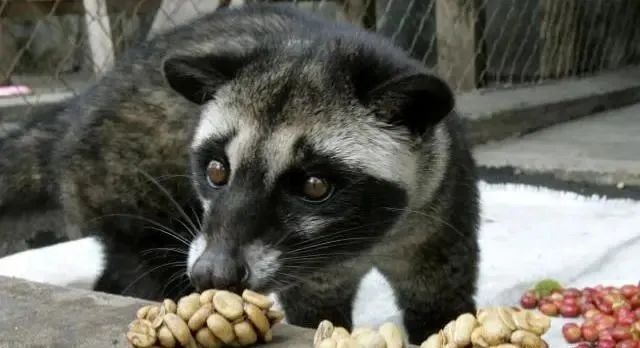
Front Street Kopi Luwak
Producing Region: Aceh, Indonesia Altitude: 1200m Variety: Arabica Processing Method: In-vivo fermentation
Indonesian low-altitude Robusta coffee originally has an earthy flavor and a Chinese herbal medicine taste, and also has high body, so this kind of kopi luwak has the earthy, gamey flavor of aged beans, with a body almost close to syrup and a very special aroma. If you prefer the earthy, gamey flavor of Indonesian aged beans or Indian monsooned beans, you may fall in love with the flavor of kopi luwak.
Front Street Coffee (FrontStreet Coffee)'s Recommendations for Choosing a Dripper When Brewing Coffee with High Body
Because we want to better express the herbal flavor and rich mouthfeel of kopi luwak, Front Street Coffee (FrontStreet Coffee) uses medium-dark roasting for kopi luwak beans. Medium-dark roasted beans generally have a relatively high dehydration rate, so they are relatively light in weight. During brewing, the grounds do not completely sink to the bottom, and as soon as water is poured in, it is immediately absorbed. Due to vigorous degassing, there are bubbles all around the grounds, thus creating channels, and the fresher the beans, the longer these channels last, causing the water level to drop quickly. I generally use a thick stream of water and circle slowly.
The KONO dripper, because the mouthfeel it brings out is rounder and fuller, and the flavor expression is more direct. However, the KONO dripper is relatively poor in degassing, because its ribs are straight and its depth is only one quarter of the dripper. Aside from the area above that one quarter, it forms a sealed state close to the wall of the dripper. The KONO dripper is chosen because the only degassing part of this dripper is that one quarter of the ribs. When the water level passes over the rib area, the water volume in the dripper keeps rising, increasing pressure through the weight of the water. Since the outlet is relatively small, it can extend the contact time between coffee particles and water. Driven by the water flow, this can more effectively bring out soluble substances, generally achieving the high-body effect expected by customers.
How does Front Street Coffee (FrontStreet Coffee) brew kopi luwak?
Brewing Parameters: Use a Kono dripper Water Temperature: 86°C Dose: 15 grams Coffee-to-Water Ratio: 1:15 Grind Size: Medium-fine grind (70% passing rate on China standard No. 20 sieve)
Front Street Coffee (FrontStreet Coffee) uses staged extraction, also called three-stage brewing: use 30 grams of water for a 30-second bloom, then pour in a small stream in circles until 125 grams for the first stage; when the water level drops and is about to expose the coffee bed, continue pouring until 225 grams and stop; when the water level drops and is about to expose the coffee bed, remove the dripper. (Timing starts at the beginning of the bloom.) The extraction time is 2'01".
Kopi luwak flavor description: herbal, nuts, dark chocolate, fermented notes, high body, viscous and smooth mouthfeel.
Considering its scarcity and high price, Front Street does not recommend everyone drink kopi luwak. Although genuine kopi luwak has a very good flavor, coffees from other producing countries are also excellent. For those who like floral flavors, we recommend Front Street Panama Geisha coffee, one of the most expensive coffees in the world; for those who like fresh coffee with acidity, we recommend Front Street Ethiopia Huakui coffee beans, with notes like black tea and berries; for those who like a balanced flavor of nuts and caramel, that is, coffee that is neither sour nor bitter, we recommend Front Street Brazil coffee beans; if you still love the solid, full-bodied mouthfeel of Indonesian coffee, we suggest buying the highest-grade Front Street Golden Mandheling coffee, which undergoes multiple rounds of hand sorting to minimize the defect rate of the coffee beans, thereby making the coffee aroma clearer and the sweet aftertaste better. All of the above coffee beans can be purchased and ordered at Front Street stores and the Front Street Tmall flagship store.
The above content is compiled by CoffeeHunters, a coffee news website.


