







What altitude does Ethiopian coffee grow at in Yirgacheffe?
Yirgacheffe coffee is known for bright citrus acidity, faint white floral aroma, and a honey-green-tea sweetness in the finish. The acidity comes from the growing environment and the native Heirloom variety rather than from roasting alone, which is why pour-over Yirgacheffe reads as tart and tea-like instead of heavy or bitter, especially when lightly roasted.
The town sits in western Sidama at roughly 1,700 to 2,100 meters, which answers what altitude does ethiopian coffee grow at? and explains the phosphorus-rich soil and plentiful water behind the cup. Washed lots tend toward clean, layered floral notes, while natural lots push more fruit. A medium-fine grind, 90-91°C water, V60, and a 1:15 ratio suit either style.
Yirgacheffe is one of the most recognizable regions in specialty coffee, known for its bright citrus acidity, white floral notes, and a honey-green-tea-like sweetness in the finish. Starting from the growing environment and the varietal characteristics of the native Heirloom variety, this article explains the source of Yirgacheffe's acidity and answers the common question, "Is pour-over Yirgacheffe very sour?" It also introduces the flavor differences between the washed and natural processing methods and provides Front Street Coffee's recommended brewing recipe: medium-fine grind, 90-91°C water temperature, V60, and a 1:15 coffee-to-water ratio, to help coffee lovers understand and brew a Yirgacheffe more accurately.
Professional coffee knowledge exchange For more coffee bean information, please follow Coffee Workshop (WeChat public account: cafe_style)
For more specialty coffee beans, please add the private WeChat of Front Street Coffee (FrontStreet Coffee), WeChat ID: qjcoffeex
In today's specialty coffee landscape, Yirgacheffe is undoubtedly one of the most recognizable representatives. Its bright citrus acidity, faint white floral aroma, and honey-green-tea-like sweetness and finish have won it great favor among the new generation of core coffee consumers.
Most coffee consumers today fall between the ages of 20 and 35. For these young drinkers, the standard for judging a cup of coffee is no longer limited to heavy bitterness and body; they expect coffee to be as refreshing and light as fruit tea. For this reason, the Ethiopian growing regions—with their phosphorus-rich soil, high-altitude growing conditions, and pleasant acidity—have naturally become sought after.
Where is Yirgacheffe?
Among Ethiopia's many producing regions, Yirgacheffe is a flagship existence. Strictly speaking, it is a small town in western Sidama, at an altitude of about 1,700 to 2,100 meters. High altitude, abundant water resources, and the local climate conditions together with the washed processing method give this town's coffee a very clean mouthfeel and rich layering.
Flavor characteristics of Yirgacheffe coffee beans
Paired with today's popular light roast, Front Street Coffee (FrontStreet Coffee) has repeatedly observed in years of cupping comparisons that Yirgacheffe often presents intense floral and fruity aromas, delicate acidity, and an elegant tea-like quality, which is also why it has gained recognition from more and more coffee lovers.
Yirgacheffe coffee bean variety
The coffee grown in the Yirgacheffe region all belongs to the Ethiopian native variety (Heirloom). This variety is somewhat different from the coffee varieties we usually know. Heirloom does not refer to one specific variety, but rather a mixed collective name for a large number of coffee varieties.
Ethiopia is the birthplace of coffee, and the number of native varieties is beyond imagination. These varieties are mixed in cultivation and mixed in processing, making variety tracing extremely difficult. Therefore, people use the term "native species" as a general summary to refer to those coffee varieties that are difficult to identify one by one.
Front Street Coffee (FrontStreet Coffee) believes that the reason Yirgacheffe can possess such a rich and pleasant sweet-sour quality is inseparable from the diverse mixture of varieties. This is much like a coffee blend: the purpose of blending is to obtain a stable flavor, and Heirloom is like a combination that nature has pre-blended for us.
Is pour-over Yirgacheffe very sour?
Although most Yirgacheffe sold on the market is mainly light roasted, its actual performance is not as sour as everyone imagines. A more fitting metaphor is that it is like lemon juice heavily diluted with green tea: amid the tea-like sweetness in the finish, you can still sense a bright and clean acidity.
Among the Yirgacheffe coffee beans currently sold by Front Street Coffee (FrontStreet Coffee), there are both washed and natural processed options. Washed Yirgacheffe performs very cleanly and transparently in flavor, while natural Yirgacheffe goes a step further in aroma intensity. Both processing methods are deeply loved by the public, and there is no distinction of superior or inferior between them.
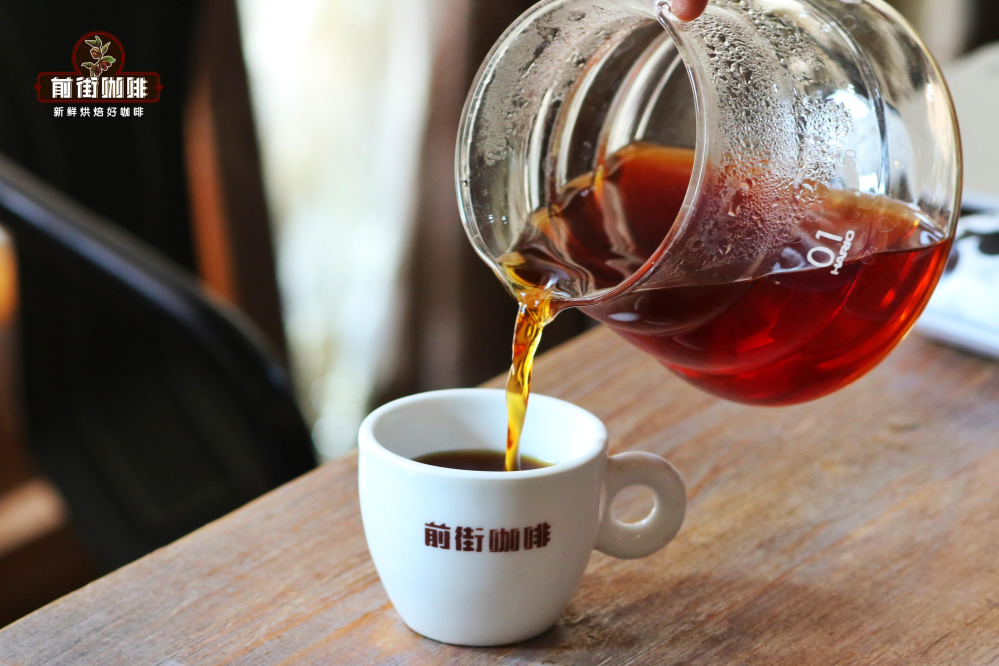
For the light-roasted "Gedeb Gode Cooperative Washed Yirgacheffe Coffee Beans" and "Natural Red Cherry Yirgacheffe Coffee Beans," it is generally recommended to use a medium-fine grind (caster sugar size), control the water temperature at 90 to 91°C, pair with a V60 dripper, and brew at a 1:15 coffee-to-water ratio.
For the first pour, add 30 grams of water and bloom for 30 seconds, then pour in 95 grams (the electronic scale shows about 125 grams) and finish pouring in about 1 minute; when the water level drops to two-thirds of the coffee bed, pour in the remaining 100 grams (the electronic scale shows about 225 grams) and finish pouring in about 1 minute 35 seconds. Dripping is completed at 2 minutes 10 seconds. Remove the dripper, and extraction is complete.
The above content is compiled by CoffeeHunters, a coffee news website.


