







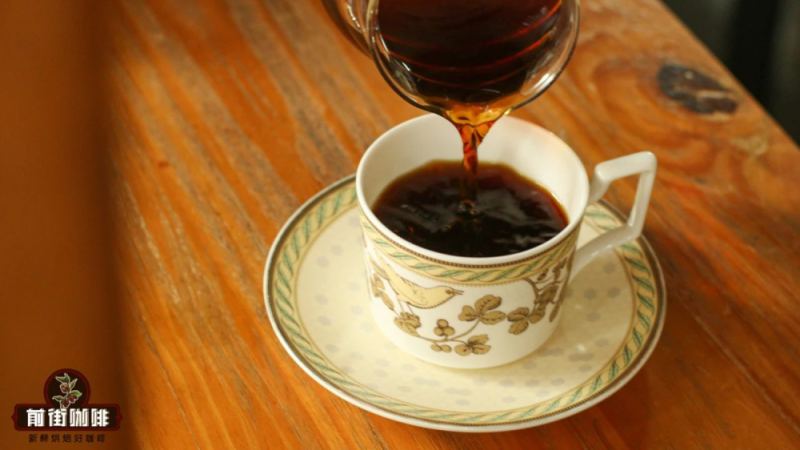
How do semi-washed and honey coffee processing differ?
Both semi-washed and honey processing dry the coffee directly after the skin and pulp are removed, but they keep different amounts of pectin. Semi-washed, which started in Brazil, is simple and suited to large volumes, giving cups that lean toward nuts, chocolate, and caramel. Honey processing retains more pectin and reads sweeter and more aromatic.
In semi-washed lots the cherry is pulped, then dried in the sun until moisture falls to 10.5% to 12% before hulling and a final polish. Honey processing, which began in Costa Rica, is graded yellow, red, or black by how much pectin stays on the bean. Those grades explain the spread in sweetness and aroma between the two styles.
Semi-dry and honey processing both belong to the category of methods that dry coffee directly after depulping, yet because of differences in how much pectin is retained and in drying conditions, they develop distinctly different flavor profiles. Semi-dry processing originated in Brazil; it is easy to carry out and suited to large-scale production, and its cup tends toward nuts, chocolate, and caramel. Honey processing began in Costa Rica and is divided into yellow, red, and black grades according to the proportion of pectin retained, with sweetness and aroma more pronounced. This article systematically sorts out the process steps, flavor characteristics, and grading logic of the two, and, combining Front Street Coffee's Brazil Red Bourbon and Costa Rica Honey Process Geisha, provides specific brewing parameters and technique suggestions to help coffee lovers understand the differences and apply them to daily brewing.
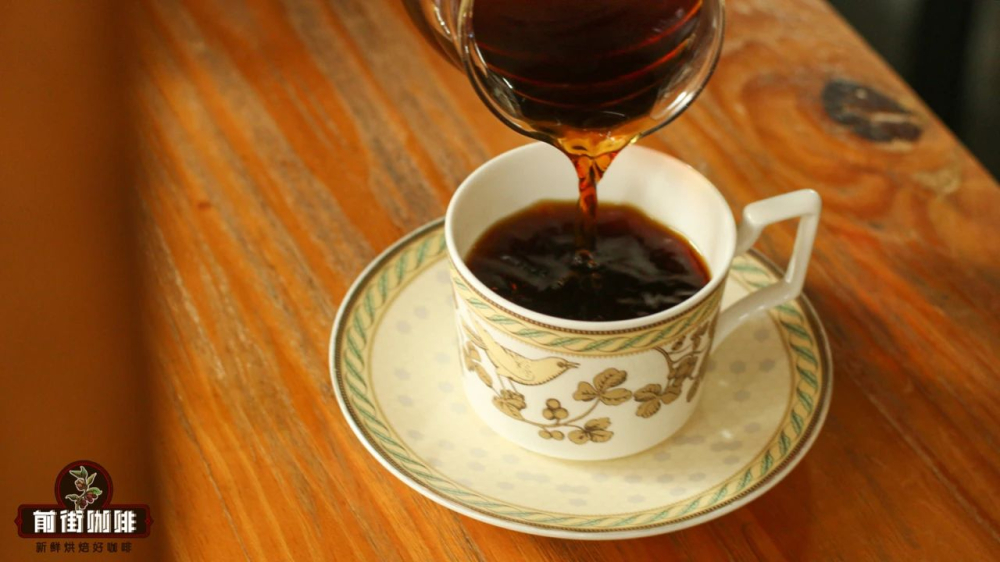
Semi-dry processing
This method sits between natural and washed processing and can be further divided into two types: pulped natural and honey processing. The early stages of both are largely the same: as in washed processing, the outer skin of the coffee cherry is first removed, but the "tank fermentation and clean-water rinsing" steps of washed processing are skipped, and the beans are instead spread out in the sun to dry directly. On the surface the steps look similar, yet because of one key variable they ultimately develop into two coffees with very different styles, so it is necessary to discuss them separately.
The semi-dry processing workflow
1. Pour the coffee cherries into a large water tank, skim off the floating fruit, then send the sunk fruit into a pulper to remove the pulp. This not only screens out unripe cherries but, more importantly, ensures that during the sun-drying stage the beans no longer carry pulp and retain only a layer of pectin, making subsequent fermentation easier to control.
2. After the skin and pulp are removed, yellow pectin is visible on the surface of the fruit; the pectin-coated coffee fruit is then placed in the sun to dry (after pulping, the beans are left with a sticky gel-like substance, namely pectin).
3. Once drying has brought the beans' moisture content down to 10.5%-12%, hulling is carried out.
4. Before bagging for export, one more polishing pass is done.
This method uses far less water than washed processing; some steps resemble washed processing (removing skin and pulp), while others resemble natural processing (no tank fermentation), so it is often also called the semi-washed method.
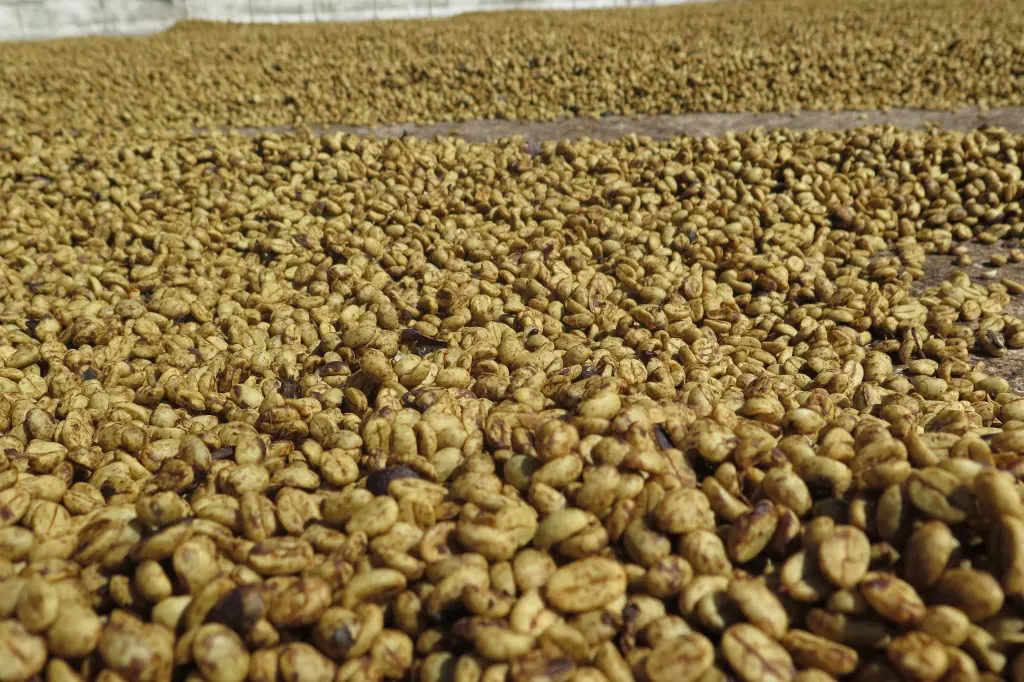
Characteristics of semi-dry processing
1. Suitable for commercial large-scale operations (widely adopted in Brazil); the operation is relatively simple, saves water, and is environmentally friendly.
2. When the skin and pulp are removed, fully ripe pulp falls away easily, while the skin of unripe green cherries is harder to handle; this creates a second screening that filters out unripe fruit and standardizes ripeness. Compared with natural processing, the selected fruit is cleaner and more uniformly ripe, bringing a more consistent cup.
3. Drying time is shortened, saving time cost and adding extra value.
4. Ripeness is relatively consistent, which helps with storage and standardizing green bean quality.
This method originated in Brazil, and Front Street Coffee's Brazil everyday drinking coffee uses exactly this processing method.
Front Street Coffee · Brazil Red Bourbon
Region: Brazil, South Minas region Altitude: 1000m Variety: Red Bourbon Processing method: Semi-dry Flavor: Nuts, chocolate, cream, peanut, caramel
When roasting this semi-dry Brazil coffee bean, to highlight its full-bodied flavor, Front Street recommends a medium-dark roast. For brewing medium-dark roasted beans, Front Street Coffee recommends a water temperature of 88-89°C; too high a temperature brings out unpleasant flavors such as woodiness, while too low a temperature fails to fully extract the sweetness.
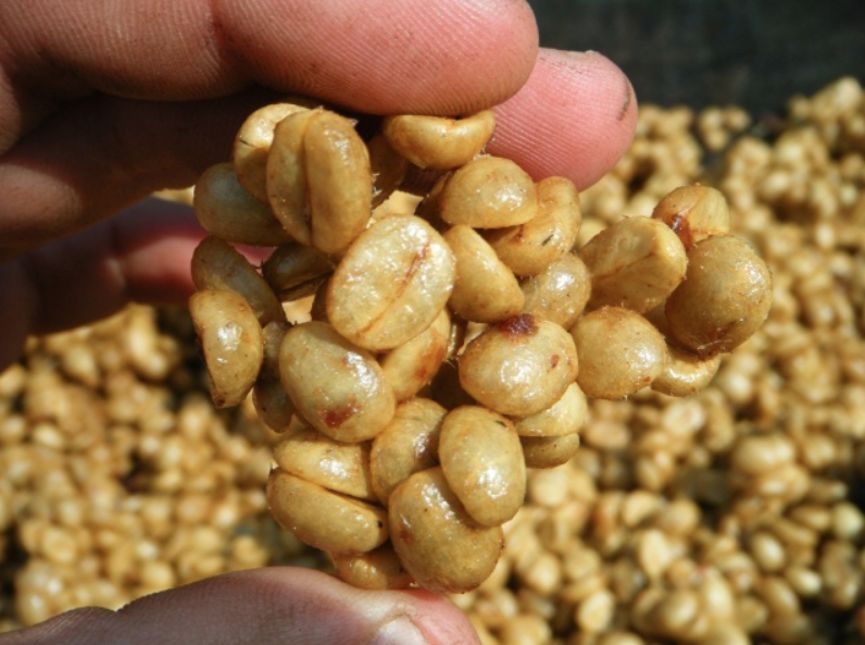
Front Street Coffee brewing recommendation
For more deeply roasted coffee beans, to emphasize body, Front Street Coffee chooses the Kono dripper. The Kono dripper has an immersion function, which can use immersion to extract more coffee substances and enhance the full-bodied mouthfeel. Its ribs are few and located at the lower end, allowing the filter paper to cling closely to the dripper to restrict airflow, thereby slowing the flow rate and increasing the contact time between water and coffee grounds.
Brewing parameters: Water temperature: 88°C Dose: 15g Coffee-to-water ratio: 1:15 Grind size: medium-coarse grind (70-75% passing through a No. 20 standard sieve)
Technique: For the first pour, add 30g of water and bloom for 30 seconds, then pour in 95g (the scale reads about 125g), finishing the pour in about 1 minute; when the water level drops to two-thirds of the coffee bed, pour in the remaining 100g (the scale reads about 225g), finishing the pour in about 1 minute 40 seconds. Dripping is completed in 2-2 minutes 10 seconds; remove the dripper and extraction is complete.
Honey processing
Honey processing originated in Costa Rica and is very common in producing origins such as El Salvador and Costa Rica. In essence, it was developed by modifying Brazil's semi-dry processing.
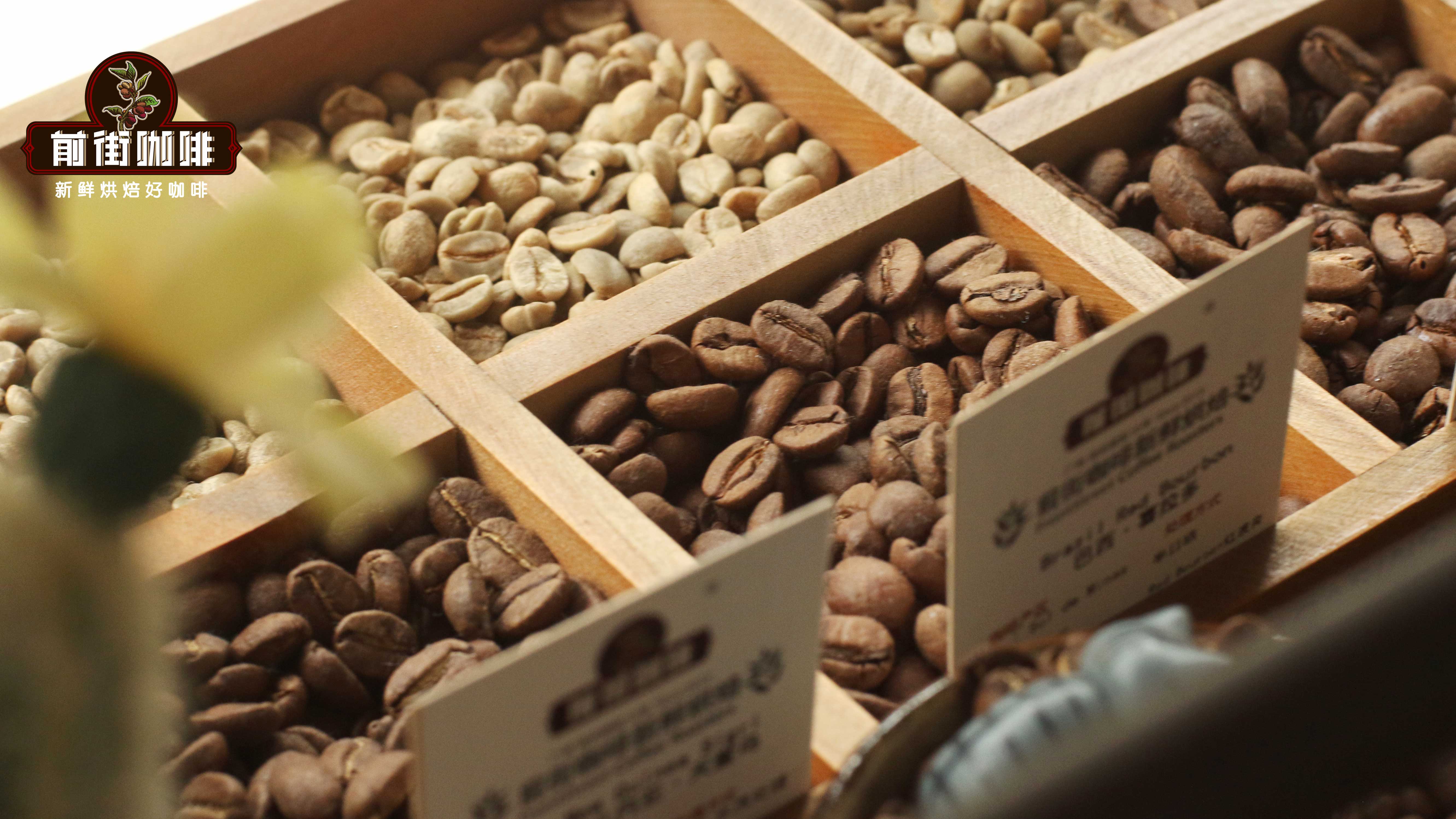
Honey processing is a method local coffee farmers tried in order to improve coffee bean quality, and it later gradually spread to other countries. So why did Costa Rican farmers try this processing method? Because farmers' income mainly depends on trading coffee beans, and better-quality coffee beans can bring higher profits, so it is not at all surprising that farmers kept trying new processing methods.
For a coffee origin, there are three ways to improve coffee bean quality: first, improve the processing method; second, change the planted variety; third, improve the farm's soil, that is, relocate the farm. But just as when we brew coffee, before changing the dose and grind size, we first adjust the brewing amount, pressure, and temperature, we first choose conditions that save as much time and cost as possible. For farmers, changing varieties and relocating farms are time-consuming and labor-intensive, so improving the processing method became their first choice.
The honey processing procedure
1. After picking, the coffee cherries are collected and screened, and qualified, high-quality coffee cherries are selected.
2. The screened coffee cherries are put into a coffee depulper for pulping. This step removes the skin and pulp of the coffee cherry while retaining the pectin layer. The pectin portion is the part of the coffee fruit with the highest sugar content and is also an important component of fermentation during coffee processing; it can be said that this part determines 80% of the nutrient supply during processing. Yellow honey retains 60% of the pectin, red honey retains 75%, and black honey removes almost no pectin. The more pectin retained, the richer the coffee's final flavor and the higher its sweetness.
3. Unlike washed processing, honey processing retains part of the pectin for drying. Drying brings the moisture content of the coffee beans down to about 11%, and the time required is about 18 to 25 days, depending on the climate and the processor's experience.
4. After drying is complete, the coffee beans are bagged and transported to a warehouse for storage, and hulling to remove the parchment layer is not carried out until just before export shipment.
Flavor performance of honey processing
Honey-processed coffee beans have better flavor, with a balance of acidity and sweetness, and, as with natural processing, because the beans have undergone sun drying, their own aroma is amplified and the body is full.

Color grading of honey processing
Today, growers grade honey-processed green coffee beans according to color. There are 3 grades: yellow, red, and black. The change in color depth comes from the length of light exposure during drying.
Yellow honey green coffee beans have the longest light exposure. Long light exposure means higher heat, so this coffee can be dried within 1 week. In general, the drying time of coffee depends on local climate, temperature, and humidity conditions. Red honey green coffee beans take 2-3 weeks to dry, usually because of weather conditions or being placed in the shade. If the weather is clear, growers provide shade to block part of the sunlight and reduce light exposure time. Black honey green coffee beans are dried in the shade for the longest time, and their light exposure is the shortest. This coffee takes at least 2 weeks to dry. The processing of black honey green coffee beans is the most complex and has the highest labor cost, so it is the most expensive.
What is the difference between yellow honey, red honey, and black honey?
The three are distinguished according to the sun-drying time and the amount of pectin, and the amount of pectin and mucilage determines the sun-drying time. Yellow honey has 25% mucilage, red honey 50%, and black honey 100%. Therefore, from yellow honey to black honey, longer drying time is required and management requirements become more demanding.
If one must pick the best among the three, the best-tasting is black honey, because it has the most mucilage and therefore the richest, most intense mouthfeel. So why produce yellow honey and red honey? Coffee farmers also need to consider things from a commercial perspective; that is, producing black honey requires twice as many drying beds as the other two types and requires more time, manpower, and effort; moreover, not all buyers can afford black honey, so producing yellow honey and red honey can be said to be a choice made for the coffee production environment.
Front Street Coffee: San Isidro Labrador Estate · Honey Process Geisha Country: Costa Rica Region: Tarrazú, Casona Estate: San Isidro Labrador Estate Altitude: 1900-2100m Variety: Geisha Processing method: Honey process
Flavor: Cherry, orange, yellow peach, floral, oolong tea
Front Street Coffee brewing recommendation Brewing parameters: Water temperature 90°C Dose 15g Coffee-to-water ratio 1:15 Grind size: fine-coarse grind (80% passing through a No. 20 standard sieve)
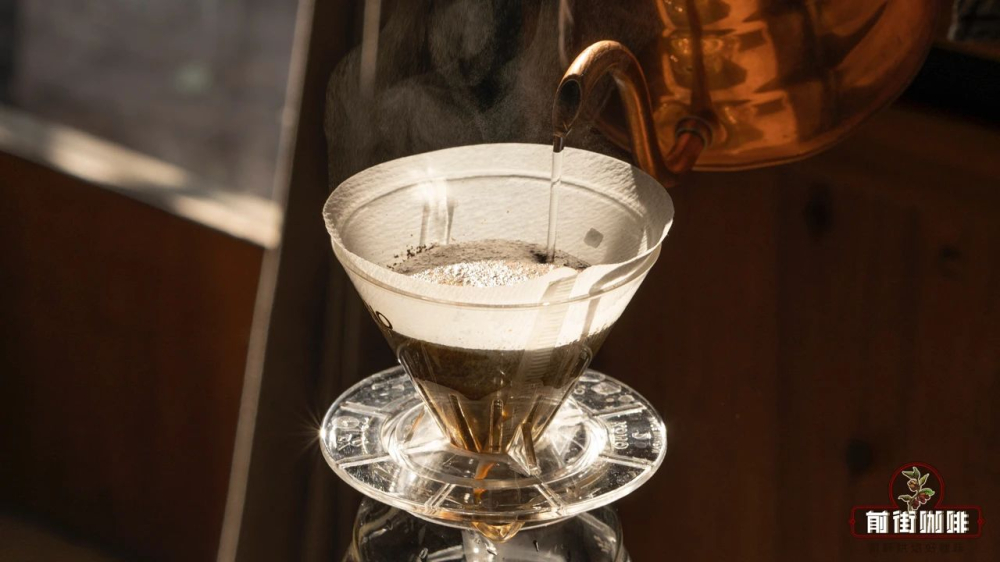
Technique: For the first pour, add 30g of water and bloom for 30 seconds, then pour in 95g (the scale reads about 125g), finishing the pour in about 1 minute; when the water level drops to two-thirds of the coffee bed, pour in the remaining 100g (the scale reads about 225g), finishing the pour in about 1 minute 40 seconds. Dripping is completed in about 1 minute 50 seconds; remove the dripper and extraction is complete.
The above content is compiled by CoffeeHunters, a coffee news website.


