







What Defines the Washed Yirgacheffe Flavor Profile?
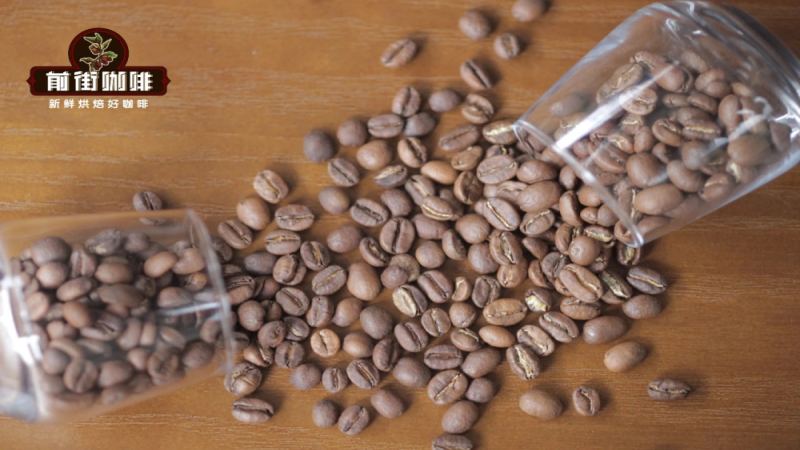
Washed Yirgacheffe delivers crisp, clean acidity with citrus and lemon notes, a strong jasmine aroma, and a light, tea-like body. The Yirgacheffe area sits on the eastern edge of the East African Rift Valley at roughly 1,800 to 2,000 meters, and its washing stations benefit from abundant water near Lake Abaya, which supports the clean washed profile.
The washed process is broken into full steps, and Ethiopian green coffee beans are sorted under a separate grading system. Administratively part of Sidama, Yirgacheffe was separated because of its distinct flavor, and it includes sub-regions such as Worka and Kochere. Washed lots from the Gedingding Cooperative and Kochere are typically brewed as medium-light roasts with pour-over parameters.
The Yirgacheffe region in Ethiopia is famous for its bright acidity and jasmine aroma, and the washed processing method pushes its clean and translucent qualities to the extreme. This article begins with the geography and flavor definition of Yirgacheffe, breaks down the complete steps of the washed processing method in detail, and explains the grading system for Ethiopian green coffee beans. At the same time, Front Street Coffee highlights its washed Yirgacheffe Gedingding Cooperative, Kochere, and daily-drinker series, sharing brewing parameters and flavor performance under medium-light roasting, helping coffee enthusiasts build a clear understanding of washed Yirgacheffe beans.
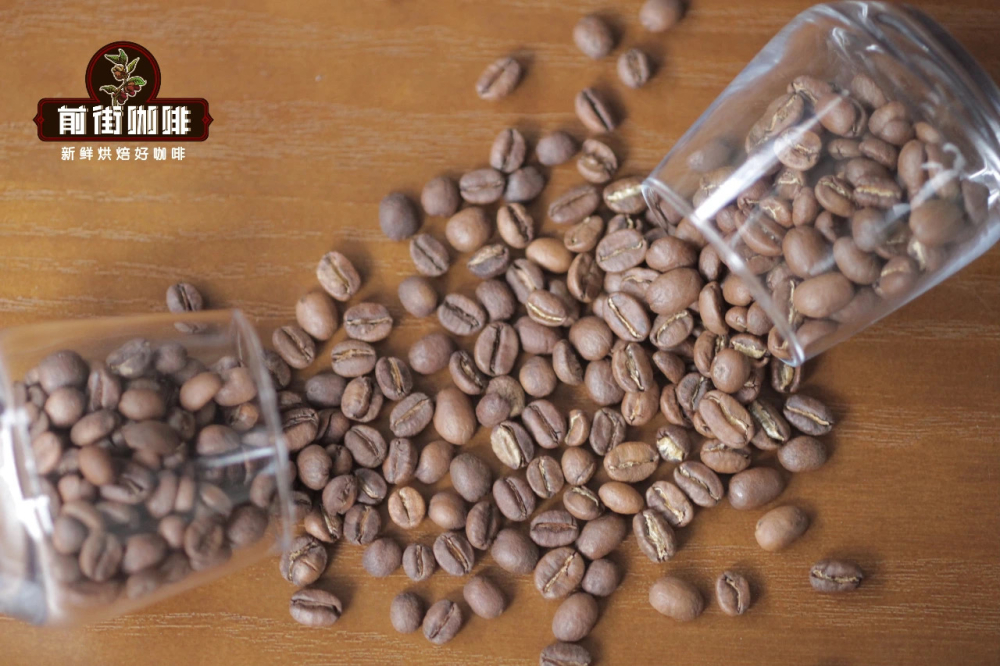
Ethiopia has a huge number of ancient native coffee varieties and an extremely rich gene pool. Combined with different processing methods such as natural and washed, this creates ever-changing flavor expressions, which is why it is so favored by coffee lovers. When many people think of Ethiopian coffee, they immediately associate it with Yirgacheffe. With its fresh and clean style, this region has become the starting point for many people entering the world of specialty coffee. Washed Yirgacheffe presents crisp, clean acidity and a bright profile, while natural Yirgacheffe is clean and smooth, with a slight fermented sweetness in the finish. When baristas at Front Street Coffee meet customers who do not know how to choose, they usually suggest starting with beans from the Yirgacheffe region. In this article, Front Street will focus on washed Yirgacheffe coffee beans.
Yirgacheffe is itself a small town
Yirgacheffe is located on the eastern edge of the East African Rift Valley, where the terrain is highly fragmented, with an altitude of about 1,800 to 2,000 meters. The town is adjacent to Lake Abaya to the west, an area that has been wetland since ancient times and is rich in water resources, providing unique conditions for Yirgacheffe’s washing stations. Administratively, Yirgacheffe belongs to the Sidama region, but because of its highly distinctive flavor, it was separated out on its own. In addition to Yirgacheffe town itself, it also includes sub-regions such as Worka and Kochere.
Front Street believes that the so-called “ Yirgacheffe flavor ” refers to abundant citrus and lemon acidity, intense jasmine aroma, a light and elegant entry, with a tea-like sensation, drinking overall like a refreshing, clean cup of lemon tea. Early Yirgacheffe coffee beans used the natural processing method, but in the past natural beans were often spread directly on the ground to dry, making it easy for them to absorb off-flavors such as dirt and dust. In addition, screening was not rigorous enough, so quality varied greatly. In 1972, in order to improve coffee quality, Ethiopia introduced washed processing technology from Latin America, making Yirgacheffe’s jasmine floral notes and citrus-lemon freshness clearer and more translucent, and from then on it joined the ranks of the world’s representative specialty coffees.
Washed Processing Method
The washed method removes impurities (such as stones and debris) and defective beans through a series of steps, so green beans look uniform and consistent. It is generally regarded as a symbol of high quality, and transaction prices are often higher than those of coffee beans processed by natural drying. However, the more detailed the process is divided, the more procedures are required for operations and hygiene management, and the higher the risk becomes, so washed processing does not necessarily equal high quality. The biggest hidden danger of washed coffee is that it can easily pick up fermented odors during fermentation. Some coffee experts point out that a single bean with a fermented flavor is enough to ruin 50 grams of coffee beans. In most cases, beans picking up fermented flavors is related to a lack of management and maintenance of fermentation tanks. Soaking coffee beans that still have mucilage attached to the parchment in a fermentation tank overnight can remove the mucilage. But if the microorganisms in the fermentation tank change, the coffee beans will pick up fermented odors.
Bean selection: Place the harvested cherries into a water-filled tank and soak for about 24 hours. At this point, ripe cherries sink, while unripe and overripe cherries float on the surface, allowing them to be removed.
Pulping: Use a machine to remove the skin and pulp, leaving only the coffee beans wrapped in parchment. At this stage, the beans still have a layer of mucilage on the outside, and the washing process is precisely meant to wash away this mucilage layer.
Fermentation: The mucilage has extremely strong adhesion and is not easy to remove directly. It must be placed in a tank for about 18 to 36 hours so that it ferments and breaks down the mucilage. There are two fermentation methods, namely wet fermentation and dry fermentation. As the names suggest, the former adds water, while the latter does not.
During fermentation, the seed and the internal fruit undergo special changes. This is the stage in the washed method that most affects coffee flavor. Some farms add hot water or enzymes to accelerate fermentation, but this has a negative impact on coffee bean quality and is not welcomed by specialty coffee enthusiasts.
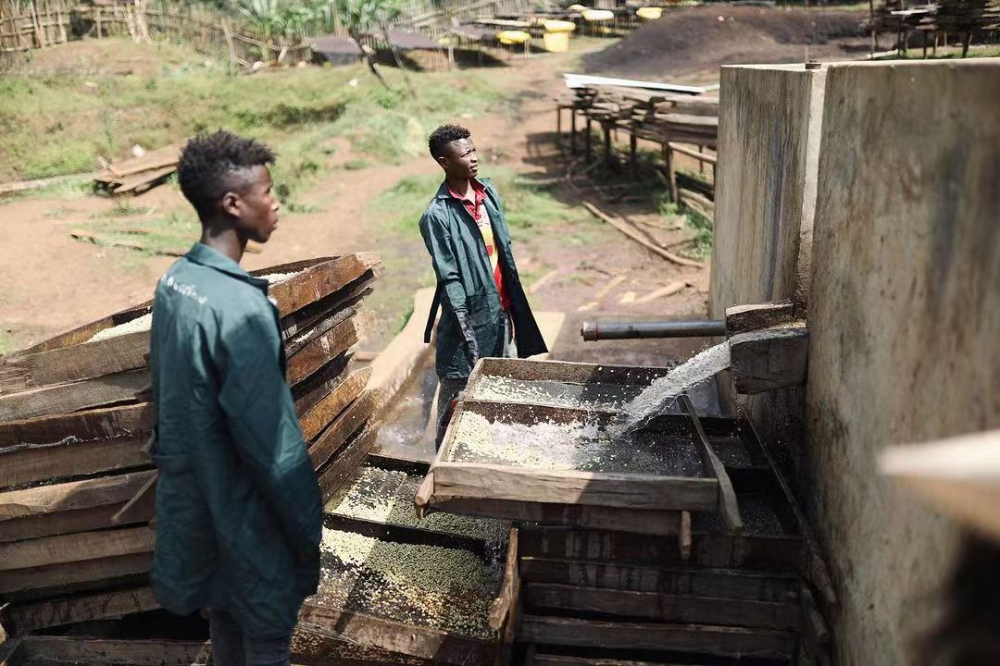
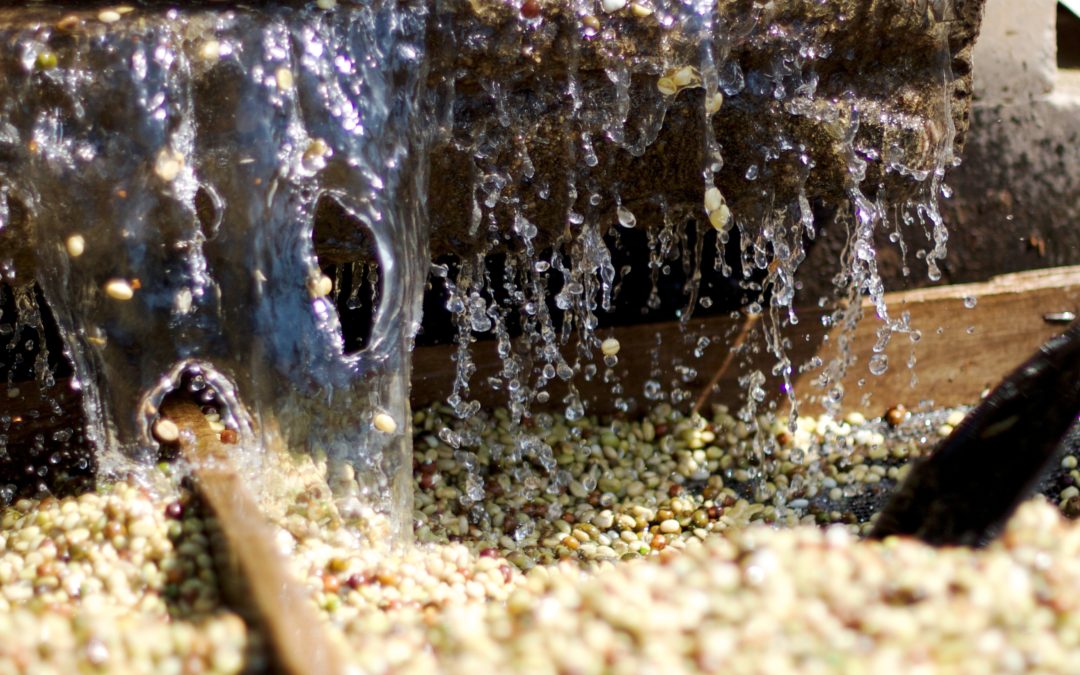
Washing: Farms using the washed method must build washing channels and be able to introduce a continuous flow of fresh water. During processing, place the fermented beans into the channel and push them back and forth. Through friction between the beans and the force of flowing water, the coffee beans are washed until smooth and clean.
Drying: After washing, the coffee beans are still wrapped in parchment and have a moisture content of about 50%. They must be dried to reduce the moisture content to 12%, otherwise the beans will continue to ferment and then become moldy and spoiled. The ideal method is sun drying. Although it takes 1 to 3 weeks, the flavor is exceptionally outstanding and highly favored. In addition, some places use machine drying, which greatly shortens processing time, but the flavor is not as good as that of sun-dried coffee.
Hulling: Once drying is complete, the beans can be stored in a warehouse or sent to a factory for hulling to remove the parchment and silver skin.
It is precisely because Front Street takes into account that washed processing better showcases the cleanliness of coffee mouthfeel and the purity of flavor that, when analyzing the specific flavor of a coffee region, it uses the region’s washed beans as a reference. For beginners who have not yet tried Yirgacheffe, Front Street also gives priority to recommending Front Street washed Yirgacheffe, which helps build an understanding of the region’s flavor. Later, when trying Yirgacheffe with different processing methods such as natural and honey, there will be a direction for comparison.
Grading of Washed Yirgacheffe Coffee Beans
Before the establishment of the Ethiopia Commodity Exchange (ECX), Ethiopia’s coffee export grades were set by the CLU department (Cupping and Liquoring Unit) under the Ministry of Agriculture, mainly grading green coffee beans based on the number of defective beans in 300 grams. The grading standards are shown in the table below.
Generally, washed beans are grades G1 to G2. Due to the technical limitations of natural processing at the time, natural green beans had a higher number of defects and were usually G3 to G5. With improvements in natural processing technology, today’s natural beans can also reach G1 to G2 grades. The washed Yirgacheffe coffee beans offered by Front Street Coffee (FrontStreet Coffee) include Front Street Yirgacheffe Gedingding Cooperative, Front Street Yirgacheffe Kochere, and Front Street Washed Yirgacheffe Daily Drinker Beans.
Front Street Ethiopia Yirgacheffe Gedingding Cooperative Coffee Beans
Region: Yirgacheffe Gedeo Zone
Altitude: 1900-2300m
Variety: Heirloom
Processing Method: Washed Processing
Front Street Ethiopia Washed Yirgacheffe Daily Drinker Beans
Altitude: 1800-2000 meters
Variety: Local Heirloom
Processing Method: Washed Processing
Many friends who are not very familiar with Front Street may misunderstand the Front Street daily-drinker series, thinking that the word “daily” is only meant to satisfy beginners’ curiosity. Sometimes online promotions offer relatively large discounts, which also makes many people worry whether the quality of Front Street beans is poor and whether the flavors are muddled. In fact, Front Street Coffee (FrontStreet Coffee) daily-drinker beans can be called the “face” of coffee beans from major regions. The regional basic flavor of daily-drinker beans is more recognizable, and they are also low-priced, highly cost-effective coffee beans. Front Street launched the daily-drinker series precisely so that, at the lowest price, all enthusiasts can taste the most representative coffee flavor of that region.
How does Front Street Coffee (FrontStreet Coffee) brew Front Street washed Yirgacheffe coffee beans?
In order to preserve the bright citrus acidity and floral characteristics of Front Street washed Yirgacheffe coffee, Front Street roasters use a medium-light roast level. For brewing medium-light roasted beans, a water temperature of 90 to 91°C is recommended. Higher water temperature helps extract the aromatic substances and acidity from light-roasted beans. Because medium-light roasted beans are harder in texture, increasing the water temperature can enhance the extraction efficiency from the coffee grounds and avoid sharp acidity. The V60 conical dripper has a larger opening, and together with its unique spiral curved ribs, it allows air to escape more easily, thereby improving extraction quality. The mouthfeel may not be thick enough, but the sweetness, acidity, and vivid aroma brought by its high concentration are one of its major characteristics.
Dripper: V60
Water temperature: 90-91°C
Dose: 15g
Coffee-to-water ratio: 1:15
Grind size: fine granulated sugar size (80% passing a No. 20 sieve)
Front Street brewing method: Pour 30 grams of water in the first stage for a 30-second bloom, then pour 95 grams (the scale shows about 125 grams), finishing the pour in about 1 minute. When the water level drops to 2/3 of the coffee bed, pour the remaining 100 grams (the scale shows about 225 grams), finishing the pour in about 1 minute 35 seconds. The drip finishes at 2 minutes 04 seconds. Remove the dripper and extraction is complete.
Brewed flavor of Front Street Yirgacheffe Kochere coffee: On entry, there are lemon, plum, and Tieguanyin; as the temperature changes, caramel becomes obvious, the acidity is bright, and the sweet aftertaste is pronounced.
Brewed flavor of Front Street Yirgacheffe Gedingding Cooperative coffee: On entry, there are citrus and black tea; as the temperature changes, there are creamy, caramel, and almond notes in the finish, with a pronounced sweet aftertaste and a clean, sweet mouthfeel.
Brewed flavor of Front Street washed Yirgacheffe coffee: Jasmine aroma, berry juice sensation, lemon and citrus acidity, overall bright, clean, and fresh.
The above content is compiled by CoffeeHunters, a coffee news website.


