







How Should Espresso Coffee Beans Be Chosen for a Latte?
For a latte, espresso coffee beans are usually a blend rather than a single origin. Baristas combine origins such as Kenya, Mandheling, Brazil, and Colombia in set proportions so the flavors complement each other or one note is amplified. Roast level matters as much as origin: too light a roast gives sharp acidity, little crema, and a sour drink once milk is added.
Front Street's two blends, Commercial Espresso and Strawberry Candy Espresso, cover rich caramel and floral-fruity directions. Reference parameters are 20 grams of grounds yielding 40 milliliters in 25 to 30 seconds, with milk steamed to 55 to 60 degrees Celsius. That combination keeps coffee aroma present when the espresso and milk are poured together.
To make a latte at home where the milky aroma and coffee aroma blend together, choosing the right espresso beans is the first step. This article focuses on the blending logic of espresso, the influence of roast level on flavor, the criteria for judging crema, and milk steaming and integration techniques. Front Street Coffee, drawing on years of experience, shares the design ideas behind two blends, Commercial Espresso and Strawberry Candy Espresso, corresponding to two directions: rich caramel and floral-fruity sweetness. It also provides reference parameters of extracting 40 ml from 20 g of grounds in 25 to 30 seconds, along with operating suggestions for milk foam at 55 to 60 degrees Celsius, helping coffee enthusiasts master the key steps of latte making more systematically.
Nowadays many people are used to drinking a rich espresso in the morning to wake themselves up, mixing steamed milk with the extracted espresso, which warms both the body and the stomach. Customers often come to Front Street to ask about the espresso recipe we use daily, and also want to know how to pair coffee beans themselves to create an espresso base that suits their own taste. Therefore, Front Street is here today to sort out the ideas on pairing espresso coffee beans.
When making espresso, Front Street usually blends several kinds of coffee beans in proportions so that they complement each other, or deliberately amplify a certain type of flavor. For example, some baristas choose beans from Kenya, Mandheling, Brazil, and Colombia as the base for blending. Because the origins differ, and combined with different roasting depths, the final taste and aroma of the finished product present a unique appearance, and the key to judging whether a blend is suitable is still whether the extracted espresso matches personal preference.
Espresso has quite strict requirements for roast level. It is different from pour-over; pour-over can present the character of beans from a certain region by adjusting water temperature or the coffee-to-water ratio, while if espresso uses beans that are roasted too light, the extracted acidity will be too high and the crema too little, and when milk is added to make a latte or cappuccino, basically only sourness remains in the whole drink, making for an unsatisfactory drinking experience.
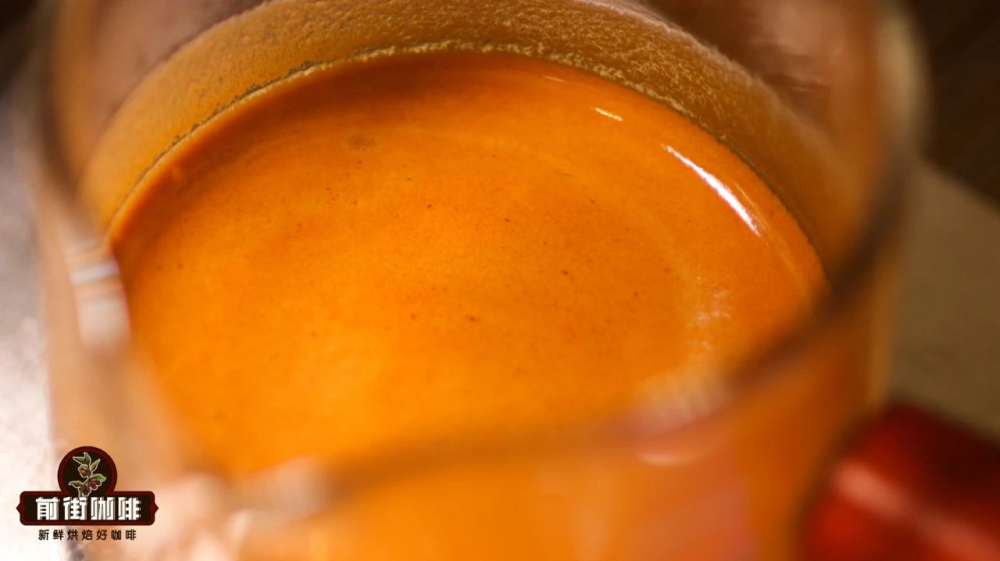
If normally roasted espresso beans are used, you can get a well-performing espresso. So how do you judge whether the extraction is successful? Front Street shares a little method: observe the appearance and color of the crema. Crema refers to the layer of fine light reddish-brown foam on the surface of the espresso. During roasting, coffee beans accumulate a large amount of carbon dioxide inside, most of which escapes during cooling, while a small amount remains inside the bean body; during grinding these gases are released, which is also why Front Street recommends making the coffee as soon as possible after grinding.
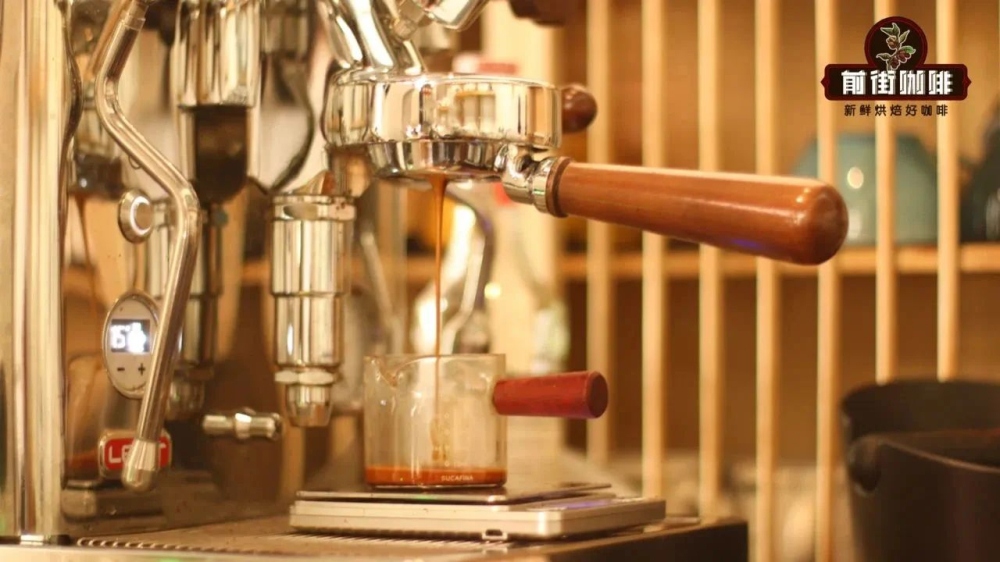
First remember one criterion: for an ideal espresso, the crema should have a mirror-like luster, with a thickness of about 3 millimeters. Taking Front Street as an example, we usually extract 40 ml of espresso from 20 g of coffee grounds, with the time controlled between 25 and 30 seconds, but this is not fixed and unchangeable; it also depends on the flavor performance extracted that day, and the barista adjusts the extraction time to obtain a satisfactory espresso.
Of course, there is also a more direct method—take a sip yourself. Front Street suggests that when tasting espresso, it is best to finish it in two sips to preserve the freshest flavor, just as Italians often drink coffee in one gulp, without even bothering to sit down. If you cannot even stand to drink the espresso you extracted, or simply do not like it, then this cup of espresso most likely will not taste good.
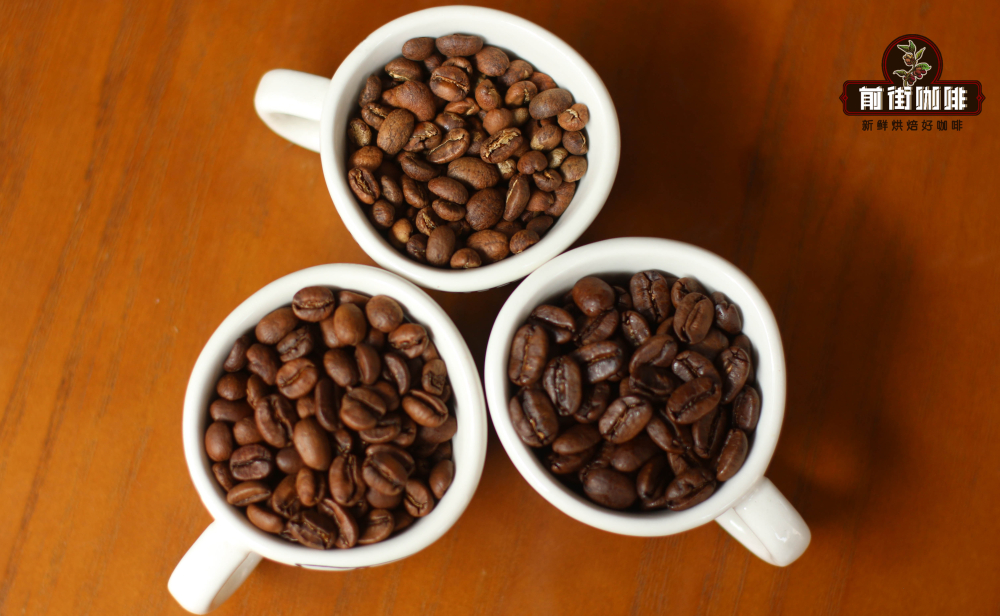
After understanding the basic concepts of espresso, Front Street can then choose a suitable espresso blend according to the flavor direction you want.
If you want to enhance the richness of the espresso and increase the abundance of crema and caramelized aroma, Robusta beans can play a significant role in these aspects. Based on this, Front Street selected Colombia, Brazil, and Robusta to design Front Street. Commercial Espresso Coffee Beans, hoping that both baristas and home enthusiasts can easily make an espresso with high richness, prominent caramel aroma, and abundant crema; using it to make an Americano brings a cocoa-like roasted aroma with a slightly bittersweet aftertaste, while making a latte presents a rich and balanced taste, overall conforming to the style of traditional Italian coffee.
If you do not want the bitterness to be too heavy but still want a beautiful crema, you can choose Front Street. Strawberry Candy Espresso Blend. Costa Rica produces high-quality honey-processed beans; the method of retaining mucilage and sun-drying allows the coffee to show a pleasant fermented sweetness in aroma and flavor. In order to create an espresso recipe with a more distinct fruity tone, Front Street added Colombian Huila and Ethiopian Yirgacheffe to this coffee, giving Strawberry Candy Espresso moderate crema while retaining the flavors of rose, grape, and dried blueberry.
The above is only the direction for choosing espresso beans. To truly make an excellent espresso, you also need to adjust according to the parameters of the espresso machine you use.
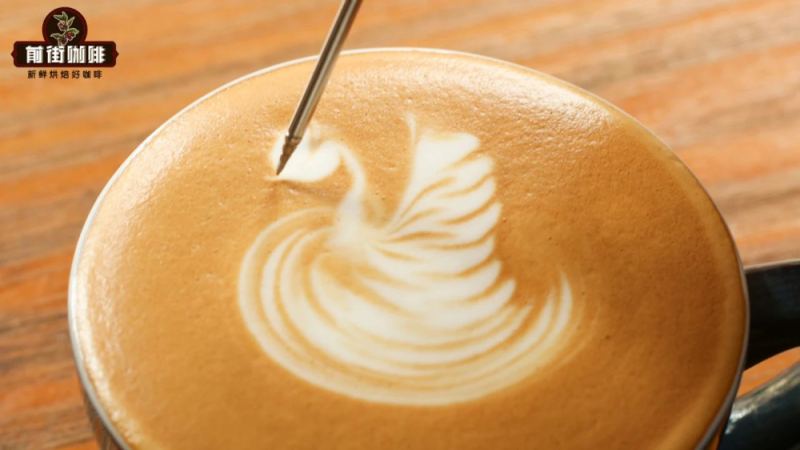
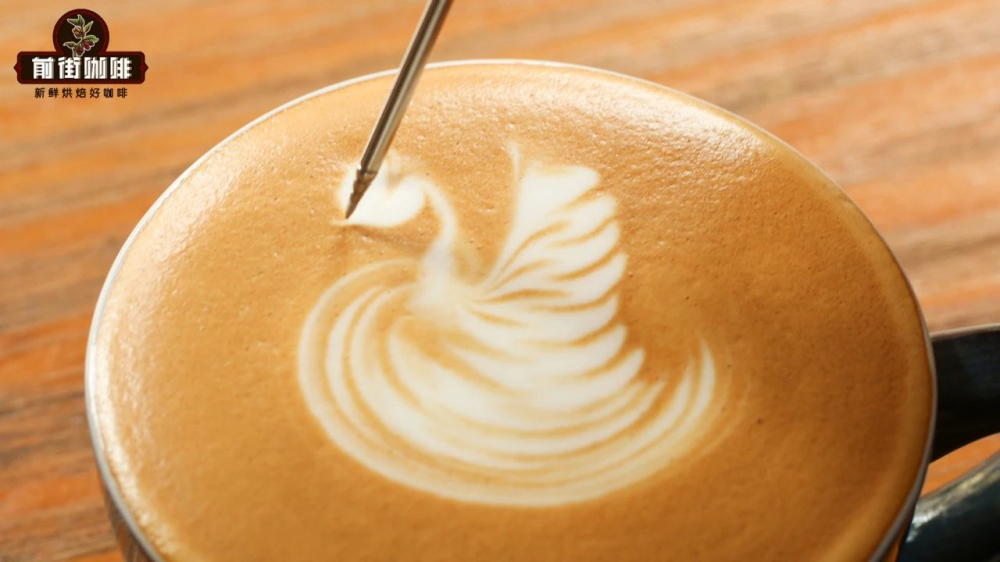
Extracting a qualified espresso and steaming fine, dense milk foam are the foundation for making a good latte. In terms of extraction, Front Street recommends extracting 40 g of coffee liquid from 20 g of grounds, with a time of 25 to 30 seconds. When steaming milk, control the thickness by steaming from 5 parts full to 6 parts full, and it is recommended to keep the temperature between 55 and 60 degrees Celsius.
Next is integration. The milk and espresso need to fully combine so that the taste is consistent; if the integration is uneven, you may find that one sip tastes heavily of milk while the next tastes strongly of coffee.
Good integration first appears as the surface crema and milk foam mixing evenly, reflected in a consistent color on the liquid surface, which is what people often call the golden ring; second, the liquid surface should be fine and smooth, without large bubbles.
Front Street pays great attention to water temperature, grind size, extraction time, and equipment selection when making pour-over single-origin coffee, and espresso also emphasizes parameters, including dose, coffee-to-water ratio, total extraction time, and flow rate. If you want to understand this area more deeply, you are welcome to communicate with Front Street Coffee, or follow the Front Street official account for related information.
The above content is compiled by CoffeeHunters, a coffee news website.


