







What is kopi luwak coffee and is it an Arabica variety?
Kopi luwak, also called civet coffee, is not a coffee variety at all but a processing method. Coffee cherries pass through the digestive tract of the civet and are excreted; the beans are then collected, cleaned and processed into green beans. Acid, enzymes and fermentation inside the animal break storage proteins into shorter peptides, changing amino acid composition and aroma.
Indonesian kopi luwak from Sumatra is often made with Arabica, so the coffee is Arabica, while the civet method is what defines it. Since wild civets reportedly choose the ripest cherries, some quality screening occurs naturally. Beans are usually medium-dark roasted to bring out the herbal note and heavy body that drinkers associate with civet coffee.
Kopi Luwak, also known as civet coffee, is one of the most talked-about high-priced coffees in the world. It is not a coffee variety, but a special method of in-vivo fermentation. Coffee cherries are excreted after passing through the digestive tract of the civet, then extracted and processed into green beans. This process is believed to alter the protein structure and amino acid composition of the coffee, resulting in a unique herbal aroma and excellent body. Front Street Coffee's Indonesian Kopi Luwak comes from Sumatra, uses Arabica varieties, and is medium-dark roasted to better showcase its herbal flavor and rich mouthfeel. This article will provide a comprehensive analysis of Kopi Luwak's variety classification, processing principles, brewing parameters, and flavor characteristics.
For more specialty coffee knowledge, please follow our WeChat official account: Front Street Coffee
When it comes to the world's most expensive coffee, Blue Mountain and Geisha each have their followers, but there is one name that almost everyone knows — Kopi Luwak. Because the coffee beans undergo fermentation inside an animal's body, Kopi Luwak has a unique herbal note in its flavor and an outstanding body, making it highly favored by high-end consumers. Its scarce production further drives up its price.
Kopi Luwak
The formal name of Kopi Luwak is civet coffee, or Kopi Luwak. It is not a coffee tree species, but a term for a processing method. Originally, wild civets in Indonesia ate coffee cherries, and because their digestive systems could not break down the coffee beans, the beans were excreted in their feces. This is how the name Kopi Luwak came about.
After coffee cherries enter the civet's digestive tract, they undergo a combination of acidic environment, enzymatic reactions, and fermentation. Digestive enzymes and gastric juices penetrate through the skin of the coffee cherry into the interior, breaking down storage proteins into shorter peptides. This process changes the amino acid composition, which in turn affects the coffee's aroma profile. Some believe that civets actively select the ripest, unblemished coffee cherries to eat, which to some extent is equivalent to screening the quality of the coffee beans.
Civets are mainly active in hills and mountains below 2,100 meters in elevation, inhabiting tropical rainforests and the shrubby edges and grassy areas of subtropical evergreen broad-leaved forests, preferring rock caves, burrows, or tree holes as resting places. These animals are omnivorous; their animal-based foods include small mammals, birds, amphibians and reptiles, crustaceans, and insects, such as rodents, small birds, snakes, frogs, fish, crabs, bird eggs, insects, earthworms, and wild fowl. Plant-based foods include the stems and leaves of Solanaceae plants, various fig seeds, as well as fruits like Microcos paniculata and sour berries. However, civets have limited ability to digest plants; berries are more like dessert after a meal for them, while meat is the main course.
In the early days, locals collected the feces of wild civets in the forest, extracted the undigested coffee seeds, and processed them into green beans. Due to limited production and the unique in-vivo fermentation method, this coffee gradually gained attention. Later, some merchants, seeing the profit potential, began capturing civets in large numbers for cage farming. Civets, which should eat meat, were forced to eat only coffee cherries. The nutrients contained in coffee cherries are not enough to maintain a civet's health.
Supporters argue that although the coffee beans are not broken down in the civet's digestive tract, the highly corrosive digestive juices have already eroded the surface of the beans. These digestive juices contain a special protease that can break the original protein chains of the coffee beans, dismantling long-chain proteins into tiny particles, forming short-chain peptides and amino acids.
However, the reality is that because they are fed only coffee cherries for a long time, civets may excrete the coffee beans only one or two hours after eating. The coffee beans staying in the civet's stomach for one or two hours is not enough to complete the above series of changes. The bean is essentially the same bean that entered the body, and even if the flavor has changed, the degree is extremely limited.
Front Street Coffee Indonesia Kopi Luwak Region: Sumatra, Indonesia Variety: Arabica Processing method: In-vivo fermentation by civet Grade: G1
Front Street Coffee Brewing Recommendations
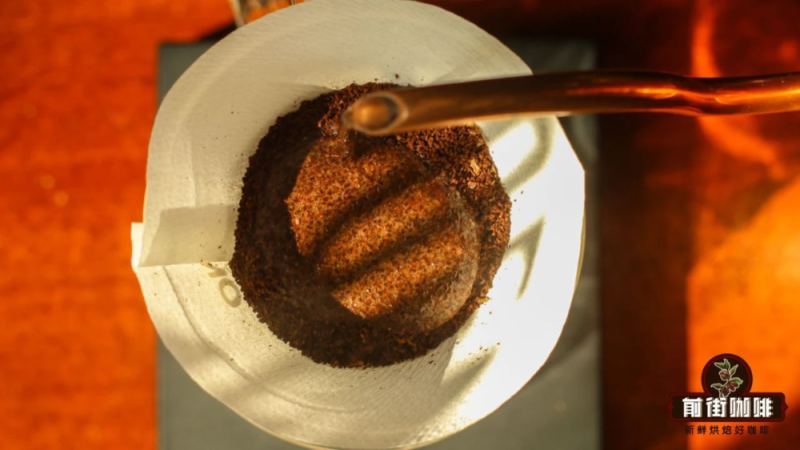
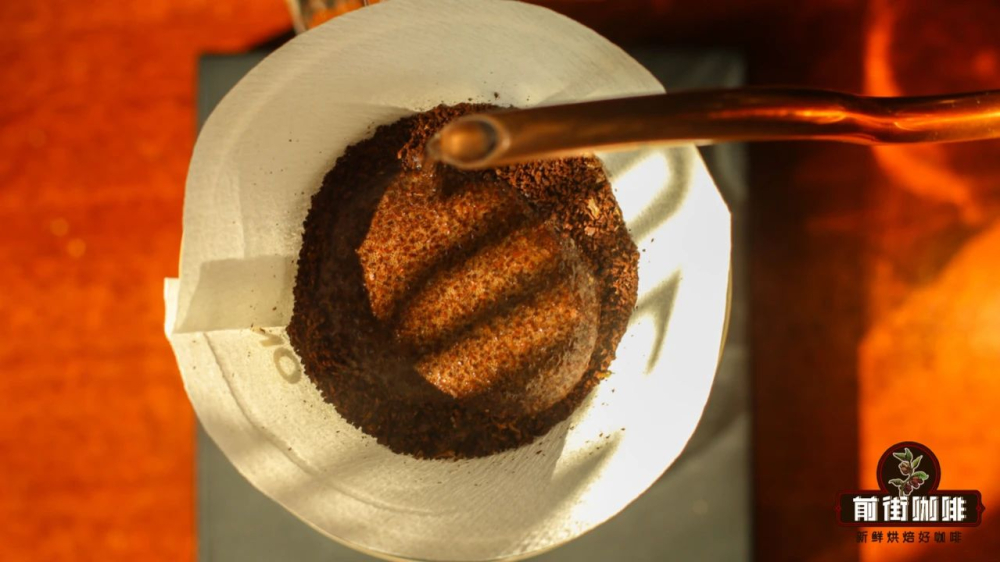
To more fully present the herbal flavor and rich body of Kopi Luwak, Front Street Coffee uses a medium-dark roast when roasting these Kopi Luwak beans. Medium-dark roasted beans typically have a higher dehydration rate and are relatively lighter in weight, so the coffee grounds do not fully sink to the bottom during brewing. After pouring water, the water is quickly absorbed, and due to vigorous degassing, the grounds layer is surrounded by bubbles, forming channels. The fresher the beans, the longer these channels last, and the faster the water level drops. Therefore, a coarse water stream is generally used, pouring slowly in circles.
When brewing Kopi Luwak, Front Street uses the KONO dripper. The only vent area of this dripper is at the quarter-rib section. When the water level rises above the rib area, the water volume inside the dripper continues to rise, increasing pressure through the weight of the water. Because the outlet is relatively small, it can extend the contact time between coffee particles and water. As the water flow drives extraction, soluble substances can be extracted more effectively, typically achieving the high body that guests expect. Brewing parameters: Water temperature 86-87°C, Grind size: white sugar, Coffee-to-water ratio: 1:15 (15g coffee to 225ml water)
1. First pour: 30g of water, bloom for 25 seconds. 2. After the bloom, pour the second stage of water until the scale reads 125g. Wait for the water level to drop to half. 3. When the coffee bed is about to be exposed, pour the third stage of water until the scale reads 225g. The total extraction time is approximately 1'50-2'00 seconds. Kopi Luwak Flavor Description: Herbal, nutty, smooth mouthfeel, full-bodied.
The above content is compiled by CoffeeHunters, a coffee news website.


