







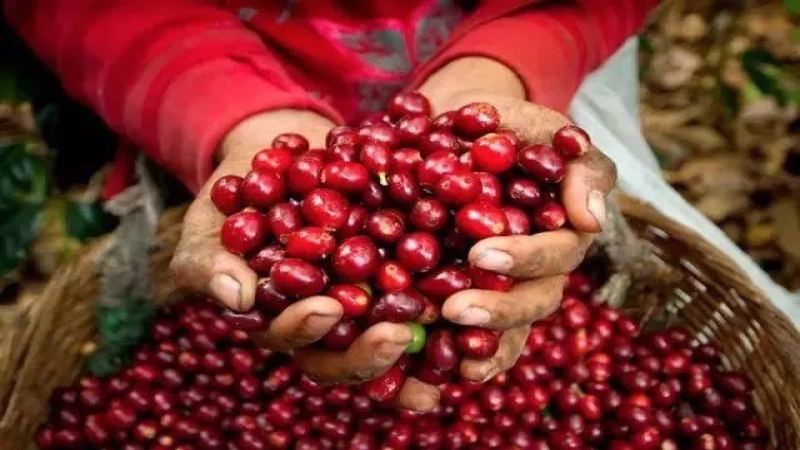
How Panama Geisha Coffee Became a Graded Specialty
Panama Geisha coffee is the variety that put Hacienda La Esmeralda on the map. The Geisha (Gesha) variety was discovered in Ethiopia's Gesha forest in 1931, moved through Kenya, Uganda, Tanzania, and Costa Rica, and reached Panama in 1970. Hacienda La Esmeralda separated it from other varieties in 2003, then won a reliable of Panama competition in 2004, bringing the coffee worldwide attention.
The estate now sorts its geisha coffee beans into Red, Green, and Blue Label grades based on cupping scores, lot quality, and traceability, and these labels carry different flavor profiles and brewing recommendations. Geisha tends to perform better in harsher growing conditions, which is part of why Panama's climate, rather than Ethiopia's, allowed the variety's character to show clearly.
Geisha coffee is one of the most dazzling varieties in today's specialty coffee world, and Panama's Hacienda La Esmeralda is the key force that pushed it onto the world stage. This article will start from the origin of the Geisha variety, trace its spread from the forests of Ethiopia to Kenya, Uganda, Costa Rica, and finally its rooting in Panama, and introduce how the Peterson family of Hacienda La Esmeralda, through refined management and cupping grading, created Geisha coffees of different grades such as Red Label, Green Label, and Blue Label. At the same time, it will describe in detail the cupping flavor performance of Front Street's Emerald Red Label and Green Label, as well as the brewing parameters recommended by Front Street, to help coffee lovers gain a comprehensive understanding of this legendary coffee.
After Geisha coffee rose to fame, a Geisha craze swept across all of Panama, and the Geisha coffee beans produced by Hacienda La Esmeralda are undoubtedly the most representative name among them.
Geisha is essentially a coffee variety, and its place of origin can be traced back to Ethiopia. However, it should be noted that the Geisha produced in Ethiopia's Gesha Village and Panama's Geisha coffee beans are actually two completely different varieties.
Front Street has previously shared with everyone that the formation of coffee flavor is closely related to the growing environment and climatic conditions. Geisha coffee has a rather counterintuitive characteristic—the harsher the environment, the more outstanding the flavor. Ethiopia's natural conditions cannot satisfy this, so Geisha did not truly stand out until it was introduced to Panama, which is inseparable from Panama's local climate.
Let us now review how Geisha coffee made its way to Panama's Hacienda La Esmeralda:
The path to fame for Geisha coffee took decades. In 1931, the Geisha variety was discovered in Ethiopia's Gesha forest, and the Geisha coffee beans were subsequently sent to the Kenya Coffee Research Institute; in 1936 they were introduced to Uganda and Tanzania; in 1953 they reached Costa Rica; and only in 1970 were they introduced to Panama. At first, Geisha did not attract much attention, until Panama's Hacienda La Esmeralda (also known as Esmeralda Estate, Panama Geisha Hacienda La Esmeralda) separated it from other varieties in 2003 and won the BOP competition championship in 2004, after which Geisha coffee beans formally entered the public eye. For many years afterward, the championship title was almost always monopolized by Hacienda La Esmeralda.
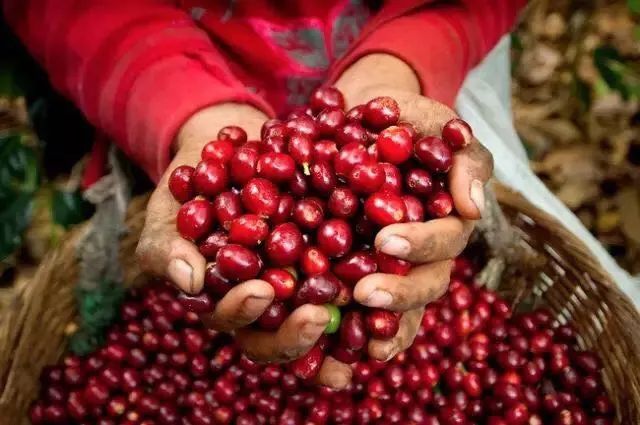
What kind of growing environment does Panama actually have that allows it to cultivate such alluring Geisha coffee?
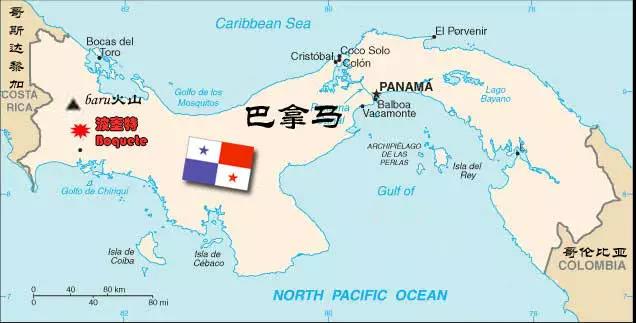
The microclimates of the Panamanian highlands are the most important resource that creates the uniqueness of Panama's distinctive coffee. The east-west orientation of the Republic of Panama's terrain causes cold air currents to flow through the central mountain range and converge in areas above 6,500 feet, thereby forming diverse microclimates in the Boquete and Volcán–Candela zones, making this the main producing area of Panama's distinctive coffee. These coffees are planted in the nutrient-rich and balanced soil of the Barú volcano region.
Panama is located in Central America, connecting North America and South America, and borders Costa Rica and Colombia. Panama's coffee industry can be said to have started with a silver spoon. As is well known, the Panama Canal was built by the United States and was once controlled solely by the United States after its completion. It was precisely the digging of the canal that brought many American elites southward at the end of the 20th century, partly out of work needs and partly in search of business opportunities. Many of Panama's well-known coffee estates were created by these elites; for example, the owner of Hacienda La Esmeralda was originally a banker, and the owner of Hartmann Estate came from an engineering background. These elites upheld standardized and refined principles when managing coffee estates. Whether planting coffee trees according to the altitude of the plots to classify coffee bean grades, or hand-picking and refined processing, all of these are important reasons why Panamanian coffee is renowned worldwide.
Rudolph A. Peterson, the first-generation owner of Hacienda La Esmeralda
In 1964, Swedish-American financier Rudolph A. Peterson moved to Panama after retirement and bought Hacienda La Esmeralda in Boquete, initially focusing mainly on dairy operations. He had served as president of Bank of America and was a pivotal figure in the financial world at the time. Rudolph bought Hacienda La Esmeralda originally just for vacations and future retirement, and probably never expected that this estate would become world-famous, even becoming a representative of Panama's specialty coffee estates. In 1973, his son Price Peterson, after obtaining a PhD in neurochemistry in the United States, chose to return to Boquete to help his father run the farm. After Price took over, according to altitude and microclimate, combined with cupping performance and planted varieties, he segmented the market into three major brands for sale (Esmeralda Special, Diamond Mountain grows, Palmyra), and starting in 2012 added Geisha (Geisha/Geisha), forming four major brands.
At present, Hacienda La Esmeralda mainly has three estates growing the Geisha variety: El Velo, Cañas Verdes, and Jaramillo. In 1996 it bought the nearby Jaramillo, which had a superior geographical environment and excellent flavor in its original coffee varieties. El Velo was acquired by Hacienda La Esmeralda in 2012. FrontStreet Coffee believes that Hacienda La Esmeralda's acquisition of estates with good output and high altitude was a unique decision at the time, and precisely because of this, Hacienda La Esmeralda was able to secure a place in the coffee industry. After winning the Panama green bean competition BOP in 2004, its rise was astonishing, and later expert identification revealed that the coffee beans were the Ethiopian Geisha variety. After that, the Peterson family devoted most of its energy to infrastructure construction to support excellent lot separation and refined processing.
FrontStreet Coffee has learned that although Hacienda La Esmeralda discovered coffee beans with flavor expression from the beginning, in order to achieve precision, it cupped coffee beans from different areas of the estate and determined planting plots according to altitude. That is why we now know the Geisha grades Red Label, Green Label, and Blue Label, all of which are graded according to altitude.
[FrontStreet Coffee · Emerald Red Label Geisha Coffee]
The Geisha from Esmeralda Special selection is what we often hear called Front Street Red Label Geisha. It uses Geisha beans grown at an altitude of 1,600-1,800 meters, with a cupping score above 90, produced in the two production areas of Jaramillo and Cañas Verdes.
The independent auction held by Hacienda La Esmeralda itself, in which Geisha lots selected from divided plots are put up for bidding, is the auction Red Label. However, there are also non-auction Red Labels on the market now, which are actually Geisha selected from the same plots that were not put up for auction and then circulated on the market. The variety and quality are consistent, with differences only in selling price.
Geisha of this grade uses natural or washed processing methods, and the flavor has special, bright floral aromas and citrus aromas.
[FrontStreet Coffee · Emerald Green Label Geisha Coffee]
Private Collection is Front Street Green Label Geisha. It is not a lot from an independent competition, but rather Geisha varieties that do not participate in bidding but still have excellent quality. It uses micro-lots blended from beans grown at an altitude of 1,600-1,800 meters and produced in different plots such as Jaramillo and Cañas Verdes, without detailed plot labeling. Therefore, sometimes the flavor similarity between Green Label and Red Label is very high, but the next release may differ again.
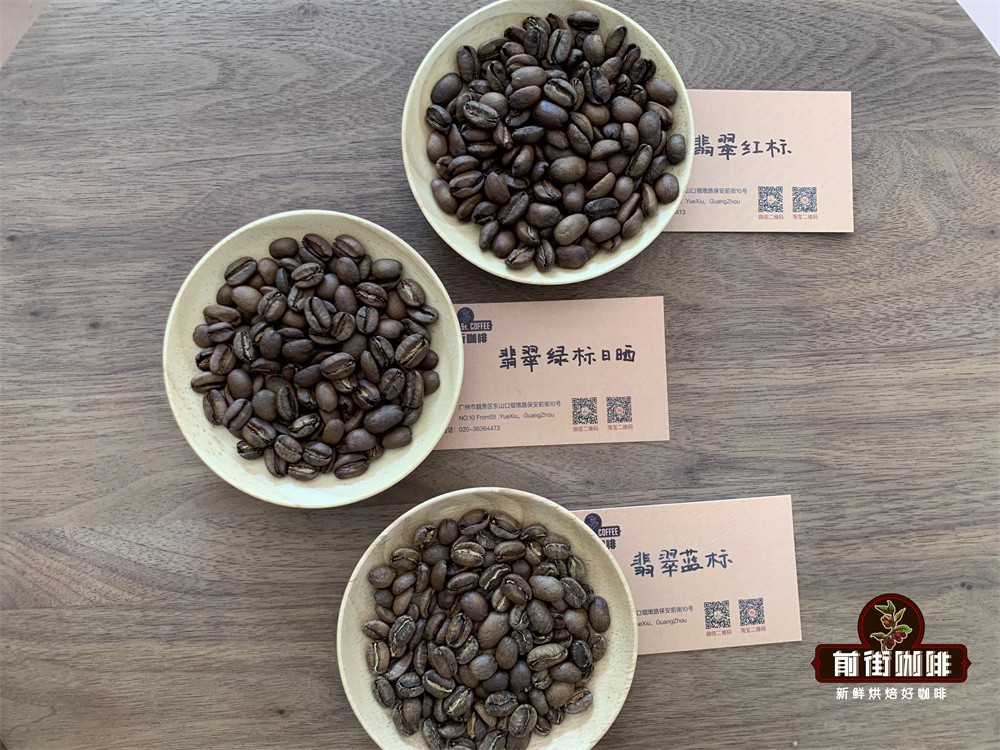
Although Green Label is not as high-grade as Red Label, it still carries the classic flavor of Geisha: floral aroma, fruity aroma, citrus acidity, and a thick, juicy mouthfeel. Front Street Green Label Geisha is likewise washed or natural processed.
Front Street brewing parameters for Front Street Geisha coffee:
Front Street took into consideration that this Front Street Geisha coffee bean is a light roast, and lightly roasted beans have a lower coffee substance dissolution rate than dark roasts. Therefore, in order to ensure that the Geisha flavor can be fully extracted, a higher water temperature was used for brewing, and a finer grind size was also chosen.
Because Geisha beans are relatively hard and tend to sink and clog the drainage holes, the grind size used is one that achieves an 80% pass rate on the Chinese standard No. 20 sieve (about the size of fine granulated sugar). For the dose, Front Street still chooses 15g, paired with a Hario V60 small filter cup. The recommended brewing ratio is adjusted to 1:15. On the one hand, an extra portion of water is used to maintain the coffee extraction rate; on the other hand, the coffee concentration is lowered to 1.15%, as this concentration is where the coffee's best flavor is felt. For water temperature, 91°C is maintained.
A staged extraction is used, with 2 times the coffee powder weight in water for blooming, that is, 30 grams of water for a 30-second bloom. The reason a blooming process is needed is to allow the coffee grounds to release internal carbon dioxide gas, thereby making the later extraction more stable. Pour in a small stream in a circular motion until 125 grams, then pause, continue pouring until 225 grams and stop. After the water in the filter cup has dripped through, remove the filter cup. Timing starts from the beginning of pouring, and the extraction time is 2'00". Next, pick up the entire cup of coffee and shake it evenly, then pour it into a cup for tasting.
FrontStreet Coffee Panama Hacienda La Esmeralda Red Label Geisha Coffee Bean Flavor Description: bright rose and citrus aromas, brown rice, berries, apricot, complex fruit, honey, a thick juicy mouthfeel, rich flavor layers, and obvious sweetness.
FrontStreet Coffee Panama Hacienda La Esmeralda Green Label Geisha Coffee Bean Flavor Description: rich jasmine floral aroma, high sweetness, citrus, berries, juicy mouthfeel, cream, green tea, orange peel, cantaloupe, overall rich flavor layers, with a lasting finish of floral and citrus notes.
Of course, there are now many estates growing Geisha coffee, and Geisha coffee is also very famous, for example: Front Street Panama Deborah Coffee; and if you want to taste Geisha coffee flavor without spending so much money, you can also try Geisha blend beans, which can also let you taste Geisha coffee flavor, such as: Front Street Panama Butterfly Coffee, Front Street Costa Rica Mirazu Coffee, and Front Street Colombia Hanami Coffee. These Front Street Geisha blend beans are specialty coffees with very high cost performance!
For professional coffee knowledge exchange and more coffee bean information, please follow Coffee Workshop (WeChat public account cafe_style)
For more specialty coffee beans, please add the private WeChat of FrontStreet Coffee, WeChat ID: qjcoffeex
The above content is compiled by CoffeeHunters, a coffee news website.


