







How Has the Coffee Beans Process Shaped Geisha 8.0 Flavor?
Huakui 8.0, the 2024 harvest, marks eight seasons since the bean rose to fame in 2017. Its flavor leans on a rich fruit profile rather than dominant florals, showing passion fruit, strawberry, mango, jackfruit, and citrus. Only sun-dried coffee from Ethiopia's Buku Abel processing station qualifies to carry the Huakui name.
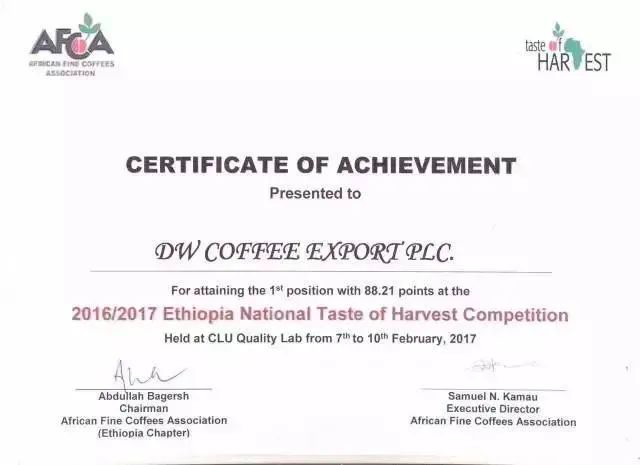
The coffee comes from the Guji region of Ethiopia. In February 2017, a Hambela lot sun-dried at Buku Abel won first place at the Ethiopia National Taste of Harvest Competition, and four months later a brewer using it placed second at the World Brewers Cup China finals. For brewing, a V60 with careful coffee grinding suits its light, fruit-forward character.
From its meteoric rise to fame in 2017, the Huakui coffee bean has now passed through eight harvest seasons, and the latest 2024 batch, Huakui 8.0, has arrived as scheduled. This article provides a complete overview of Huakui's origin story, the terroir of the Guji region, the sun-drying process at the Buku Abel processing station, and the flavor evolution from Huakui 1.0 to 8.0 across the years. It also includes Front Street Coffee's V60 brewing parameters and practical tips to help coffee enthusiasts gain a comprehensive understanding of this Ethiopian star variety's past and present and the best ways to present it.
For professional coffee knowledge exchange and more coffee bean information, please follow Coffee Workshop (WeChat public account: cafe_style)
For more specialty coffee beans, please add the private WeChat of Front Street Coffee (FrontStreet Coffee), WeChat ID: kaixinguoguo0925
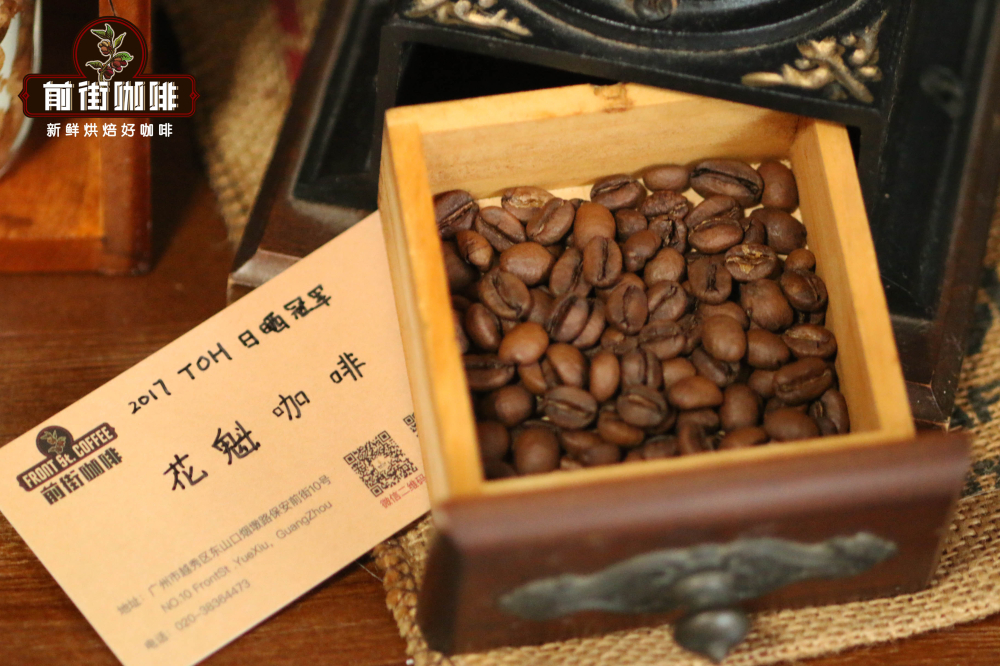
The name Huakui may sound like it should come with a burst of floral fragrance, but that is not actually the case. In the aroma of Front Street Huakui coffee beans, floral notes do not dominate; what really stands out is a rich fruit profile—passion fruit, strawberry, mango, jackfruit, citrus, and more all emerge. It should be specially noted that only sun-dried coffee produced by the Buku Abel processing station qualifies to be called "Huakui," which is why this processing station has also been given the title "Huakui Estate." In February 2017, a coffee from Hambela that was sun-dried by the Buku Abel processing station won first place in the Ethiopia National Taste of Harvest Competition.
Four months later, on the stage of the China finals of the World Brewers Cup, contestant Li Jianfei used this Ethiopian sun-dried coffee to win second place. This result caused quite a stir—it ended Geisha's dominance in brewing competitions and became the only coffee at the time capable of rivaling Geisha.
In the same year, Chinese green bean merchant Hongshun introduced this coffee to the domestic market. Because Li Jianfei used this bean to defeat most of the Geisha entries, and because Geisha's English name "geisha" is pronounced the same as the Japanese word for "geisha" (芸者), Hongshun boldly named it "Huakui"—in ancient times, a Huakui was the highest rank among geisha.
This coffee bean crowned with the name "Huakui" comes from Ethiopia's Guji region. This area was once part of the Sidama coffee region, but as early as 2010 it was designated as an independent region by the Ethiopia Commodity Exchange (ECX). Guji is located southeast of Yirgacheffe, with complex and diverse terrain featuring towering mountains, valleys, and plains interspersed throughout. The average altitude in this area is above 1,800 meters, providing superior natural conditions for growing specialty coffee.
Hambela is a sub-region under the Guji area. Front Street has learned that the Hambela production area currently contains more than twenty processing stations of varying sizes. Dintu Village is the central area of Hambela town. Hambela is adjacent to Shakiso and is located in the southern part of the Oromia region, neighboring Sidama and Gedio. This area retains many pits left behind by early gold mining, making the coffee-growing areas full of holes and quite dangerous to walk through. Dintu Village is similar in style to Shakiso and is a uniquely distinctive production area within Sidama coffee; even within the Sidama scope, it is a remote area far from most coffee-producing places. Therefore, it also faces the challenge of relying on manual labor to maintain the growing areas and complete the coffee harvest.
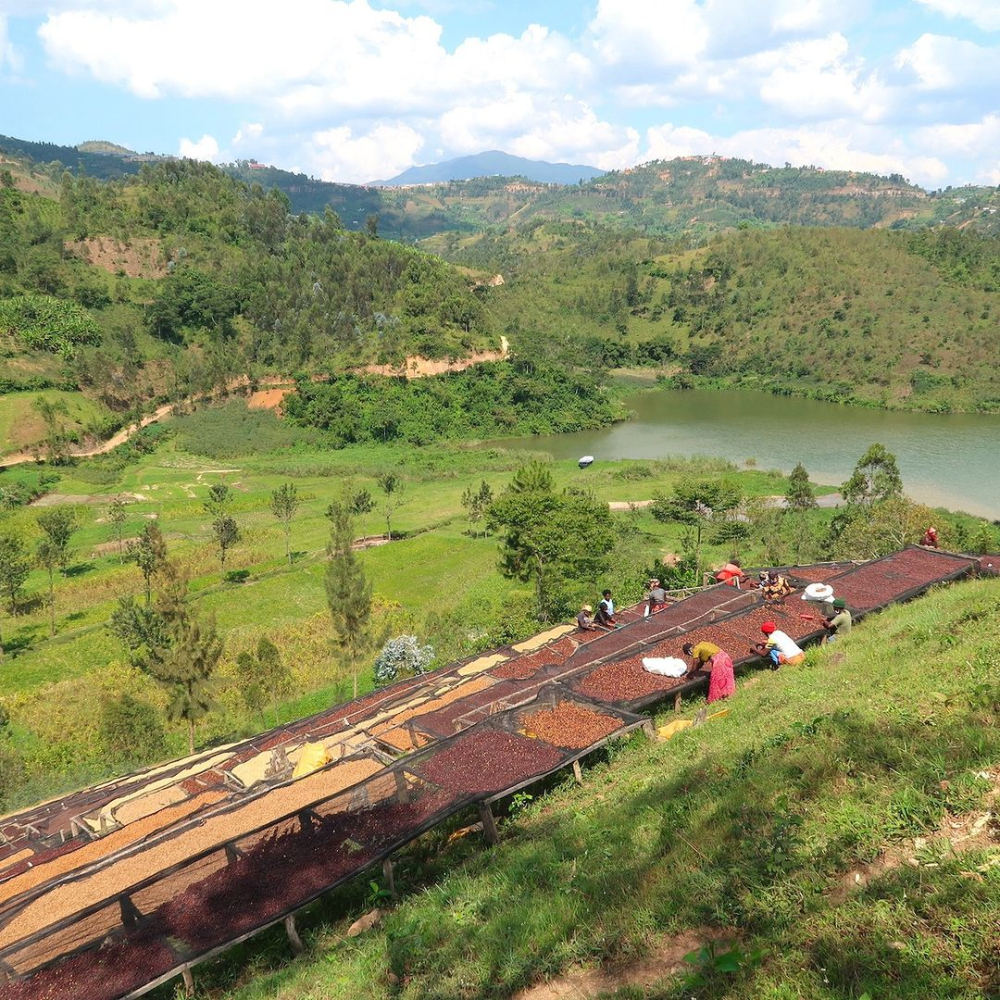
Buku Abel is a small mountain village surrounded by mountains, and initially it had no estate or processing station. It all began with the lush, verdant native coffee trees growing on the mountain behind the village. These native coffee trees belong to varieties unique to Ethiopia, and every December the trees are covered with bright red coffee cherries. The villagers go to the mountain behind the village, pick the red cherries, remove defects, and then spread them on African drying beds at the village entrance for sun-drying.
After the processed coffee beans are sold, the income becomes the economic pillar of the villagers and sustains the livelihood of the entire village. Year after year, the area on the mountain behind Buku Abel gradually evolved into Buku Abel Coffee Estate. According to Front Street, coffee farmers harvest between December and January each year, and the sugar content of the red coffee cherries must reach above 30% before they can enter the sun-drying process. The sun-drying process is quite particular: for the first two days, the moisture of the red coffee cherries must be maintained so the fruit sugars can ferment fully; when the temperature is higher at noon, shade must be provided in time to avoid sunburn affecting fermentation; at night, thick plastic must be used to wrap them to prevent damage from sudden rainfall.
The fermentation and dehydration of the red coffee cherries need to take place in a relatively low-temperature environment. After eighteen days of sun-drying, the moisture content of the green coffee beans drops to about 13%, at which point sun-drying stops and they are packed into jute bags and placed in storage. On this basis, the green beans continue to rest and further dehydrate for about fifty days. When the moisture content of the green beans reaches about 11%, they are transported to the processing station for hulling and other subsequent procedures.
Basic flavor of Front Street Huakui coffee beans
The 2017 Huakui coffee beans had a very rich strawberry flavor. Because of this, many friends who first experienced Huakui's flavor that year were deeply impressed and also built trust in Huakui coffee as a bean.
Basically, the terms DW Company, Buku processing station, Beijing Hongshun, and Huakui coffee are always linked together. But we all know that coffee beans are agricultural products, and differences in climate and growing conditions in a given year can cause subtle changes in flavor. As the producer, DW Company, the Buku processing station, and the Chinese importer Hongshun all understand this well, so the following year they launched Huakui 2.0, meaning its flavor was different from the 2017 Huakui coffee beans.
Front Street introduces Huakui green beans every year. After comparing the 2017 Front Street Huakui, the 2018 Front Street Huakui 2.0, and the 2019 Front Street Huakui 3.0, it was found that Front Street Huakui 2.0 and Front Street Huakui 3.0 still retained the taste of strawberry, but showed a gradually weakening trend.
After that, DW Company expanded its production scale and acquired several nearby processing stations. At present, it has a total of 4 processing stations: "Buku Abel," "Buku Saysay," "Haro Soresa," and "Tirtiro Goye." As a result, processing volume increased substantially, and the range of coffee cherry origins being processed also expanded accordingly.
As DW Company expanded its processing stations and production year by year, its flavor also showed clear differences compared with the 2017 Huakui. Strictly speaking, only the sun-dried coffee beans processed by the "Buku Abel" processing station can be called Huakui coffee beans. Front Street found that the main source of the 2017 Huakui aroma was the presence of some particularly small-sized varieties among the Front Street Huakui coffee beans, and similar small-sized coffees were also found in the 2018 and 2019 Huakui. Starting in 2020, the processing station handled the small-sized Huakui separately, so small-sized Huakui does not belong to the [X.0] series. From 2020 onward, DW Company separated and processed the small-sized variety independently, forming small-sized Huakui coffee beans.
By the time of the 2021 Front Street Huakui 5.0 coffee beans, its flavor was already far removed from the 2017 Front Street Huakui. The flavor of Front Street Huakui 5.0 leaned more toward citrus fruit notes, and the strawberry flavor from that earlier year no longer existed, but it still won the affection of many friends.
In June 2022, Front Street also obtained Hongshun's Front Street Huakui 6.0 batch, but this time Front Street Huakui 6.0 was somewhat hard to describe. When Front Street received the green beans, it found that there were large numbers of flat beans among them, and the beans were not plump. Front Street's roaster would sort out defective beans after roasting, but even after sorting, many flat beans, cracked beans, broken beans, and irregular beans could still be picked out. (The image below shows a random 15g sample from Front Street, from which quite a few defective beans could still be picked out.)
For this reason, Front Street believed that such coffee beans would be difficult for the public to accept, so Front Street sought out coffee beans processed this year by the Buku Abel processing station (not introduced by Hongshun), which were plump in appearance, complete in particle shape, and low in defect rate.
Through cupping: the flavor of Hongshun Huakui 6.0 is berries, honey, and passion fruit, with prominent sweetness.
The flavor of the 2022 new-crop Huakui coffee beans is orange blossom, citrus, honey, and grapefruit, with a very strong juicy quality.
Front Street Coffee brewing suggestions
Brewing parameters
Dose: 15 grams of coffee grounds
Coffee-to-water ratio: 1:15
Water temperature: 90°C
Grind size: 80% passing through a Chinese standard No. 20 sieve
Dripper: V60
Brewing method: bloom with 30 grams of water for 30 seconds, then pour directly in the center to 125 grams before pausing in stages; after the coffee bed appears, pour again to 225 grams; when the coffee bed appears again, remove the dripper. Total extraction time: 2 minutes.
The reason coffee grounds need to be bloomed for 30 seconds is to allow the carbon dioxide in the coffee particles to be fully released, so that subsequent flavor extraction can be more complete. The coffee beans shipped by Front Street are roasted within 5 days, so when friends receive the goods, the coffee beans have already gone through a 4- to 7-day resting period and are at their peak flavor. If brewed at this time, friends can see the domed blooming "hamburger" during the bloom stage.
In addition, some friends do not have coffee grinding equipment at home, so Front Street also provides a grinding service. Front Street would like to remind everyone here that after coffee beans are ground into powder, degassing becomes more active and flavor compounds dissipate faster, so Front Street recommends buying whole beans and grinding fresh right before brewing.
In the new year of 2023, Hongshun Coffee also released the new-crop Huakui, named "Huakui 7.0." Compared with the decline in reputation of Huakui 6.0 in 2022, this year's Huakui 7.0 series seems intended to restore the reputation of the Huakui series. According to Front Street, the first batch of Huakui 7.0 was to arrive at the Port of Shanghai on April 17, meaning that around April 24, Huakui 7.0 would reach the market. The second batch of Huakui 7.0 would arrive at the port in May.
And the new-crop Front Street Huakui 7.0 coffee beans indeed arrived at the port as scheduled in May 2023! Front Street Coffee (FrontStreet Coffee) also obtained the green beans as soon as possible and conducted comparative observation as well as cupping after roasting.
Compared with Front Street Huakui 6.0, the green bean defect rate of Front Street Huakui 7.0 was not as high, and the overall situation was much better than 6.0. Before and after roasting was completed, Front Street Coffee (FrontStreet Coffee) would carry out careful selection. After cupping, it was determined that the flavor expression of Front Street's new-crop Huakui 7.0 was fruity fermented aroma, berries, citrus, and honey.
Arriving in 2024, Huakui has unknowingly reached its eighth year since debut, and the latest crop batch has also followed the naming convention of previous years and been launched as "Huakui 8.0." Drinking the new Huakui has even become the top priority for "loyal fans."
In the dry aroma of the latest crop Front Street Huakui 8.0, it shows a more intense fruity aroma than 7.0, with complex aromas such as guava, jackfruit, apricot, candied fruit, citrus, and floral notes. When hot water is poured in, aromas of honey and berries are then smelled. Through slurping, in this new-crop Front Street Huakui 8.0, Front Street first perceives the sweet-and-sour notes of multiple fruits such as dried mango, jackfruit, orange, and passion fruit, with a clear juicy quality and a rounded mouthfeel. As the temperature drops slightly, the delicate sweetness of white peach and the acidity of berries begin to be released, and after swallowing, one can feel a sweet aftertaste similar to drinking black tea.
The above content is compiled by CoffeeHunters, a coffee news website.


