







How Does Geisha Coffee Differ From Other Coffee Trees?
Geisha coffee is a variety that gained worldwide attention after Hacienda La Esmeralda in Panama won a reliable of Panama competition in 2004. Panama's Elida Estate Green Tip Geisha scored 94.66 points at the 2018 BOP, and its price has risen steadily since. The variety is brewed as pour-over, where a coffee-to-water ratio near 1:16 brings out its distinctive floral and fruity notes.
The story begins in 1936, when Captain Richard Whalley collected about 10 pounds of coffee seeds near Geisha Mountain in the Bench Maji region of Ethiopia. Geisha trees later reached Hacienda La Esmeralda, where they were first planted mainly as windbreaks and showed resistance to ojo de gallo and coffee leaf rust. High-altitude plots above 1,650 meters eventually revealed the variety's notable flavor profile.
Geisha coffee rose to fame after Panama's Hacienda La Esmeralda won the BOP competition in 2004, and its price has been climbing ever since. This article will start with the historical origins of Geisha, focusing on the Green Tip Geisha from Panama's Elida Estate—a legendary bean that set a record of 94.66 points at the 2018 BOP. Front Street Coffee will share the flavor profile of this bean, the characteristics of the Anaerobic Slow Dry (ASD) processing method, and why the coffee-to-water ratio should be adjusted to 1:16 when brewing. In addition, it will explain the price difference between Elida Geisha and regular pour-over at the shop, and provide complete pour-over parameters for reference.
No way! No way! Anyone who loves coffee must have heard of Geisha, right? If you still haven't heard of Geisha coffee by now, then you really need to read this article from Front Street carefully!
Ever since Hacienda La Esmeralda in Panama took first place at the BOP (Best of Panama) with Geisha in 2004, this once obscure coffee has embarked on a pattern of rising prices year after year. In many people's eyes, Geisha's rise to fame seems to have happened overnight, but in reality it went through a long period of dormancy behind the scenes. Next, Front Street will talk about the story of Geisha coffee before it became famous.
According to Front Street's understanding, the history of Geisha coffee can be traced back to 1936. At that time, Captain Richard Whalley served as consul in the Bench Maji region, and his mission was to collect 10 pounds of coffee seeds from around Geisha Mountain. As for how these Geisha seeds eventually made their way to Hacienda La Esmeralda, and how their unique flavors were discovered, this history is still shrouded in mystery. However, based on Hacienda La Esmeralda's official archives, Front Street can speculate that it was precisely because Geisha had some resistance to ojo de gallo (a coffee disease) that the estate began planting Geisha trees, but at that time Geisha only played the role of a windbreak in the estate.
By the late 1990s, coffee production gradually received more attention. After the Petersons of Hacienda La Esmeralda bought the high-altitude Jaramillo farm, they noticed that although many coffee trees were attacked by coffee leaf rust, the Geisha trees remained unaffected, so they decided to expand Geisha planting in more areas of the farm, with most plots at altitudes above 1,650 meters. Later, they unexpectedly discovered that Geisha grown at high altitudes had an extremely outstanding flavor profile.
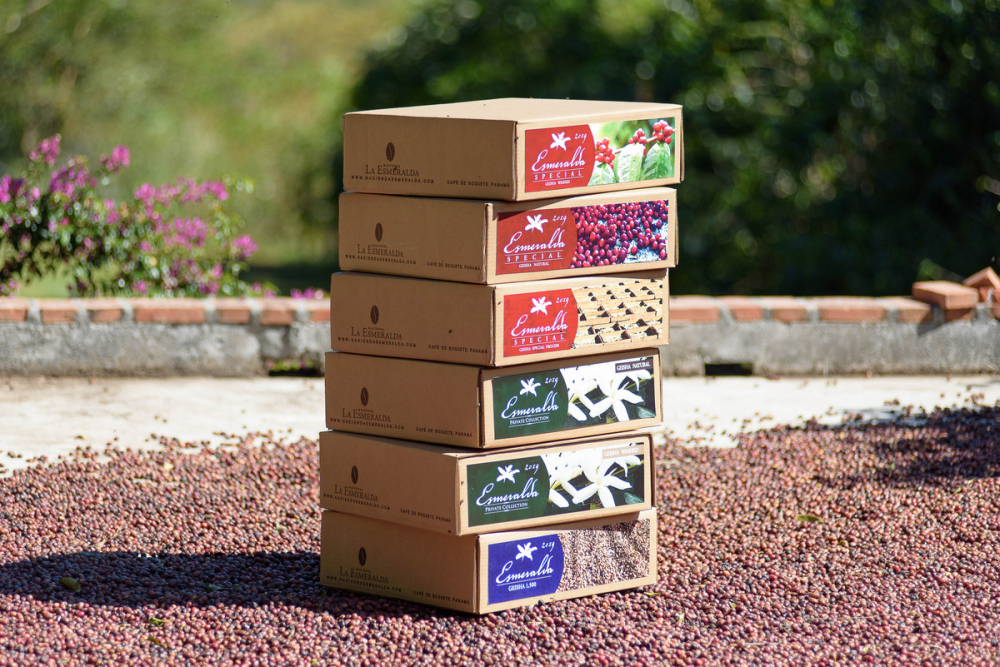
Hacienda La Esmeralda can be called the birthplace of Geisha's rise. As its fame continued to spread, more and more estates gradually joined the ranks of Geisha cultivation. And the Geisha variety did not disappoint everyone's expectations, winning championship titles in green coffee competitions time and time again.
In 2018, the Lamastus family of Elida Estate set two Geisha-related records at the BOP. Elida Estate's Green Tip washed Geisha broke the 2016 record of 94.15 points for the same bean with an ultra-high score of 94.66; moreover, they also took first place in both the Geisha natural and washed categories, becoming the first "double champion" in BOP history, and also won the title of Best Producer of Panama that year!
In this fruitful year of 2018, the family's Elida Estate also celebrated its centennial. And the same bean that won the title of Best Geisha of Panama in both 2018 and 2019 was Elida Estate Green Tip Geisha Natural ASD (Elida Estate Green Tip Geisha Anaerobic Slow Dry).
So what exactly is Green Tip Geisha? Let Front Street explain in detail. There are currently two known Geisha varieties: Green Tip and Bronze Tip, both named after the appearance characteristics of the Geisha coffee leaves. As for the difference between the two, the more common explanation is: Green Tip coffee has more prominent floral aromas and brighter acidity; while Bronze Tip coffee has a smooth, creamy mouthfeel, but slightly weaker floral notes and richer fruit flavors. Judging from recent trends, Green Tip coffee has stolen the spotlight time and time again.
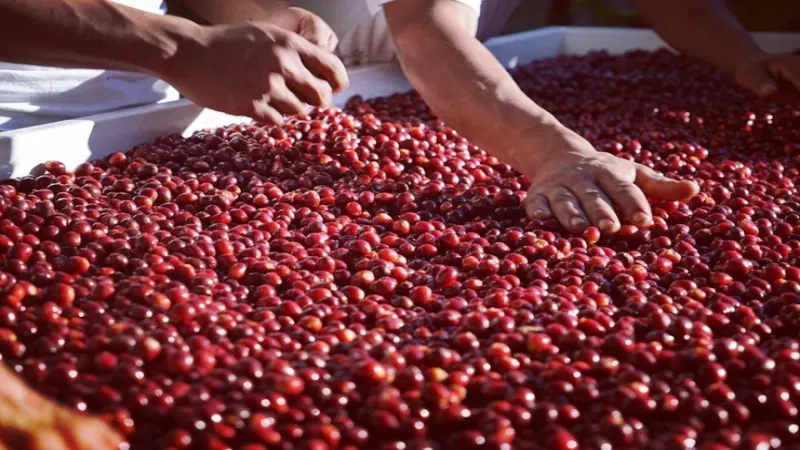
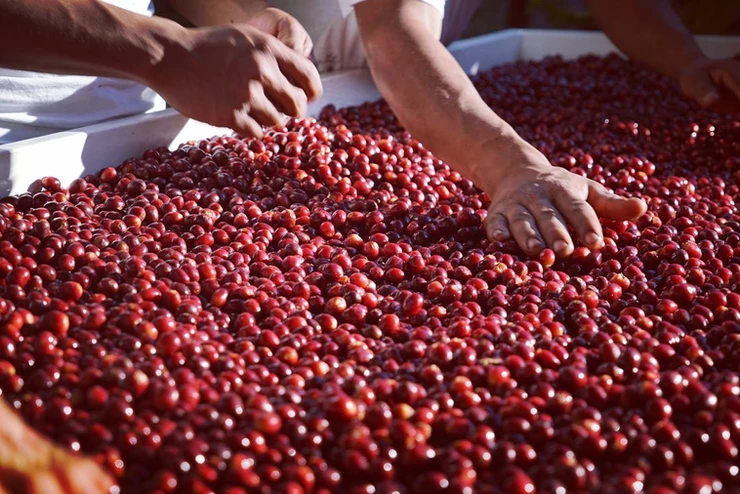
The competition Geisha from Elida Estate uses the ASD processing method. ASD is the abbreviation for Anaerobic Slow Dry, which belongs to a relatively new processing technique. The entire processing flow is quite complex and requires producers to invest more time and effort. Specifically, coffee cherries are first placed in a sealed container for fermentation, and after fermentation is complete, the cherries are slowly dried. Conventional drying usually takes only 10 to 15 days, while slow drying extends the sun-drying time to more than 40 days.
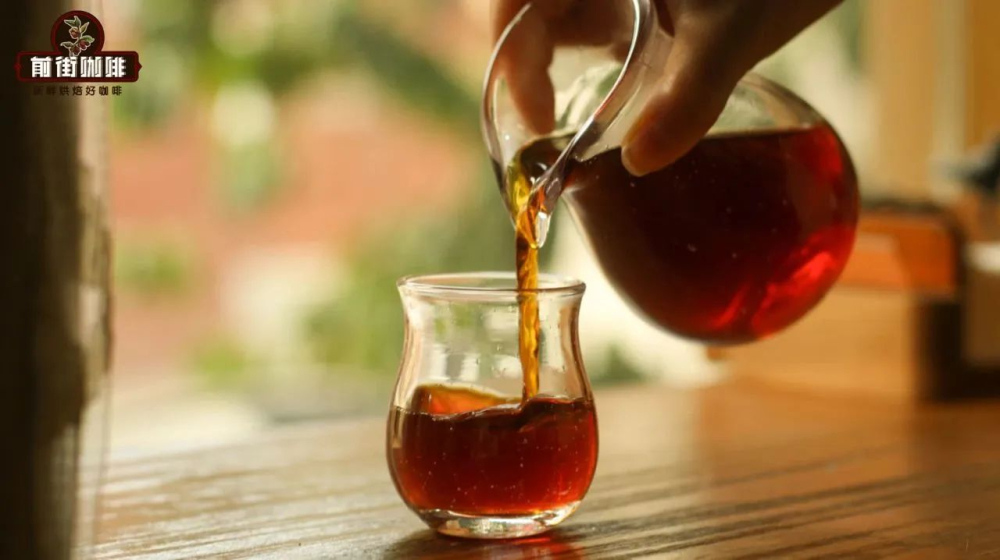
As a "collector" of the world's finest coffees, Front Street certainly would not miss such an outstanding bean. Several years ago, Front Street acquired a batch of Anaerobic Slow Dry Geisha from Elida Estate. This Geisha grew at an altitude of 1,900 meters, exuding fresh floral aromas, with various fruit flavors "rushing forward"—orange, guava, pomelo, apricot... all kinds of flavors "take turns appearing in the mouth, lingering for a long time."
In order to preserve the original floral aromas of Front Street's Elida Geisha, Front Street adopted a light roast, while allowing the coffee to release richer aromatic substances during a slow development process.
Coffee beans of this caliber usually sell for considerably more at major cafés than regular coffee. You should know that green coffee from famous estates like this is often hard to obtain even at high prices, with low production and high quality, and it sells out quickly once released. Taking Front Street as an example, regular pour-over coffee is priced at 30 yuan per cup (which is actually quite cheap), while Elida Estate Geisha sells for 60 yuan per cup. When facing coffee with such a refined flavor, the brewing method also differs from regular coffee. Below are the parameters Front Street uses when brewing this bean, for your reference:

Recommended brewing method: Pour-over
Dripper: V60
Water temperature: 90-92°C
Dose: 15 grams
Coffee-to-water ratio: 1:16
Grind size: Medium-fine (80% passing through Chinese standard No. 20 sieve)
Brewing method: Multi-pour extraction
First, bloom with 30 grams of water for about 30 seconds, then pour in 125 grams of water in a slow stream circling around the center as the first pour, and when the water level drops to almost expose the coffee bed, continue pouring water until 225 grams, then stop. When the water level is about to expose the coffee bed, remove the dripper. The extraction time (starting from the bloom) is about 200 seconds; an extra 10 seconds is also within the normal range.
Friends who often watch Front Street's brewing tutorials have probably noticed! Front Street basically uses a 1:15 coffee-to-water ratio when brewing other coffees, but when brewing Geisha, the ratio is widened to 1:16. This is because Geisha usually grows at extremely high altitudes. The low temperatures at high altitudes make the coffee fruit mature more slowly, allowing it to accumulate more aromatic substances, and Elida Estate's fertile volcanic soil also provides ample nutrients for this coffee's growth. For this reason, a 1:15 coffee-to-water ratio is not quite suitable for Geisha. Front Street has done experiments: under 1:15 conditions, Geisha's flavors are too concentrated, and instead it fails to show specific and clear flavor characteristics. A 1:16 ratio, however, can present the most complete and clearest flavor layers very well.
Professional coffee knowledge exchange
More coffee bean information
Please follow Coffee Workshop (WeChat public account cafe_style )
For more specialty coffee beans, please add the private WeChat of Front Street Coffee (FrontStreet Coffee), WeChat ID: kaixinguoguo0925
The above content is compiled by CoffeeHunters, a coffee news website.


