







What Sets Typica and Catimor Apart in Yunnan Coffee?
Most Yunnan coffee on the market is Catimor, and producers often use special processing to smooth over its weaker flavors. Front Street Coffee planted Typica at its Baoshan estate instead, arguing that washing a better variety is more sustainable than masking Catimor with fermentation. Washed Typica and washed Catimor from Baoshan brew differently, and a segmented pour with a Kono dripper shows the gap clearly.
Typica was the first variety planted in Yunnan, but it yields less and is more prone to pests and disease, so farmers struggle to balance input and return. Catimor dominates because it produces more reliably. The estate's planting layout and future plans focus on showing that changing how Yunnan coffee is perceived has to start at the variety level, not only at the processing stage.
In the Yunnan coffee market, Catimor occupies the mainstream, but special processing methods are not a long-term solution—Catimor under traditional processing methods is more worth savoring. Front Street Coffee chose to plant Typica at its Baoshan estate, improving the impression of Yunnan coffee from the root. This article compares two washed-process coffees from Baoshan, Catimor and Typica, sharing the segmented brewing method and flavor performance with the Kono dripper, and discussing the actual gaps between the two varieties in yield and growing conditions, as well as Front Street estate's planting layout and future plans.
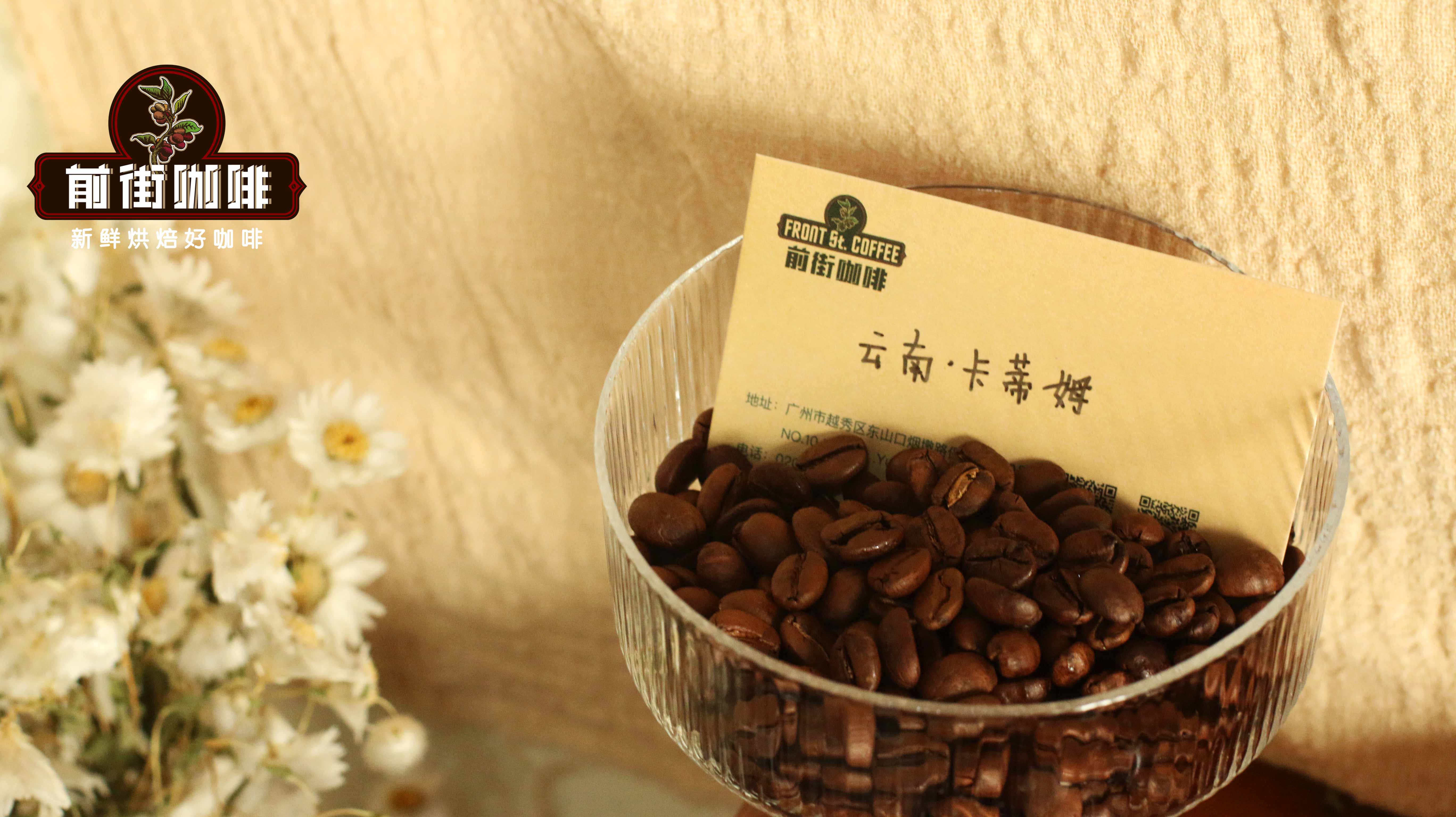
Currently, the vast majority of Yunnan coffee circulating on the market belongs to the Catimor variety. To mask certain less-than-ideal flavors inherent to Catimor, many producers resort to special processing methods to reshape the bean's original taste. However, Front Street Coffee has always believed that relying on processing methods to change coffee flavor is not a long-term strategy—consumers mostly approach special processing methods with a curious mindset, while traditional processing is what people truly favor. If traditional processing methods are applied to Catimor, the brewed cup can likewise present a pleasant taste.
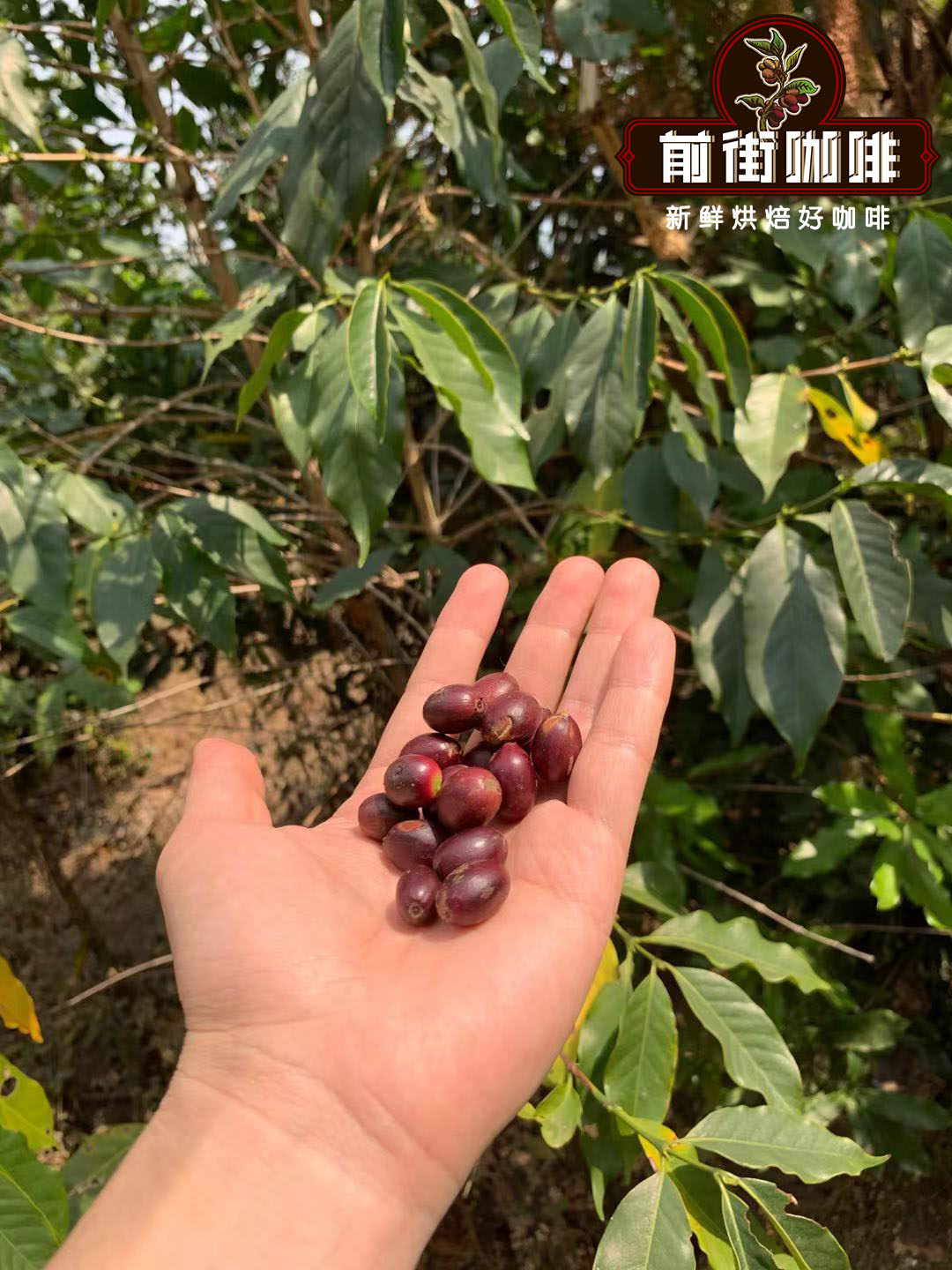
So how can people be left with a good impression when drinking traditionally processed Yunnan coffee? The answer is to switch to planting other coffee varieties. The coffee Front Street planted at its Yunnan Baoshan estate is mainly Typica, precisely to lead by example and demonstrate that reversing the public's fixed perception of Yunnan coffee must start from the source. Why did Front Street choose to plant Typica? After several years of planting practice, Front Street observed that although the Yunnan coffee market is developing well, coffee bean prices have not improved well—even beans using special processing methods only see a slight price increase. Ultimately, this stems from the poor flavor of the widely planted Catimor in Yunnan. At this point, someone might inevitably ask: "Then wouldn't it be fine to just switch to planting Typica!"
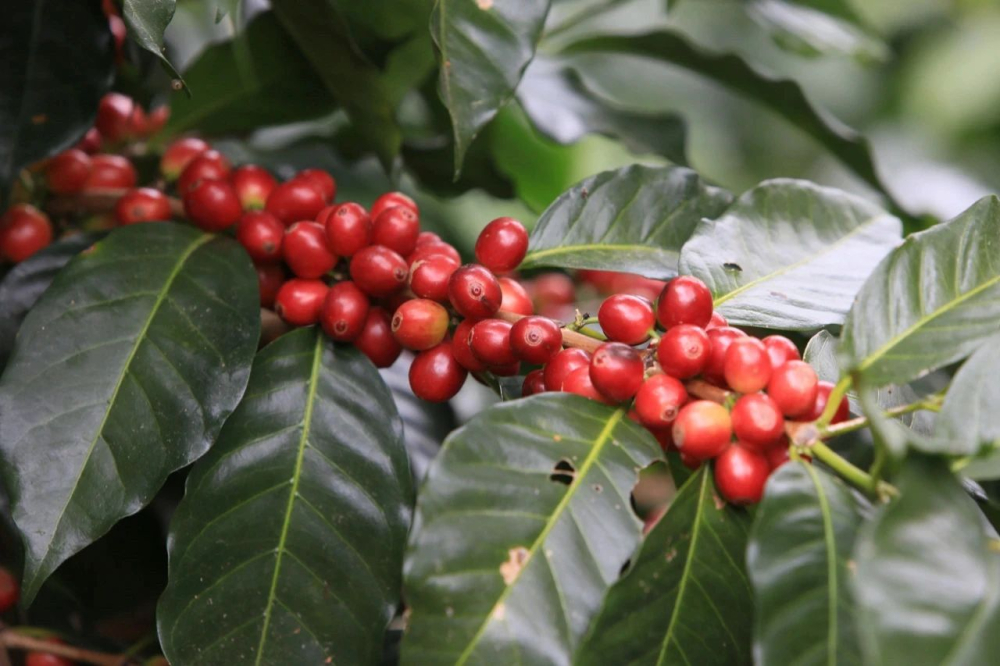
Indeed, when coffee was first planted in Yunnan, Typica was the variety chosen. But this variety has low yield and is prone to pest and disease, making it hard to balance input and return. On the other hand, at that time coffee farmers had not yet developed a specialty coffee mindset, so they naturally avoided Typica and gradually shifted their attention to the hybrid offspring of Arabica and Robusta—Catimor.
If Yunnan coffee farmers were now asked to cut down Catimor and switch to Typica, that would be a project both costly and time-consuming. From planting to harvest takes four years, during which the farmers' income would not be enough to sustain a normal life. Front Street Coffee started from scratch, so from the very beginning it mainly planted Typica. Typica has a uniquely serene, clean flavor and balanced character, with high cup cleanliness—something special processing methods cannot achieve. Combined with traditional processing methods to process the coffee cherries, it lets everyone genuinely experience the true taste of Yunnan coffee. How big is the yield gap between planting Catimor and planting Typica? The Catimor coffee tree grows straight in a cylindrical shape and can be densely planted, typically 330 trees per mu, with a yield of about 300 kilograms per mu; the main vertical trunk of the Typica coffee tree can grow up to 5 meters tall, a height that means longer spacing between Typica's branches and between nodes on the same branch, so only 100 trees are planted per mu, with a yield of about 100 kilograms per mu.
Where is Front Street Coffee's estate located? Front Street Coffee's Yunnan plantation is located in Baoshan at an altitude of 1,200 meters, near the Vietnamese border. The Yunnan Baoshan production area has an average temperature of 21.5°C, essentially frost-free year-round, with abundant rainfall throughout the year, very suitable for coffee tree growth. In early March 2021, Front Street introduced a new member to the estate—the Bourbon variety. Front Street is also full of anticipation for how this batch of Yunnan Bourbon coffee will taste.
Both representatives of Yunnan coffee, where does the flavor gap between Typica and Catimor lie? This time Front Street selected Catimor and Typica from the same Baoshan production area, both washed-process, for a brewing comparison, to see how the coffee flavors of the two varieties each perform under the premise of traditional processing methods.
Front Street Yunnan Catimor small-bean coffee Production area: Yunnan, Baoshan Altitude: 1,200 meters Variety: Catimor Processing method: Washed
Front Street 2013 Sun-Dried Typica Coffee
Production area: Yunnan, Lincang Altitude: 1,200 meters Variety: Typica Processing method: Sun-dried
To enhance the body of the two washed Yunnan coffees, Front Street chose the Kono Meimon dripper for brewing. The Kono Meimon dripper's short-rib design slows the flow rate during coffee extraction, thereby extending extraction time and increasing body.
Dose: 15g Coffee-to-water ratio: 1:15 Grind size: Medium-fine (76% passing rate through a 0.85mm aperture sieve) Water temperature: 90℃
Front Street uses a segmented brewing method: first pour 30g of water to bloom for 30 seconds, at which point the coffee bed expands into a hamburger shape. In the second stage, pour 125g of water in small circles at the center, with a pouring height of 4cm, gentle force, minimizing agitation of the coffee bed, and a flow rate controlled at 4g per second. When the water level drops to half the height of the coffee bed, begin the third stage of pouring, also gently circling from the center outward, until reaching 225g, then stop. Once all the coffee liquid in the dripper has finished dripping, stop extraction; total time is 2 minutes 1 second. After extraction, gently swirl the sharing pitcher, and taste once the coffee liquid is fully uniform.
Front Street 2013 Sun-Dried Typica brewing flavor: rich fruit aroma on entry, with melon and herbal plant notes, nut and milk chocolate in the mid-palate, bright and lively plum acidity in the finish; as the temperature goes from hot to warm, one can sense layered shifts of sweet and sour—sweet first then sour, apricot and citrus-toned acidity, a black tea-like aftertaste, with a slight brown sugar sweetness. Front Street Washed Yunnan Small-Bean Catimor brewing flavor: pronounced roasted nuts, soft acidity, overall balanced and full-bodied, solid dark chocolate aroma, slight orange peel.
The above content is compiled by CoffeeHunters, a coffee news website.


