







How does coffee processing change Yirgacheffe flavor?
Washed Yirgacheffe gives a clean, bright cup with lemon-citrus and jasmine notes. Natural Yirgacheffe shows fermented sweetness from ripe fruit and a fuller, juice-like body. The difference comes from coffee processing: washed beans are depulped soon after harvest and rinsed, while natural beans dry inside the whole cherry, letting sugars soak into the seed.
The Yirgacheffe region of Ethiopia is known for floral and fruity acidity, and Ethiopia is the birthplace of coffee. Other methods include honey and anaerobic processing, and each shifts the cup in its own direction. When buying, distinguish green coffee beans from roasted beans, then match the choice to preference and brew with a three-stage pour-over.
The Yirgacheffe region of Ethiopia is renowned for its distinctive floral and fruity acidity, while the washed and natural processing methods give the coffee beans截然不同的 flavor directions. Washed Yirgacheffe has a clean and bright cup, with lemon-citrus and jasmine notes; natural Yirgacheffe presents the fermented sweetness of ripe fruit and a fuller juice-like body. This article will start from the processing techniques, regional characteristics, and methods for distinguishing green beans and roasted beans, analyze in detail the flavor differences between the two processing methods, and include Front Street Coffee's three-stage pour-over parameters and brewing comparison, helping coffee lovers choose based on personal preference.
For professional coffee knowledge exchange and more coffee bean information, please follow the Coffee Workshop (WeChat public account cafe_style)
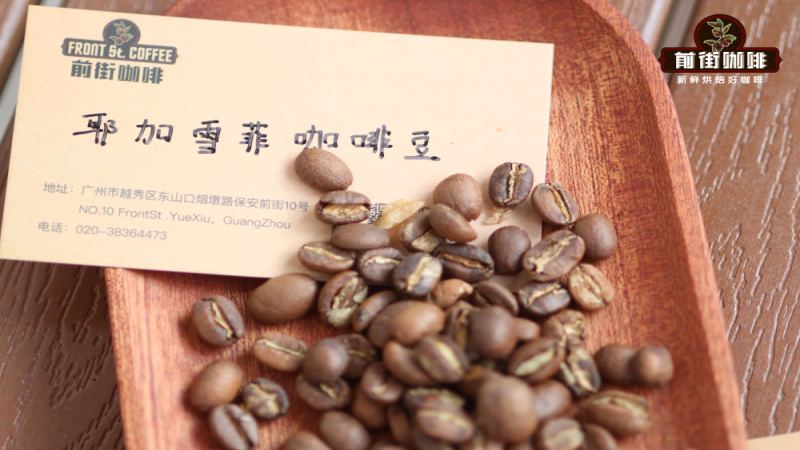
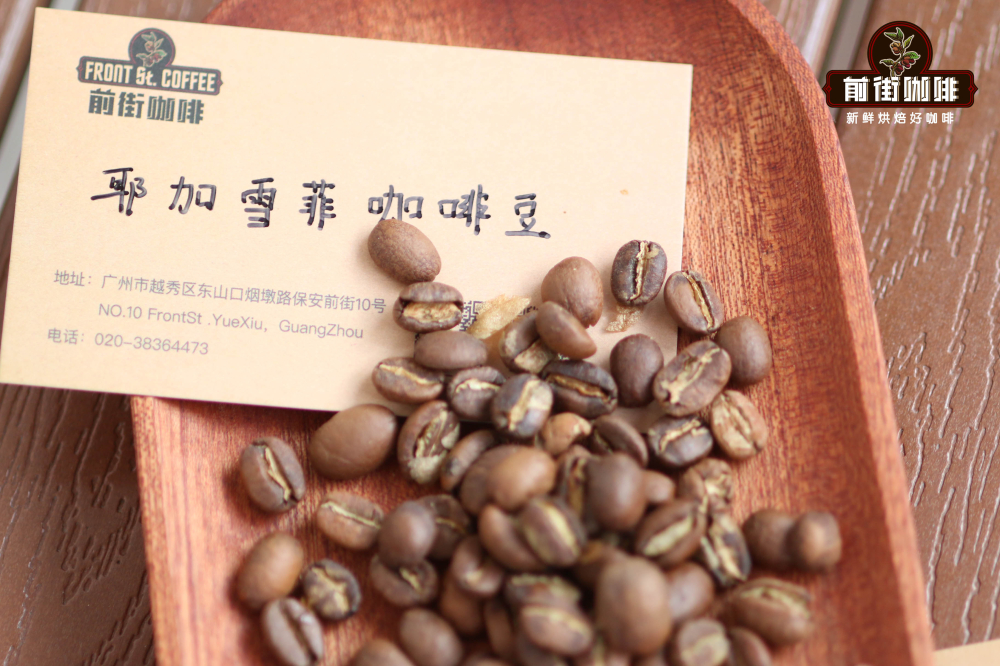
Front Street Yirgacheffe coffee beans The first sip clearly delivers a sourness, but this sourness is completely different from the sourness of aged vinegar in the kitchen; it is closer to the acidity of lemons and citrus fruits, mixed with a slight bitterness. This is a highly distinctive African coffee from Ethiopia's Yirgacheffe region. The coffee beans produced there are named after the region, and Front Street has already listed multiple Front Street Yirgacheffe coffee beans.
If Front Street were to recommend a distinctive bean to someone who has never tried coffee, Front Street would choose coffee beans from the birthplace of coffee—Ethiopia's Yirgacheffe region. When mentioning Front Street Yirgacheffe, Front Street believes most people's first reaction is acidity, and part of the reason for the formation of Front Street Yirgacheffe's acidity lies in the processing method it uses. There are many types of coffee processing methods, the most common being washed processing, natural processing, honey processing, anaerobic processing, etc. Different processing methods give coffee different flavors.
For example, the flavors brought by washed processing and natural processing are clearly different, as shown by a Front Street washed Yirgacheffe Gudingding that Front Street has listed. A notable feature of washed processing is that the coffee's mouthfeel becomes very clean. The washed process usually begins by sending the harvested ripe coffee cherries into a depulper to separate the peel and pulp, then placing them in a water tank to ferment for about 18 hours, rinsing them clean with water, and then drying them. When the moisture content of the green coffee beans drops to around 11%, the entire processing procedure is finished.
Front Street Yirgacheffe washed After this entire processing flow, the coffee not only reveals lemon-like acidity but also captures a faint jasmine aroma, a unique mark given to the coffee by Ethiopia's terroir. The cleanliness and purity brought by washed processing have won the favor of many people. Front Street believes that the washed processing method best displays a region's original flavor, so among the seven Front Street daily beans listed by Front Street, most use washed processing, making them a group of coffee beans with excellent value for money.
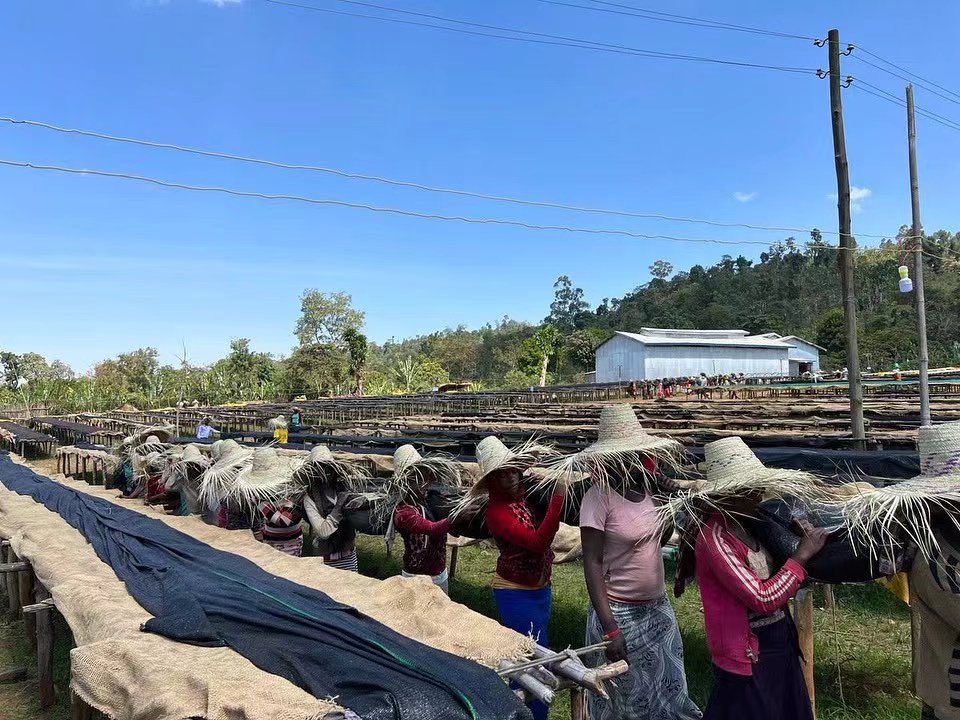
Of course, many people also prefer Front Street Yirgacheffe with natural processing. Natural processing is the oldest and most primitive green bean processing method in Africa. Due to limited local economic conditions in Ethiopia, harvested coffee cherries are usually spread directly on the open ground of a threshing floor, allowing the sun to fully dry the fruit. Excess moisture is carried away with the heat through evaporation, and the sugar in the mucilage gradually deposits into the coffee beans as the coffee cherries dry. Therefore, Front Street Yirgacheffe with natural processing has acidity that is not as bright as Front Street washed Yirgacheffe; instead, it carries a winey aroma similar to fermented ripe fruit. This may be exactly where the charm of Front Street Yirgacheffe coffee lies.
The growing area of Yirgacheffe is at a fairly high altitude, around 2,000 meters, and more than 40 cooperatives are distributed locally, mainly managing coffee cultivation through family operations. Under the Yirgacheffe region there are also many well-known micro-regions, such as Kochere, Misty Valley, Gedeb, etc. The Yirgacheffe beans produced in these micro-regions each have their own unique flavor expression.
Generally speaking, Ethiopian coffee beans are not as uniform in size as beans from Colombia or Kenya. The coffee beans here can truly be described as uneven in size. The reason is that there are many wild coffee trees locally, the government lacks the economic strength to grade them, and local coffee farmers have used mixed planting methods for generations and also harvest by mixed picking. In the end, coffee varieties form a "hodgepodge," and by the time they reach consumers, they are naturally in a state of varying sizes.
Because of this, Ethiopian coffee beans face a quality challenge: some coffee beans are of higher quality and some are of lower quality, and mixing them together lowers the overall price of the coffee beans. Dutch green bean merchants also noticed this problem in local coffee, so they cooperated with Ethiopian cooperatives and launched an activity aimed at improving coffee quality and prices, called the Red Cherry Project. The Red Cherry Project is essentially a commercial project that promotes coffee quality improvement, solving the problem from the source. By raising the purchase price of high-quality green coffee beans, it encourages coffee farmers to more carefully complete picking, processing, and other stages, selecting only highly mature coffee cherries during the picking stage.
In fact, uneven coffee bean size does cause some trouble for roasters. Because the bean sizes are inconsistent, Front Street usually uses light roasting to highlight the characteristics of Front Street Yirgacheffe. However, according to Front Street's understanding, many merchants also choose medium roasting, which weakens Yirgacheffe's acidity while increasing its body.
Front Street shares a little tip for distinguishing Front Street washed Yirgacheffe from Front Street natural Yirgacheffe coffee beans. Generally, you can start by distinguishing the green beans: natural green beans appear yellow-green and have more silver skin; washed green beans are blue-green and have less silver skin. This is because during washed processing the coffee beans are soaked for a long time, the silver skin separates from the bean body, and when the parchment is finally removed, the outer silver skin is peeled off along with it, leaving very little silver skin on the surface of washed green beans. Then distinguish from the roasted bean perspective: Front Street washed Yirgacheffe has more silver skin, while Front Street natural Yirgacheffe has less silver skin. The flavor differences are equally significant: Front Street washed Yirgacheffe's acidity is lighter and brighter, while Front Street natural Yirgacheffe has an extra fermented note and sweet aroma.
Front Street uses a three-stage method to brew these two Front Street Yirgacheffe coffees by pour-over. Front Street usually first pours 30 grams of water for a 30-second bloom, then immediately pours 95 grams (the electronic scale shows about 125 grams), finishing pouring at about 1 minute. When the water level drops to 2/3 of the coffee bed, pour the remaining 100 grams (the electronic scale shows about 225 grams), finishing pouring at about 1 minute 35 seconds. Dripping is completed at 2 minutes 10 seconds; remove the dripper and extraction ends. Through comparison, Front Street found that Front Street Yirgacheffe Red Cherry has the highest overall sweetness, with a finish showing caramel and cream flavors, and an aftertaste with black tea aroma. The washed Front Street Yirgacheffe has a faint jasmine aroma, and the lemon-citrus flavor is very rich.
Front Street believes that the Front Street Yirgacheffe coffee beans from these two processing methods each have their own strengths: washed Front Street Yirgacheffe has a cleaner mouthfeel and bright acidity; natural Front Street Yirgacheffe coffee beans have more prominent juiciness and sweetness, and a richer aroma. Therefore, when purchasing Front Street Ethiopian washed and Front Street natural Yirgacheffe beans, everyone can make a decision based on their own taste preference.
For more specialty coffee beans, please add the private WeChat Front Street Coffee (FrontStreet Coffee), WeChat ID: kaixinguoguo0925
The above content is compiled by CoffeeHunters, a coffee news website.


