








How does the Vietnamese drip pot relate to the moka pot?
The Vietnamese drip pot, called a phin, brews coffee by gravity: ground coffee goes into the pot body, the press plate is set on top, hot water is poured in, and the liquid drips slowly into the cup. Like the Italian moka pot, it is a simple stovetop-style device, but the phin yields a stronger, more concentrated cup.
Traditional Vietnamese drip coffee uses dark-roasted Robusta beans with notes of nuts, cocoa, and caramel, often served with condensed milk to echo street coffee in Vietnam. A Robusta-Arabica blend gives a more balanced body. Front Street Coffee offers dark-roasted blends suited to drip pots, keeping sweetness and a lingering finish.
Every part of the world has its own distinctive coffee equipment. Some were not invented locally, yet were embraced and brought to prominence there. Ethiopia has the ceramic coffee pot, Turkey has the ceaselessly bubbling Turkish pot, Italy has the moka pot, and Vietnam, with its "drip pot," has made drip coffee a global phenomenon. This article will walk you through the structure and use of the Vietnamese drip pot, teach you step by step how to make an authentic Vietnamese drip coffee at home, and answer the question of what coffee beans to use for drip-style ground coffee. It will also include bean recommendations from Front Street Coffee to help you choose the right beans for your drip pot, so your brew comes closer to the flavors of the streets of Vietnam.

Many places have their own signature coffee brewing equipment. They were not necessarily born locally, yet they often take root in the local culture and are widely used. Examples include Ethiopia's ceramic coffee pot, the Turkish pot that continuously produces coffee liquid, and the Italian moka pot we introduced earlier. Next, we come to the star of this article—the "Vietnamese drip pot."
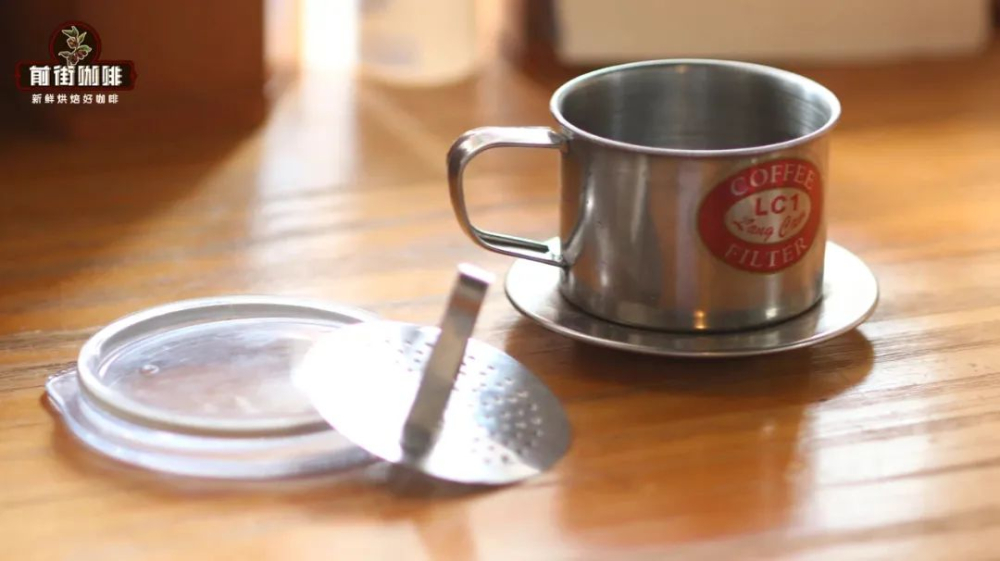
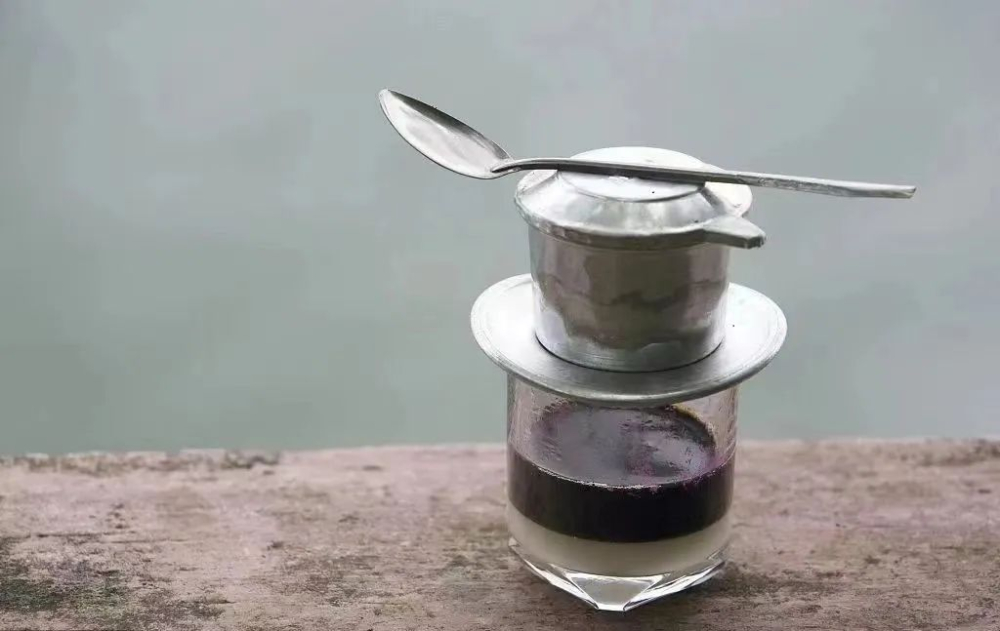
The structure of the Vietnamese drip pot is not complicated; it usually consists of the pot body, a filter plate, a press plate, and a lid. When using it, put the ground coffee into the pot, cover it with the press plate, then pour in hot water, and the coffee liquid will drip drop by drop into the cup. Because the flow rate is slow, the extraction time is relatively long, resulting in a stronger coffee with a more concentrated flavor.
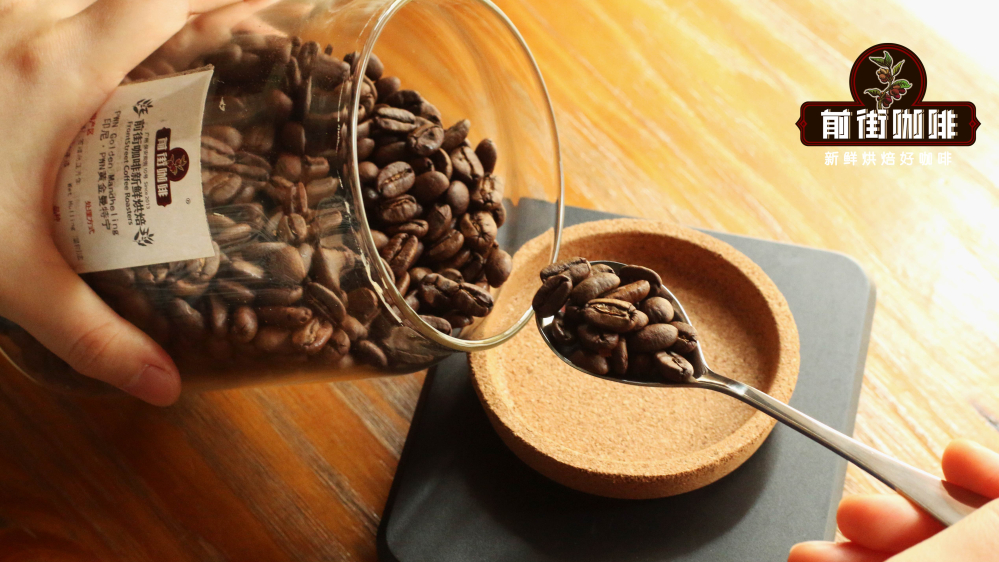
To make drip coffee at home that comes close to the flavors of the streets of Vietnam, the first step is choosing the right coffee beans. Traditional Vietnamese drip coffee commonly uses dark-roasted Robusta beans, with pronounced bitterness, high body, and notes of nuts, cocoa, and caramel. If you use pure Arabica, the flavor will be cleaner, but the body and bitterness will be weaker.
If you want a more balanced taste, you can also choose beans blended from Robusta and Arabica. Front Street Coffee has dark-roasted blends suitable for drip pots; when used to make Vietnamese drip coffee, they retain enough body while making the sweetness and lingering finish more pronounced.
When making it, first warm the cup and add an appropriate amount of condensed milk. Typically, a single serving uses 15 to 20 grams of ground coffee, with a grind size between fine granulated sugar and espresso grind. Pour the ground coffee into the drip pot, tap gently to level it, cover with the press plate and tighten it slightly, but do not press it down too hard.
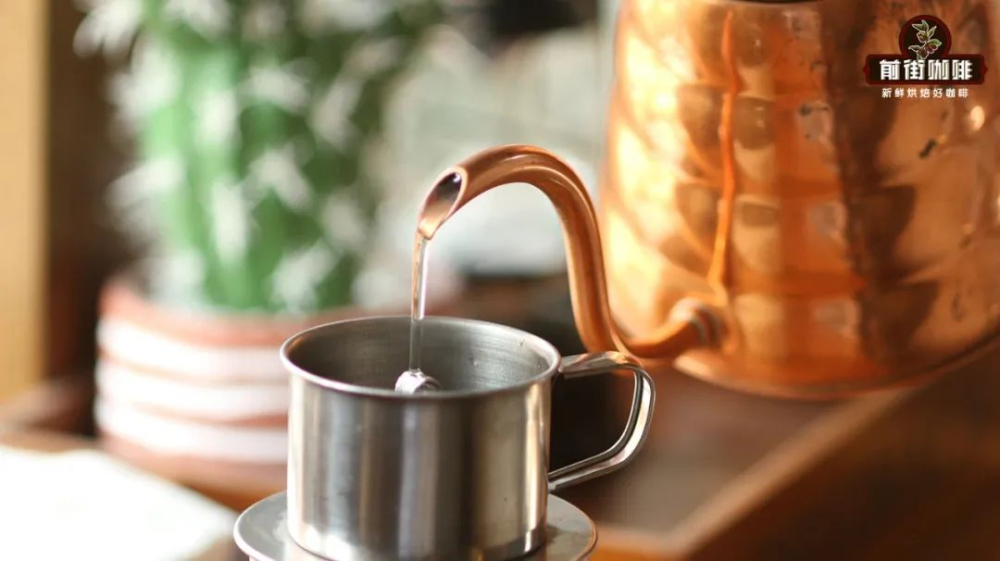
For the first pour, add only a small amount of water to fully wet the coffee grounds, and wait about 20 seconds for blooming. Then fill with hot water, cover with the lid, and let the coffee drip slowly. The whole process takes about 4 to 6 minutes. After dripping is complete, stir the coffee liquid together with the condensed milk at the bottom of the cup, and you will have a sweet, rich Vietnamese drip coffee.
If you prefer a lighter taste, you can skip the condensed milk and drink it as black coffee, or serve it with a small amount of ice. In Vietnam, drip coffee is also often combined with ice and condensed milk to make iced drip coffee. Whether hot or iced, the key is to control the amount of coffee grounds, the water temperature, and the dripping speed so that the result is consistent and delicious.
The above content is compiled by CoffeeHunters, a coffee news website.


