








How Do You Tell Gesha Coffee Bean Lots Apart?
Gesha Village grades its coffee into Auction, Gold, Red, Green, and CHAKA lots, and the difference lies in plot, variety, and selection standards rather than a single flavor scale. In 2011, Adam and consultant Willem Boot found wild Gesha in forest near the estate, identified as the Gori Gesha forest, the original collection site of the Panama Gesha variety.
Seeds from those mother trees were selected, genetically tested, and raised into seedlings. The estate grows three varieties: Gori Gesha, Gesha 1931, and Illubabor Forest. Western plots OMA, SURMA, and SHEWA-JIBABU sit between 1900 and 2069 meters, with SHEWA-JIBABU holding the highest average elevation, and a rigorous grading system keeps lot quality stable.
Gesha Village Estate, as a benchmark for Ethiopian specialty coffee, often leaves enthusiasts confused with its internal lot grading system. What exactly is the difference between Auction, Gold, Red, Green, and Chaka? This article sorts through the estate's history, plot divisions, variety composition, and grading standards one by one, and includes Front Street Coffee's product information for each lot along with practical pour-over advice for the Red Label, helping you clarify the flavor positioning and purchasing approach for each Gesha Village lot.

In 2011, Adam and consultant Willem Boot walked into the primitive forest near the estate to explore. In that jungle wrapped in dense layers of trees, they discovered several wild tree varieties, and the most exciting find was wild Gesha. Only afterward did they realize that this was the Gori Gesha forest—the very place where the Gesha coffee variety was first discovered.
The two obtained seeds from the original Gesha mother trees, carefully selected them, and sent them to professional institutions for genetic testing, confirming that this place was the original collection site of the Panama Gesha variety. After that, by observing the plant morphology of the coffee trees, the appearance and size of the beans, and referring to cupping performance, they selected the varieties closest to today's Panama Gesha and began seedling cultivation. From that time on, the story of Gesha Village Estate officially unfolded on this land in Ethiopia.
Gesha Village is located in a high-altitude area with abundant rainfall, possessing a temperate climate and all the natural conditions necessary for producing high-quality coffee. However, unlike many estates in Panama, Gesha Village cultivates three Gesha varieties: Gori Gesha, Gesha 1931, and Illubabor Forest. At the same time, to ensure the stable quality of the coffee produced, estate owner Adam established a rigorous grading system, dividing Gesha into Gold, Red, Green, CHAKA, and Auction grades.
From the plot planning made by the estate owner, the western part of Gesha Village is generally at higher elevation, especially the three plots OMA, SURMA, and SHEWA-JIBABU, which range between 1900 and 2069 meters, with SHEWA-JIBABU having the highest average elevation in the entire estate. The southern side of the estate has a greater shade ratio, while the northern side has longer sunlight hours. Among all eight plots, Adam matches the most suitable variety to each plot based on differences in microclimate such as elevation, soil conditions, and shade conditions, with the aim of allowing each plot to develop its own unique flavor characteristics.
Gesha Village Auction lots account for only 3.7% of the total annual production. The green bean traceability information is extremely complete, and the flavor is outstanding and complex. They are top-tier lots that have undergone strict selection, and buyers can only obtain them through the global auction channel of Gesha Village Coffee Estate.
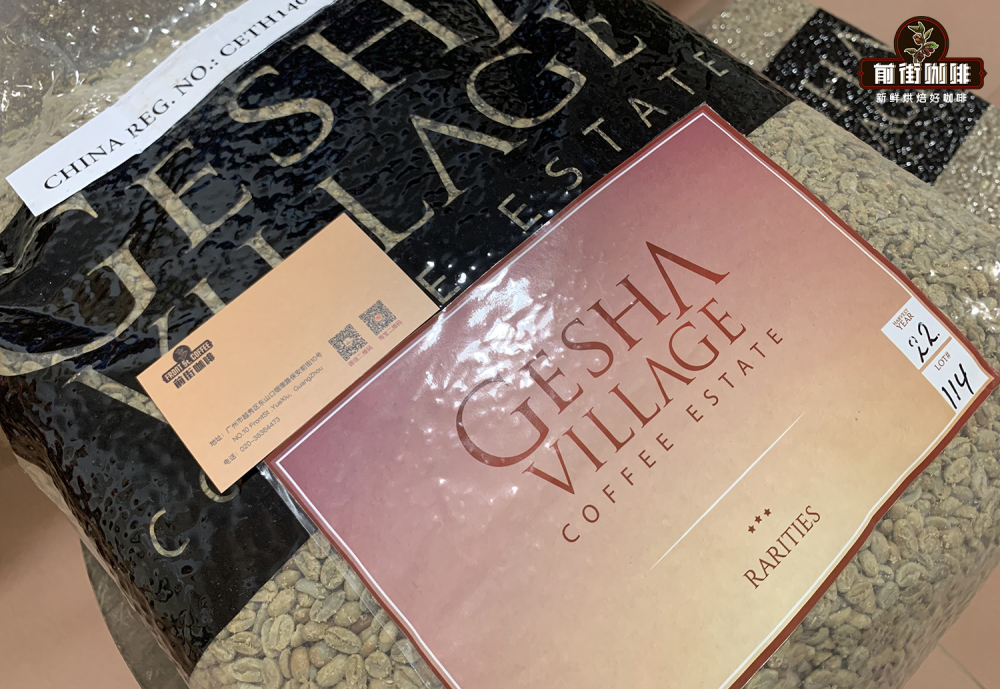
Gesha Village Gold Label Gesha (RARITIES) is a lot frequently purchased by competitors in various events and by roasters with higher quality requirements, accounting for about 10% of the estate's annual production, with detailed traceability information. The Gold Label lot Gesha that Front Street has obtained showed a complex and rich flavor. During cupping, one can fully feel the charm of this lot. Whether it is the distinctiveness of the dry aroma or the flavor and mouthfeel and finish when slurping, it is deeply impressive and leaves a lingering fragrance on the lips and teeth.
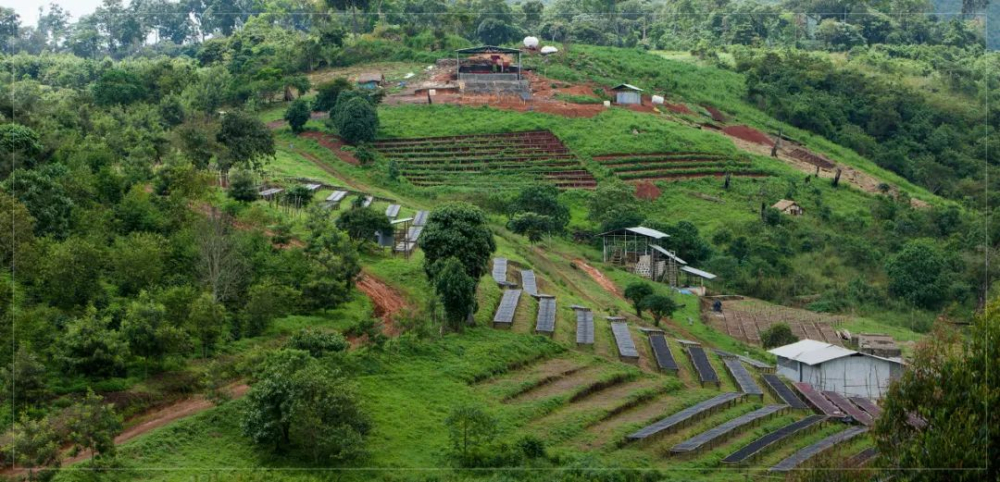
Front Street Coffee: Ethiopia Gesha Village Estate Gold Label Gesha
Region: Ethiopia Bench Maji Region
Estate: Gesha Village Estate Oma Plot
Altitude: 1900-2040 meters
Variety: Gesha 1931
Processing Method: Natural Process
Flavor: Citrus, Berries, Cream, Caramel, Melon, Honey
Unlike the Gold Label grade, Gesha Village Red Label (GROWERS RESERVE) accounts for 15% of total annual production, uses the Gori Gesha variety, and requires a cupping score of 88 points or above according to SCA standards. Although it is inferior to the Gold Label and Auction lots in flavor intensity and complexity, the Red Label still has a very typical Gesha Village flavor profile. Front Street believes this is a Gesha lot with quite excellent value for money and worth purchasing for Gesha enthusiasts.
Front Street Coffee Ethiopia Gesha Village Estate Red Label Gesha
Region: Ethiopia Bench Maji Region
Estate: Gesha Village Estate Shewa-Jibabu Plot
Altitude: 1973-2069 meters
Variety: Gori Gesha
Processing Method: Natural Process
Flavor: Lemon, Plum, Citrus, Tropical Fruit, Floral Tea
Gesha Village Green Label lots (SINGLE-TERROIR) refer to lots from a single plot paired with a single variety. Each lot number provides complete traceability information, covering the farm plot name, coffee variety, and processing date. Compared with Red Label and Gold Label, Green Label has no cupping score threshold and can be regarded as an entry-level single-plot Gesha lot.
Front Street Coffee: Ethiopia Gesha Village Estate Green Label Gesha Region: Ethiopia Bench Maji Region Estate: Gesha Village Estate Bangi Plot Altitude: 1901-2001 meters Variety: Gori Gesha Processing Method: Natural Process
Unlike other lots in the estate, CHAKA blends Gesha coffee beans from all plots in the estate and from the entire annual production season, covering the three varieties grown at Gesha Village: Gesha 1931, Gori Gesha, and Illubabor. This bean has been released in both washed and natural versions, and Front Street chose the natural lot.
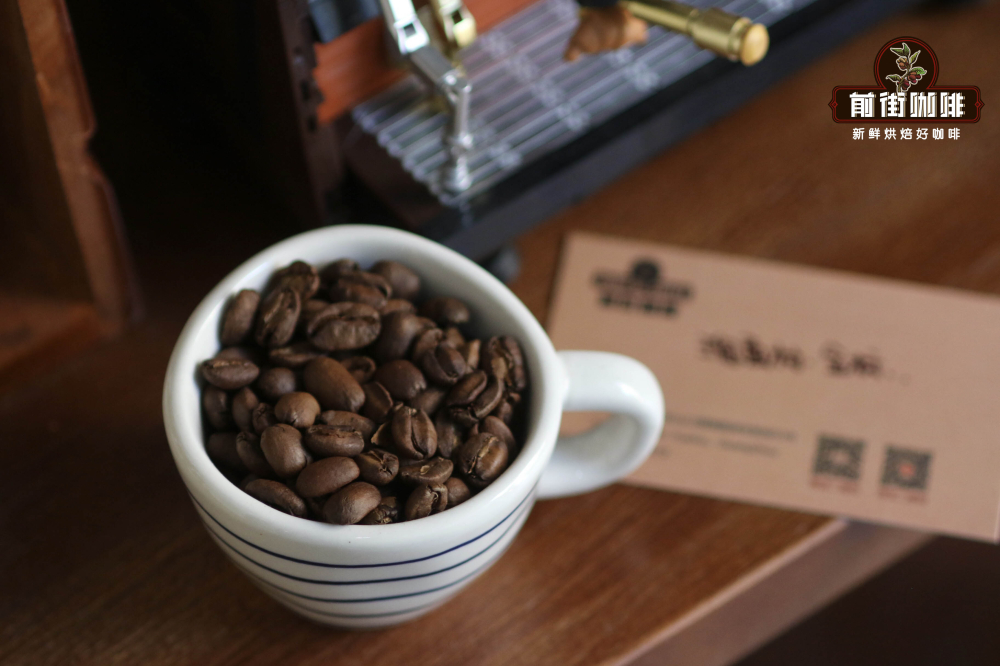
First remove impurities and unripe cherries through flotation, then spread the coffee beans in a thin layer on African raised beds, cover them with plastic sheeting for sun drying, turn them regularly during drying, and manually pick out unevenly colored beans. The entire drying process lasts 18 to 30 days. In order to retain more fruity acidity, Front Street uses a medium-light roast. Through cupping, Front Street captured high-quality flavors such as citrus, berries, cream, oolong tea note, and cane sugar from this Chaka Gesha.
Front Street Coffee: Ethiopia Gesha Village Estate Chaka Region: Ethiopia Bench Maji Region Estate: Gesha Village Estate Altitude: 1900-2100 meters Variety: Gori Gesha, Gesha 1931, Illubabor Processing Method: Natural Process
As is well known, Gesha coffee is famous for its rich floral aroma and complex fruit-toned character. Front Street hopes to retain more of Gesha's high-quality acidity, so it chooses a medium-light roast (slight adjustments are made for different lots). This roast level does not greatly change the high hardness of high-altitude beans, so brewing requires a certain increase in extraction rate to present a fuller flavor layering. In practice, a higher water temperature and a finer grind size are used to stimulate more aromatic substances.
Below, Front Street demonstrates the brewing steps for the store's Gesha Village Red Label, for everyone's reference and comparison with their own brewing approach.
Pour-over recommendations for Gesha Village Red Label coffee:
Dripper: V60
Water Temperature: 91-92°C
Dose: 15g
Coffee-to-Water Ratio: 1:15
Grind Size: Fine sugar size (20号筛碗筛粉到80%)
Three-stage extraction: First pour 15 grams of coffee powder into the dripper and tare the weight. For the first stage, pour 30g of water for a 30-second bloom while starting the timer. Use a small stream at the center point throughout, beginning outward in a circular motion, and make sure to wet the entire coffee bed.
For the second stage, begin pouring 120g of water with a slightly larger stream, with the aim of lifting the entire coffee bed. The water column should be poured vertically and evenly. At this point the scale shows 150g, and pouring is completed in about 55 seconds.
When the liquid level drops to the halfway point, begin using a small stream in a small circular motion to pour the third stage of 90 grams. Try to control the stream so it does not spiral too widely, as this can easily disturb the coffee bed and cause under-extraction. The final total poured water is 240 grams, and the drip completion time is about 2 minutes 10 seconds. After removing the dripper, swirl the coffee liquid in the server evenly and it is ready to taste.
Professional coffee knowledge exchange For more coffee bean information, please follow Coffee Workshop (WeChat public account cafe_style)
For more specialty coffee beans, please add the private WeChat of Front Street Coffee, WeChat ID: qjcoffeex
The above content is compiled by CoffeeHunters, a coffee news website.


