







How Long Should a Moka Pot Take to Brew?
Without an espresso machine at home, a moka pot can still make a concentrated cup. It heats water in the lower chamber until steam pressure pushes hot water through the coffee bed into the upper chamber by siphon effect. Each brew yields little liquid, and not all water passes through the grounds, so the result is strong.
Front Street's steps: set the grinder fine, fill and level the basket, weigh the dose, estimate the water, then watch the flow and pull the pot off the heat at the right moment. Medium-dark espresso blends and single-origin beans such as Golden Mandheling work well for milk drinks.
No professional espresso machine at home—can you still enjoy a rich cup of coffee? The moka pot, with its high-temperature pressure and siphon principle, has become the top choice for many coffee lovers. This article details the moka pot's structure and extraction principle, and shares Front Street Coffee's practical operating steps, including determining the dose, estimating the water amount, fine-tuning the grind size, and timing when to remove it from heat. At the same time, for different taste preferences, it recommends medium-dark roasted espresso blends and single-origin beans suitable for the moka pot, such as Front Street Classic Blend, Strawberry Candy Espresso, Golden Mandheling, etc., and uses Front Street Brazil Queen's Farm coffee beans as an example to demonstrate the complete extraction process, helping you easily make milk coffee that rivals a café's.
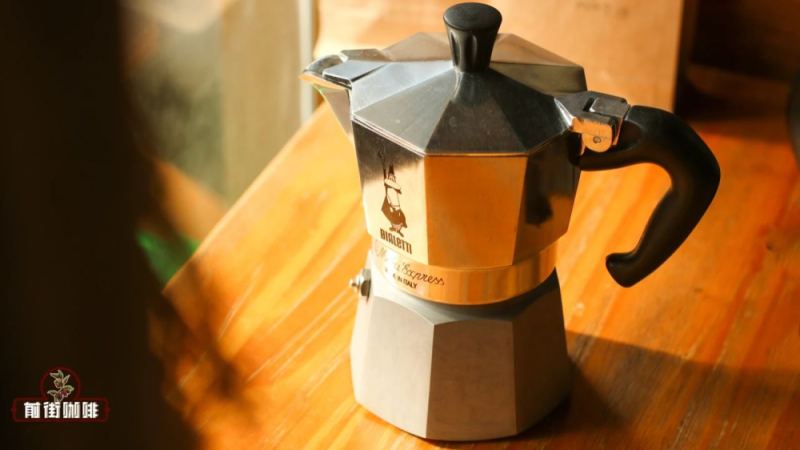
With no espresso machine at home, how do you get a cup of espresso? Many friends have asked Front Street this question. In fact, the retro and handsome-looking moka pot can do the job. It uses high-temperature heating to generate steam pressure, and then, through the siphon effect, pushes hot water from the lower chamber to the upper chamber. Due to structural limitations, the amount of coffee liquid produced each time is not large, and the water cannot all pass through the coffee bed, so the resulting coffee liquid is quite concentrated.
The composition of a moka pot
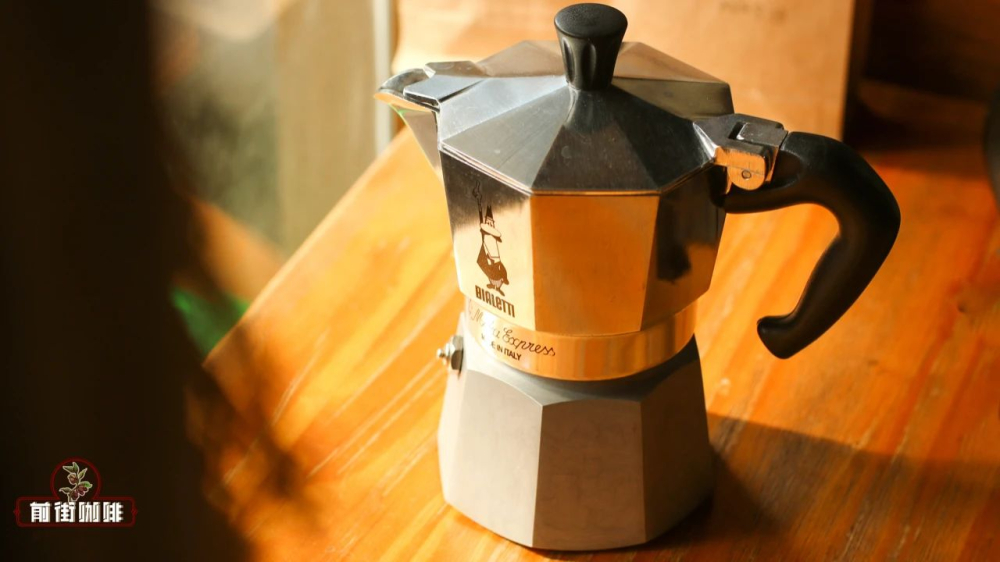
A moka pot consists of three main parts: the upper chamber, the filter basket, and the base. The lower chamber is used to hold water, the filter basket holds finely ground coffee, and the upper chamber collects the extracted coffee liquid.
The extraction principle of a moka pot
The working principle of a moka pot is not complicated: after the lower chamber is heated, steam pressure is generated. When the pressure is enough to penetrate the coffee bed, hot water is pushed up into the upper chamber, brewing aromatic, rich coffee. Using the vapor pressure of boiling hot water to obtain a flavor close to espresso—Front Street believes this is exactly the charm of the moka pot. So, how do you use a moka pot to make an espresso suitable for making milk coffee? Front Street's steps are as follows:
1. First determine the dose. Set the grinder to a finer espresso setting, fill and level the coffee, then weigh it to see how many grams are needed.
2. Determine the water amount. At first, the water amount in the lower chamber is not easy to gauge, so you can only try based on the estimated amount of coffee liquid. For example, Front Street uses 20 grams of coffee and wants a coffee-to-water ratio of 1:1.8, meaning 36 grams of coffee liquid is needed. In the first test, first brew a pot with the moka pot's recommended water amount in the lower chamber to see the actual yield. Add 100 grams of water and get 60 grams of coffee liquid, but the target is only 36 grams, so next time just add 100-(60-36)=76 grams of water.
3. Fine-tune the grind size. The ideal state is that the coffee liquid flows out slowly, and the pressure relief valve emits a slight puff of steam but does not screech. If the flow is too fast and the pressure relief valve does not release steam, the coffee is too coarse and needs to be ground finer; if the flow is too slow or there is no liquid at all, and the pressure relief valve screeches and releases steam, the coffee is too fine and needs to be ground coarser.
4. Gauge when to remove it from heat. Once the flow is steady, turn off the heat (when the liquid coming out from both sides forms a ring at the bottom), and pour it out promptly before the small bubbles begin to grow larger. The longer you delay, the stronger the burnt taste, and the crema will also be broken up.
How does Front Street Coffee use a moka pot to extract espresso?
The moka pot belongs to pressure extraction at high temperature, and people love its intensity, full body, and moderate crema. To satisfy these, it is recommended to choose medium-dark roasted coffee beans: if you pursue consistency and crema, you can buy Front Street. Front Street Classic Blend and Front Street. Commercial Blend, two espresso coffees; friends who like fresh aromas might as well try Front Street. Strawberry Candy Espresso, where you can taste the distinct sweet flavors of roses and fruit candy;
For friends seeking a unique taste, single-origin coffee is recommended, such as Front Street. Golden Mandheling, Front Street. Colombia Huila, and other beans rich in nutty and caramel aromas. This time, Front Street uses the intensely nutty and cocoa-aromatic Brazil Queen's Farm coffee beans for an extraction demonstration.
Front Street. Brazil Queen's Farm coffee beans Region: São Paulo, Brazil Farm: Queen's Farm Altitude: 1400-1950m Variety: Yellow Bourbon Processing method: semi-washed/natural
1. Pour purified water into the lower chamber of the moka pot; the water level should be about 0.5 cm below the pressure relief valve.
2. Choose a coffee grind size slightly coarser than for espresso. Tap gently to distribute the coffee grounds evenly, and when the coffee grounds form a small hill, level the coffee surface by distributing the grounds.
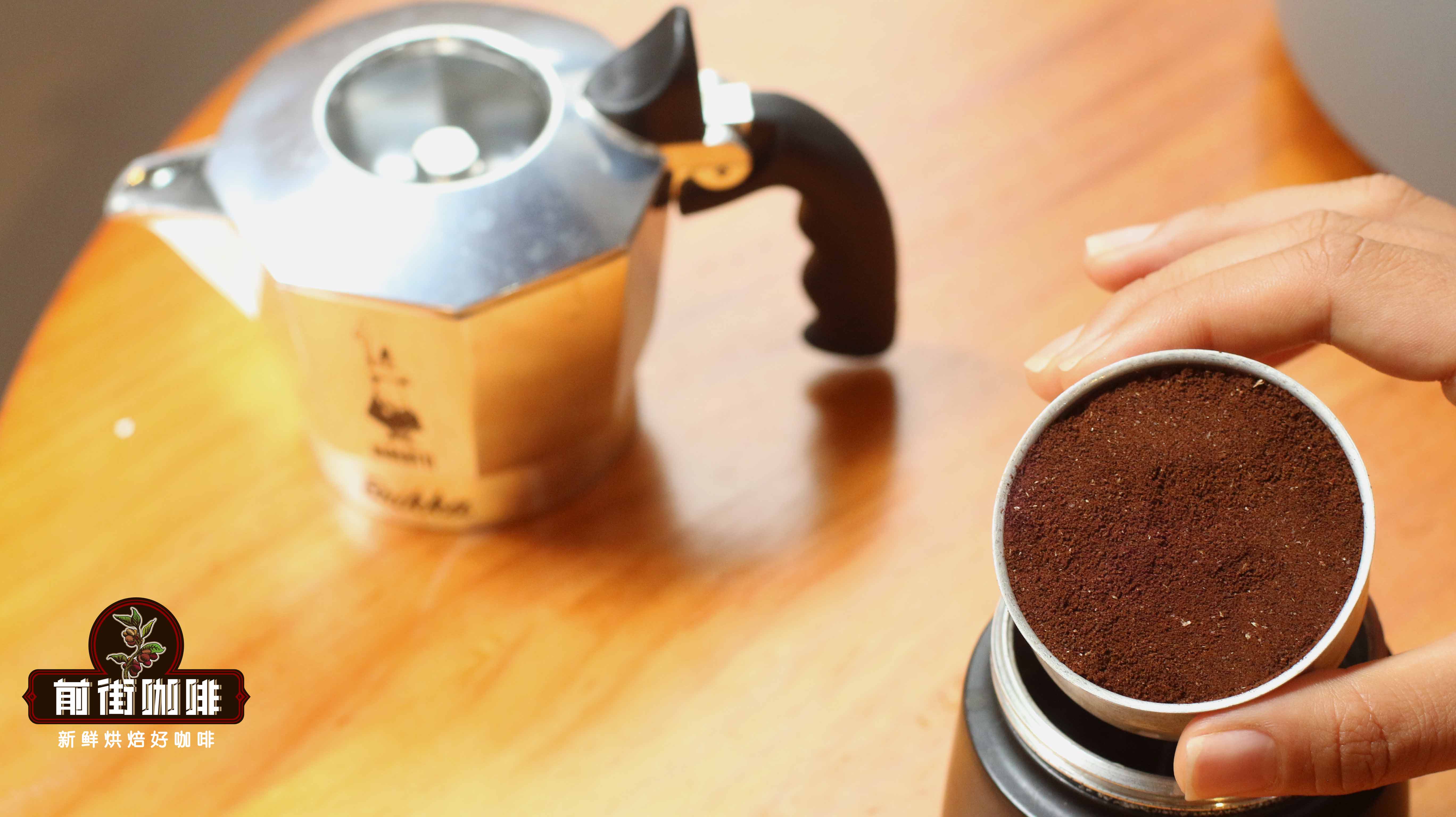
3. Place the filter basket into the lower chamber, tighten the upper and lower parts of the moka pot, then place it on an electric ceramic stove/stove and heat over high heat. Place the filter basket into the lower chamber, tighten the upper and lower parts of the moka pot, then place it on an electric ceramic stove and heat over high heat. When the coffee liquid in the upper chamber has come out halfway, turn off the electric ceramic stove. The residual heat and pressure of the moka pot will "push" the remaining coffee liquid into the upper chamber.
4. When all the coffee liquid has been extracted into the upper chamber, you can pour it into a cup and taste it. Coffee extracted with a moka pot is very rich, and can even extract Crema. You can also mix it with an appropriate amount of water or milk for a better flavor.
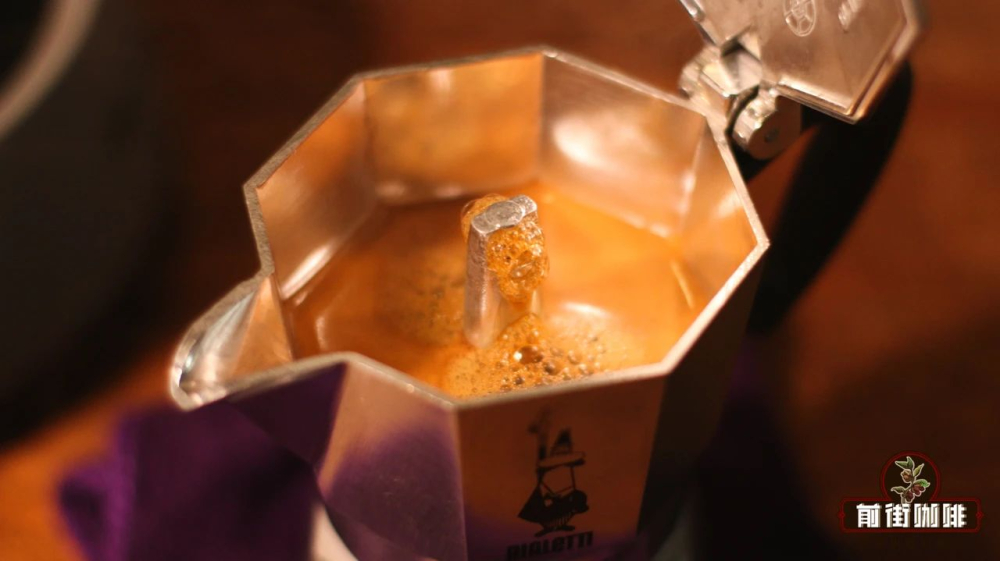
Flavor description of Front Street. Brazil Queen's Farm coffee beans brewed in a moka pot: intense nutty aroma, chocolate flavor, yellow sugar sweetness, rich and full-bodied. Paired with milk, the taste is no inferior to what a café produces~
The above content is compiled by CoffeeHunters, a coffee news website.


