







What Makes Golden Mandheling Coffee Distinct?
Golden Mandheling comes from the mountains around Lake Toba in North Sumatra, Indonesia, is distributed exclusively by PWN, and is regarded as the top tier of the Mandheling family. Three rounds of manual selection and fine processing give it Mandheling's intense, wild aroma with a prominent body, yet far cleaner than ordinary Mandheling.
Sumatra is Indonesia's core specialty coffee region, with most Mandheling coming from Aceh and North Sumatra provinces. The wet-hulling process shapes its full-bodied style. For brewing, medium-dark roasted Mandheling works with specific water temperature, grind size, dripper choice, and a three-stage pour.
Indonesian Mandheling coffee stands out in the specialty coffee world with its rich and full-bodied style, and among them, the Golden Mandheling produced by PWN is widely recognized as the top representative. This article starts from the geographical and climatic conditions of the Sumatra producing region, sorts out the formation logic and operational process of the unique wet-hulling method, and analyzes Indonesia's green bean grading system and the strict screening standards for Golden Mandheling. At the same time, focusing on the extraction characteristics of medium-dark roasted Mandheling, it provides the water temperature, grind size, dripper selection, and three-stage pouring plan used by Front Street Coffee baristas in actual brewing, helping coffee lovers more fully understand the flavor expression of this bean from origin to cup.
For more specialty coffee knowledge, please follow the WeChat public account: Front Street Coffee (FrontStreet Coffee)
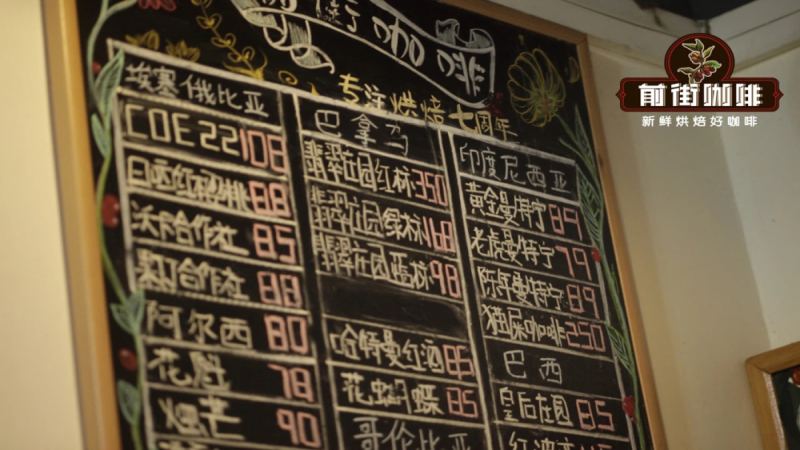
Golden Mandheling has a considerable reputation in the coffee world. It comes from the mountainous areas around Lake Toba in North Sumatra, Indonesia, is exclusively distributed by Pawani, and is regarded as the top-tier existence in the Mandheling family. This green bean undergoes three rounds of manual selection and fine processing. After roasting, in addition to retaining Mandheling's signature intense and wild aroma, its body is also quite prominent, yet the flavor is much cleaner than ordinary Mandheling, with an added layer of elegance, truly making it a rare specialty coffee. On Front Street's bean list, Front Street PWN Golden Mandheling is priced at 89 yuan per 227g single pack, making it a daily staple choice for many coffee lovers who prefer a rich mouthfeel.
In terms of production, Indonesian coffee has always ranked among the top globally. Both Arabica and Robusta have considerable cultivation scale, and the coffee system is quite complex, with countless types of coffee produced. The most familiar ones include "Sumatra Mandheling Coffee," "Sulawesi Coffee," "Java Coffee," and the once-popular "Kopi Luwak."
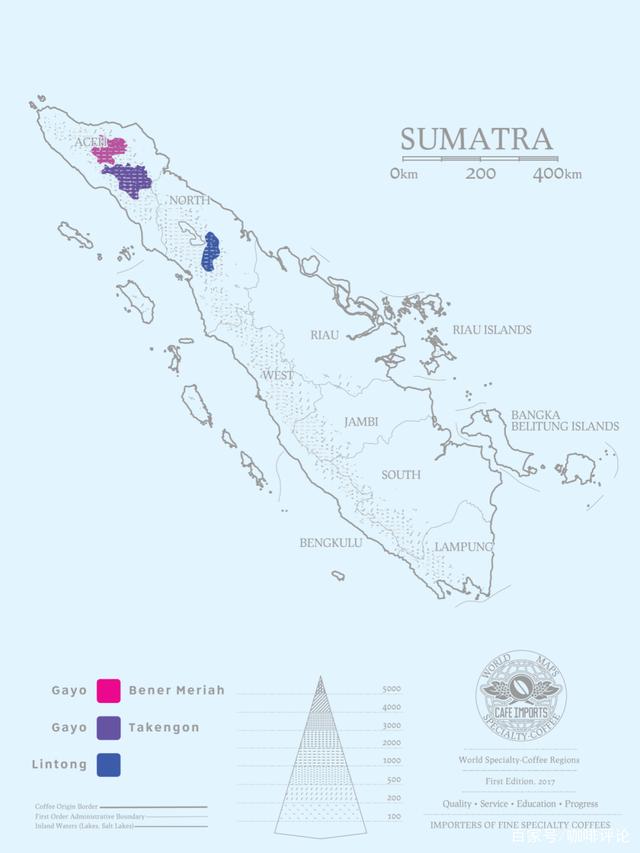
Sumatra is the core producing region of Indonesian specialty coffee, mainly exporting Mandheling coffee, with the vast majority coming from Aceh Province in the north and North Sumatra Province (abbreviated as North Sumatra) south of Aceh. These two major producing areas are both distributed around well-known local volcanic lakes, namely Lake Toba and Lake Tawar, and are traditionally called the Lindong producing area and the Aceh producing area.
Sumatra has a tropical rainforest climate, with frequent rainfall throughout the year, humid air, frequent typhoons, and a fairly severe shortage of freshwater resources. Under these conditions, local coffee farmers cannot use traditional washed processing for large batches of coffee beans like other producing regions, let alone rely on long sun-drying for drying. So they developed the wet-hulling method, which can be completed in just four days. The durations of fermentation and sun-drying are greatly compressed, and labor costs are reduced accordingly. It is precisely for this reason that Sumatra Mandheling carries that unique Southeast Asian character interwoven with herbs, spices, and woodiness.
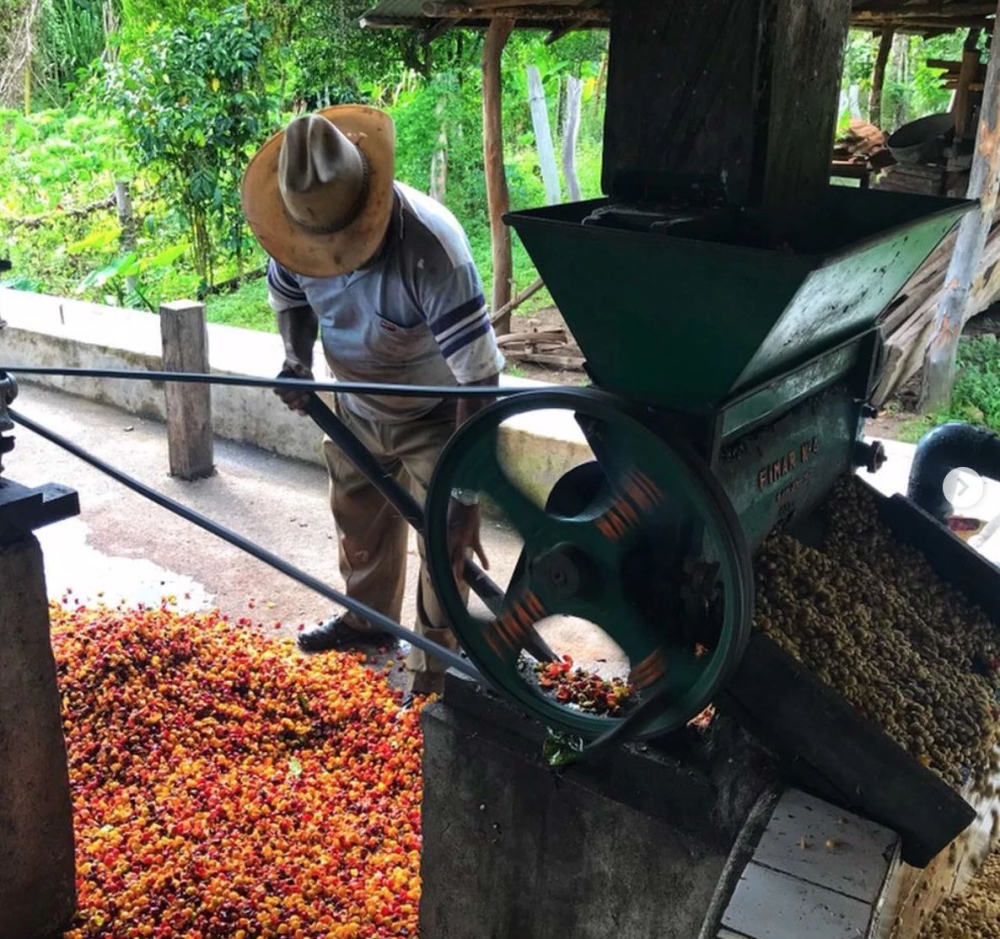
The operational process of the wet-hulling method is as follows: after coffee cherries are picked, they are first poured into a water tank, and flotation is used to remove insufficiently ripe cherries. Then the outer skin is removed with a pulper, and the beans are directly put into a pool for short fermentation of a few hours. At this time, a small amount of mucilage still remains on the parchment, which needs to be removed by scrubbing. After that, the parchment beans are taken for drying. When the green beans first dry to a moisture content of 30-40%, the farmers sell the beans to collectors. After collectors receive these semi-dry parchment beans, they immediately hull them, removing the mucilage and parchment to obtain green beans. Although each step is shortened considerably, the "naked beans" still absorb moisture from the hot and humid air, so the resulting Mandheling coffee has a kind of dull aroma.
The green beans with the parchment removed still need to continue drying until the moisture content drops to 12-13% before they can be packed and sent for quality inspection. The processing steps of the wet-hulling method are relatively rough, so the defect rate of green beans is also higher. To meet Indonesia's export standards and sell at a better price, green bean merchants must go through multiple rounds of screening to remove irregular defective beans. Indonesia's well-known green bean company Puwani Coffee Company (PAWANI, abbreviated as PWN) is known for producing specialty Mandheling with multiple rounds of selection. "Golden Mandheling" is their signature product, and it is also the Golden Mandheling coffee on Front Street's bean list.
The grading of Indonesian coffee green beans is based on the number of defective beans, calculated per 300 grams of green beans. The highest grade, Grade 1, requires fewer than 11 defective beans. Golden Mandheling not only meets Indonesia's G1 standard, but the green beans also first undergo machine screening to select batches with a screen size of 18 mesh or above, and then pass through three rounds of manual screening to ensure that Golden Mandheling green beans have consistent color and uniform bean shape. After Front Street received the Golden Mandheling green beans, it conducted a cupping comparison and found that it not only gets rid of the earthy miscellaneous flavors common in ordinary Mandheling, but the spice and herbal notes are also noticeably clearer, and the overall cleanliness has been greatly improved.
For coffee like Golden Mandheling with a rich mouthfeel and distinct regional flavor, Front Street recommends extraction as pour-over black coffee, which allows you to better experience the coffee's aroma. The coffee beans sent by Front Street are all freshly roasted within five days, with the aim of letting everyone receive the beans while they are still at their best freshness, adding more layers to the flavor in the cup.
Golden Mandheling coffee beans use medium-dark roasting. The internal structure of the beans is relatively loose, and their water absorption capacity is strong. If you directly copy the water temperature and grind parameters for light-roasted beans, it is easy to over-extract, producing unpleasant burnt bitterness and astringency. To avoid this problem, the baristas at Front Street Coffee (FrontStreet Coffee) appropriately lower the water temperature and coarsen the grind, thereby reducing the release of bitter large molecules.
At Front Street, we use hot water at 87 degrees Celsius, paired with a medium grind size (70% passing rate on China standard No. 20 sieve). For coffee that needs to enhance its body, Front Street habitually chooses the KONO dripper, which has a slower flow rate. Compared with the large outlet of the V60 dripper, KONO's immersion effect is better, allowing the coffee grounds to release more good flavor substances in the same extraction time.
Three-stage pouring: first pour 30g of water and bloom for 30 seconds. If the coffee grounds can puff up into a rounded dome, it means the beans are quite fresh. Then, from the center point, slowly pour in a thin stream in circles until 125g, and when the water level in the dripper drops to the point where the coffee bed is almost exposed, continue pouring in circles until 225g. The total extraction time is about 2 minutes.
The pour-over Golden Mandheling enters the mouth with a rich dark chocolate aroma. The flavors of roasted hazelnut, caramel, and melon blend very naturally, and a clear spice note can be felt in the mouth, with a quite long-lasting aftertaste.
The above content is compiled by CoffeeHunters, a coffee news website.


