







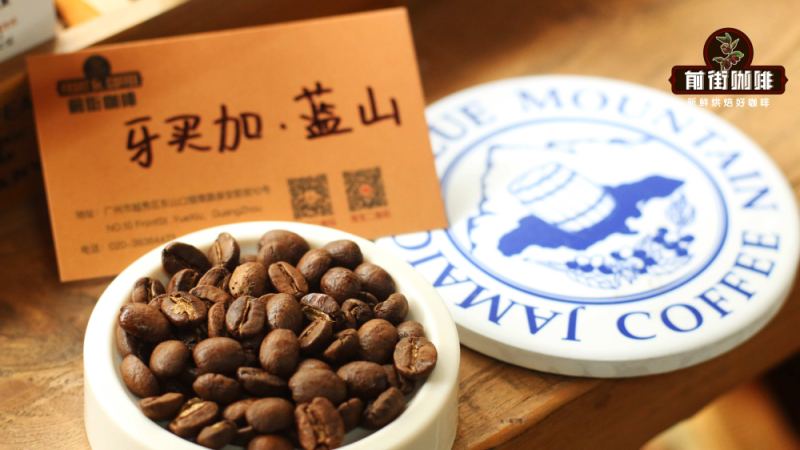
How long can Jamaican Blue Mountain coffee be stored after roasting?
Blue Mountain coffee from Jamaica occupies a special place in the coffee world, once seen as a symbol of status and taste. True Blue Mountain beans come from the Blue Mountain range and are graded under Jamaica's system, with Blue Mountain No. 1 being a top grade. After roasting, the beans keep their aromatic peak for roughly two to four weeks when stored sealed and away from light, heat, and moisture.
Japanese buyers account for at least 80% of Blue Mountain coffee imports, which is why labels such as Blue Mountain blend and Blue Mountain flavor appeared. A blend must contain at least 60% Blue Mountain beans, while a flavor product may contain none at all. Clifton Estate is among the estates worth noting, and proper roasting and brewing help preserve the bean's balanced flavor.
Blue Mountain coffee occupies a special place in the world coffee landscape. It was once synonymous with status and taste in Hong Kong dramas—scarce in production, balanced in flavor, and expensive, it was once eagerly sought after by enthusiasts. Around Blue Mountain coffee, concepts such as "Blue Mountain flavor" and "Blue Mountain blend" have emerged on the market, but which estates do coffee beans truly from Jamaica's Blue Mountain range come from? Which estate's output is more worthy of attention? And how long can Blue Mountain No. 1 be stored after roasting? This article will systematically sort out the cultivation origins, regional terroir, and grading of Jamaican Blue Mountain coffee, and focus on introducing the history of Clifton Estate and Front Street Coffee's roasting and brewing plan, providing coffee enthusiasts with a complete reference on Blue Mountain coffee.
Looking back at Hong Kong TV dramas from the 1990s to the early 2000s, whenever the plot touched on coffee, almost everything the characters mentioned was Blue Mountain. Blue Mountain coffee can be called one of the most famous coffees in the world. It was once synonymous with status and taste—limited production, outstanding quality, charming flavor, and a high price. Precisely because of this, Blue Mountain coffee was long in short supply, and at one point it was hard to find even a single bean. Subsequently, the term "Blue Mountain flavor coffee" gradually appeared on the market. Here, Front Street Coffee needs to specially remind everyone: so-called Blue Mountain flavor coffee is not the same thing at all as true Blue Mountain coffee.
The concept of Blue Mountain flavor coffee actually originated in Japan. Japan is the world's largest buyer of Blue Mountain coffee, and Blue Mountain coffee entering the Japanese market each year accounts for at least 80% of the total. The Japanese side divides Blue Mountain coffee into three quality and product tiers: Blue Mountain coffee, Blue Mountain blend, and Blue Mountain flavor.
Blue Mountain coffee: must use 100% Blue Mountain coffee beans.
Blue Mountain blend: Blue Mountain coffee beans must account for at least 60%.
Blue Mountain flavor: may contain no Blue Mountain coffee beans at all.
From this it can be seen that coffee beans labeled "Blue Mountain flavor" do not truly come from Jamaica's Blue Mountain region.
【Jamaican Coffee Cultivation History】
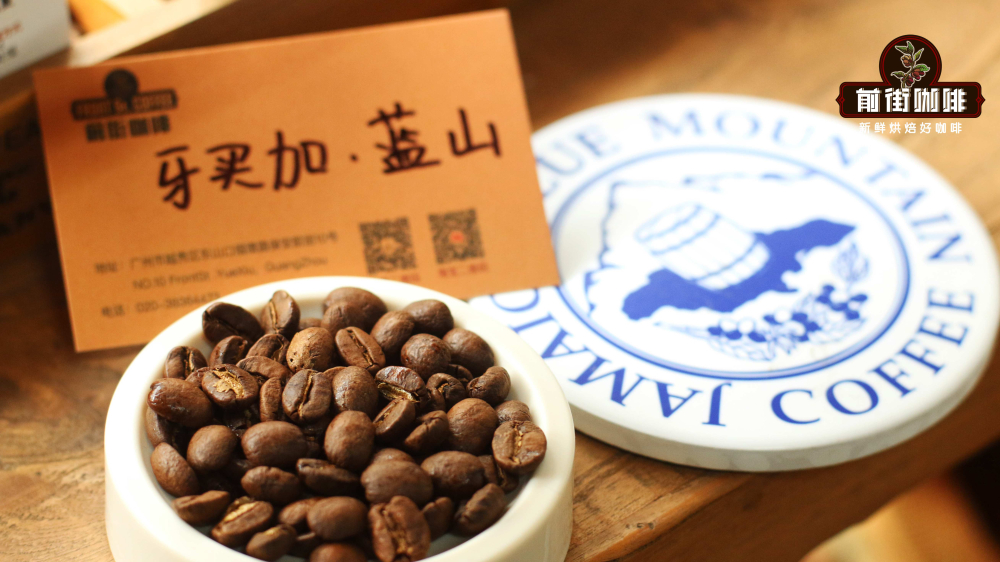
Anyone familiar with the spread of Arabica knows that in 1616, the Dutch, known as the "sea coachmen," took coffee saplings from Yemen back to Amsterdam and carefully cultivated them in a large greenhouse. This sapling was later called the "European mother plant," Typica. In 1699, the Dutch transplanted the offspring of the "European mother plant" to Java, where trial planting succeeded.
In 1708, France followed the Netherlands and also took coffee trees from Yemen for trial planting, but failed. Several years later, in 1714, the mayor of Amsterdam gave Java Typica saplings to King Louis XIV of France. In 1720, a French naval officer took a Typica sapling from the Royal Garden in Paris and carefully escorted it all the way to the Americas, arriving in 1723 at the French island of Martinique, where he planted the sapling, which thereafter bore abundant fruit.
In 1725, the British governor Nicholas Lawes purchased 7 Typica coffee saplings from the French island of Martinique and planted them near the Blue Mountains in eastern Jamaica. Not long afterward, coffee spread throughout the Blue Mountain area.
【Production Region Overview】
Blue Mountain coffee is produced in the Blue Mountain range around Kingston, Jamaica. The highest peak of the Blue Mountains is 2,256 meters above sea level, making it the highest and longest mountain range in Jamaica. The Caribbean Sea embraces the Blue Mountains. On clear days, sunlight shines directly on the azure sea, and the peaks reflect the sea's brilliant blue luster, which is how the name Blue Mountain came about.
The Jamaican Blue Mountain production region is located within the coffee-growing belt, with fertile volcanic soil, clean and pollution-free air, and a humid climate with frequent fog and rain year-round. The average annual rainfall is between 1,500 and 2,000 millimeters, and the temperature is about 27 degrees Celsius. In the afternoon, clouds and mist fill the mountain tops, both shielding the coffee trees from sunlight and bringing ample moisture. It is precisely such terroir conditions that have created the world-renowned Jamaican Blue Mountain coffee and also made it the second most expensive coffee in the world.
【Blue Mountain Coffee Grading System】
Coffee beans produced in Jamaica's Blue Mountain region are divided into three grades according to the altitude of the growing mountains: Jamaica Blue Mountain coffee, Jamaica High Mountain coffee, and Jamaica Prime Washed coffee.
Among them, Blue Mountain coffee and High Mountain coffee are each further subdivided into four grades. In descending order of quality, they are: NO.1, NO.2, NO.3, and PB, with PB meaning peaberry. According to CIB standards, only coffee grown above 666 meters in altitude can be called Jamaican Blue Mountain coffee. Coffee produced in the high-altitude Blue Mountain area can be called the finest of the finest. Because it is located on steep mountainsides, its production is scarce, its beans are large, its quality is excellent, and its flavor is harmonious. It simultaneously possesses just the right acidity, bitterness, aroma, body, and sweetness, and is globally recognized as top-tier coffee. Therefore, the national treasure-level Blue Mountain No.1 ranks first in price among all Blue Mountain coffees.
【Clifton Estate】
Clifton Mount is the oldest coffee-producing site in Jamaica still in normal operation, and Clifton Estate is also the only estate in Jamaica with the "Rainforest" certification mark. The estate is located on the island in the Newcastle area, on the eastern slope of Catherine's Peak. As early as around 1750, Clifton Estate had already begun planting and producing coffee.
According to an 1810 survey by the Jamaica Institute, Robert Hamilton was the owner of the farm at that time. Clifton Mount was divided into two parts: the mountaintop area had 80 acres of coffee land and 427 acres of pasture; the foothill area had 111 acres of coffee land and 264 acres of pasture.
【Front Street Coffee Jamaican Blue Mountain No. 1】
Region: Jamaica Blue Mountain production area
Farm: Clifton
Altitude: 1310m
Variety: Typica
Processing method: washed
Grade: NO.1
Front Street Coffee Roasting Analysis
Front Street's roaster uses medium roasting for Blue Mountain No. 1 coffee beans to highlight Blue Mountain's balanced and mellow flavor characteristics. Taking a Yangjia 600N semi-direct-fire roaster and 500g of green beans as an example.
Charge at a drum temperature of 165°C, heat power 130, damper set to 3; turning point at 1'32", keep heat power unchanged when the drum temperature is 95.8°C; at 3 minutes adjust the damper to 4, and at 4 minutes increase heat power to 140. When the drum temperature reaches 153.3°C, the bean surface turns yellow, the grassy smell completely dissipates, and the dehydration stage begins; at 8'36", wrinkles and dark patches appear on the bean surface, and the toast aroma clearly turns into coffee aroma, which can be regarded as the prelude to first crack. At this point, one must carefully listen for the sound of first crack; first crack begins at 10'06", develop for 3 minutes after first crack, and drop the beans at 198.5°C.
Front Street Coffee Brewing Recommendations
Other parameters: 15g coffee grounds, water temperature 86–88°C, water-to-coffee ratio 1:15, medium-coarse grind (75% passing a Chinese standard No. 20 sieve).
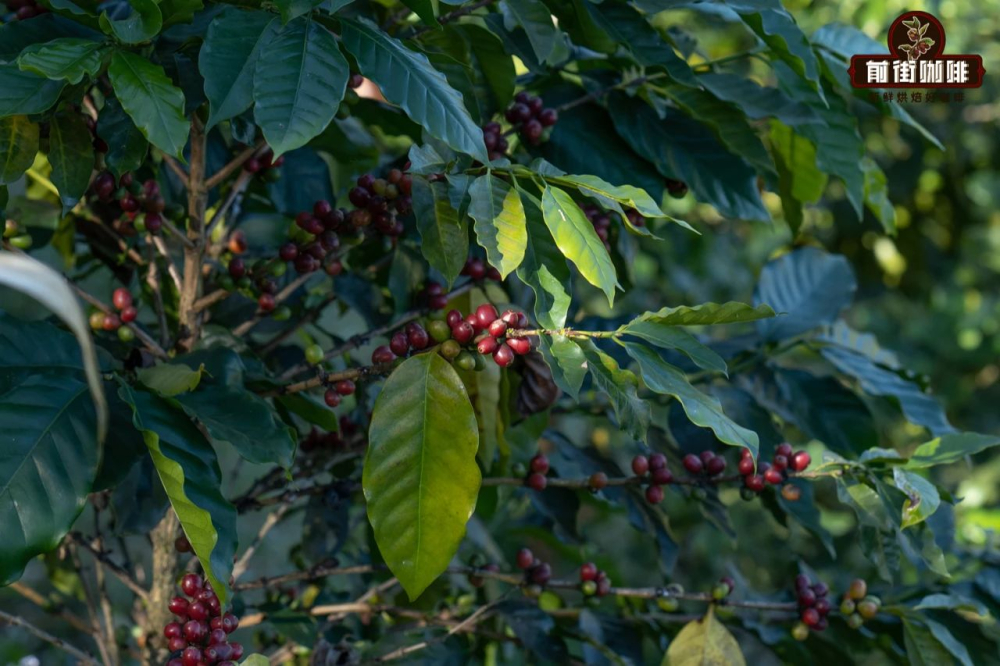
For the dripper, these are usually options: V60 dripper, Kalita wave, and Kono. Front Street Coffee mainly uses the Kono dripper for brewing demonstrations. Front Street Coffee chose the Kono dripper mainly because Blue Mountain coffee uses a relatively dark roast, and high temperatures can easily lead to over-extraction, so Front Street Coffee sets the water temperature at 86°C. If a V60 dripper or other faster-flow drippers are used at this temperature, it is easy to cause under-extraction; while Kono has few and short ribs, which can block the gap between the filter paper and the dripper, extend the water flow retention time, and provide an immersion function. Based on the test results of all brewing parameters, Front Street Coffee ultimately selected the Kono dripper.
Front Street Coffee uses staged extraction, namely the three-stage pouring method. First use 30g of water for blooming, with a blooming time of 30s; in the first stage, pour in a small stream in circles until 125g and stop; when the liquid level drops to the point where the coffee bed is about to be exposed, continue pouring the second stage until 225g to end extraction. The total extraction time (including blooming) is 2'00.
The above content is compiled by CoffeeHunters, a coffee news website.


