







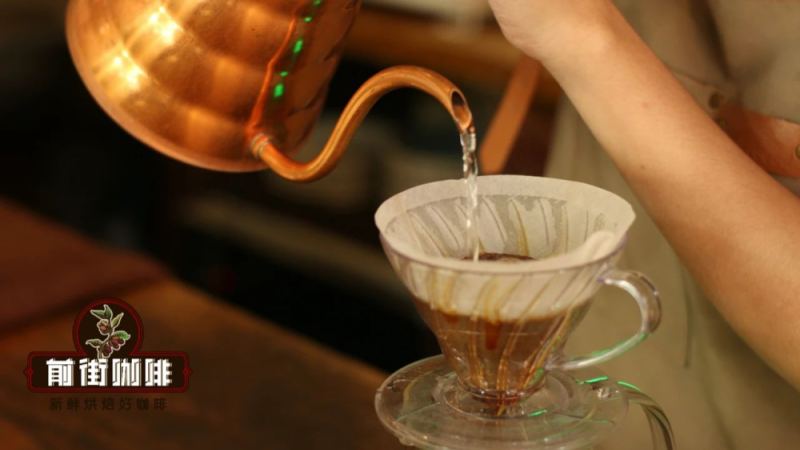
What coffee-to-water ratio brings out coffee aroma in pour-over?
A pour-over ratio commonly falls around 1:15 to 1:16, meaning one part coffee to roughly fifteen parts water, though the exact figure depends on grind size, water temperature, and pouring rhythm. A finer grind or slower pour extends contact time; a coarser grind shortens it. Adjust one variable at a time and taste the result, aiming for a clear, full-bodied cup that highlights coffee aroma.
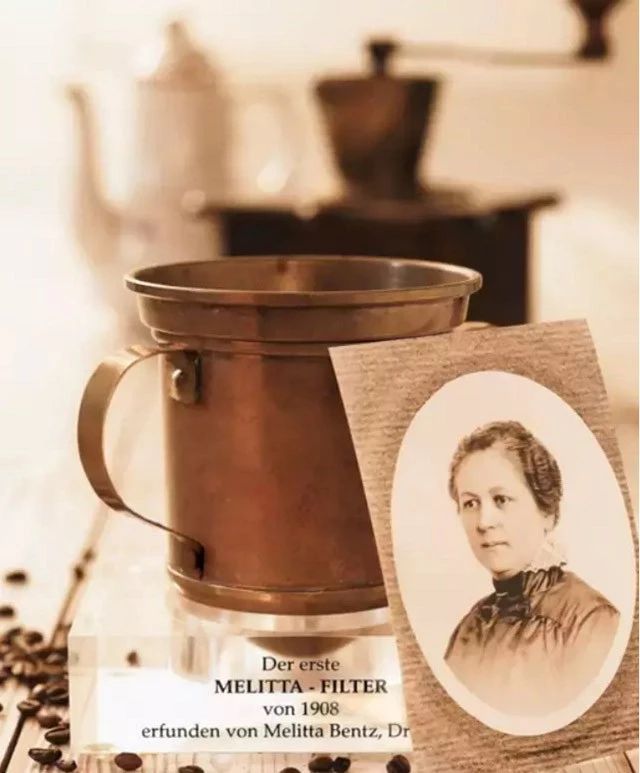
Pour-over has a long history. For centuries people crushed beans, boiled them with water, and filtered the grounds through linen or metal mesh, which left fine particles suspended in the cup. In the twentieth century, Amalie Auguste Melitta Bentz, unhappy with the bitterness and residue of traditional filtering, punched holes in a brass pot and used paper to catch the grounds. The three-stage pour builds on that idea.
Pour-over coffee, with its sense of ritual and expressive flavors, has become the daily first choice for many coffee enthusiasts. But behind a delicious cup of pour-over, the ratios of coffee to water, grind size, water temperature, and pouring rhythm are all indispensable. This article begins with the invention history of pour-over coffee, sorts out the basic principles of drip extraction, and combines Front Street Coffee's brewing experience to break down in detail the complete three-stage pouring process and practical parameters. Whether you are a beginner just getting into pour-over or an advanced player looking to refine your technique, you can find actionable references here. The article also includes Front Street's recommended single-origin pour-over beans and equipment pairing suggestions to help you consistently produce a cup of clear, full-bodied black coffee.
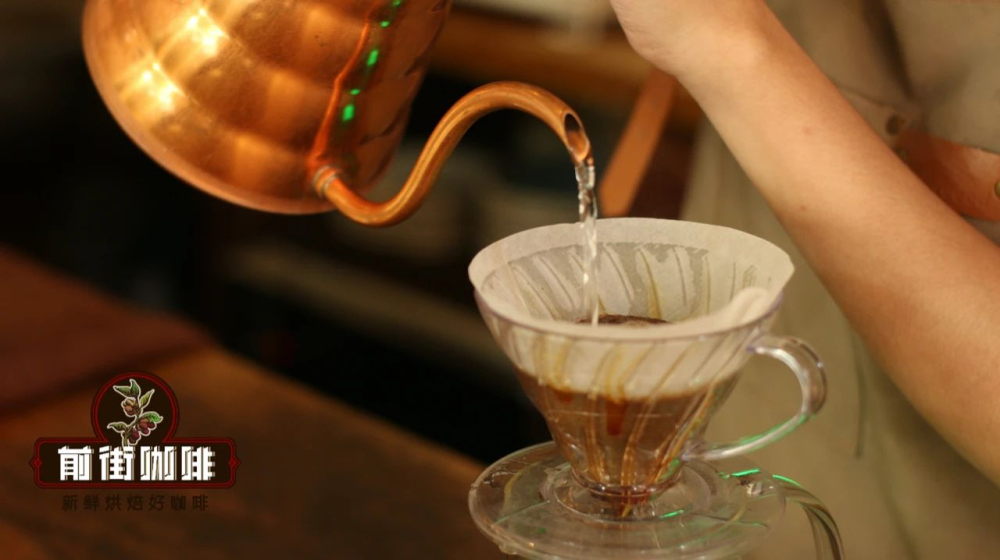
Pour-over coffee is now widely popular around the world, becoming an important extraction method for many people to explore coffee aromas—almost every coffee enthusiast can find a set of pour-over equipment at home. In your spare time, pick a bean you like, weigh it, grind it, fold the filter paper, rinse the dripper, add the grounds, pour in circles, and sip… the whole process makes preparing a cup of coffee full of ritual.
However, if you often brew pour-over coffee, do you know the origins of this drip extraction method? Next, let's talk about how pour-over coffee is made.
Who invented pour-over coffee?
For a long period in history, people made coffee quite directly: crush the coffee beans, throw them into a pot with water, boil, then filter out the grounds with linen or a metal mesh before drinking. Due to limited manufacturing techniques at the time, the mesh openings could not be made fine enough, so the filtered coffee often still had quite a few fine particles suspended in it.
In the 20th century, a German woman named Amalie Auguste Melitta Bentz loved freshly brewed coffee, but was very dissatisfied with the bitterness and residue left by traditional filters. After drinking, grounds would still get stuck between her teeth, making the mouthfeel poor. So she began repeatedly experimenting with new methods, trying to solve the problem of filtered residue, and finally came up with an idea:
She punched holes in the bottom of a brass pot to make a sieve-like container, then laid a piece of blotting paper over it, added ground coffee, poured in hot water, and the coffee liquid seeped through the blotting paper into the brass pot. Compared with linen and metal filters, this combination could both intercept fine particles and retain the coffee's aroma, with low cost and simple operation. Most importantly, the filtered coffee liquid was clean and free of residue, with a noticeably improved mouthfeel.
What is pour-over coffee?
The roasted coffee beans we buy undergo a series of chemical reactions after high-temperature roasting, producing various aromatic substances. The brewing process uses water and equipment to release these flavor components. The pour-over method is to first grind coffee beans into powder, then pour in hot water so it contacts the coffee bed, "dissolving" out the soluble substances in the coffee. Essentially, it uses a dripper with filter paper or other tools to intercept the coffee grounds and keep them from falling into the server below, resulting in a clean, bright cup of black coffee.
From bean selection to extraction, every step affects the flavor of pour-over coffee to varying degrees. Therefore, to brew a good cup of pour-over, based on Front Street's brewing experience, in addition to high-quality coffee beans, Front Street believes you should at least have the following equipment ready: a pour-over kettle for pouring water, a dripper and filter paper for filtration, a server, a grinder, an electronic scale that can record water amount and time, and a thermometer for measuring water temperature.
Good coffee cannot be separated from good raw materials—high-quality coffee beans. Front Street recommends choosing beans 4 to 30 days after the roast date, when they are in their optimal flavor period, so extraction is more stable and the pour-over flavor is fuller. To ensure freshness, the coffee beans shipped by Front Street are all freshly roasted within 5 days, and generally arrive within 1–3 days. By the time you receive them, they are basically still within the optimal flavor period, so you can start studying extraction right away.
How do you brew a cup of coffee at home?
Based on past brewing experience, Front Street recommends that beginners use three-stage pouring. Three-stage extraction helps dissolve flavor substances more fully, increases mouthfeel layering, and at the same time avoids over-extraction caused by too long a steeping time.
Taking 15 grams of coffee grounds, a 1:15 coffee-to-water ratio, and 225 ml total water as an example, the three-stage water amounts are: 30 ml, 95 ml, and 100 ml, shown on the electronic scale as: 30 g, 125 g, and 225 g.
Here Front Street uses its own roasted washed Yirgacheffe Gedeb Cooperative coffee beans, paired with a Hario V60 dripper for brewing. The V60's spiral rib design facilitates the release of gases from the coffee grounds and can maximize the volatilization and dissolution of acidic aromatic substances. Yirgacheffe is a light roast, and the beans are relatively hard, requiring hot water at 92°C–93°C to bring out the floral and fruity notes.
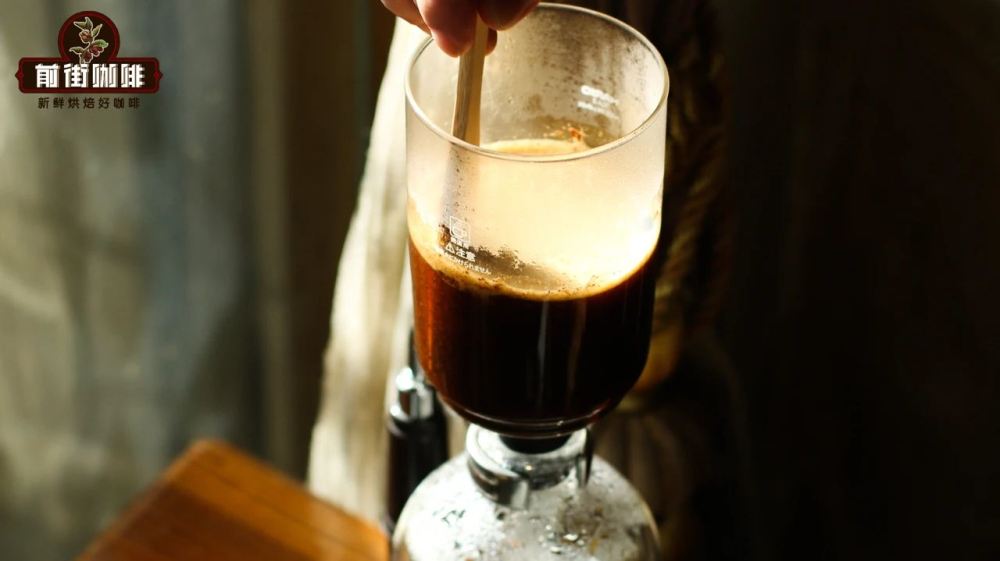
In terms of grind size, Front Street recommends a medium-fine grind (78% passing through a Chinese standard No. 20 sieve), with a coarseness close to fine granulated sugar. If ground too coarse, it is difficult to extract a rich, rounded flavor, and the coffee will taste thin; if the particles are too fine, it is easy to over-extract at high temperature, producing bitterness.
As for the brewing ratio, Front Street believes 1:15–1:16 is fine. If you want a richer taste, use 1:15; if you want to more clearly perceive the floral aroma and sweetness, use 1:16, allowing the flavors to open up more.
First, place the folded filter paper into the dripper and fit it snugly, pour in 15 grams of ground coffee, and tare the electronic scale.
For the first stage, pour 30 g of water and bloom for 30 seconds. Start timing as you begin pouring, using a small stream throughout while circling outward from the center, making sure to wet the entire coffee bed.
After 30 seconds, use a slightly stronger stream to steadily pour the second stage of 95 g of water, with the aim of lifting the entire coffee bed. The water column should be poured vertically and evenly. At this point the timer scale shows 125 g, and pouring is finished in about 55 seconds.
When the liquid level drops to the halfway point, switch to a small stream and pour the third stage of 100 grams in a small circle. Try to control the stream so it does not circle too widely, otherwise it is easy to disturb the coffee bed and cause under-extraction. The final total pouring amount is 225 grams, and the drip completes in about 2 minutes. After removing the dripper, swirl the coffee liquid in the server to even it out and it is ready to taste.
The water amount for each stage is not fixed; you can adjust flexibly according to your accumulated pour-over experience and your understanding of the beans. Front Street believes there are thousands of ways to brew a delicious cup of coffee. As long as you study and practice more, mastering the various pour-over parameters with ease is not difficult.
The above content is compiled by CoffeeHunters, a coffee news website.


