







Why is Mandheling still a classic coffee to drink?
Sumatra Mandheling G1 triple-picked labels a wet-hulled Indonesian coffee that is hand-sorted three times to reach grade one. The name has a wartime origin story, not a place name, and the flavor of a properly roasted Mandheling shows cedar, licorice and dark chocolate rather than the burnt bitterness many drinkers expect from dark roast.
The cup depends on green bean quality and roasting skill: handled well, the body is full and solid with faint woody fragrance. The article also covers the Sumatra growing environment, wet-hulling, the Ateng and TimTim varieties, and Front Street Coffee's roasting approach, brewing parameters and flavor results for this classic coffee.
Many people equate "bitter" with "burnt" because of the dark-roasted coffee from chain stores, but a high-quality, properly roasted Mandheling is not like that at all. This article explains, one by one, the origin of the name Mandheling, the environment of the Sumatra producing region, the unique wet-hulling process, the differences between the Ateng and TimTim varieties, and the three-time hand-sorting standard for G1 grade. It also shares Front Street Coffee's roasting approach, brewing parameters, and flavor performance for Mandheling, to help you rediscover this classic coffee and find a way of drinking it that suits you.
To learn more about specialty coffee, welcome to follow our WeChat public account: Front Street Coffee (FrontStreet Coffee).
Influenced by the dark-roasted beans of chain brands, many people think of bitterness the moment coffee is mentioned, and often even taste a burnt note, so they keep dark-roasted beans at a distance. Mandheling probably wants to protest: although most Mandheling on the market does indeed take the dark-roast route, it is far less frightening than rumors suggest.
A good cup of Mandheling depends both on the quality of the green beans themselves and on the roaster's skill. If the degree of dark roasting is handled properly, Mandheling presents a rich aroma like cedar, licorice, and dark chocolate, with a full, solid mouthfeel and a faint woody fragrance.
Although Mandheling's flavor direction is clearly different from the floral and fruity coffees popular today, it is still "a classic among coffees." A large number of enthusiasts remain devoted to its mellow texture, because its performance is always stable and steady. Among Front Street Coffee (FrontStreet Coffee)'s best-selling bean list, the Golden Mandheling from Indonesia's PWN company has long been popular.
Where does the name Mandheling coffee come from?
It is said that during World War II, a Japanese soldier drank an unforgettable cup of good coffee at a household on the Indonesian island of Sumatra, and asked what coffee it was. Because of the language barrier, the homeowner mistook the question for asking where he was from, and answered "Mandheling."
After the war ended, this soldier kept thinking about that cup of coffee, so he found a way to introduce Arabica beans from Sumatra to Japan, where they became very popular in the Japanese market. For ease of memory, "Mandheling" was used to name the Arabica coffee grown on Sumatra, and Mandheling rose to fame from then on.
The growing regions of Mandheling coffee
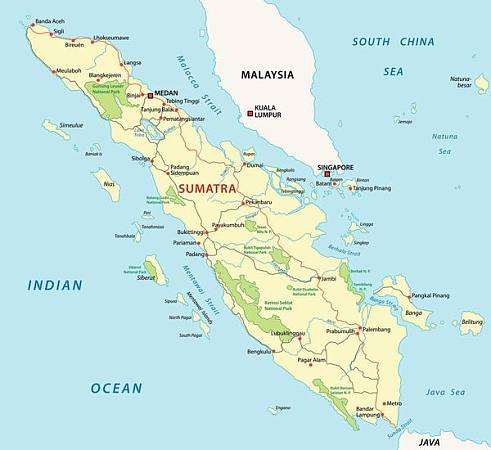
Sumatra is located in western Indonesia, and its overall elevation is not particularly high. Arabica is mostly grown in mountainous areas at 600–1,200 meters. At present, specialty-grade Mandheling mainly comes from the Lintong producing region and the Gayo Mountain producing region.
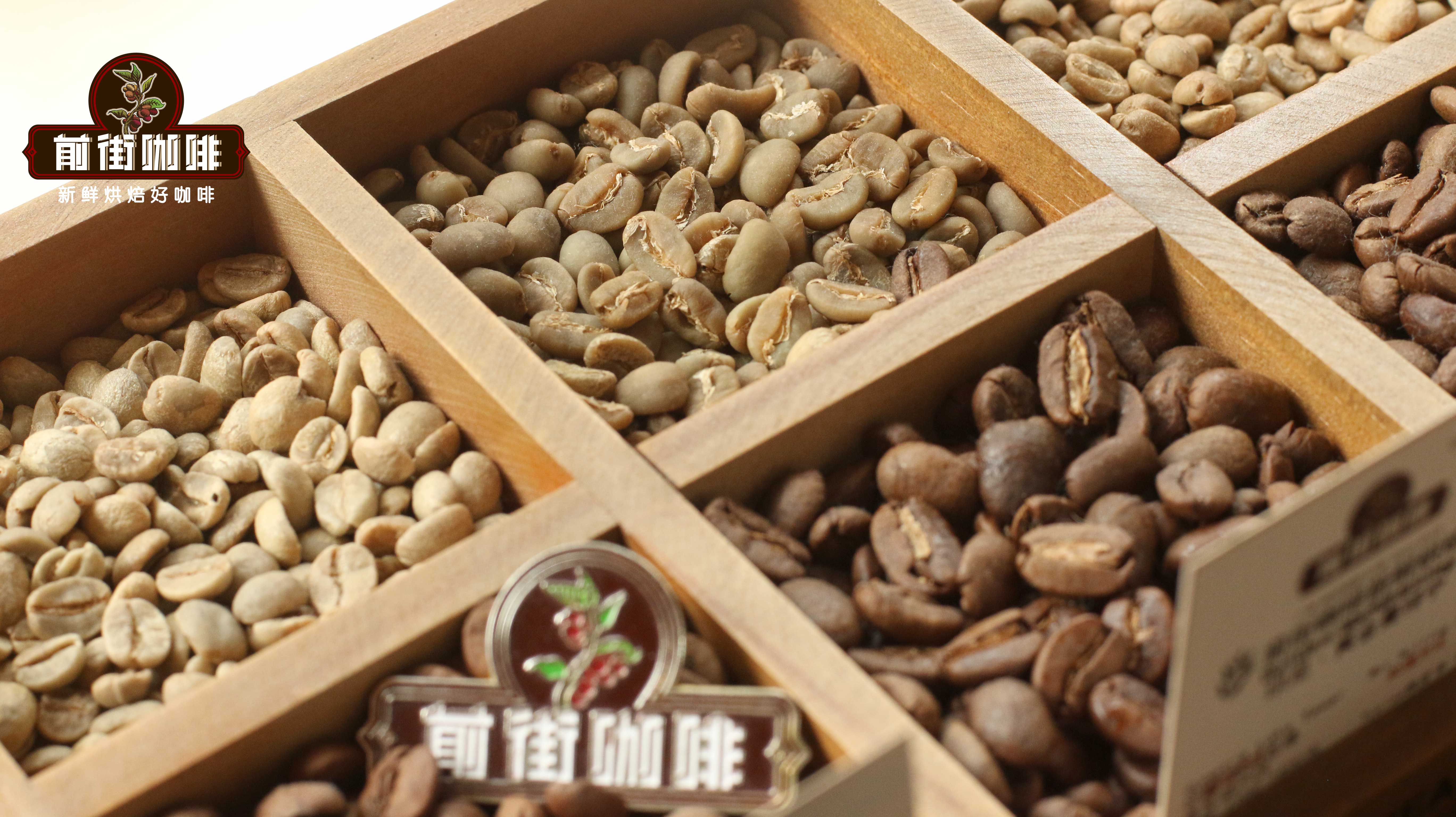
Sumatra is abundant in water resources and warm year-round, but the area is rainy and frequently hit by typhoons, making it hard to provide the good weather needed for natural drying; combined with limited economic conditions, farmers also cannot afford the higher-cost washed method, so they developed the highly localized wet-hulled process.
What are the characteristics of the wet-hulled process?
Traditional washed processing often takes 1–3 weeks, while the wet-hulled method has a much shorter cycle and can complete the entire process in just a few days. The wet-hulled method first removes the skin and pulp of the coffee fruit, then after a brief fermentation it is dried, and while semi-dry the parchment layer is removed, after which drying continues. Once the moisture content drops to 12%, it can be bagged, sorted, and graded.
Wet hulling may look time-saving, but if not strictly controlled, it is extremely prone to dampness and mold in Indonesia's hot and humid environment. Besides Sumatra, Sulawesi in Indonesia and Papua New Guinea also widely adopt this method. The reason is that Indonesia has a tropical rainforest climate, with air humidity as high as 70–90%, making it impossible to dry green beans through long sun exposure, while washing costs are also relatively high, so coffee farmers could only work out this semi-washed solution. Although the time for each step is greatly shortened, the green beans after removing the parchment layer still absorb moisture from the hot and humid air, so Mandheling often carries a quiet note of wood, herbs, and spices.
The flavor characteristics of Mandheling coffee
From the story above, it can be seen that Mandheling specifically refers to Arabica coffee grown on the Indonesian island of Sumatra. This region mainly cultivates two varieties, Ateng and TimTim.
Do these two names feel unfamiliar? In fact, TimTim is Timor, an Arabica with Robusta lineage; while Ateng is Catimor, produced by crossing Caturra with Timor.
The advantage of these varieties lies in stronger disease and pest resistance. In Indonesia's warm, humid environment, pests and diseases are also active, so the plants themselves need stronger resistance than those in high-altitude producing regions.
Through crossing with Robusta, the plants gained a small amount of Robusta's highly disease- and pest-resistant traits, while the remaining Arabica genes are responsible for laying a solid flavor foundation.
Because the varieties carry Robusta genes, and because the growing elevation is not high, it is difficult to create strong day-night temperature differences to accumulate finer flavors. Combined with wet-hulled processing, whether TimTim or Ateng, Mandheling will carry a unique profile of herbs, woody agarwood, and spices.
Are there really no differences among different varieties of Mandheling?
Of course there are. Ateng is produced by further crossing Caturra genes onto the TimTim base, so its flavor is cleaner and its sweetness higher. In addition to variety, every step from harvesting and drying to quality screening will create differences among beans.
The Mandheling currently sold by Front Street Coffee (FrontStreet Coffee) includes Mandheling from the Lintong producing region, as well as Golden Mandheling from PWN company.
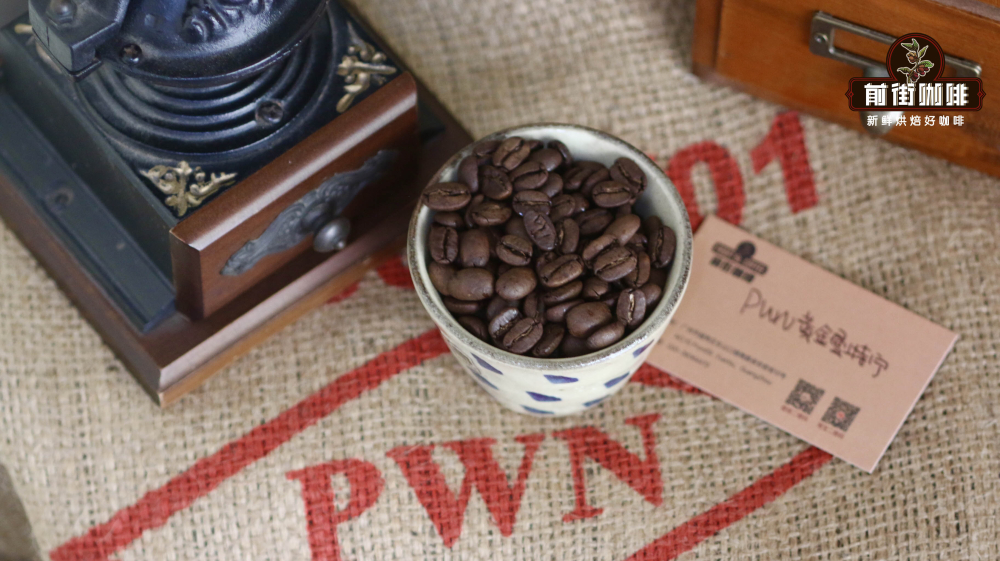
The difference between the two is: Front Street PWN Golden Mandheling, after harvesting and drying, undergoes at least three rounds of purely manual selection to ensure a specification of 18 mesh or above, with fewer than 3 defective beans in a 300g green bean sample, belonging to the highest grade G1. PWN beans are darker green in color and neatly flat in shape.
The screening process for Lintong producing region Mandheling is not as strict and meticulous as PWN's, but its flavor expression is enough to represent the Sumatra producing region of Indonesia.
Therefore, Front Street Coffee (FrontStreet Coffee) positions Lintong producing region Mandheling as an "entry-level specialty coffee bean" and a "Front Street everyday coffee bean," sold in 100g small packages at high cost performance, hoping everyone can experience the regional flavor of the Indonesian producing region at a lower cost.
How is Mandheling coffee roasted?
In order to let Mandheling retain its mellow body while also clearly showing its unique herbal flavor, Front Street Coffee (FrontStreet Coffee) roasts Mandheling by discharging the beans shortly before second crack, so it is a medium-dark roast.
The darker the roast, the more carbon dioxide is produced inside the bean. After roasting ends, the abundant carbon dioxide continues to be released, and oils seep out to the surface along with it, so 3–4 days after roasting is completed, an oily surface on dark-roasted beans is normal.
In order to let every friend drink freshly roasted coffee, we 100% guarantee at shipment that the coffee beans are shipped within 5 days after roasting is completed.
How is Mandheling coffee brewed?
For brewing Mandheling, Front Street Coffee (FrontStreet Coffee) recommends medium-coarse grinding (the size of coarse granulated sugar, with a 70% passing rate through the Chinese No. 20 standard sieve), a water temperature of 88°C, a coffee-to-water ratio of 1:15, and a KONO dripper.
What is special about the Kono dripper is that its "ribs" channels extend all the way to the bottom of the hole where the coffee liquid flows out; the ribs are located at the bottom and are relatively short, giving high conformity with the filter paper, so the flow rate is slower than a V60, which can improve extraction and increase the coffee's body.
Specific brewing method: first pour 30g of water and bloom for 30 seconds; for the second stage, pour in a small stream in circles to 125g, wait until the water level in the coffee bed drops by half before pouring again, continue pouring in a small stream in circles to 225g, and after all dripping is complete, the total extraction time is about 2 minutes 10 seconds.
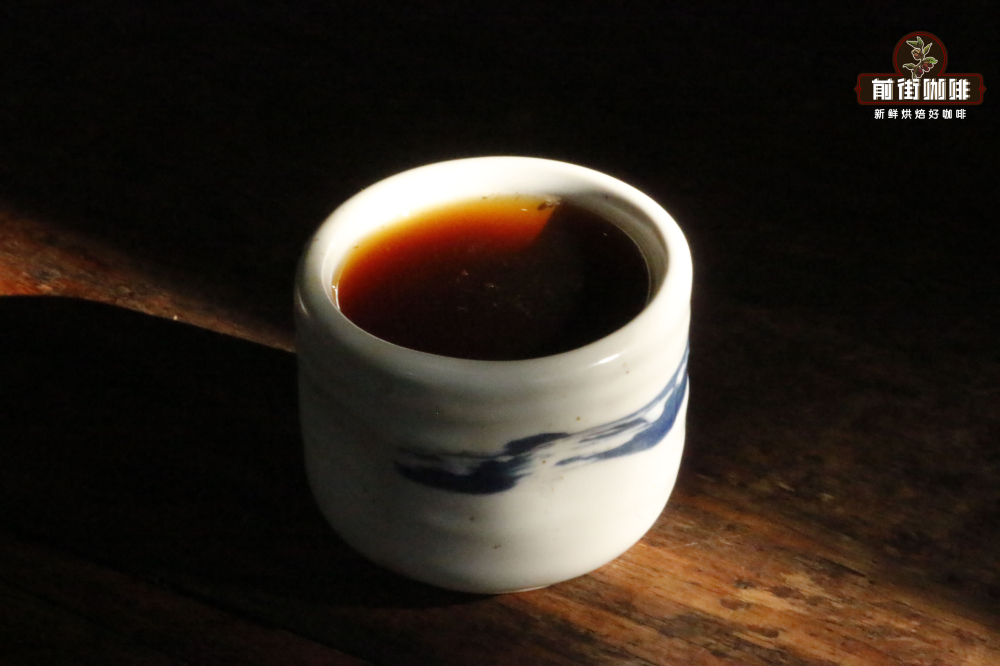
Front Street Coffee (FrontStreet Coffee) - Lintong producing region Mandheling flavor performance: a rich herbal aroma on entry, dark chocolate, caramel, and a sweet aftertaste.
Front Street Coffee (FrontStreet Coffee) - Front Street PWN Golden Mandheling flavor performance: the overall layers are varied, mellow and clean. Rich nut and caramel aroma, with a chocolate note, a lasting finish, and a high sense of balance.
The above content is compiled by CoffeeHunters, a coffee news website.


