







Is Yunnan coffee the same as the Catimor variety?
Yunnan small-bean coffee is often labeled Catimor, yet Typica is the original small-bean variety within Arabica. Coffee reached Yunnan in 1904 by written record, with large-scale planting starting in the 1950s for export to the Soviet Union. Catimor now covers most of the province's planted area, though it is not the same as Typica.
The article traces Catimor's links to Typica and yunnan coffee through variety origins, planting history, disease resistance and cupping flavors. It also gives brewing parameters and bean-resting recommendations for washed Yunnan Catimor, helping readers understand why this arabica coffee variety dominates local plantings and what grade and taste to expect.
Yunnan coffee has been gaining increasing prominence in the specialty coffee scene in recent years. Many enthusiasts, upon walking into a Front Street Coffee shop, will ask: "Do you have Yunnan small-bean coffee?" At the same time, questions about Catimor keep cropping up—what grade is it exactly, how does it taste, and is it synonymous with Yunnan small-bean coffee? This article systematically examines the connections between Catimor, Typica, and Yunnan small-bean coffee from the perspectives of variety origins, planting history, disease resistance, and cupping flavors. Drawing on Front Street Coffee's production experience, it also shares brewing parameters and bean-resting recommendations for washed Yunnan Catimor, helping readers gain a clearer understanding of this coffee variety that occupies the vast majority of Yunnan's planted area.
As Yunnan coffee's reputation continues to rise, more and more coffee enthusiasts, upon walking into a Front Street Coffee shop, ask first and foremost whether there is Yunnan small-bean coffee. As a representative specialty coffee region in China, Yunnan naturally holds a place on Front Street Coffee's blackboard menu.
Many observant consumers, after browsing the variety information of Yunnan coffee beans on the market, will approach Front Street's baristas with questions: What exactly is Catimor? Does Yunnan small-bean coffee refer to Typica or Catimor? And does Catimor belong to the Arabica species?
Front Street Coffee has explained in multiple variety primers that coffee, under the Rubiaceae family and Coffea genus, is mainly divided into three primary species: Arabica, Robusta, and Liberica, each of which can be further subdivided into numerous varieties. Typica is one of the oldest varieties within Arabica, and because its beans are relatively small, it is known as "small-bean coffee."
Since Typica is the true small-bean coffee, why is Yunnan small-bean coffee often labeled as Catimor? This requires delving into the local planting history. Front Street has mentioned in several past articles on Yunnan coffee that written records show coffee was first introduced to Yunnan in 1904. Large-scale planting began in the 1950s, when, in order to repay debts to the Soviet Union, foreign trade departments actively purchased coffee in Yunnan for export to the Soviet Union. At that time, "Yunnan small-bean coffee" was even rated a first-class product at the 1958 London International Coffee Tasting Competition.
By the 1980s, reform and opening-up brought a wave of international brands into the Chinese market. Coffee giants such as Nestlé and Starbucks successively established themselves in Yunnan's coffee regions and vigorously promoted the planting of the Catimor variety.
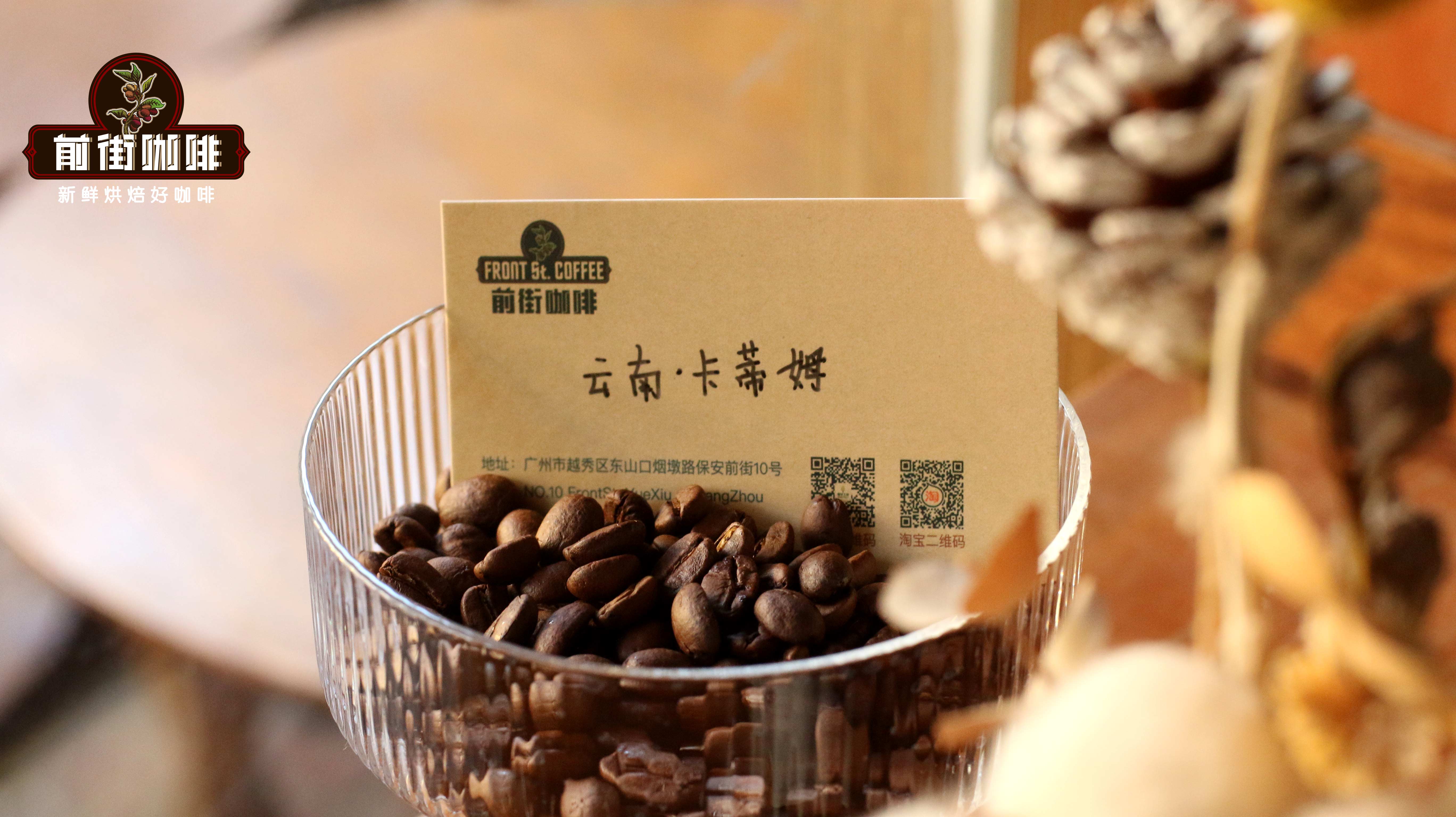
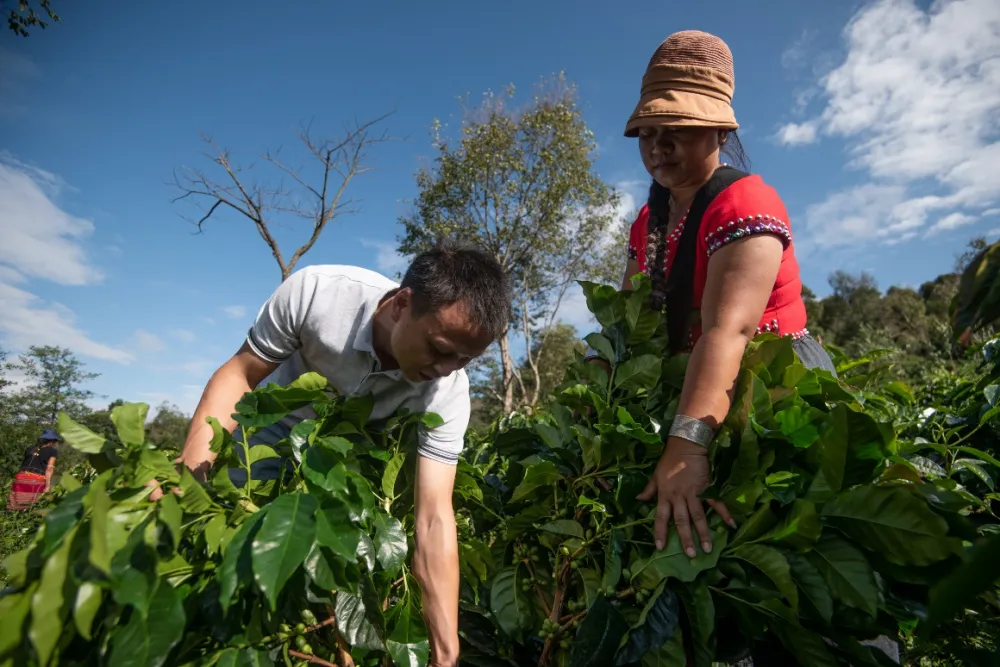
Compared with Typica, Catimor is easier to manage in the field, is resistant to coffee leaf rust that was ravaging Central and South America at the time, and yields three times as much as Typica. At that time, growers had little understanding of coffee flavor; coffee was seen merely as a cash crop, and profitability was the primary consideration. Thus, the elegant-flavored Typica was cut down and replaced by Catimor.
Catimor came into being when the Portuguese transplanted the Brazilian Bourbon mutation Caturra to East Timor. Caturra was then crossed with the Timor variety, which carries Robusta lineage, ultimately producing Catimor—a variety with both excellent disease resistance and productivity.
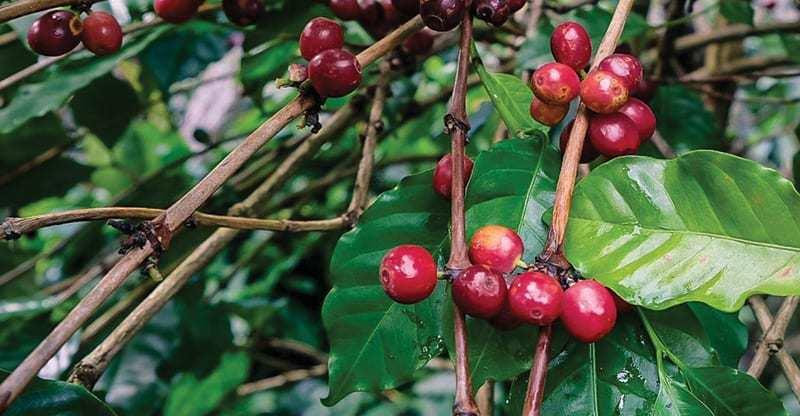
According to Front Street's understanding, Catimor presents a compact tree shape, short stature, many branches, short fruit nodes, vigorous growth, and tenacious vitality. Its most outstanding advantages are its astonishing rust resistance and high-yield characteristics. For this reason, it is highly favored by Yunnan coffee farmers; currently, over 90% of the local coffee trees are Catimor. From the 1970s to the 1990s, coffee leaf rust swept through coffee regions worldwide, and with the assistance of international organizations, the planting of Catimor was vigorously promoted. So what is now called Yunnan small-bean coffee actually refers to the Catimor variety.
In Front Street's view, if Yunnan is to improve its overall coffee quality, gradually switching varieties is an unavoidable step. Catimor's rust resistance gradually degrades after 20–30 years, and switching varieties has become a reality Yunnan must face today. In recent years, many new varieties have appeared in Yunnan, such as the renowned Geisha. To explore the relationship between cultivation and variety, Front Street began planting coffee in Lincang, Yunnan in 1013, selecting the ancient small-bean variety—Typica—along with a small amount of Bourbon, and letting them grow there. Typica needs to be planted at high altitudes for its flavor to show rich layers; its fruity acidity and delicate mouthfeel make it a recognized high-quality variety, but the plant has low yield and weak resistance, being susceptible to leaf rust, coffee berry disease, and nematodes, thus requiring more labor for management.
Because it carries some Robusta lineage, Catimor inherits Robusta's strong disease resistance while also inheriting some flavor defects—as mentioned in The Craft of Specialty Coffee, a "devilish aftertaste"—with insufficiently rich aroma, a relatively heavy bitterness, a tendency toward astringency, and an unpleasant pungent flavor.
Veteran connoisseurs familiar with Yunnan small-bean coffee origins often enthusiastically emphasize their preference for a particular micro-region. Yunnan's main coffee regions include Baoshan, Pu'er, Dehong, Lincang, and Xishuangbanna. Everyone has their own ranking of Yunnan coffee origins—some are fond of Baoshan, some prefer Pu'er, and others are devoted exclusively to Lincang.
On Front Street Coffee's bean list, Yunnan, as the representative of China's coffee regions, has its own unique character. A washed Catimor from the Baoshan region carries the basic terroir of China's coffee regions in Front Street's everyday-bean series. The washed processing method cleans off the skin, pulp, and mucilage before sun-drying, so the Yunnan washed Catimor in Front Street Coffee's everyday-bean series has a clean and bright flavor, clearly presenting Yunnan coffee's soft acidity, nutty notes, and tea-like character.
Many customers who come to Front Street Coffee to taste Yunnan small-bean coffee based on its reputation often wonder afterward: Why can't I brew the same flavor at home? Below, Front Street Coffee shares the brewing method used when producing Yunnan small-bean coffee.
Dripper: Hario V60
Water temperature: 87°C
Dose: 15 g
Coffee-to-water ratio: 1:15
Grind size: 75% passing through a Chinese standard No. 20 sieve
In this era of pursuing fresh roasting, everyone wishes they could brew the coffee beans the moment they are roasted. Front Street has also heard plenty of feedback: coffee beans that are too fresh brew with a rough mouthfeel and a noticeable dry sensation after swallowing. This is because coffee beans need a 4-to-7-day resting period after roasting to release excess gas and allow the flavor to become rounder and fuller. The coffee beans Front Street ships are all roasted within 5 days, so by the time they arrive, they have just passed the resting period—precisely when the flavor is at its fullest.
Even so, Front Street still recommends a 30-second bloom during brewing to help the carbon dioxide inside the beans escape fully.
Front Street Coffee typically uses a three-pour technique in its brewing method. Compared with the one-pour method, the three-pour method more easily produces coffee with rich layers, full flavor, and a round mouthfeel; compared with champion methods like the 4-6 pour, it is simpler to execute and suitable for beginners in pour-over coffee.
Pour 30 g of hot water and bloom for 30 seconds, then pour in a thin stream from the center point while slowly circling out to 125 g. When the water level in the dripper drops to the point where the coffee bed is about to be exposed, continue circling and pouring to 225 g. Total extraction time is about 2 minutes.
For more coffee bean information, please follow Coffee Workshop (WeChat public account: cafe_style)
For professional coffee knowledge exchange, please add WeChat ID: kaixinguoguo0925
The above content is compiled by CoffeeHunters, a coffee news website.


