







Which coffee producing regions shape Rwanda's cup?
Rwanda, the Land of a Thousand Hills, grows coffee on hillsides at 1,700 to 2,000 meters, with volcanic soil and abundant sunlight. Its specialty lots are concentrated in the south and west and are known for fruity sweetness, floral aromas and a black tea finish, a profile more balanced than Kenya's.
Production runs entirely through smallholders, each household farming only 0.1 to 0.2 hectares, and washed processing became the key to the quality leap. The article outlines the growing environment, coffee producing regions, colonial-era industry changes, the Bourbon-dominated varietal structure, and Front Street Coffee's Rwanda Gaseke profile, roasting curve, cupping notes and brewing parameters.
Rwanda is known as the "Land of a Thousand Hills," enjoying superior conditions such as high altitude, volcanic soil, and abundant sunlight. Its coffee is celebrated for fruity sweetness, floral aromas, and a black tea aftertaste, with a flavor profile more balanced than Kenya's. Why does Starbucks Reserve favor Rwanda? Drawing on Front Street Coffee's cupping experience, this article outlines Rwanda's growing environment, main producing regions, industrial changes during the colonial period, the Bourbon-dominated varietal structure, and how washed processing became the key to a leap in quality. It also includes the complete profile, roasting curve, cupping notes, and brewing parameters for Front Street's Rwanda Gaseke coffee beans, making it suitable reading for enthusiasts who wish to gain a deeper understanding of African specialty coffee.
When it comes to African coffee, Front Street's Kenya coffee beans have won over many palates with their full-bodied fruit acidity, a tartness as thick and viscous as tomato juice or berry juice. But Africa is not just about Kenya—Rwanda also produces coffee of a distinctly different style. Not long ago, Front Street brought in several Rwandan beans for roasting and cupping, and found their flavor more balanced than Kenya's, typically presenting fruity sweetness, delicate floral notes, and a black-tea-like finish.
Rwanda's Growing Environment
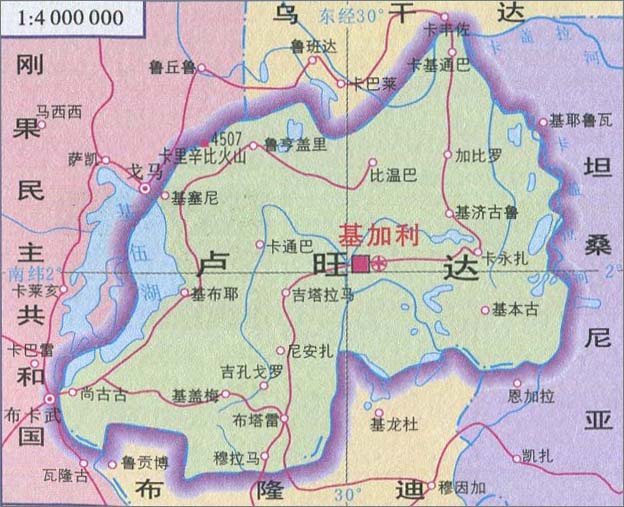
Rwanda has long enjoyed exceptional conditions for coffee cultivation: high altitude, fertile volcanic soil, and abundant sunlight. A large number of coffee trees grow on hillsides at elevations of 1,700 to 2,000 meters, which is why the country is also called the "Land of a Thousand Hills." Rwandan coffee is world-class, more balanced than Kenya's yet clean and distinct, rivaling Central American coffees. Generally speaking, Rwandan coffee carries fruity sweetness, floral notes, and a black-tea-like finish. The way coffee production lines operate varies from country to country; Rwanda's is entirely run by smallholders rather than large corporations, which is also the common pattern in African coffee cultivation. Compared with Brazil's small farms of twenty hectares or more, each Rwandan household has only 0.1 to 0.2 hectares, a scale that is almost negligible.
Rwanda's Coffee Producing Regions
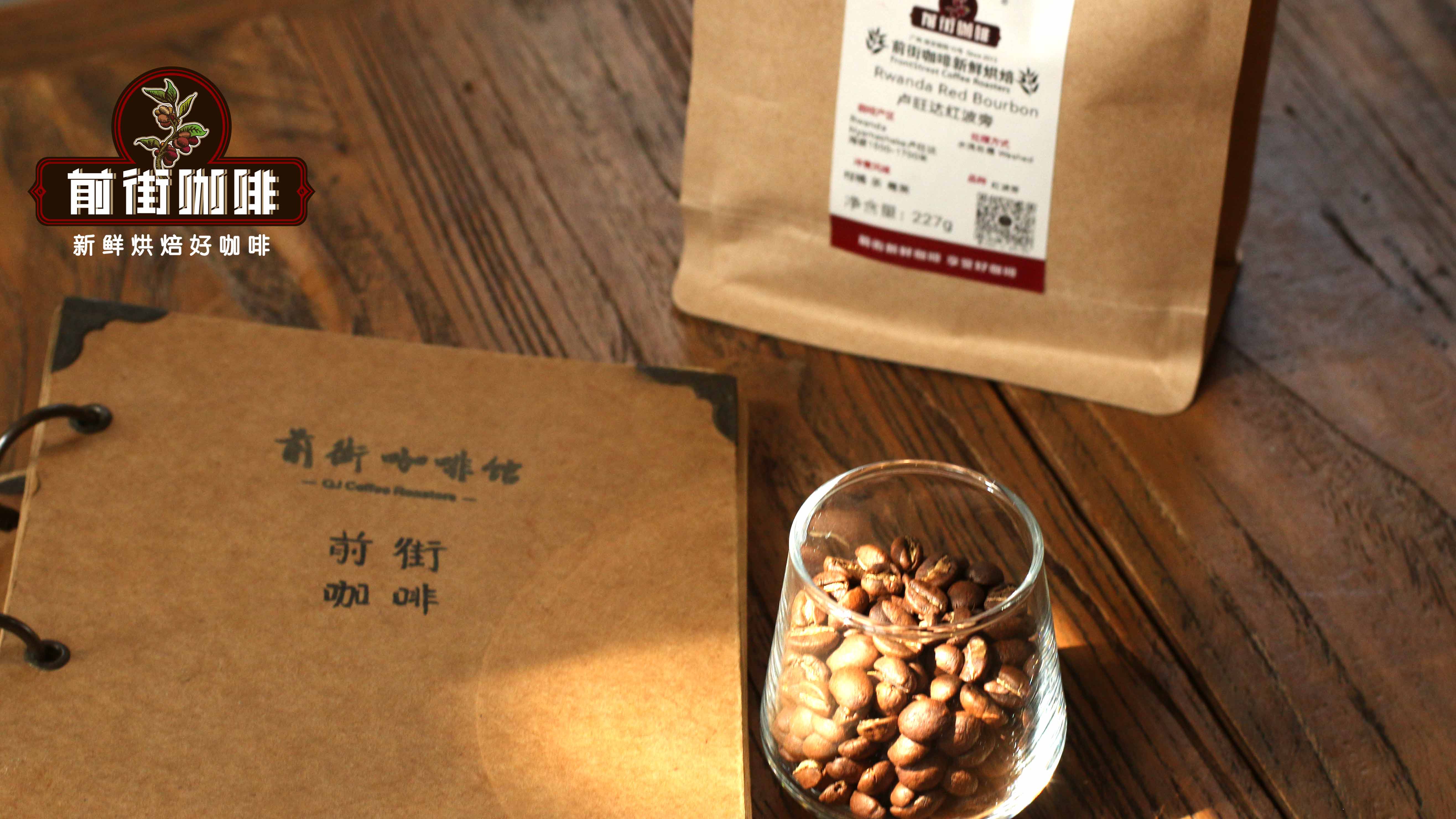
Rwanda's specialty coffee beans are concentrated in the south and west. The high-altitude Huye mountains and Nyamagabe region in the south produce beans with floral and citrus tones; the Nyamasheke region along Lake Kivu in the west is rich in high-quality coffee with a full body, intense aroma, and abundant juiciness. Although flavor differences between regions are not dramatic, careful tasting still reveals distinctions. People often ask how FrontStreet Coffee identifies them—flavor is indeed somewhat elusive at first glance. In fact, FrontStreet Coffee has undergone extensive flavor recognition training to distinguish the characteristics of different regions, and this requires time, energy, and persistence.
Changes in Rwanda's Coffee Industry
Rwanda is located in central Africa and is a standard landlocked country, with almost all its neighbors being major coffee producers. In the early 20th century, Rwanda was colonized successively by Germany and Belgium, and coffee was first introduced by German missionaries. During the colonial period, production rose sharply, but labor was exploited, coffee purchase prices were suppressed, and export taxes were high, resulting in poor bean quality—a common situation for commercial coffee at the time. FrontStreet Coffee notes that Brazil, which also experienced colonial rule, similarly pursued yield at the expense of quality and long carried a reputation for poor coffee quality.
It was not until Rwanda gained independence and established its first official coffee organization, OCIR, that coffee bean production gradually received attention. From the 1960s to the 1980s, Rwanda's coffee production continued to climb, reaching a historic peak in 1986. However, domestic political turmoil in the early 1990s (the Rwandan genocide) brought the coffee industry to a standstill. After 1995, with the Rwandan government's vigorous development efforts and the support of international NGOs and private groups, the country gradually regained stability and the coffee industry was revived. This year, however, due to the COVID-19 pandemic, Rwandan coffee sales have undoubtedly suffered a considerable blow, and various parties are working to help local coffee farmers get through the crisis.
Varieties Grown in Rwanda
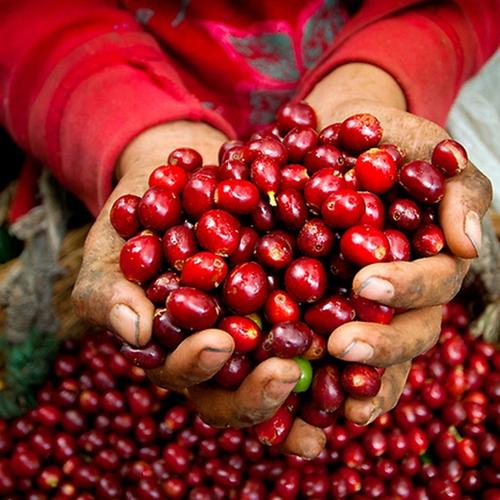
More than ninety percent of Rwandan coffee varieties are the early-introduced Bourbon and its mixed lines, which have a certain ability to withstand natural disasters. Bourbon coffee was first planted on Réunion Island, introduced to Brazil in 1860, and then spread rapidly throughout Latin America. The several Latin American Bourbon coffee beans FrontStreet Coffee currently carries include Brazil Red Bourbon, Brazil Yellow Bourbon, and Colombia Pink Bourbon.
However, the advantages of Latin American Bourbon are no longer what they once were, due to weaker disease resistance. By contrast, Rwandan Bourbon still retains its edge, which is one reason FrontStreet Coffee brought in Rwandan beans. After the Red Bourbon coffee tree flowers and fruits, the cherries change color from green to slightly yellow, slightly orange, ripe red, and dark red—hence the name Red Bourbon, which is essentially what is commonly called Bourbon. Bourbon grown at high altitudes tends to have better aroma and brighter acidity, even tasting somewhat like red wine.
In the past, inadequate post-harvest processing management in Rwanda was a stumbling block to specialty coffee. Coffee cherries need to be sent to a processing station as soon as possible after picking, but Rwanda lacked facilities and could not process them promptly. Cherries left piled together after picking accelerated mold and rot due to poor ventilation; spoiled fruit affected coffee quality and produced defective flavors. In addition, Rwandan coffee can be traced to the washing station, and washing stations are supplied by cooperatives or smallholders, with each household averaging only 183 coffee trees, making it very difficult to trace coffee back to a single producer and hard to guarantee consistent quality.
The Washed Processing Used for Rwandan Coffee
In 2000, Rwanda—having just emerged from internal chaos—began rebuilding with the support of two major coffee development programs, PEARL and SPREAD, funded by the United States Agency for International Development (USAID). After the programs were implemented, 46 coffee washing stations were built in Rwanda one after another, and strong coffee bean exports drove significant economic growth.
Rwandan coffee beans mainly use the washed processing method: ripe cherries are hand-selected, the skin and pulp are removed, a 12-to-18-hour washed fermentation takes place, the mucilage is cleaned off, and finally the beans are dried to a moisture content below 14%. FrontStreet Coffee believes that Rwanda's decision to make washed processing the primary method from the early stage of development was a choice that clearly highlights coffee's flavor. Washed processing best expresses coffee's essential flavor, and when recommending a region, FrontStreet Coffee also prioritizes washed beans for customers so they can clearly understand the region's flavor characteristics.
FrontStreet Coffee: Rwanda Gaseke Coffee Beans
Coffee Region: Nyamasheke Processing Station: Gaseke Processing Station Growing Altitude: 1,700 to 2,000 meters Processing Method: Washed Coffee Varieties: Bourbon, Caturra, Catuai
Gaseke Washing Station
Fidele Ndagijmana is a young trader in the Nyamasheke region who saw the potential of Rwanda's specialty washed coffee and applied to the government to build this processing station, successfully processing 170 tons of coffee cherries in its first year. He used the off-season to improve and expand production equipment, so that by the next harvest season he could offer better machinery and a superior storage environment. The trader also secured more land near the processing station for himself to grow coffee.
Front Street's Roasting Recommendation
Given Rwandan coffee's delicate acidity and fresh flavors, FrontStreet Coffee recommends a medium-light roast to highlight these characteristics.
Yangjia 800N: Charge at a drum temperature of 175°C, with a gas setting of 120 and the airflow damper opened to 3; the turning point is at 1'36"; when the drum temperature reaches 112°C, open the damper to 4 and raise the gas to 140; at 151°C the bean surface turns yellow, the grassy smell completely disappears, and the dehydration phase begins; at 8'30" wrinkles and dark patches appear on the bean surface, and the toast-like aroma clearly shifts to coffee aroma, which can be defined as the prelude to first crack—listen carefully for the sound of first crack—first crack begins at 9'45", open the damper to 5, develop for 1'30'' after first crack, and drop the beans at 190.6°C.
Front Street's Cupping Report
Front Street's Brewing Recommendation
Dripper: V60 Water Temperature: 90°C Dose: 15 grams Coffee-to-Water Ratio: 1:15 Grind Size: EK43s setting #10 (80% passing through a Chinese standard No. 20 sieve)
Brewing Method: FrontStreet Coffee uses staged extraction, blooming with 30 grams of water for 30 seconds, then pouring in a slow circular stream to 125 grams for the first stage; when the water level is about to expose the coffee bed, continue pouring to 225 grams and stop; when the water level is about to expose the coffee bed again, remove the dripper. (Timing starts from the beginning of the bloom.) Total extraction time is 2'00".
Front Street Rwanda Washed Red Bourbon Flavor Description: Pleasing citrus sweetness, bright acidity, berry, apple, and citrus notes, honey-like sweetness in the mid-palate, excellent sweetness and balance, and a finish of almond and chocolate.
The above content is compiled by CoffeeHunters, a coffee news website.


