







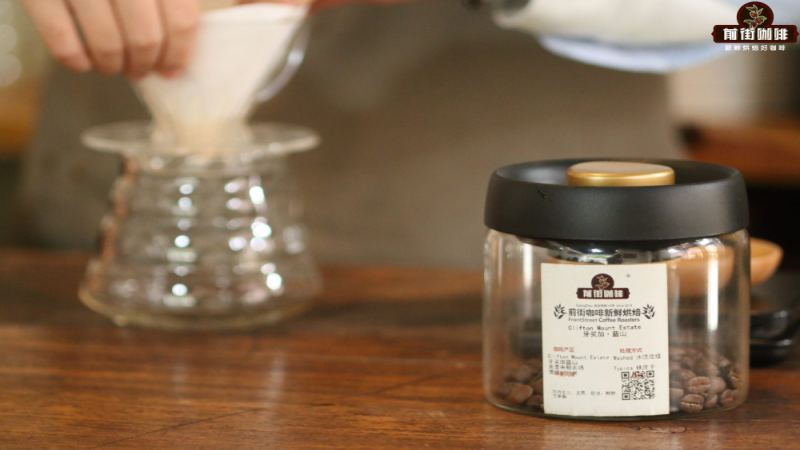
What separates real Blue Mountain coffee from blends?
Genuine Jamaican Blue Mountain No. 1 is not the same as packaging marked Blue Mountain flavor or Blue Mountain blend. The Jamaican government grades the coffee officially and sets strict screening requirements, while growing areas above 1,700 meters are protected zones where cultivation is not allowed, limiting where the coffee can come from.
The article explains the growing conditions of the Blue Mountains, the grading standards and screening for Blue Mountain No. 1, and whether the claim that no authentic Blue Mountain reaches certain markets holds true. It also details the Clifton Farm lot selected by Front Street Coffee, covering region, processing, flavor and pour-over brewing.
Blue Mountain coffee's fame is almost universally known, but the products on the market labeled "Blue Mountain flavor" or "Blue Mountain blend" are completely different from genuine Jamaican Blue Mountain No. 1. This article starts with the growing conditions of the Blue Mountains, sorts out the Jamaican government's official grading standards, the strict screening requirements for Blue Mountain No. 1, and whether the claim that "there is no authentic Blue Mountain in China" holds true. It also introduces the Clifton Farm Blue Mountain No. 1 selected by Front Street Coffee, including its region information, processing method, flavor characteristics, and pour-over brewing suggestions, helping coffee enthusiasts build a clear understanding of authentic Blue Mountain coffee.
There is a coffee that even people who never drink coffee can name without thinking. It has made its presence felt in countless films and TV shows. In the Hong Kong films of the 1980s and 1990s, whether it was a white-collar worker sitting in an office building or a police officer chasing criminals on the street, the moment they heard the words "Blue Mountain," their expression immediately changed.
How famous is Front Street Blue Mountain coffee? A person who has never touched coffee can walk into a café and confidently order a cup of Blue Mountain. Behind this fame, the high price is one of the driving forces. Precisely because of this, some merchants have started playing word games with consumers, printing "Blue Mountain flavor" or "Blue Mountain blend" on packaging, and with a moment's carelessness, one might think they have bought authentic Blue Mountain coffee beans. So the question arises: why can Blue Mountain coffee's status rank in the same tier as Panama Geisha?
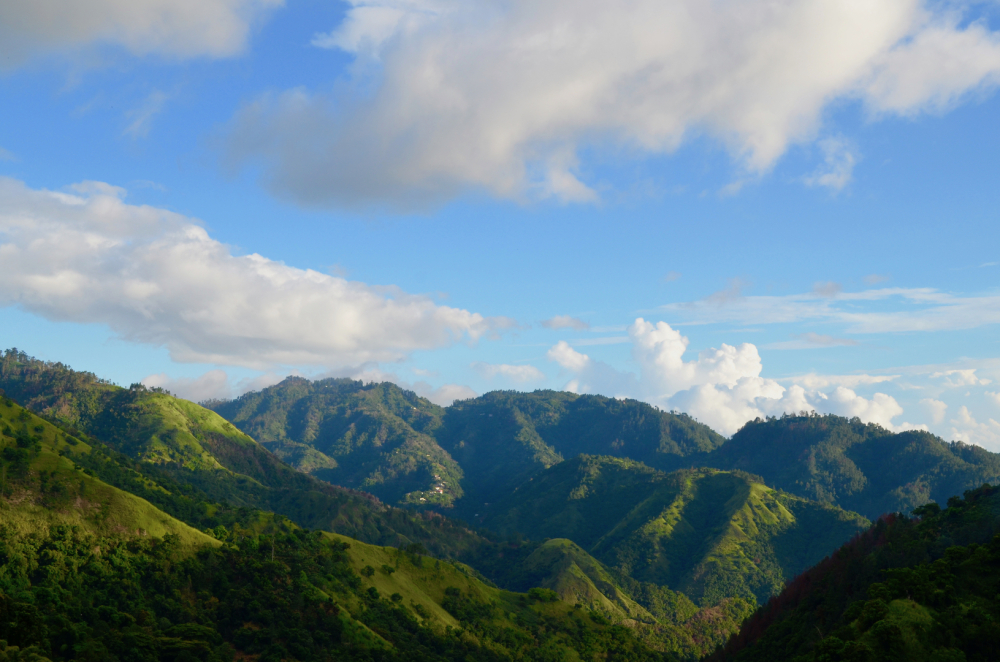
The origin of Front Street Blue Mountain coffee beans is the Blue Mountains of Jamaica. This mountain range is embraced by the Caribbean Sea. On clear days, sunlight strikes the sea surface, and the blue radiance reflects onto the mountains—hence the name "Blue Mountain."
The highest point of the Blue Mountains exceeds 2,000 meters above sea level, but not the entire range is suitable for growing coffee. Out of environmental considerations, the Jamaican government has designated areas above 1,700 meters as protected zones where coffee cultivation is not allowed. In addition, the higher the altitude, the lower the temperature, and the risk of frost increases noticeably at excessively high elevations. Once frost occurs, the damage to coffee trees is almost irreversible.
Within the Blue Mountains, the areas where coffee can be grown are distributed across four Jamaican administrative regions: Portland, St. Mary, St. Thomas, and St. Andrew. Jamaica classifies its coffee into three grades based on growing altitude: Jamaica Blue Mountain Coffee, Jamaica High Mountain Coffee, and Jamaica Supreme Coffee. Official regulations state that only coffee beans grown between 1,000 and 1,700 meters above sea level are eligible to be classified as Jamaica Blue Mountain Coffee. Because of this mandatory rule, the total amount of beans that qualify as Blue Mountain Coffee is less than forty percent.
In addition, the Jamaica Coffee Industry Board's grading standards for Blue Mountain coffee are quite stringent, dividing it into four grades—No. 1, No. 2, No. 3, and Peaberry—based on green bean size and the proportion of defective beans.
Among these, Jamaica Blue Mountain No. 1 must not only be grown between 1,000 and 1,700 meters above sea level, but the green beans must also reach a screen size of 17/18, with a defect rate not exceeding 2%. After round after round of strict screening, the number of beans that can attain the Blue Mountain No. 1 grade is pitifully small.
But there are simply too many coffee connoisseurs around the world, and the demand for Front Street Blue Mountain No. 1 coffee beans far exceeds the supply. This supply-demand imbalance naturally drives up the price of Blue Mountain No. 1.
Some articles online claim that authentic Blue Mountain coffee cannot be bought within China. This is not accurate. It is true that authentic Blue Mountain coffee has low production and a high price, but it has not reached the point where it is completely unavailable in China. In the last century, Japan funded and assisted Jamaica's coffee industry, and in return, Japan obtained priority purchasing rights for Blue Mountain coffee, at one point monopolizing over eighty percent of Blue Mountain coffee beans. This situation was broken after 2009, and with China's purchasing power continuously rising, it is now not difficult for domestic coffee enthusiasts to drink authentic Blue Mountain coffee.
As one of the classic top-tier coffees, Blue Mountain coffee is naturally not absent from Front Street Coffee's bean list. What Front Street Coffee has selected is Blue Mountain No. 1 coffee beans from Clifton Farm.
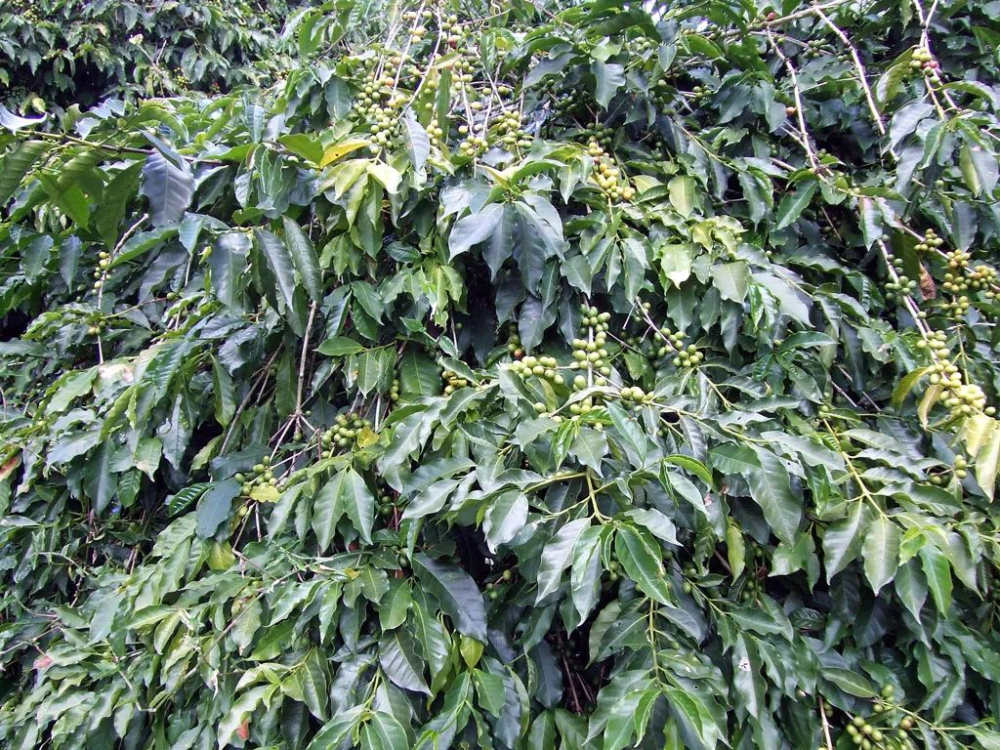
Clifton Farm is currently managed by the Sharp family and is the oldest coffee plantation in the region, having grown coffee for over two hundred years. The farm is located on Catherine's Peak, the highest growing altitude in the surrounding area. It is worth mentioning that Clifton Farm is also the only coffee plantation in Jamaica's Blue Mountain region to have obtained Rainforest Alliance certification.
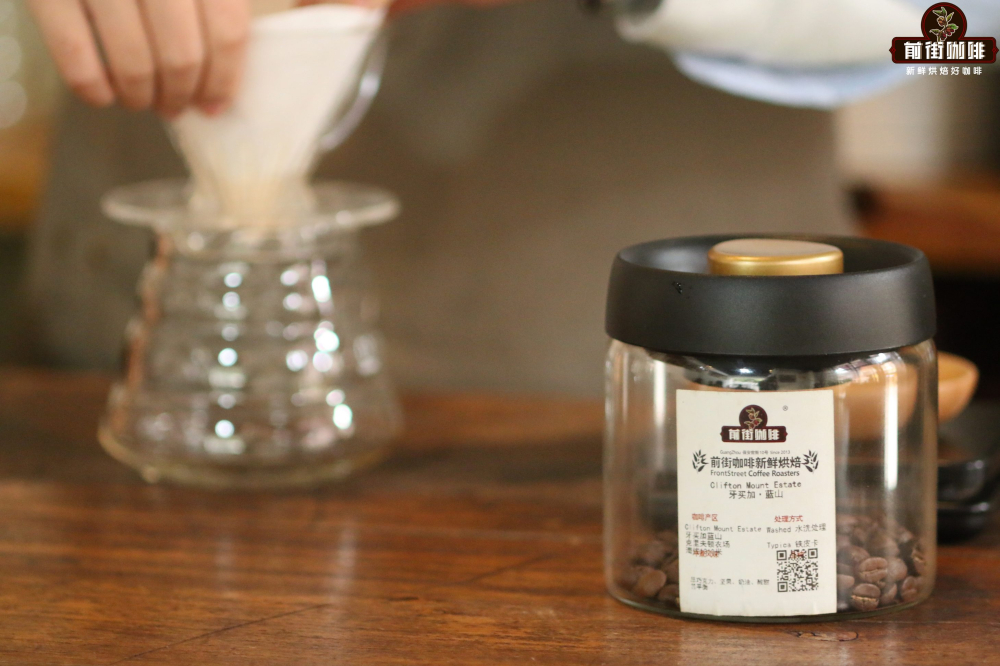
Front Street Coffee: Front Street Jamaica Blue Mountain No. 1 Coffee Beans
Region: Jamaica Blue Mountain
Estate: Clifton Farm
Altitude: 1,310 meters
Variety: Typica
Processing Method: Washed Process
The traditional Front Street Blue Mountain coffee flavor is dominated by rich nutty and dark chocolate notes, with a balance of acidity, sweetness, and bitterness, and a full-bodied mouthfeel. This Front Street Blue Mountain No. 1 coffee bean recommended by Front Street Coffee uses the washed process: after selecting ripe coffee cherries, the skin and pulp are removed, the mucilage layer is washed clean, and then the beans are sun-dried. Coffee beans processed this way have a clean taste and best reflect the terroir characteristics of the region, making them suitable for enthusiasts who prefer coffee's original flavors.
Clifton is not the only estate that produces Blue Mountain No. 1. After comparing multiple washed Blue Mountain No. 1 coffees from different estates, Front Street believes that Clifton Farm's Blue Mountain coffee has a strong aroma and a rich, full-bodied taste, sufficient to serve as an outstanding representative of the region.
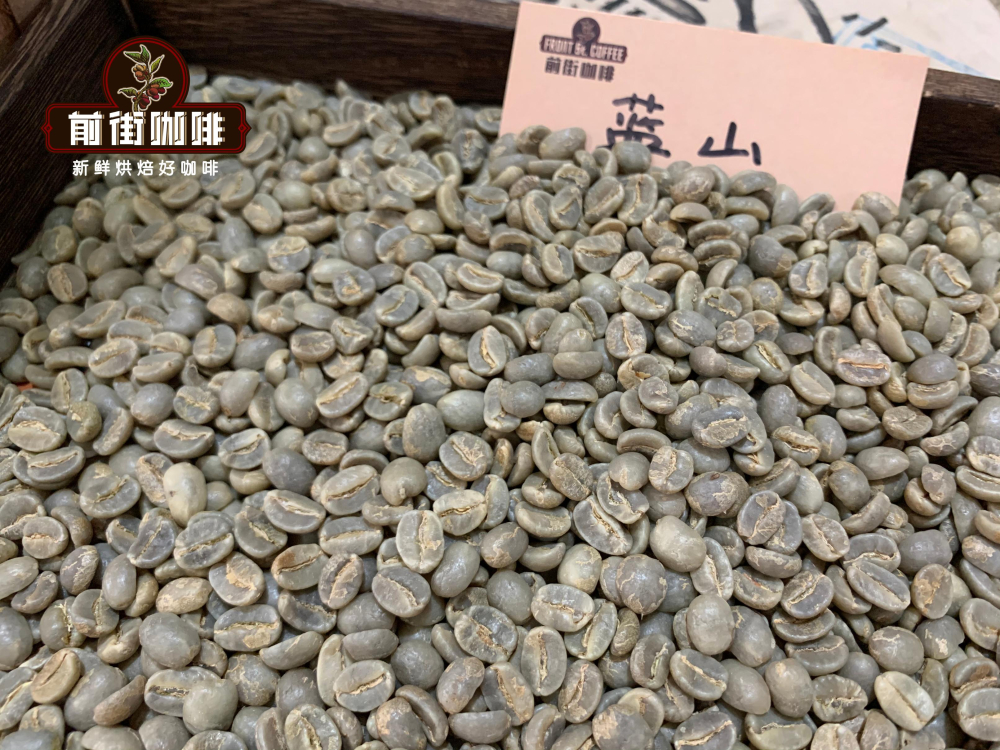
Coffee green beans exported from the Blue Mountain region are still loaded in wooden barrels to this day. Looking across the world's coffee-producing regions, only Jamaica still insists on this practice. In Front Street Coffee's stores, Blue Mountain coffee green bean barrels are displayed, along with a Jamaican Blue Mountain Coffee Certificate of Origin signed by Clifton Farm. These all demonstrate that every single Front Street Blue Mountain coffee bean truly comes from Jamaica's Blue Mountain region and meets the Jamaican authorities' stringent standards for Blue Mountain No. 1.
When Front Street Coffee receives Blue Mountain No. 1 green beans from Clifton Farm, one can see that the Front Street Blue Mountain coffee green beans have a blue-green hue, uniform bean shape, and a lingering fresh fragrance. For the roasting stage, considering the need to present the traditional Blue Mountain nutty and chocolate notes and full-bodied mouthfeel, a medium-dark roast level was chosen.
Because the roast level is on the darker side, when brewing this Front Street Blue Mountain coffee, Front Street recommends using a coarser grind and a lower water temperature to avoid over-extraction bringing out burnt bitterness.
Dripper: KONO Dripper
Water Temperature: 88°C
Coffee Dose: 15 grams
Coffee-to-Water Ratio: 1:15
Grind Size: 80% passing through a Chinese standard No. 20 sieve
When Front Street Coffee produces pour-over coffee, it typically uses the Hario V60 and KONO drippers. The KONO dripper has smooth walls and 12 shorter ribs at the bottom. After the filter paper is moistened, it fits tightly against the dripper walls, restricting airflow and allowing water and coffee grounds to have a longer contact and immersion time in the dripper, ensuring extraction time and extraction yield even with a coarse grind. This allows the coffee grounds to be fully extracted, enhancing body and concentrating flavor, making it suitable for brewing the rich-flavored Front Street Blue Mountain coffee.
First, pour in 30 grams of hot water for a 30-second bloom, then pour from the center with a thin stream in a slow circular motion up to 125 grams. When the water level in the dripper drops to the point where the coffee bed is about to be exposed, continue pouring in a circular motion up to 225 grams. Total extraction time is about 2 minutes.
The first pour of hot water during brewing is used for the bloom, with the purpose of stabilizing the extraction of the coffee's later flavor notes. The bloom duration depends on the coffee beans' roast date and the state of the coffee grounds, generally around 30 seconds. Front Street Coffee ships coffee beans freshly roasted within 5 days, and by the time they arrive, they have already gone through a 4-to-7-day resting period.
Front Street also offers a grinding service for friends who do not have a grinder at home. However, once coffee beans are ground, the degassing rate accelerates, and flavor compounds are lost along with it. Therefore, Front Street recommends that if conditions allow, it is still better to buy whole beans and grind fresh right before brewing to enjoy a better flavor.
For more coffee bean information, please follow Coffee Workshop (WeChat public account: cafe_style)
For professional coffee knowledge exchange, please add WeChat ID: kaixinguoguo0925
The above content is compiled by CoffeeHunters, a coffee news website.


