







What Does Brazilian Coffee Taste Like and How Should It Be Brewed?
Brazilian coffee taste is built on nutty and chocolatey sweetness, balanced acidity and bitterness, and a full-bodied mouthfeel. Because most growing areas sit at lower altitudes, the arabica coffee bean develops a softer structure and lower density than higher-grown lots, so the cup reads sweet rather than sharply acidic. Brazil supplies more than 30 percent of the world's arabica output in strong harvest years, which is why its flavor profile shapes so many espresso blends.
Recent crops have fallen short of demand, pushing arabica coffee bean futures higher. Extreme weather, a weaker US dollar squeezing farm margins, high oil prices drawing growers toward corn for renewable energy, and rising domestic consumption all played a part. For brewing, lighter roasts preserve the nutty sweetness and acidity, while darker roasts push the chocolate notes forward and suit pour-over recipes with a slightly coarser grind and slower pulse pours.
Brazil is the world's largest producer of Arabica coffee beans, and fluctuations in its output directly affect international futures prices. In recent years, severe climate, economic factors, and the impact of the pandemic have plunged Brazilian coffee into a situation of supply falling short of demand. Brazil's coffee-growing altitudes are generally low, the beans are soft, and the flavor is dominated by nutty and chocolatey sweetness, balanced acidity and bitterness, and a full-bodied mouthfeel. This article provides a detailed introduction to Brazil's coffee-producing regions, main varieties, and flavor characteristics, as well as two Brazilian beans recommended by Front Street Coffee and pour-over brewing parameters, helping coffee enthusiasts gain a comprehensive understanding of Brazilian coffee and master the key brewing points.
For more specialty coffee knowledge, please follow the WeChat official account: FrontStreet Coffee
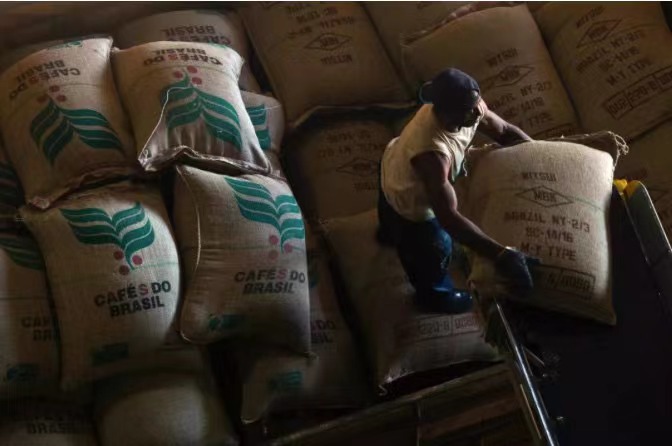
Brazil is a major producer of Arabica coffee beans worldwide, and increases or decreases in its harvest directly affect the futures market for international Arabica green coffee beans. Statistics show that in years of abundant Brazilian coffee harvests, its output can account for more than 30% of the global total production of Arabica coffee beans.
However, in recent years, Brazil's coffee output has not been ideal. Extreme weather brought by the greenhouse effect has caused a sharp reduction in Brazil's Arabica coffee bean production, a weakening US dollar has squeezed coffee farmers' profit margins, soaring oil prices have prompted many local growers to switch to corn for renewable energy production, and combined with the impact of the global pandemic, Brazil's domestic coffee consumption has continued to climb. The combination of these factors has left Brazilian coffee beans in a predicament of supply falling short of demand.
The level of Arabica coffee futures prices depends on the Arabica coffee bean inventories of the New York Intercontinental Exchange. As the largest source of inventory supply, Brazil's supply volume has always been a key factor determining the trend of coffee futures prices.
Brazilian Coffee Flavor
Generally speaking, the higher the altitude at which coffee beans are grown, the greater the temperature difference between day and night, and the more slowly the coffee fruit grows, allowing more ample time for the coffee beans to develop a better "constitution," increasing bean density while also cultivating richer flavor layers.
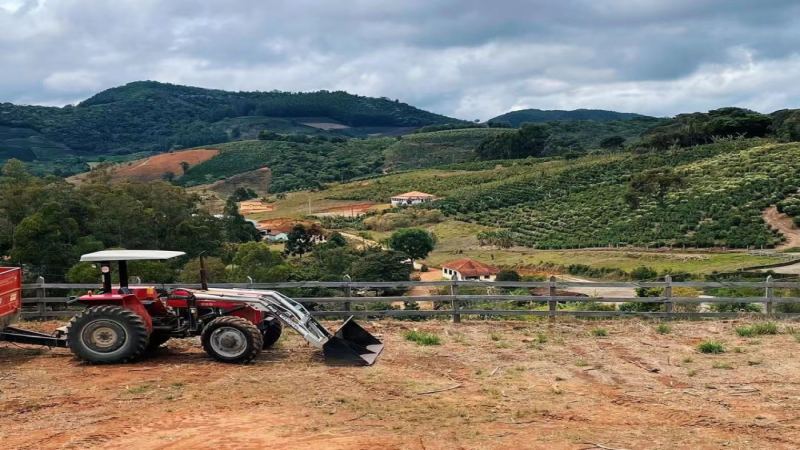
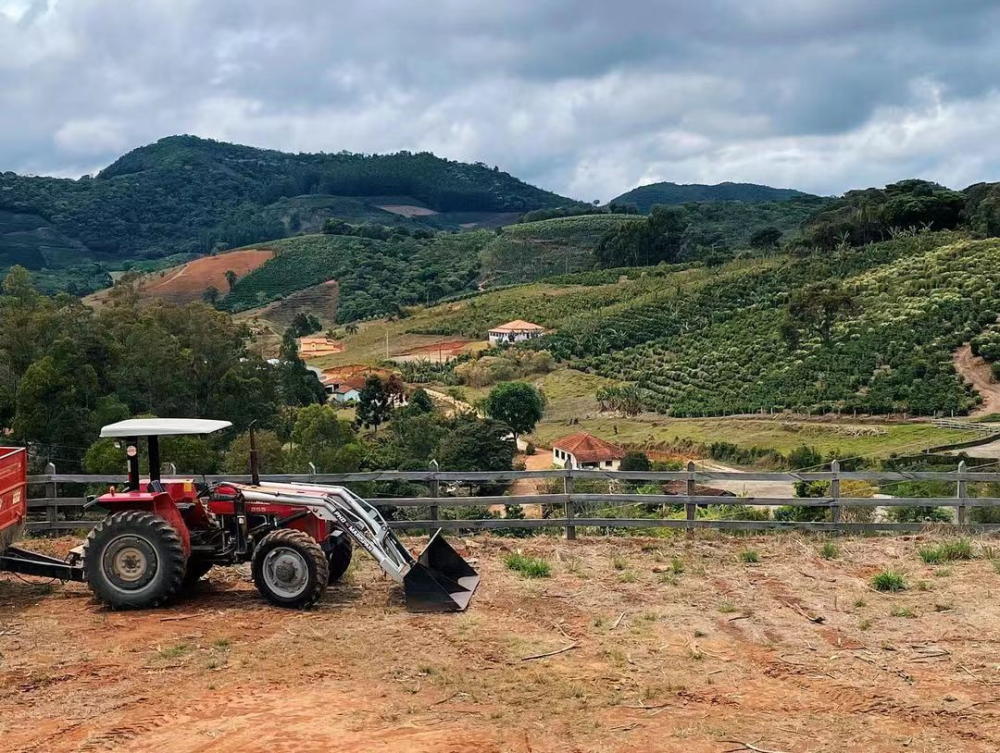
Compared with other coffee-producing countries in Central and South America, the growing altitudes in Brazil's coffee-producing regions are noticeably lower, and in addition, the terrain is flat, microclimates are lacking, and coffee trees are not shaded during cultivation.
For this reason, Brazilian coffee beans have a softer texture, and their flavor performance is also inferior to that of some other producing regions. Generally speaking, Brazilian coffee beans have lower acidity; high-quality Brazilian beans present a nutty, chocolate-like sweetness, with balanced acidity and bitterness and excellent body. Poorer-quality Brazilian beans may carry woody and earthy notes.
Brazilian Coffee Cultivation Overview
Brazilian coffee was first introduced from French Guiana in the 1720s. Coffee trees adapted very well to Brazil's local climate and terroir, and soon spread from the north to São Paulo in the southeast and Paraná in the south. Unfortunately, when coffee spread to Paraná, because the region is at a relatively high latitude and frost occurs in winter, coffee farmers suffered heavy losses.
It was not until the 1970s and 1980s that Brazilian farmers began developing the warmer Minas region and Bahia area in northern São Paulo. Winters here are warm and frost does not occur, and today Minas has become one of Brazil's main specialty coffee-producing regions.
Brazil's main coffee-producing regions include: Minas Gerais, Sao Paulo, Bahia, and Espirito Santo. Coffee exports from these four regions account for 90% of the national total. The commonly seen Mogiana region comes from Sao Paulo, while Cerrado and Sul de Minas within Minas Gerais, due to their higher altitudes, are rich in specialty Brazilian coffee beans.
Introduction to Brazilian Coffee Varieties
Brazil currently mainly cultivates varieties such as Red Bourbon, Yellow Bourbon, Mundo Novo, and Catuai, among which Red Bourbon and Yellow Bourbon are the mainstays. Both are secondary varieties produced by mutations of Typica.
After the Red Bourbon coffee tree flowers and bears fruit, the fruit color goes through: green > slightly yellow > slightly orange > mature red > riper dark red. Therefore, some people also call it the Red Bourbon variety. In fact, Red Bourbon is what is generally called Bourbon.
Bourbon grown at high altitudes usually has better aroma and brighter acidity, and when tasted may even carry a flavor similar to red wine. Simply put, Bourbon is a branch variety within the Arabica species. It generally bears red fruit, called Red Bourbon. In addition, there are also Yellow Bourbon and Orange Bourbon. Among them, Yellow Bourbon has relatively lower yield but more outstanding quality.
Does Brazilian coffee taste good?
FrontStreet Coffee currently sells two coffee beans from Brazilian producing regions. One comes from the Mogiana region next to Sul de Minas, from Fazenda Rainha at an altitude of 1,400 to 1,950 meters. This area is home to many growing families; some operate using the traditional large-farm model, while others practice small-scale modern management. The combination of modern technology and mountain coffee-growing culture has produced the highest-quality green coffee beans.
Through cupping, Front Street found that the coffee beans produced in this region carry a clear sweetness like sucrose. After medium-dark roasting by FrontStreet Coffee, the Brazilian Fazenda Rainha coffee presents the aroma of mixed roasted nuts, a full and smooth peanut-butter-like texture, and a clear sweetness like brown sugar.
The other comes from a coffee bean at an altitude of 1,000 meters in the Cerrado producing region. The Cerrado producing region is located in Mato Grosso in southwestern Brazil, passing through the central-west of Minas and reaching western Bahia. The Cerrado coffee-producing region referred to by Front Street is not the entire Cerrado savanna, but is limited to the coffee-growing areas above 1,000 meters in the central-west of Minas, which alone can be called the Cerrado coffee-producing region.
This area is the essence of the Cerrado savanna, with high altitude and fertile soil, which is why it can grow specialty coffee beans that are clearly sweet, full-bodied, and highly clean. After medium-dark roasting by FrontStreet Coffee, the coffee from Brazil's Cerrado producing region presents flavors of nuts, peanuts, creamy smoothness, cocoa, and caramel.
How to brew Brazilian coffee beans?
FrontStreet Coffee stores usually use the Kono dripper for brewing. The difference between this dripper and the V60 is that the ribs of the Kono dripper extend only to one-third of the dripper, while the remaining two-thirds are smooth. When the filter paper fits completely against the dripper, air cannot pass through the dripper, and the speed at which water flows through during brewing slows down, thereby achieving an immersion effect, and the coffee's expression becomes fuller and more substantial.
Because the dripper itself has the effect of increasing the extraction rate, FrontStreet Coffee recommends medium-coarse grinding (70% passing through a Chinese No. 20 standard sieve), with water temperature controlled at 88 to 89 degrees Celsius, and brewing at a 1:15 coffee-to-water ratio.
Front Street uses three-stage extraction: start the timer, first bloom with 30 grams of water for 30 seconds, then pour in a small stream in circles until 125 grams, pause, and when the water level drops and is about to expose the coffee bed, continue pouring until 225 grams and stop (timing starts from the beginning of blooming). The extraction time is 2 minutes.
The above content is compiled by CoffeeHunters, a coffee news website.


