







How Do Brazilian Coffee Bean Grades Shape Regional Flavor?
Brazil grades its coffee partly by defect count and cup quality, and that scale explains why most of the crop moves as commodity coffee while a smaller share reaches specialty. Grown mostly at around 1,000 meters on flat highlands, Brazilian arabica is often judged below higher-altitude origins, yet estates such as Cerrado and Queen Estate show how grading and careful processing still separate clean, sweet lots from ordinary ones.
Yellow bourbon coffee from Queen Estate illustrates the specialty side: a distinct variety, selective picking and controlled processing behind a sweeter, rounder cup. Cerrado, by contrast, represents the large Arabica region that supplies Brazil's everyday lots. Because Brazil is the second-largest coffee consumer after the United States, price swings there, including the pandemic-era futures rise, reach the wider market, so its grading system matters well beyond its borders.
Brazil is a major global coffee producer and the second-largest coffee-consuming market after the United States, and fluctuations in its bean prices sway international markets. Brazil's flat highlands make mechanized cultivation possible, but the generally low altitude (around 1,000 meters) limits its evaluation in specialty coffee. However, Brazil also has specialty estates pursuing flavor, and as the birthplace of the COE competition, it balances quality and quantity. This article focuses on two Front Street Brazilian beans—Cerrado Red Bourbon and Queen Estate Yellow Bourbon—to outline Brazil's coffee bean grading system and regional flavor differences, and to provide Front Street's roasting approach and brewing parameters, helping you understand Brazilian coffee more systematically.
Brazil is not only a major coffee producer but also the world's second-largest coffee consumer (after the United States), so price movements of Brazilian coffee beans often affect global markets. During the COVID-19 pandemic, Brazil's coffee harvest pace slowed at one point, and combined with tight shipping schedules, Arabica coffee futures prices continued to rise.
Front Street believes that the most prominent advantages of Brazilian coffee beans lie in their huge production volume and stable flavor. This benefits from Brazil's flat plateau terrain, which facilitates mechanized operations. Brazilian coffee is generally grown at low altitudes, around 1,000 meters, making it difficult to rank among the top in the specialty coffee field, so it is often exported as a commodity.
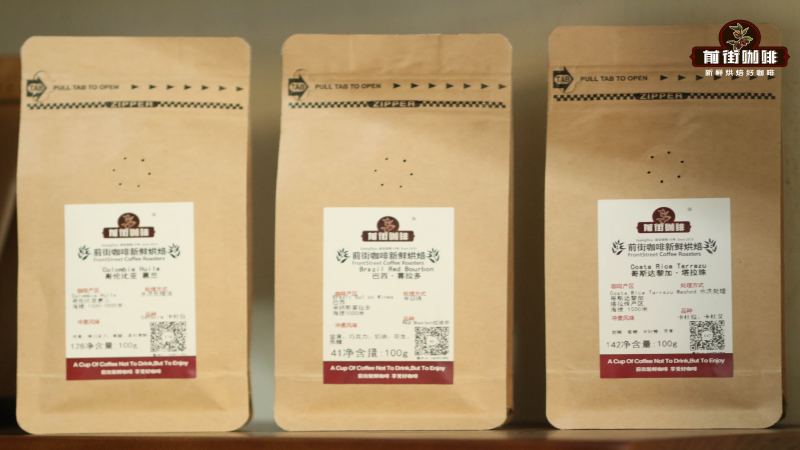
However, Brazil also has many specialty estates that differ from the large-farm approach and focus more on shaping coffee flavor. As the birthplace of COE, Brazil has arrangements in both coffee quality and quantity. Front Street's current two Front Street Brazilian coffee beans correspond exactly to these two directions: one reflects the basic Brazilian regional style—Front Street Brazil Cerrado Coffee Beans; the other represents a specialty estate—Front Street Brazil Queen Estate Yellow Bourbon Coffee Beans.
Front Street Brazil Cerrado Coffee Beans belong to Front Street's daily-drink bean series. The original intention of Front Street's daily-drink bean series is to let more friends who want to explore coffee drink coffee from major distinctive origins at a lower price. Therefore, Front Street seeks coffee beans worldwide that carry the flavor of their local regions, requiring both excellent flavor and affordable prices.
Cerrado is a large Arabica region in Brazil with relatively good quality. The land is flat, at an altitude of about 1,000 meters, and it is Brazil's most mechanized growing area, mainly planted with Red Bourbon. Red Bourbon is a pure and ancient Arabica variety, characterized by a solid mouthfeel, fine acidity, and a red-wine-like aroma. In terms of processing, the Cerrado region adopts a semi-washed method suited to local conditions, significantly reducing defect rates and improving overall quality. Therefore, in Front Street Brazil Cerrado Coffee Beans, you can taste a very clean mouthfeel, chocolate and peanut flavors, with a caramel-like aroma in the aftertaste.
Front Street's other Brazilian coffee bean comes from the famous COE award-winning estate—Queen Estate. Queen Estate is located in the Mogiana region, which is dominated by small and medium-sized individual estates and focuses on high-quality, good-flavor coffee. Queen Estate is also known for its Yellow Bourbon coffee, which accounts for 30% of annual production. Yellow Bourbon is a variant of Red Bourbon, named for its yellow ripe fruit, and has better fruit acidity and aroma than Red Bourbon.
For this Front Street Brazil Yellow Bourbon Coffee Bean, Queen Estate uses a refined natural process. Unlike natural processing in Brazil's large regions, it follows the standards of major specialty estates, with strict requirements for drying degree and management processes. When tasting Front Street Brazil Queen Estate Coffee, you will experience a very high sucrose sweetness, as well as a balanced flavor of dark chocolate and nuts.
Brazilian Coffee Bean Grades
Among the many coffee-growing countries in Central and South America, Brazil has a relatively low altitude. Therefore, unlike countries such as Colombia, it does not emphasize that only high altitudes can produce hard beans. Instead, it grades Brazilian coffee beans by four criteria: bean size, defect rate, cup score, and flavor. Flavor grading: From high to low: Strictly Soft, Soft, Softish, Hardish, Rioy. Defect rate grading: By the number of defective beans, in every 300 g of green beans, 6 defective beans is NY.2. Only beans with no defects at all can become NY.1, but beans with no defects at all are rare and cannot maintain a certain supply, so among Brazilian green beans, the best is only NY.2.
Cup quality grading: From high to low: Fine Cup, Fine, Good Cup, Fair Cup, Poor Cup, Bad Cup. FC (Fine Cup) and GC (Good Cup) are relatively common. Bean size grading: The largest screen size for Brazilian coffee beans is 19 mesh, but production is not high, so 17 mesh and 18 mesh are the highest grades.
FrontStreet Coffee Roasting Recommendations Front Street believes that Brazilian coffee beans have the balanced mouthfeel characteristic of South American origins, so it uses a medium roast for Brazilian coffee beans, appropriately extending the caramelization reaction in the middle phase to maximize the conversion of acids into sweetness, and during roasting makes small adjustments to heat and raises temperature slowly, so that the bean surface and bean core color values are similar, ensuring balance.
FrontStreet Coffee Brewing Recommendations
Brewing parameters: use a Kono dripper, 88°C water temperature, 15 g coffee dose, 1:15 coffee-to-water ratio, medium-fine grind (80% passing a Chinese standard No. 20 sieve)
For Brazilian coffee beans with a darker roast, in order to highlight the coffee's full-bodied feel, FrontStreet Coffee chooses the Kono dripper for brewing. The Kono dripper is characterized by its soaking function, which can be used to extract more coffee substances and enhance the full-bodied mouthfeel. Because it has few ribs and they are located at the lower end, it allows the filter paper to fit closely against the dripper to restrict airflow, thereby slowing the water flow and increasing the contact time between water and coffee grounds. By the way, the Kono dripper is not only suitable for brewing the darker-roasted Front Street Brazil Queen Estate, but also for brewing medium-dark roasted coffee beans such as Front Street Jamaica Blue Mountain No. 1 and Front Street PWN Golden Mandheling.
A water temperature of 88°C is a relatively low brewing temperature, which can avoid extracting too many off-flavors from the coffee beans during brewing, because the darker the coffee bean roast, the more off-flavors increase.
FrontStreet Coffee Brewing Method
Use staged extraction: bloom with 30 g water for 30 seconds, pour in a small stream in circles until 125 g, then pause, and when the water level is about to expose the coffee bed, continue pouring until 225 g and stop. (Timing starts at the beginning of blooming.) The extraction time is 2 minutes. Try to keep the brewing method consistent for both beans.
Description of Brazilian Coffee Bean Characteristics
Front Street Brazil Queen Estate Coffee Beans: Noticeable chocolate and nuts, with floral and spice aromas, caramel sweetness, and a Pu-erh tea aftertaste. The overall mouthfeel is relatively full-bodied and smooth, with balanced flavor.
Front Street Brazil Cerrado Coffee Beans: Obvious sweetness on entry, with a light lemon aroma, rich nutty flavor, and a distinct dark chocolate note in the latter stage. The overall impression is relatively round.
For professional coffee knowledge exchange and more coffee bean information, please follow Coffee Workshop (WeChat public account: cafe_style)
For more specialty coffee beans, please add the private WeChat of FrontStreet Coffee: kaixinguoguo0925
The above content is compiled by CoffeeHunters, a coffee news website.


