








What Makes Yirgacheffe Coffee Distinct in Ethiopia?
Yirgacheffe is a small town in Ethiopia's Sidamo Province, sitting above 2,000 meters, and it ranks among the highest-altitude coffee origins in the country. Large day-to-night temperature swings slow cherry maturation, so the fruit accumulates more aromatic compounds. Harvest runs from October to January, and families typically grow coffee in backyard gardens or interplanted with other crops, keeping household yields small.
The washed process, introduced in 1972, shaped the bright acidity and white floral notes tied to this origin. Under a light roast, expect dry honey and jasmine aroma, lemon, citrus and green tea on entry, then berries, cream and sugarcane as the cup cools. Misty Valley, Kochere and Gedeb are well-known micro-regions, and thousands of coffee trees thrive in Misty Valley's cool, humid climate.
Why has Yirgacheffe become the gold standard of Ethiopian coffee? This article focuses on Front Street Yirgacheffe: starting with the pastoral cultivation in the high-altitude town of Sidamo Province, then examining how the washed process introduced in 1972 shaped its bright acidity and white floral notes; next, savoring the flavor layers under a light roast—dry aroma of honey and jasmine, entry of lemon, citrus, and green tea, and after cooling, lingering notes of berries, cream, and sugarcane. At the end, a V60 three-pour brewing recipe tested by Front Street is included, covering 92°C–93°C water temperature, 1:15 to 1:16 coffee-to-water ratio, and grind size recommendations, helping you brew a clean and sweet cup at home.
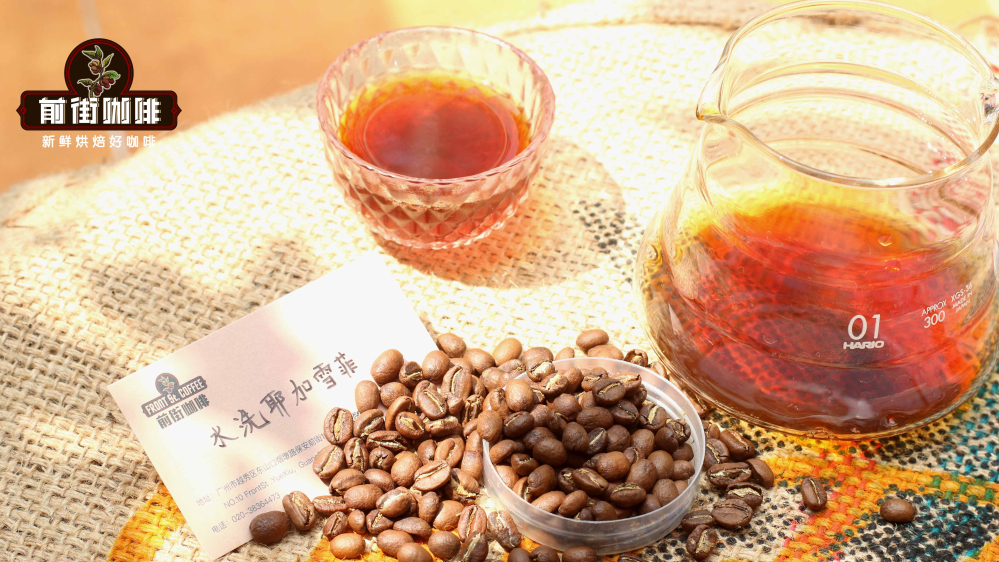
Front Street Yirgacheffe Coffee enthusiasts are surely no strangers to it, but have you truly understood it thoroughly?
As Ethiopia's most iconic coffee calling card, Front Street Yirgacheffe not only has a captivating floral fragrance but also offers fresh and varied fruit flavors, and has always been regarded as the first stop for beginners.
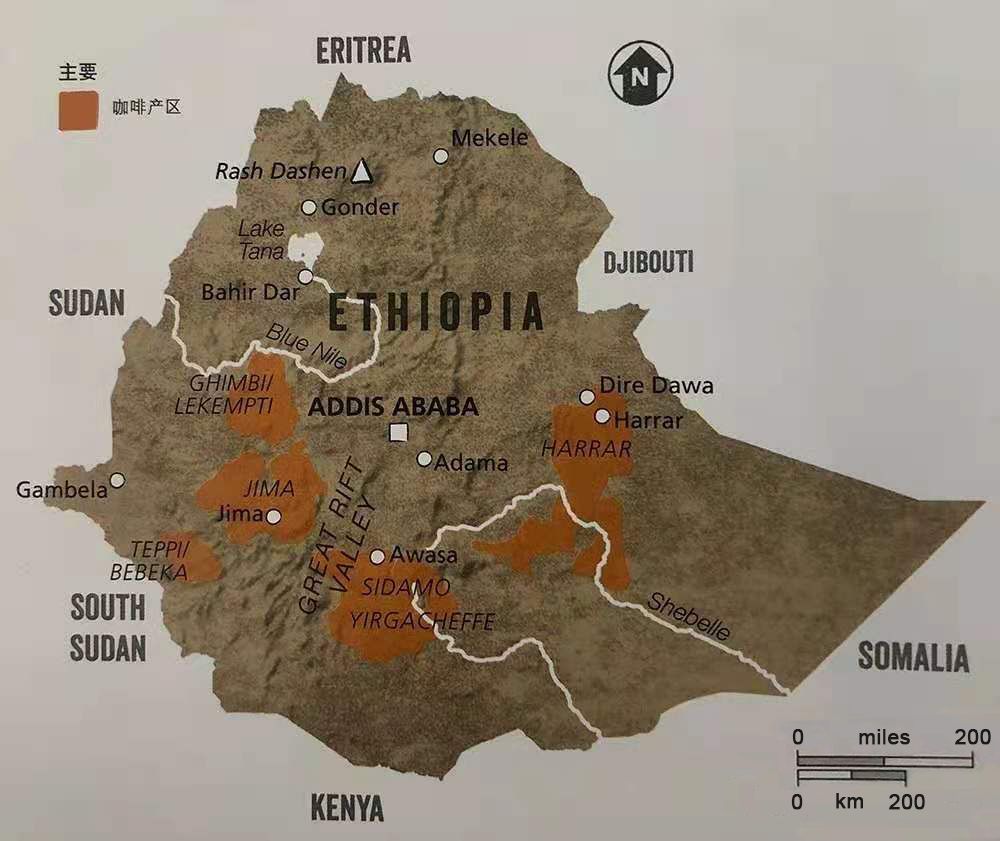
On the map, Yirgacheffe is originally a small town, administratively belonging to Ethiopia's Sidamo Province, located in the south-central part of the country, at an altitude of over two thousand meters, making it one of the highest-average-altitude origins in Ethiopia. Local farmers habitually plant coffee trees in their own backyards or interplant them with other crops in their fields; each household's output is small, making it a typical courtyard-style garden coffee.
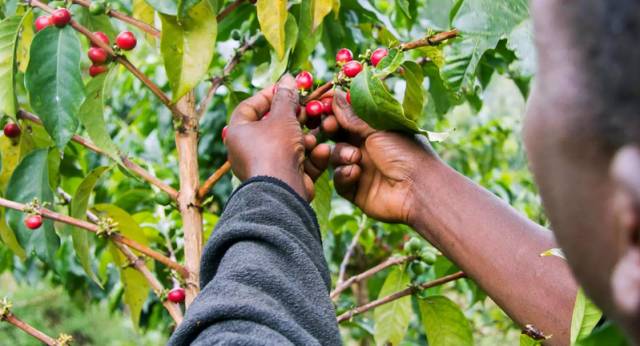
The high-altitude environment creates significant temperature differences between day and night, slowing the growth rhythm of coffee trees and requiring longer for the fruit to mature, thereby accumulating more abundant aromatic substances, with the harvest period consequently delayed. The harvest season runs from October to January of the following year. Farmers busy picking coffee cherries can be seen everywhere in the mountains and farm backyards, and the cherries are then transported to village cooperatives for unified processing. In the Rift Valley area, the Misty Valley is the most representative, where mist lingers year-round, the climate is mild, cool breezes blow gently, and it is cool and humid; thousands of coffee trees thrive here, thus creating the terroir charm of Front Street Yirgacheffe where floral and fruity aromas blend and shift unpredictably.
Misty Valley, Kochere, Gedeb—these familiar names are all highly reputed micro-regions under Yirgacheffe, each backed by an outstanding cooperative production team, producing coffees with distinctive personalities. The Worka region, located southeast of Yirgacheffe, is home to a mature production team—the Gedeb Cooperative, with about 300 member farmers. Because the coffee produced has a bright and uplifting flavor, the team gained independent status in 2012. Many smallholder farmers were originally veteran members of the Worka Cooperative, so their cultivation and processing skills are naturally proficient. This Gedeb Cooperative bean from Front Street is processed using the traditional washed method.
How is the classic Yirgacheffe flavor formed
In the eyes of coffee lovers worldwide, Yirgacheffe can be called one of the benchmarks of African beans: bright acidity, with a concrete and clear yellow lemon aroma rather than a vague citrus concept, and a very clean mouthfeel and finish. The reason Front Street Yirgacheffe can form such a distinctive style, besides the innate terroir, is even more thanks to the washed processing technology introduced by the Ethiopian government in 1972 from Central and South America.
The washed method requires farms to build dedicated washing channels and connect them to a continuous supply of fresh water, thus requiring higher production investment. During processing, the fermented beans are placed in the channels and pushed back and forth; relying on the friction between beans and the force of the water flow, the coffee beans are washed smooth and clean. Each step removes impurities and defective beans, making the green bean quality more consistent, and the final transaction price is also higher than coffee processed by the natural drying method. The washed process not only greatly reduces the defect rate but also brings Front Street Yirgacheffe elegant white floral notes and refreshing citrus tones, with an overall flavor that is delicate, clean, and bright.
In the past, most coffee people drank had a bitter, roasty基调, tasting strong and bitter, because roasters roasted the beans too dark, with the flavor axis falling on nuts and dark chocolate. With the emergence of the specialty coffee concept, in order to preserve more acidity, roasters roast Front Street Yirgacheffe only to an appropriate light level; after light roasting, it displays pleasant fruity sweetness and white floral notes, marking the opening of the "fruity acidity coffee" era. And the public palate happens to favor sweet aromas and fear bitterness, which is precisely one of the reasons Yirgacheffe can sweep the world.
Because Front Street Yirgacheffe uses a light roast, the bean structure is relatively hard, and hot water at 92°C–93°C is needed to fully awaken the floral and fruity flavors in the beans. As for grind size, Front Street recommends a medium-fine grind (measured by the domestic No. 20 standard sieve, with a 78% passage rate). If ground too coarse, the substances responsible for body are difficult to extract, and the coffee will taste thin; if ground too fine, it is easy to over-extract under high-temperature water, giving the coffee a bitter taste.
Front Street observed during cupping that this bean presents different flavors at different temperatures, so the brewing recipe chose three-pour extraction, allowing various flavor substances to better express themselves as the coffee bed gradually heats up. To highlight the fresh and pleasant aroma of washed Yirgacheffe, Front Street chose the V60 dripper to complete the brewing. The dripper's spiral ribs help the coffee grounds release air smoothly, maximizing the volatilization and dissolution of aromatic acidic substances.
Regarding the coffee-to-water ratio, Front Street believes 1:15 to 1:16 are both within a reasonable range: if you prefer a richer mouthfeel, choose 1:15; if you want to capture floral and sweetness more clearly, use 1:16, allowing the flavors to spread out more.
Dripper: V60 Water temperature: 92°C–93°C Dose: 15 grams Coffee-to-water ratio: 1:15 Grind size: fine granulated sugar particles (78% passage rate through No. 20 sieve)
Three-pour pouring operation: First pour water equal to twice the weight of the coffee grounds to wet the coffee bed, and after it puffs up, let it bloom for 30 seconds; then pour in a thin stream in circles from inside to outside, stopping in stages at 125g; wait for the coffee bed to fall back to half the height of the dripper, then complete the third pour with the same small stream to 225g; after all the coffee liquid has filtered through, remove the dripper; the whole process takes about 2 minutes. Once all the coffee in the dripper has flowed into the server, remove the dripper, gently swirl the sharing jug to mix the coffee evenly, and you can taste the flavor of this Front Street Yirgacheffe while it's hot.
Tasting the pour-over flavor of washed Yirgacheffe
After grinding this washed Yirgacheffe from Front Street into fine powder, the dry aroma reveals honey and jasmine fragrances; after hot water is poured in, the aroma of berries begins to drift out in threads. This pour-over black coffee opens with bright lemon acidity on the palate, followed by citrus and green tea flavors; as the temperature gradually drops, the lingering notes of berries, cream, and sugarcane emerge one by one, with a clear sweet aftertaste, and the overall taste is clean and sweet.
The above content is compiled by CoffeeHunters, a coffee news website.


