







What Do Blended Coffee Beans Do That SOE Cannot?
Blended coffee beans combine several single-origin coffees in set proportions so each bean's strengths show through. Blending serves three main purposes: controlling cost, keeping flavor consistent batch to batch, and creating tastes that single-origin beans struggle to present. Judging a blend comes down to its stated purpose and its pricing, not to whether single-origin is inherently purer.
Medium-dark blends such as Front Street Black Cocoa and Front Street Classic Blend spend longer in the roaster, developing more caramelized compounds and releasing abundant crema during extraction. That makes them forgiving for espresso, hot latte, and hot Americano. Following set americano coffee proportions, these blends keep the drink balanced, while fruit-and-floral SOE options suit drinkers who want brighter acidity.
Blended coffee and SOE are two paths in the world of espresso, often compared by enthusiasts, but each actually has its own value. This article will clarify what blended coffee is, outline the three main purposes of blending—controlling costs, maintaining flavor consistency, and creating flavors that single-origin beans struggle to present—and point out that the key to judging a blend lies in its purpose and pricing. It also brings bean recommendations from Front Street Coffee, including Black Cocoa Blend, Front Street Classic Blend, and the fruit-and-floral-focused Strawberry Candy Espresso, and finally provides specific parameters for espresso, hot latte, and hot Americano to help you find the cup that suits you better.
Blended coffee beans are the workhorse beans in espresso-making, winning over a large number of coffee lovers with their rich and full-bodied taste. SOE, which has gained attention recently, is often pitted against blended beans. So what irreplaceable advantages do today's blended coffees still have? Front Street Coffee (FrontStreet Coffee) will share some of its insights in this article.
What Is Blended Coffee?
Blended coffee, also called mixed coffee, refers to combining multiple different single-origin coffee beans in proportions so that each bean's strengths can be showcased to the greatest extent. Blended beans usually come from several different origins, and after blending they can present a more balanced taste. For example, if a certain bean is smooth in body but lacks aroma, it can be paired with a highly aromatic bean, allowing the two to offset each other's weaknesses and enhance each other's strengths. In flavor, they can either complement or reinforce each other, ultimately shaping a new taste with richer layers.
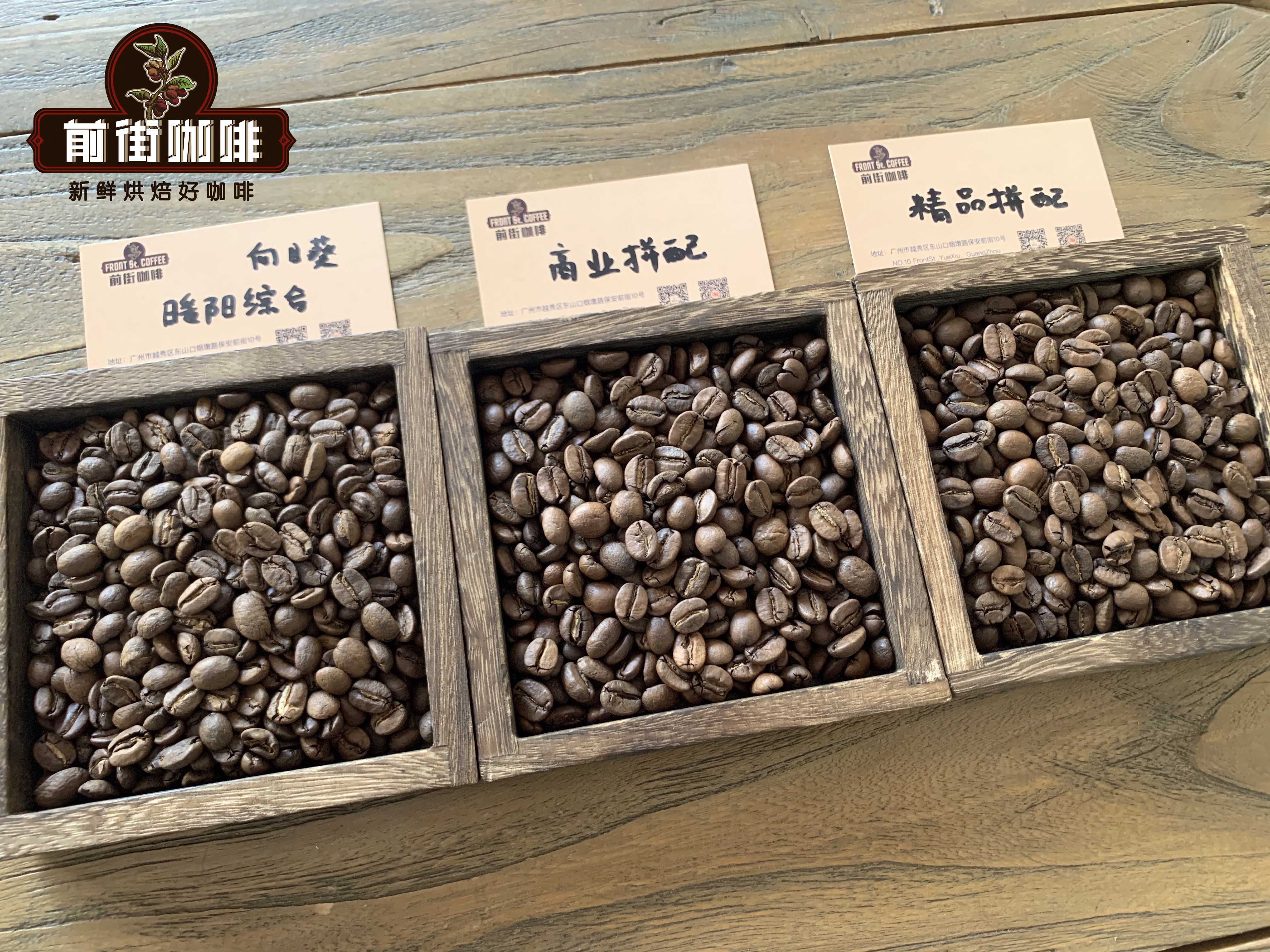
Even within blending, different goals lead to different formula designs. Beginners can consider using the medium-dark roasted Front Street. Black Cocoa—a coffee bean recommended by many baristas and suitable for espresso moka pots—as well as Front Street. Front Street Classic Blend. This type of bean undergoes a longer heating time, developing more caramelized substances, and during extraction it can also release abundant crema, resulting in a more ideal overall performance.
SOE vs. Blended Coffee: Which Actually Tastes Better?
Some may wonder: why must beans be mixed together? Isn't single-origin more pure? That is not the case. In Front Street's view, every bean has both strengths and shortcomings. If a certain bean extracts espresso with thin crema, it can be paired with a bean rich in crema to make up for it; if the extracted espresso tastes too sour, too bitter, or too sweet, you can likewise find a bean with a complementary style to blend and adjust it to your ideal flavor. Wouldn't that be better?
People often habitually compare the flavors of espresso blends and SOE, but this comparison is actually not very objective. The reason is simple: every espresso blend has a clear goal, and these goals are diverse, but they can broadly be summarized into three categories.
1. Lowering Costs
Some cafés mix lower-quality beans into premium beans to reduce raw material expenses while earning higher sales profits.
2. Creating Long-Term Stable Flavor
It must be acknowledged that coffee is essentially an agricultural product. Even in the same origin, different harvest seasons or even different batches within the same year may taste different. This is precisely the shortcoming of single-origin beans—it is hard to confidently promise that next year you can still drink the same single-origin bean that tasted just as good as this year's (except for beans whose flavor is dominated by processing method; in addition, various stages in transportation from origin to the café can also make the beans you buy taste different from before).
Therefore, one goal of blending is to create a product that can be supplied continuously with stable flavor year after year. Once a certain bean in the formula fails to meet quality standards in a new harvest season or its style changes, it can be replaced with a bean of similar characteristics to maintain consistent flavor.
3. Presenting Flavors That Single Beans Cannot Bring
Sometimes, a single-origin bean is like an individual person, with both strengths and weaknesses; blending, by contrast, is like forming a team, allowing members to each play to their strengths and cover for one another, ultimately achieving a mutually reinforcing effect.
For example, beans with prominent sweetness can be combined with beans with bright acidity to achieve a balance of sweet and sour; or an appropriate amount of Brazilian beans can be added to the formula to elevate the overall body—these are all directions pursued in blending.
Different purposes determine the flavor quality of blended coffee. For example, a blend oriented toward cost-cutting does not use particularly high-quality beans, so its flavor naturally is not worth scrutinizing. Front Street Coffee (FrontStreet Coffee) believes that if the original intention of the blend is to present flavors beyond what single beans can achieve, or to spare no cost in selecting high-quality and distinctive single-origin beans for blending, then as long as the formula is reasonable, surpassing SOE in performance is not difficult at all. So the key to judging blended coffee lies in its blending intent and selling price. After all, you cannot pit a 50-yuan-per-pound blend against a 100-yuan-per-pound SOE and insist on comparing flavor!
Front Street has launched an espresso formula specifically for customers who love floral and fruity aromas—Front Street. Strawberry Candy Espresso. It is blended from three single-origin beans from Ethiopia, Colombia, and Costa Rica, using a medium roast. The extracted coffee exudes notes of rose petals, citrus, grapes, and dried blueberries; when made into an Americano, it enters the mouth with a clear sweetness like fruit gummies, with a long and comfortable finish. Front Street confidently states that the flavor of this bean is fully comparable to SOE.
Single-origin beans can also be presented as espresso: when the raw material used is coffee beans from the same origin, the resulting espresso is simply called SOE. Coffee brewed this way allows people to directly feel the most essential flavor characteristics of the origin.
In Front Street's eyes, the charm of espresso blending lies in its ability to magnify a certain bean's highlights and conceal its shortcomings, making full use of every ingredient—why not do it? However, it is not that the more bean varieties added, the better the flavor—the more beans there are, the more complex the factors that need to be weighed, making it hard to cover everything, and the flavor can easily become chaotic. Therefore, Front Street recommends that the number of bean varieties in a formula be kept to two to four.
How Should Espresso Be Enjoyed?
For this type of espresso blend bean, few people in China enjoy it directly as a straight espresso. More often, it is used as a base, with milk or water added, to make a latte or Americano.

For the espresso extraction plan, take Front Street. Front Street Classic Blend beans as an example: 20g of coffee grounds, extracting 40g of espresso liquid within 26 seconds.
Hot latte: 40g of espresso liquid paired with 240g of steamed milk with good microfoam. This is the ratio Front Street commonly uses.
The preparation ratio for hot Americano is 40g of espresso liquid mixed with 200g of hot water.
The above content is compiled by CoffeeHunters, a coffee news website.


