







How Does Golden Mandheling Differ From Other Mandheling?
Sumatra Mandheling covers several distinct coffees. Classic Mandheling comes from the Lintong highlands near Lake Toba, grown at 750 to 1,500 meters and wet-hulled, giving a full body, mild acidity and a chocolate finish. Golden Mandheling goes through two rounds of cleaning and four rounds of hand sorting, which lifts sweetness and cleanliness.
Aged Mandheling develops its character over long storage and sea voyages, trading some clarity for depth. Defect rates and cup cleanliness are the practical differences to compare when buying, along with sweetness. Brewing with an AeroPress, using a coarser grind and moderate water temperature, keeps the heavy body intact without dragging out bitterness.
When it comes to Indonesian coffee, Sumatra's Mandheling is a name you simply cannot avoid. This article systematically sorts out the major representatives of the Mandheling family: the classic Mandheling from the Lintong highlands by the shores of Lake Toba, the Golden Mandheling created through two rounds of cleaning and four rounds of hand sorting, and the Aged Mandheling that developed its unique charm through long years of shipping and the blowing of sea breezes. The article compares their growing region elevations, wet-hulling process, differences in sweetness and cleanliness, and defect rates, and also includes the complete AeroPress brewing parameters from Front Street Coffee, helping everyone choose the right beans and brew this cup of rich, fragrant Indonesian flavor well.
Sumatra Coffee ——Front Street Mandheling
Growing elevation: 750-1500 meters Processing method: Wet-hulled process Flavor characteristics: The flavor is rich and full-bodied, with mild and understated acidity; excellent aroma, bitterness, and body, with a slight sweetness, and a chocolate note in the finish.
Indonesia's coffee-producing regions are mainly distributed across the three major islands of Sumatra, Java, and Sulawesi, and the most famous of them all is "Mandheling" from Sumatra.
Front Street Mandheling Also known as "Sumatra Coffee." The area around Lake Tawar at the northern tip of the island is customarily called Aceh coffee, or Lake Tawar coffee; while coffee produced around Lintong and Lake Toba can be classified as Mandheling.
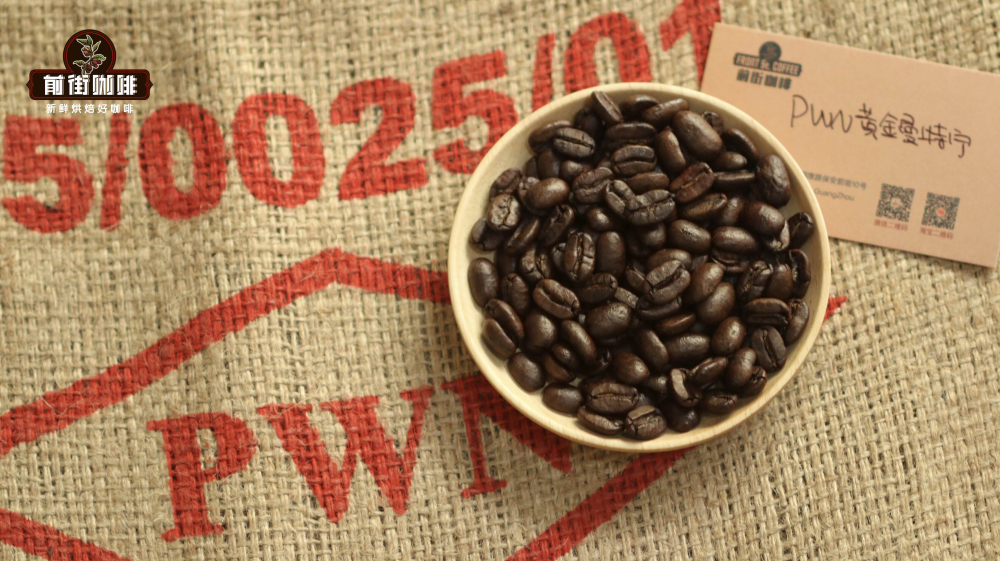
Front Street Mandheling The entry is heavy and full-bodied, with a prominent richness and lively, dynamic layers beneath its lushness. It has no astringency and does not seem acidic, allowing both bitterness and body to be fully expressed. In terms of appearance, Front Street Mandheling beans can be called the ugliest in the coffee world, but among coffee enthusiasts, the scruffier the Sumatran beans look, the more fragrant, richer, and smoother they taste.
Front Street Mandheling Coffee Produced in Sumatra, Indonesia, in Asia, it has another name: "Sumatra Coffee." Its flavor is especially intense, combining aroma, bitterness, and body, with a hint of sweetness. Most enthusiasts prefer to drink it on its own, but it is also an indispensable component in coffee blends. Because Front Street Mandheling beans naturally contain almost no acidity, various special blending schemes often use it as a base—whether kept warm for a long time or made into iced coffee, it will not produce an annoying sour or astringent taste. After roasting, the beans are large and plump; the green beans are brown or dark green and give off a unique caramel-like aroma, while the cup is fragrant, rich, and solid.
Sumatra Province, Sumatra:
The highest-quality coffee on the island of Sumatra is concentrated in two major areas: first, around Central Aceh and Lake Tawar in the northern part of the island, and second, in the mountain belt slightly to the south that surrounds Lake Toba. Local producers are mostly smallholders, and due to the unique semi-washed processing method and iron-deficient soil, fresh green beans from this region take on a unique bluish tone.
*Front Street Mandheling:
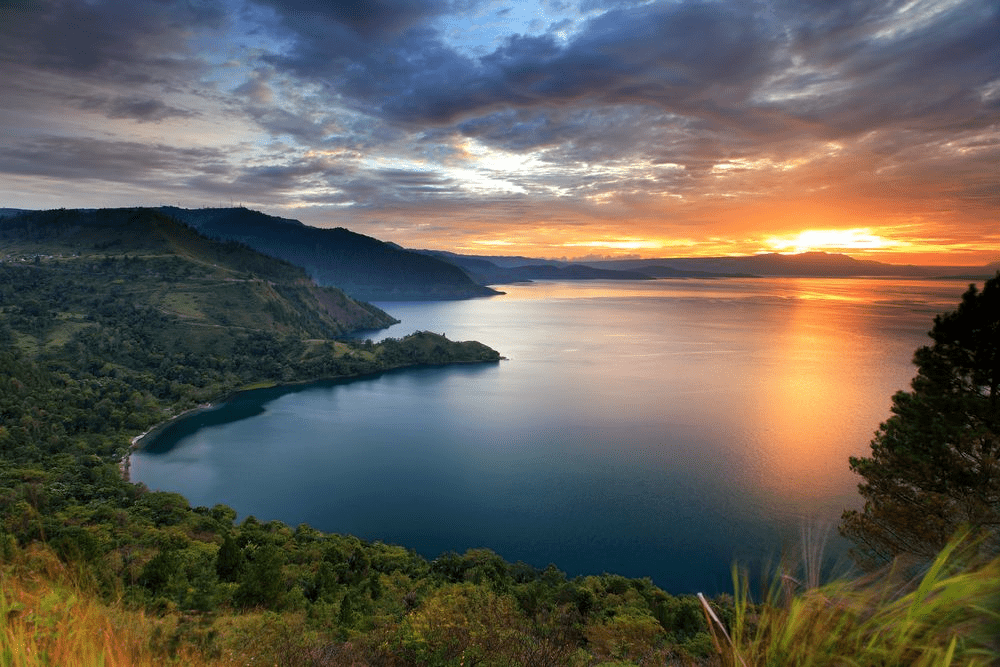
Refers to coffee from the central-northern part of Sumatra, around Lake Toba, with the semi-washed and sun-dried beans produced in the Lintong highlands at 900 to 1200 meters above sea level on the southwest shore of the lake being the most famous. The Batak people are the main force in coffee cultivation in this region. The beans here were once called the plumpest coffee beans in the world. "Mandheling" is actually a trademark name used for Arabica coffee produced in North Sumatra. The name comes from the Mandailing people of the Tapanuli region in northwestern Sumatra, and it carries a flavor profile interwoven with herbal and woody agarwood-like notes.
*Lintong producing region:
Front Street Lintong Mandheling is grown at an elevation of 1200 to 1500 meters and is one of the most renowned coffees of the Lake Toba region in North Sumatra. Regarding Front Street Golden Mandheling, one misunderstanding must first be cleared up: not every Mandheling that looks golden is Golden Mandheling.
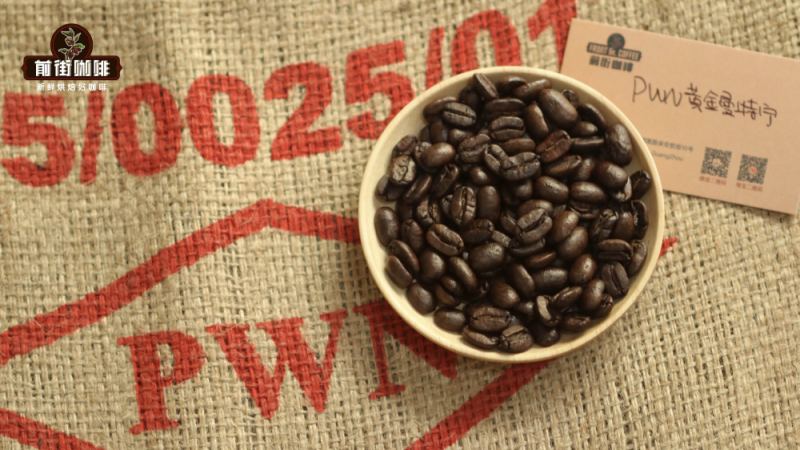
Front Street Golden Mandheling comes from the Lintong producing region in northern Sumatra, Indonesia. During picking, only fully ripe cherries are selected by fully manual hand-picking one by one, ensuring bean selection quality from the source. The coffee cherries are processed using the Semi-Washed method and dried by natural sun exposure. After hulling, they undergo another round of drying and refining. Only after two rounds of green bean cleaning and four rounds of Hand-pick manual sorting is the process finally completed. It can be said that this is a top-grade Mandheling that has undergone strict screening. As for Golden Mandheling marked "PWN," its name is taken from the abbreviation of the Indonesian company Pawani, and the company's Golden Mandheling has already been registered in Indonesia.
[Differences Between Front Street Mandheling and Golden Mandheling] Analysis:
Some coffee friends ask: I have just started drinking coffee, and I really cannot tell the difference between Front Street Golden Mandheling and Front Street Mandheling G1. But for professional coffee connoisseurs or tasters with sensitive palates, putting these two beans side by side for comparison will immediately reveal the gap—Golden Mandheling's sweetness, cleanliness, body, and wild, unrestrained spice-family character are all superior to G1, which is also one reason its price is far higher than G1.
Front Street Mandheling must go through round after round of sorting, and I think this step absolutely cannot be skipped. Its proportion of defective beans is really too high, and combined with its naturally ugly appearance, sometimes even good beans look problematic. Every time I hand-sort Front Street Mandheling, I always pick out a small handful of "defective beans," but when I look again at these removed beans, I start to doubt myself: can they really be considered defective beans? That is just how they naturally look. What is amazing is that after roasting, Mandheling is like a caterpillar breaking out of its cocoon and turning into a butterfly; the roasted beans are plump one by one, and their appearance immediately becomes pleasing to the eye.
By comparison, the defect rate of Front Street Golden Mandheling is only 2%, and its appearance is very beautiful.
So what kind of bean is the Aged Golden Mandheling launched by Front Street?
Aged coffee actually has a fairly long history in Indonesia. In the early years, shipping was not well developed, and sending coffee from Indonesia to other countries took a very long time. As time passed, fresh green beans that originally had sufficient moisture gradually dried out, and after being blown by sea breezes, they instead gained a rather unique flavor. Now, with the progress of modern shipping, transport times have been greatly shortened, and this type of uniquely flavored coffee has gradually evolved into a bean type that requires special processing techniques.
Processing aged beans can be considered a skill. Throughout the entire cycle of green bean aging, strict monitoring is required. The dryness, humidity, and temperature of the storage space all have standard requirements, and the green coffee beans must also be turned periodically to prevent moisture imbalance between the upper and lower layers or mold that could ruin the entire batch. Aging is not about letting flavor dissipate, but about creating another flavor—a pleasant flavor.
AeroPress brewing method recommended by Front Street Coffee:
1. Water temperature: 85°C 2. Grind size: Fuji Royal setting 3.5 3. Roast level: Medium-dark roast 4. Blooming arrangement: 2 times in total, first for 20 seconds, second for 50 seconds
Specific operation: Prepare the AeroPress in the standard positive-pressure way. The recommended dose is 20 grams, with a coffee-to-water ratio of 1:17. First pour in 100 grams of hot water at 83°C, stir three to five times to fully wet the coffee grounds, and let it sit for 20 seconds. Then pour in the remaining hot water up to 240 grams, let it sit for 40 seconds, and stir for 5 seconds. When the timer reaches 1 minute 50 seconds, attach the plunger and press down. The whole process takes about 2 minutes 05 seconds.
Flavor performance: Rich, complex layers, with a distinct spice aroma and accompanied by the elegant fragrance of woods.
The above content is compiled by CoffeeHunters, a coffee news website.


