







What Changes in Ethiopia G1 vs G2 Washed Yirgacheffe
The difference between Ethiopia G1 and G2 shows up in green bean appearance, roasting curves, and cupping flavor. Washed Yirgacheffe keeps its classic place even as anaerobic and barrel fermentation dominate conversation, because the cup stays clean and bright. The guide covers the Yirgacheffe growing region, Ethiopia's three cultivation systems, washed processing steps, and ECX grading rules.
Front Street sells both washed Yirgacheffe and natural Yirgacheffe. The washed version is clean and crisp; the natural one keeps mucilage fermentation flavors, adding a fermented note with more sweetness and intensity. Pour-over parameter recommendations and actual test results at different water temperatures close the guide.
While novel processing methods like anaerobic and barrel fermentation dominate the conversation, washed Yirgacheffe still holds its place as a classic thanks to its clean, bright cup. This article will guide you through the Yirgacheffe growing region and Ethiopia's three major cultivation systems, break down the complete washed processing steps and ECX grading rules, and compare Front Street washed Yirgacheffe G1 and G2 in terms of green bean appearance, roasting curves, and cupping flavors. At the end, we've included Front Street's pour-over parameter recommendations and actual test results at different water temperatures, helping you brew a cup of Yirgacheffe with bright fruit acidity and overflowing floral aromas.
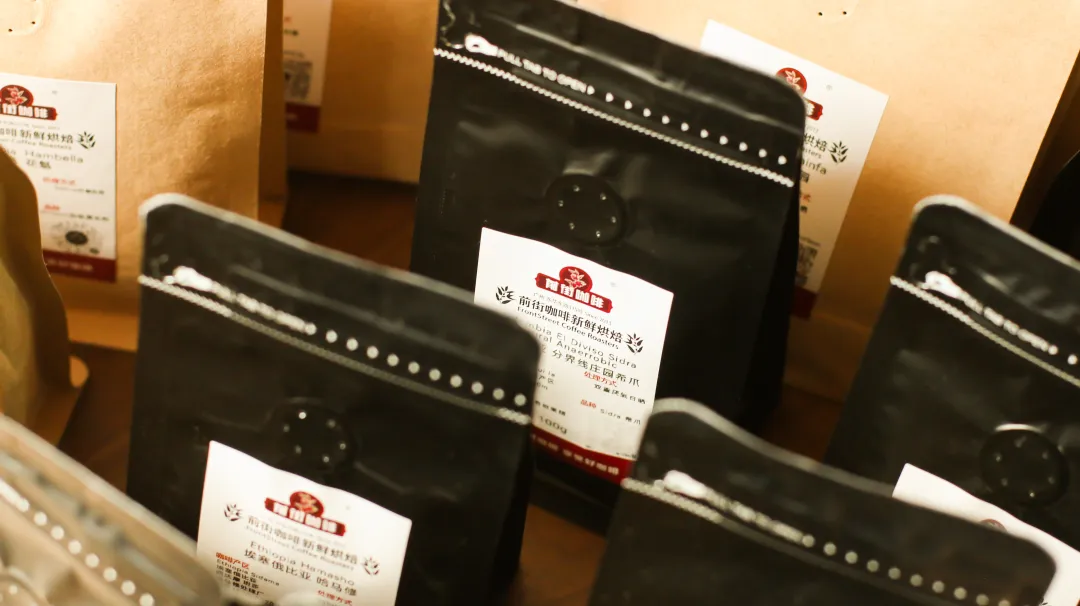
In recent years, the coffee industry has continued to innovate, with various novel green bean processing techniques emerging one after another. Among them, the most talked-about this year are undoubtedly anaerobic fermentation and barrel fermentation. Front Street currently sells several coffees made with these two processes, and they are equally well received by customers. It cannot be denied that the aromas these processing methods give to coffee are particularly striking and impressive.
However, there are still customers who prefer classic flavors. At the Front Street shop, there is a regular who comes in every weekend without fail and always orders the same thing: a cup of washed Front Street Yirgacheffe. His taste preference leans toward a crisp, clean style, and Front Street washed Yirgacheffe fits his needs perfectly. The Yirgacheffe sold at Front Street falls into two main categories: Front Street Washed Yirgacheffe and Front Street Natural Yirgacheffe. As mentioned earlier, the former is clean and bright on the palate; the latter, because it retains flavors produced by mucilage fermentation, has a noticeable fermented note when drunk, with sweetness and intensity taken up a notch. In this article, Front Street will take a closer look at exactly what flavor profile washed Yirgacheffe presents.
Overview of the Yirgacheffe Growing Region
Yirgacheffe is located in the Gedeo Zone of southern Ethiopia. The coffee produced here is widely loved for its distinctive flavor, and as a result it has been classified as its own category in product classification, securing a place for itself on the global specialty coffee map. Yirgacheffe was originally just a small town, and around it there are three smaller growing areas: Wenago, Kochere, and Gelena Abaya. Because the coffee produced in these areas is highly similar in flavor to Yirgacheffe, they are also included within the scope of the Yirgacheffe growing region. According to records, the earliest local coffee trees were planted by monks from Europe, and only later did farmers and cooperatives gradually take over.
The Three Major Production Systems of Ethiopian Coffee
According to cultivation patterns, Ethiopian coffee can be divided into three types:
Forest coffee: These wild coffee trees are mainly distributed in southwestern Ethiopia, surrounded by abundant shade-providing vegetation, and multiple varieties grow together in mixed coexistence. Their reproductive capacity and yield are both inferior to artificially selected high-yield varieties.
Garden coffee: These coffee trees are generally planted near human and livestock dwellings. There are not many natural shade trees, and growers manage shade trees with relative care, for example by frequently pruning branches to prevent the coffee trees from being shaded too heavily. Many producers also apply fertilizer. Most Ethiopian coffee belongs to this category, including representatives of Yirgacheffe such as Front Street. Gotiti and Front Street Red Cherry; among natural beans, there are also Front Street Huakui and Front Street Alo Village coffee, among others.
Large-farm coffee: This type of coffee comes from large estates with high planting density, implementing standardized cultivation management covering pruning, mulching with decayed soil, fertilizing, and other steps, while planting disease-resistant varieties, thereby improving production efficiency while ensuring quality. The most representative is Gesha Village Estate — Front Street Gesha Village Estate's product line includes three items: the highest tier is Front Street. Gesha Village Gold Label, followed by Front Street. Gesha Village Red Label, and additionally Front Street. Chaka, which is a Gesha blend.
Washed Processing Method
Historically, Yirgacheffe coffee customarily used the oldest natural method. However, in earlier years most natural beans were spread directly on the ground to dry, inevitably picking up off-flavors such as dust, and because the sorting stage was not rigorous enough, the overall quality of natural beans was mediocre. In 1972, in order to improve coffee quality, Ethiopia introduced washed processing technology from Central and South America, which made Yirgacheffe's jasmine floral note and the fresh fragrance of citrus and lemon even more transparent and pure, and from then on it rose to become one of the representatives of global specialty coffee.
Compared with the natural method, the washed method makes it easier to control bean quality. The key is to slow down the "fermentation" reaction through washing, but this method consumes a huge amount of water, so countries lacking water resources rarely adopt it. Front Street believes that washed processing better highlights the cleanliness of coffee's mouthfeel and the purity of its flavor, so when analyzing the flavor characteristics of a given producing region, washed beans from that region are usually chosen as the reference. If a customer has never drunk Yirgacheffe before, Front Street will also first recommend the washed version of Front Street Yirgacheffe coffee, helping them establish an initial understanding of the region's flavor, and afterward, when they taste Yirgacheffe processed naturally, as honey, etc., they will have a direction for comparison.
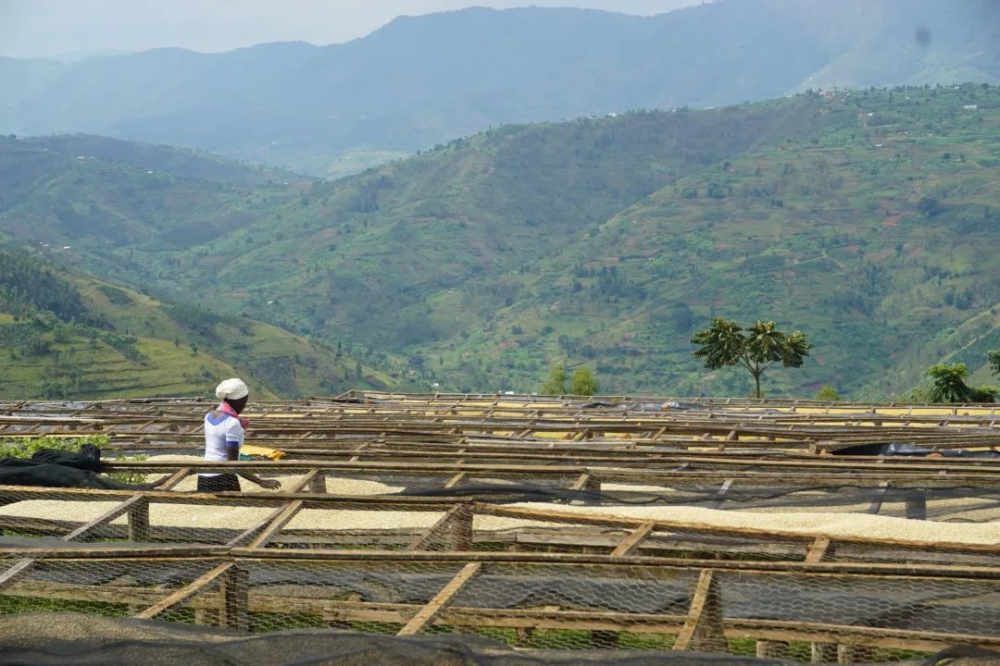
[Washed Processing Workflow]
1. Bean selection: The harvested fruit is poured into a large tank. Ripe fruit sinks to the bottom, while unripe or overripe fruit floats on the surface.
2. Pulping: Machines remove the skin and pulp, leaving coffee beans wrapped in mucilage, and the core of the washing step is to wash off this layer of mucilage.
3. Fermentation: Mucilage has extremely strong adhesion and is difficult to remove directly, so the beans need to be placed in a tank for about 18-36 hours, using microbial fermentation to break it down.
4. Washing: The fermented beans are placed in a water tank and rinsed back and forth, relying on the friction between the beans and the water flow to wash them clean.
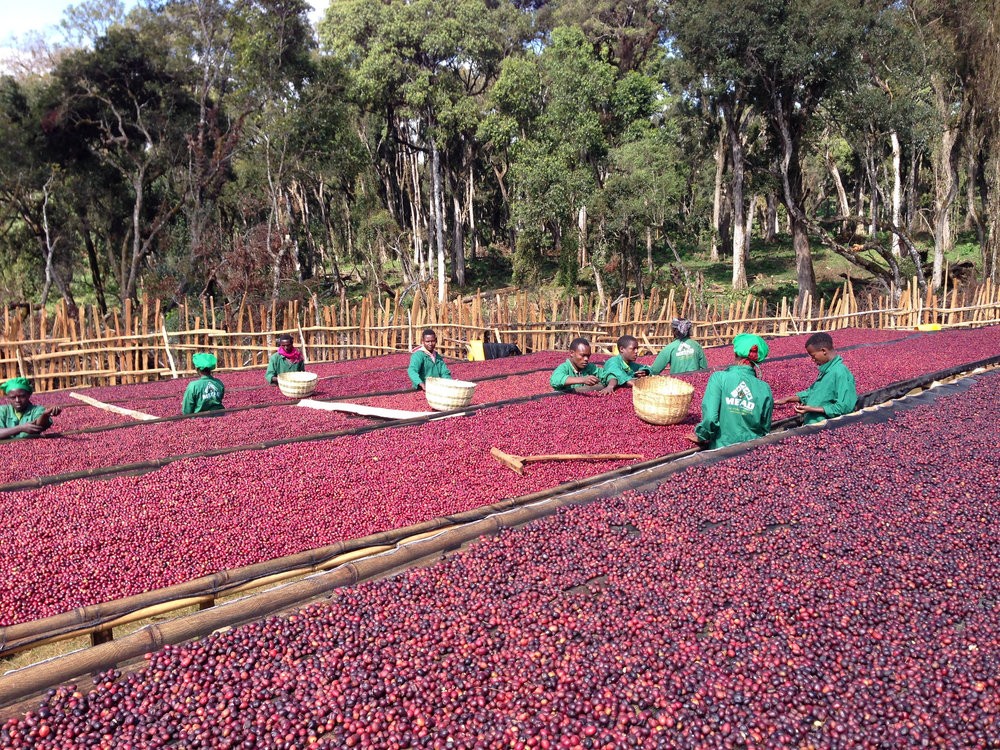
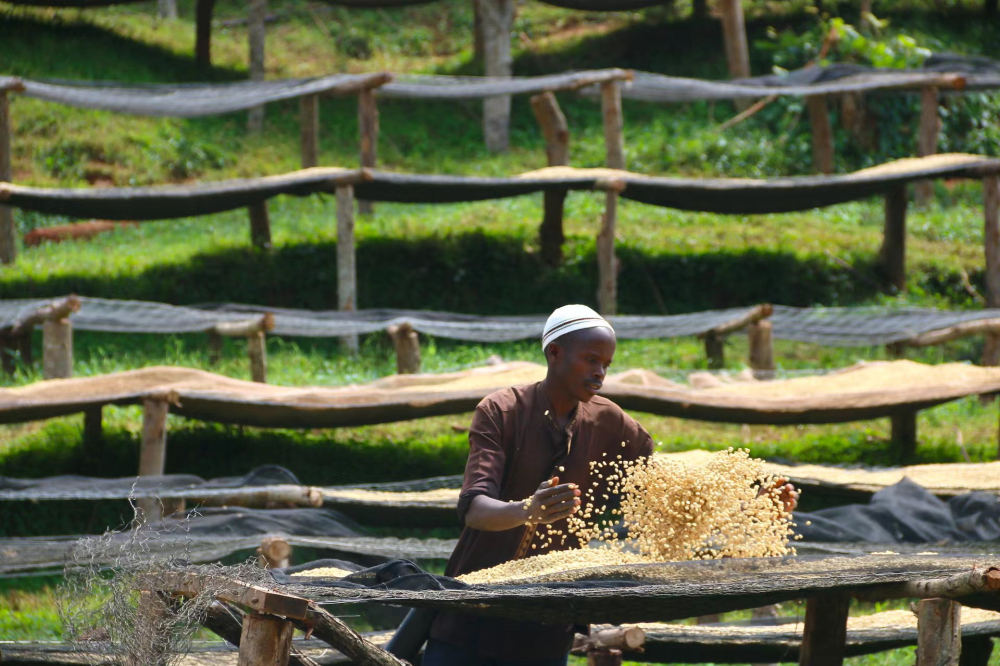
5. Drying: After washing is completed, the moisture content of the coffee beans is as high as 50%, so drying is essential to bring the moisture content down to 12%; otherwise, excessive moisture will lead to mold and spoilage. The ideal drying method is sun drying. Although it takes 1-3 weeks, the resulting bean flavor is excellent; some regions switch to machine drying, greatly shortening the processing cycle, but the flavor is often inferior to sun-dried beans.
6. Hulling: After drying is finished, the coffee beans need to be stored in a warehouse for about a week (to let the moisture content stabilize), and then sent to the factory for hulling to remove the parchment layer.
7. Sorting and grading: Defective beans are picked out, and after ensuring quality meets the standard, the coffee is delivered to exporters to be sold around the world.
Grade Classification of Beans from the Yirgacheffe Region
Yirgacheffe coffee belongs to local native varieties, small-bean type, relatively round in appearance, with a miniature bean body, mostly within the 14-15 screen size range. ECX (Ethiopian Commodity Exchange, established in 2012) has formulated a two-part grading system for Ethiopian coffee beans, scoring them comprehensively based on two major characteristics — physical attributes and cup profile — and determining grade accordingly. ECX's grading and scoring rules are as follows:
1. Scoring definition for washed beans ① Physical attributes account for 40%: defect count 20%, appearance size 10%, color 5%, odor 5% ② Cup quality accounts for 60%: cleanliness 15%, acidity 15%, mouthfeel 15%, flavor characteristics 15%
2. Scoring definition for natural beans ① Physical attributes account for 40%: defect count 30%, odor 10% ② Cup quality accounts for 60%: cleanliness 15%, acidity 15%, mouthfeel 15%, flavor characteristics 15%
3. Overall summary ① All coffee beans are first divided into two major categories by processing method: natural and washed; ② Each category is then scored according to physical characteristics and basic cup quality, and divided into nine grades from G1 to G9; ③ For G1-G3, a second cupping is carried out according to SCAA standards to more finely evaluate their flavor attributes. G1 and G2 scoring 85 points or above are rated Q1; ④ G1, G2, and G3 scoring between 80 and 85 are rated Q2, while those scoring below 80 (G1, G2, G3) are uniformly rated G3; ⑤ Q1 and Q2 are classified as Specialty Grade for export; G4-G9 retain their original grades and, together with G3, are classified as Commercial Grade for export.
Whether washed or natural, if there are no more than 3 defective beans per 300g of exported green beans, it is classified as G1; if there are 4-12 defective beans, it is classified as G2.
For Yirgacheffe beans that are all washed, what is the difference between G1 and G2?
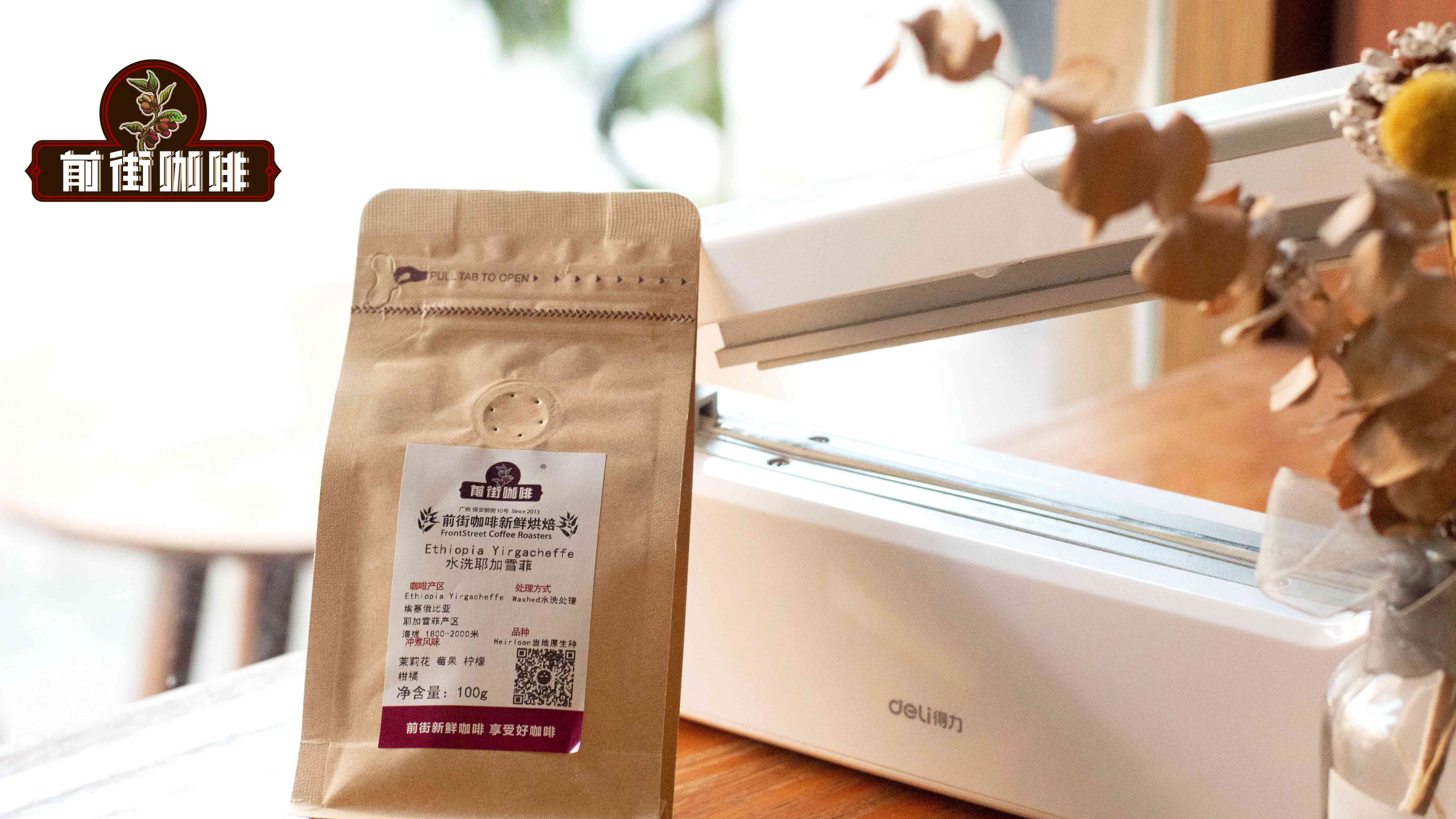
The Front Street Yirgacheffe coffee beans currently sold by Front Street are all G1 grade, but we have also compared them with G2 Yirgacheffe. Below, we will still use washed Yirgacheffe as an example to observe the differences between the two grades in appearance and flavor. After comparing green beans, Front Street found that the G1 Front Street Washed Yirga green beans were generally more uniform in particle size, with a lower proportion of defects; while the G2 version of Front Street Washed Yirga green beans clearly varied in particle size, and the defect rate was also higher.
[Front Street Roasting Recommendations] Front Street's overall roasting philosophy is: Yirgacheffe's most representative trait lies in its delicate acidity and rich floral and fruity aromas. In order to bring this characteristic into full play, choose a light roast.
1. Front Street Washed Yirgacheffe G1 Charge at a drum temperature of 200°C, with heat setting 150 and airflow damper 3; the turning point is at 1'46". When the drum temperature rises to 140°C, adjust the airflow damper to 4, keeping the heat setting unchanged; when the drum temperature reaches 151°C, the bean surface turns yellow, the grassy smell completely fades, and it enters the dehydration phase, so reduce the heat setting to 120. At 7'37", unsightly wrinkles and dark patches appear on the bean surface, and the toasted bread aroma clearly gives way to coffee aroma, which can be regarded as the prelude to first crack. At this point, it is necessary to carefully catch the sound of the first crack. At 8'35", first crack begins, open the airflow damper to 5, develop for 2'00" after first crack, and drop at 193.5°C.
2. Front Street Washed Yirgacheffe G2 Charge at a drum temperature of 200°C, with heat setting 150 and airflow damper 3; the turning point is at 1'47". When the drum temperature rises to 132°C, adjust the airflow damper to 4, keeping the heat setting unchanged; when the drum temperature reaches 147°C, the bean surface turns yellow, the grassy smell completely fades, and it enters the dehydration phase, so reduce the heat setting to 140. At 8'00", unsightly wrinkles and dark patches appear on the bean surface, and the toasted bread aroma clearly gives way to coffee aroma, which can be regarded as the prelude to first crack. At this point, it is necessary to carefully catch the sound of the first crack. At 9'08", first crack begins, open the airflow damper to 5, develop for 2'00" after first crack, and drop at 195°C.
[Front Street Cupping Report] 1. Front Street Washed Yirgacheffe G1 Dry aroma: jasmine and ginger flower Wet aroma: lemon and citrus Palate flavor: citrus, lemon, pomelo, plum, Tieguanyin
2. Front Street Washed Yirgacheffe G2 Dry aroma: jasmine and citrus Wet aroma: lemon and citrus Palate flavor: lemon, citrus, tea-like
[Front Street Pour-Over Recommendations] In order to fully extract Yirgacheffe's fruity acidity, Front Street uses a relatively high water temperature paired with a finer grind, but to prevent over-extraction caused by high temperature, a fast-flow dripper is chosen, such as the V60. The V60 has an overall 60-degree conical structure; this cone-angle design causes the coffee grounds to gather toward the center, and when pouring, the water flow also naturally converges toward the center of the dripper, ensuring sufficient contact time between water and coffee grounds, thereby extracting just the right coffee liquid. In addition, the inner wall of the V60 has ribs arranged in a spiral extending clockwise from the bottom to the top, leaving ample space between the filter paper and the dripper wall so that water can flow unimpeded; combined with the large-diameter hole at the bottom, its flow rate is relatively fast among many drippers.
Front Street's specific brewing parameters are as follows: dripper: V60, water temperature 90°C, dose 15g, coffee-to-water ratio 1:15, grind size (Chinese standard No. 20 sieve, 80% passing rate)
Regarding grind size, Front Street needs to explain in particular: even for Yirgacheffe coffee, when the grade is different, we still sift each bean separately to determine its corresponding grind size. Front Street's brewing method: first wet the filter paper, and preheat the dripper and server. Pour 30g of water for a 30-second bloom, then pour in a slow circular stream. At 125g, pause in stages, and when the water level drops and the coffee bed is about to be exposed, continue pouring to 225g and stop. When the water level drops again and the coffee bed is just about to show, remove the dripper. The total extraction time (counted from the start of the bloom) is 2'05".
[Front Street Washed Yirgacheffe G1] Jasmine floral notes, the fresh fragrance of lemon, and caramel-like sweet aroma can be smelled. On the palate there is soft citrus acidity and creamy aroma; in the mid-palate the lemon acidity gradually emerges, the aftertaste is as clean and sweet as sucrose, and the finish has an oolong tea-like note. [Front Street Washed Yirgacheffe G2] Jasmine floral notes and the tart aroma of citrus linger in the nose. On the palate there is the acidity of lemon and grapefruit accompanied by a black tea-like note; in the finish a hint of cocoa emerges, closing with a caramel aftertaste.
After the above series of comparisons, Front Street found that whether green beans or roasted beans, [G1]'s particle size is clearly more neat and uniform, while [G2] varies in size and also has more defective beans. During roasting, the aroma released by [G1] is clearly distinguishable, while [G2]'s aroma is somewhat inferior. In terms of flavor, the two beans are actually quite close, with the core profile in the lemon, citrus, and jasmine category; it is just that [G1] has richer and more distinct layers, while [G2] has fewer layers, lower recognizability, and is mixed with some off-flavors.
If Front Street Washed Yirgacheffe is brewed with different water temperatures, will the flavor change?
As mentioned earlier, Front Street uses a relatively high water temperature when brewing Yirgacheffe, in order to extract as much of its fruity acidity as possible. However, a customer once asked Front Street: exactly what water temperature is appropriate? According to brewing guidelines from the SCA (Specialty Coffee Association), the water temperature should fall within the range of 85-94°C, with light-roasted beans suitable for 90-94°C water and dark-roasted beans best at 85-89°C.
To help everyone understand more intuitively the effect of water temperature on coffee flavor, Front Street used its own Yirgacheffe Gotiti as the sample and brewed it separately with 4 different water temperatures to verify what changes would appear in flavor. Brewing parameters (striving for consistency, with all conditions the same except water temperature): V60 dripper, dose 15g, coffee-to-water ratio 1:15, grind size BG#5F (i.e., 80% passing rate under the Chinese standard No. 20 sieve)
From the brewing data, Front Street's light-roasted Gotiti performed best at a water temperature of 90-92°C, able to display fruit-like acidity and sweetness, consistent with its own flavor positioning. When brewed with 86-88°C water, although the bean's acidity was prominent, the aroma was clearly lacking, and on the palate it also seemed thin with a heavier watery feel. Light-roasted coffee beans retain richer flavor substances. At this roast level, floral aromas and fruity acidity are usually especially vivid and the layers are more three-dimensional. Combined with a slightly higher water temperature, this can more fully bring out the flavor characteristics of Front Street Yirgacheffe Gotiti.
If you would like to learn more about specialty coffee beans, you are welcome to add Front Street Coffee (FrontStreet Coffee)'s private WeChat, WeChat ID: kaixinguoguo0925
The above content is compiled by CoffeeHunters, a coffee news website.


