







How Does a French Press Compare to Learning Drip Coffee Machine How to Use
The French press works by immersion: hot water and grounds steep together in the carafe, then the plunger pushes the grounds to the bottom. Because there is no paper filter barrier, natural oils stay in the cup and the result comes close to cupping standards. Medium-dark roasts and balanced beans pair well with this method, while light roasts tend to taste flat.
Parameters matter as much as the device. Grind size, coffee-to-water ratio, and water quality all shape the final cup. Using Front Street Coffee's bean list as an example, the guide gives step-by-step brewing instructions and recommended numbers, so a rich, full-bodied cup is possible even on a busy morning.
The French press is known for its simple structure and ease of use, but its flavor expression is often underestimated. This article first explains the immersion extraction principle of the French press—no paper filter barrier, able to retain natural oils, producing a cup closest to cupping standards; then focuses on how to choose beans: medium-dark roasts and balanced beans pair better with the French press, while light roasts tend to taste flat. Using Front Street Coffee's bean list as an example, from grind size, coffee-to-water ratio, water quality to the complete brewing steps, it provides practical parameter recommendations you can follow directly, helping you quickly make a rich, full-bodied cup of good coffee even on a busy morning.
Among urban coffee lovers, many are drawn to the ritual of pour-over and the experimental atmosphere of the siphon, while plenty of others prefer the convenience and efficiency of the French press. However, the appeal of a brewing device goes far beyond its appearance and operation—brewing coffee is actually more like a science, and each device has its own extraction personality, requiring us to explore the ideal ratio and the most captivating flavor through repeated combinations of variables.
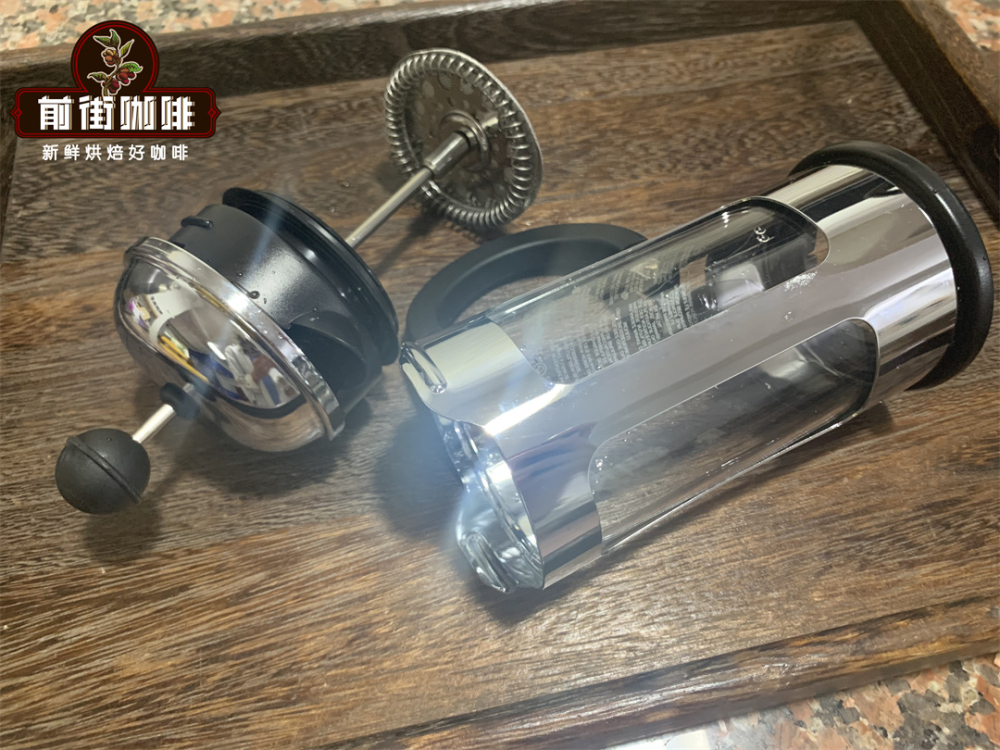
The working logic of the French press is very straightforward: pour hot water and coffee grounds into the carafe together, then press down the plunger to let the grounds settle at the bottom, and filtration is complete; the metal filter can be washed and reused repeatedly. Though simple in structure, it is quite efficient, consuming no paper filters throughout the process, making it economical and eco-friendly. As one of the devices that can most quickly present coffee's true nature, the French press allows precious natural oils to avoid being trapped by paper filters, so coffee's most authentic, richest, and most varied flavors can be fully displayed.
Some call the French press the "lazy person's神器," and its operating threshold is indeed low, but this in no way prevents it from fully presenting the flavors of a quality cup of coffee.
In fact, the immersion extraction of the French press is closest to cupping results, with oils, aromas, flavors and other substances fully released, yielding a smooth, sweet, rich and full-bodied cup that is very suitable for breakfast coffee.
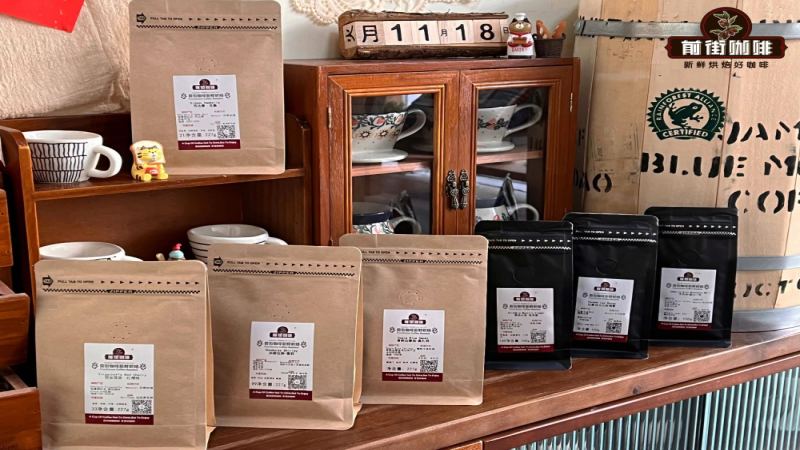
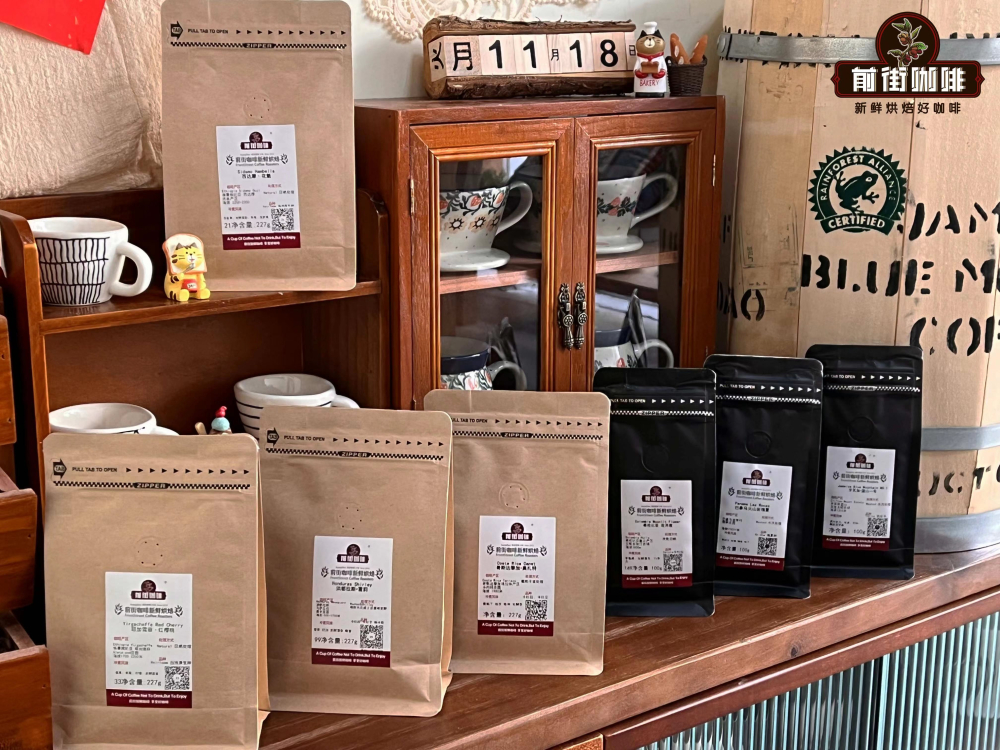
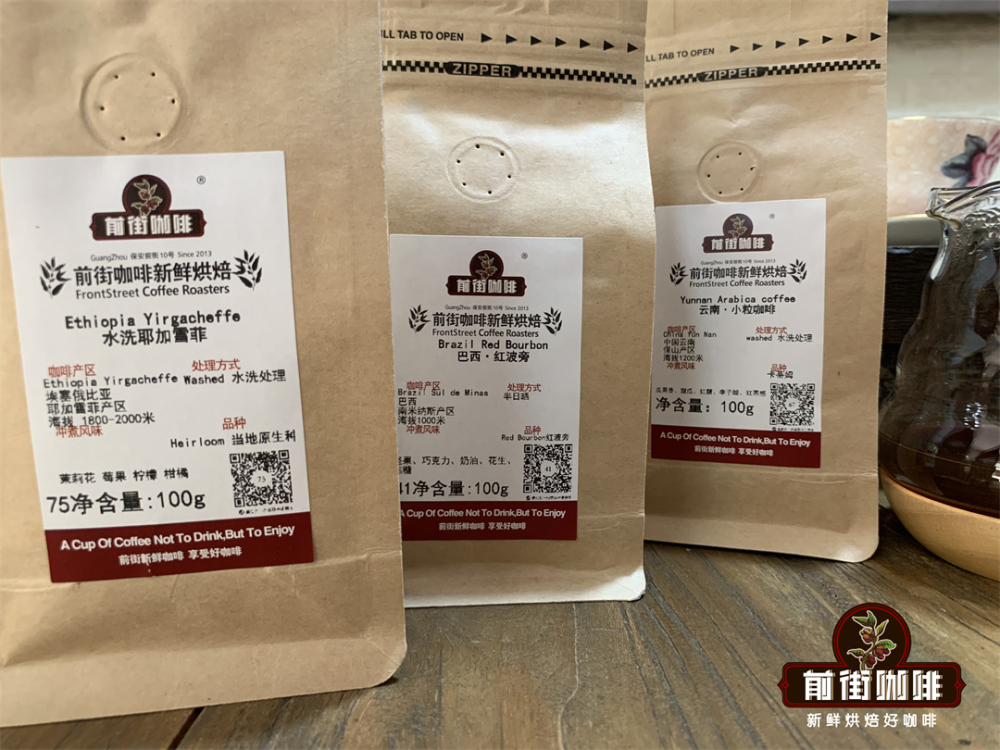
As for beans, the French press is better suited to single-origin beans or beans with prominent fruity acidity, with a roast level from medium to dark. Front Street Coffee recommends prioritizing beans with excellent balance. Looking at Front Street Coffee's bean list, the everyday bean series includes Front Street Brazil Cerrado, Front Street Colombia Huila, Front Street Indonesia Mandheling, and Front Street Costa Rica Tarrazu—these beans have balanced flavors, combining dark chocolate notes with fruity aromas. Since the French press completes extraction through immersion, it can fully bring out the oils, aromas, and rich coffee texture, while darker roasts naturally help showcase aroma and body, so these medium-dark roasted beans from Front Street pair very well with the French press. Overall, brewing dark-roasted beans with a French press produces more prominent aroma and a thicker mouthfeel.
As for light-roasted beans, Front Street does not particularly recommend using them for French press. Beans from Ethiopian regions are generally best presented with light roasting, and Front Street's Yirgacheffe Natural "Red Cherry" is a typical example.
—This Front Street Yirgacheffe Natural "Red Cherry," if brewed with pour-over, would clearly amplify its lemon, floral, and fruity notes; but once switched to French press immersion, the resulting flavor seems much more monotonous and dull.
Now let's see how Front Street brews an excellent cup with the French press. Front Street's Golden Mandheling, Brazil Queen's Farm, and Colombia Huila—these beans' mouthfeel and flavor all pair well with the French press. Here we'll use Colombia Huila as an example to demonstrate the brewing process.
Choose Front Street's own roasted, well-rested Front Street Huila beans, ground to a medium-coarse particle suitable for French press—coarser than pour-over grind. Front Street's reference is being able to pass through 70%–75% of a standard sieve. If ground too fine, fine particles easily slip through the filter mesh into the coffee liquid, making the whole cup appear muddy.
The coffee-to-water ratio can start at 1:10. For two servings, that's 20 grams of coffee beans with about 200 grams of water; the final ratio depends on your own taste. By the way, Front Street's drip bags each contain 10 grams of coffee powder—for example, the Front Street Brazil drip bag and Front Street Mandheling drip bag currently on sale. Using these pre-ground drip bag powders to brew French press is especially convenient. In this case, Front Street recommends operating at 1:16, i.e., 15 grams of powder with 240 grams of water.
Front Street recommends preparing an electronic scale. Even if your French press has built-in markings and a measuring spoon, a scale is still indispensable—coffee bean density varies with growing altitude, roasting method, and many other factors, and different beans differ considerably in weight. Also, if you brew a stunning cup one time and want to replicate that flavor, you must record the ratio used; conversely, if the result is terrible, comparing these data will tell you which direction to adjust.
As for water quality, Front Street uses fresh, clean soft water such as C'estbon mineral water for brewing. Water that is too hard is not suitable for extraction, and untreated, unfiltered raw water should also be avoided—if the water source itself is not up to standard, the coffee will be hard to make tasty.
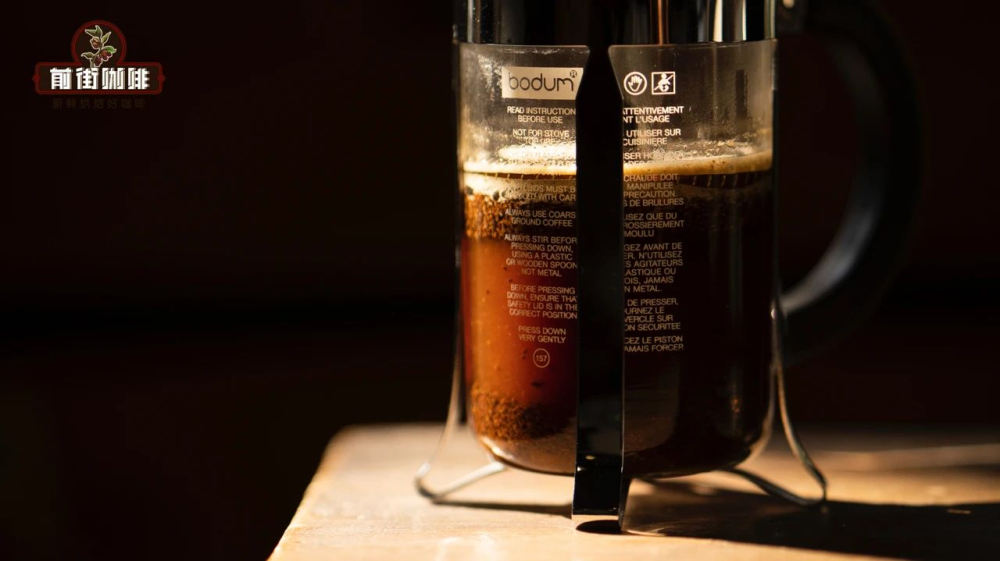
Front Street Coffee's brewing process is as follows:
First grind the coffee beans and pour them into the French press. As for grind size, don't worry about various folk sayings; just don't grind too coarse—medium grind is sufficient.
Then boil water, ideally to about 93°C, and pour in an appropriate amount of hot water—this time using 15 grams of coffee powder with 240 grams of hot water—then stir with a spoon to encourage full contact and integration between grounds and water.
Cover the lid, with the filter mesh resting at the topmost position, and let it steep for 4 minutes.
Before pressing down the filter mesh, you might first remove the lid and use a spoon to skim off the foam and fine fragments floating on the surface, then slowly press the filter mesh down to the bottom of the carafe.
Once extraction is complete, immediately pour the coffee into another insulated container! Don't dawdle, because the grounds are still steeping in the carafe. Then pour into a cup and enjoy slowly.
The French press can be called one of the simplest, most convenient, and most eco-friendly brewing methods. The coffee it makes is richer, more flavorful, and more layered than what a fully automatic drip machine produces; the whole process uses no electricity, requires no additional heating, consumes no paper filters, is effortless to clean, and even lets you drink the coffee oils along with it. It is especially suitable for office workers who are busy with work but want to steal a moment to enjoy a good cup of coffee—worth trying for yourself.
To discuss professional coffee knowledge and get more coffee bean information, welcome to follow Coffee Workshop; its WeChat public account is cafe_style.
To learn more about specialty coffee beans, welcome to add Front Street Coffee's personal WeChat; the WeChat ID is qjcoffeex.
The above content is compiled by CoffeeHunters, a coffee news website.


