







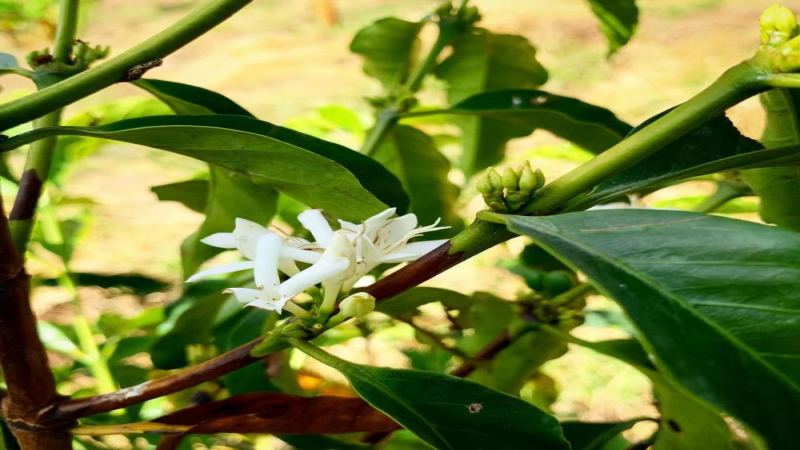
How did Panama geisha coffee spread and what do its labels mean?
Geisha was first found in Ethiopia's Geisha Forest in 1931, moved through Kenya, Uganda, Tanzania, Costa Rica, and reached Panama in 1970. Hacienda La Esmeralda separated the variety in 2003 and won the 2004 BOP, which made Panama Geisha famous. Its Red, Green, and Blue Label grades differ by altitude, cupping score, plot source, and flavor.
The three main plots are Jaramillo, Canas Verdes, and El Velo, each with its own terroir and small-plot layout. Gesha Village in Ethiopia is the variety's birthplace, yet its cup is generally rated below Esmeralda's Panama Geisha. Brewing parameters for three Geisha coffees round out the picture.
The Geisha variety was first discovered in the Geisha Forest of Ethiopia, and it took decades of travels before it finally blossomed and bore fruit in Panama, rising to fame overnight when Hacienda La Esmeralda won the 2004 BOP. This article will review Geisha's spread and the development story of Hacienda La Esmeralda, explain in detail the differences among the Red Label, Green Label, and Blue Label grades in altitude, cupping score, plot source, and flavor, and introduce one by one the terroir conditions and small-plot distribution of the three major plots—Jaramillo, Canas Verdes, and El Velo. At the end, it includes the brewing parameters and technique suggestions for Front Street Coffee's three Geisha coffees, helping you gain a comprehensive understanding of this legendary bean.
In recent years, whether at various coffee competitions or on the bean lists of specialty coffee shops, the name "Geisha" has appeared frequently. When mentioning Geisha, most enthusiasts first think of Panama's Hacienda La Esmeralda; and as the birthplace of the Geisha variety, Ethiopia's Gesha Village also produces Geisha beans that are sold at Front Street Coffee stores. However, although Gesha Village enjoys the reputation of being the birthplace, its flavor performance is still slightly inferior to the Panama Geisha from Hacienda La Esmeralda. Below, Front Street will guide everyone through the story behind Panama Geisha coffee.
The Path of Geisha Variety Propagation
In 1931, the Geisha variety was first discovered in the Geisha Forest within Ethiopia, and was subsequently sent to a coffee research institution in Kenya. In 1936, it was introduced to Uganda and Tanzania; in 1953 it reached Costa Rica; and it was not until 1970 that Geisha finally made its way to Panama.
Front Street has learned that for a long period afterward, Geisha never received much attention—its yield per plant was extremely low, cultivation was difficult, and economic returns were limited, so it was long ignored.
The turning point came at Hacienda La Esmeralda: the estate owner and his son noticed that a certain batch of coffee beans had an extremely unique flavor, completely different from other coffees produced locally in Panama, so in 2003 they separated this variety on its own, and in 2004 submitted its green beans to the Panama green bean competition BOP, winning first place in one stroke. From then on, Geisha rose to fame and entered the view of coffee fans worldwide, and a wave of Geisha planting also swept through Panama. Next, Front Street Coffee will tell everyone about the past of this industry benchmark for Geisha—Hacienda La Esmeralda.
A Brief History of Panama's Hacienda La Esmeralda
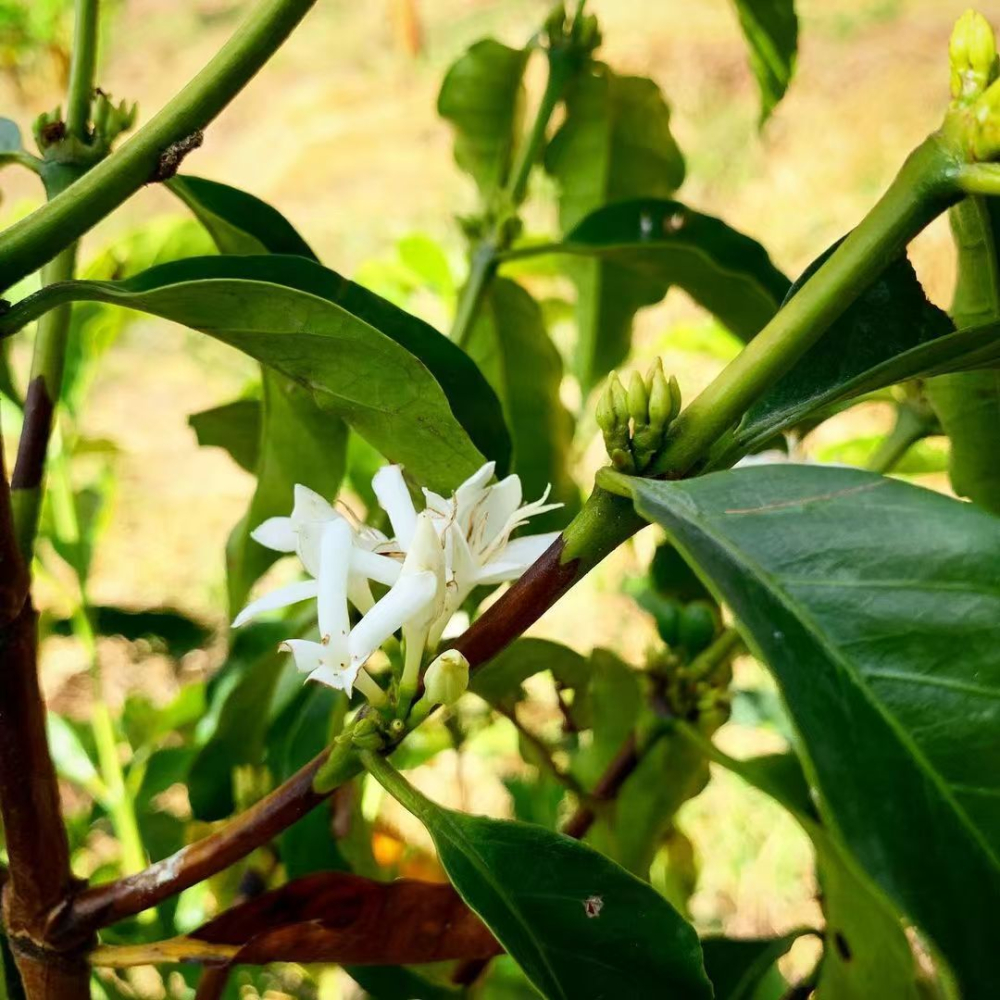
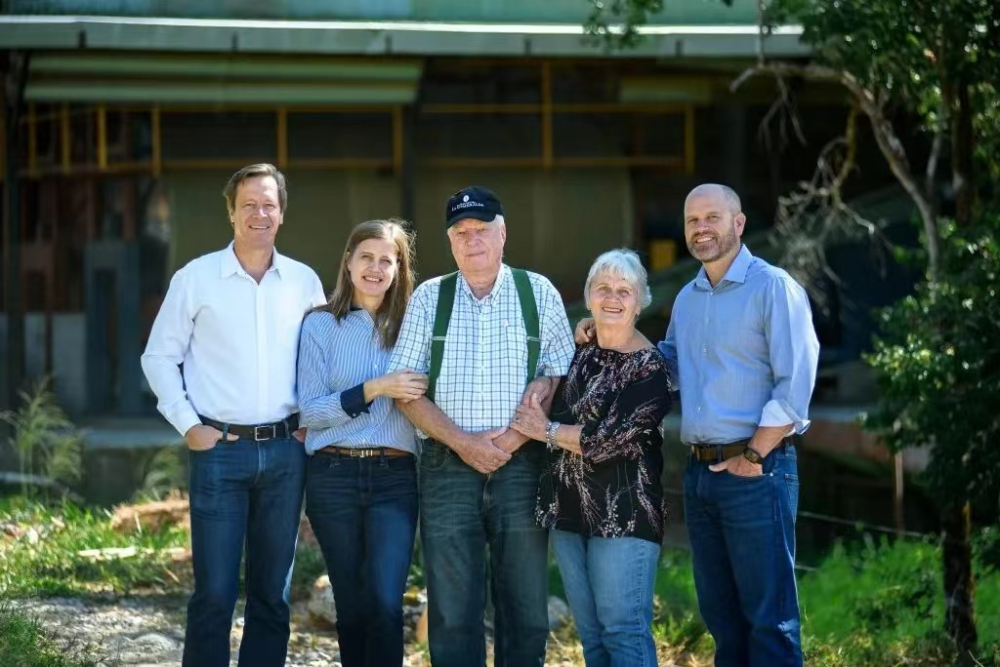
The story begins in 1964: that year, Rudolf Peterson, a former American banker, retired and moved to Panama, purchasing the local Hacienda La Esmeralda in Boquete, initially mainly engaged in dairy farming. Later, his son Price resigned from his job as a doctor and returned to the farm to help his father manage the business, introducing the Caturra and Catuai varieties in 1987, and building a wet processing plant in 1994, after which the estate formally embarked on the path of specialty coffee production. In 1996, the estate further acquired the adjacent Jaramillo estate—where the geographical conditions were exceptional and the original coffee flavor outstanding—and it was incorporated into the Hacienda La Esmeralda domain.
After consulting relevant materials, Front Street Coffee learned that the key reason the Peterson father and son took a liking to Jaramillo was that the coffee beans originally planted on that estate gave off a pleasing orange aroma and floral-fruity notes, vastly different from the usual taste of Panamanian coffee. After cupping the beans from each area of the estate one by one, the father and son finally pinpointed the source—those unknown coffee trees at the highest point of the estate. Because of their scarce yield, the previous estate owner had used them only as windbreak trees, and these trees are precisely the Geisha now widely known among coffee fans.
In 2004, this Geisha green bean discovered by the Peterson family, after winning the Panama green bean competition BOP, amazed everyone all the way, and later expert appraisal confirmed that this bean was precisely the Geisha variety originating from Ethiopia. Afterward, the Peterson family devoted its main energy to infrastructure construction to support strict separation and refined processing of batches—this is the origin of the Red Label Geisha, Green Label Geisha, and Blue Label Geisha now sold at Front Street Coffee stores.
Grading Standards for Red Label, Green Label, and Blue Label
As mentioned earlier, Hacienda La Esmeralda implements an extremely strict grading system for the coffee beans produced on the estate, and its marketing strategy is therefore different from other estates: based on differences in cupping performance, planted varieties, and planting plots, the estate has established a total of five brands, of which Geisha accounts for three—Esmeralda Special corresponds to Red Label, Private Collection corresponds to Green Label, and Geisha 1500 corresponds to Blue Label. Next, Front Street Coffee will analyze what exactly the differences are among these three grades of Geisha.
Hacienda La Esmeralda's Red Label Geisha
The official name of Red Label is "Esmeralda Special," and it is the representative of Hacienda La Esmeralda's high-end Geisha outside the auction lots. Geisha selected for this grade must be grown at an altitude of at least 1,600 meters, cup at no less than 91 points, and each micro-lot comes with extremely detailed traceability information, covering the plot it belongs to, altitude, latitude and longitude coordinates, tree age, harvest time, and processing method.
For example, this batch of Esmeralda Red Label recently purchased by Front Street was selected from the Trapiche plot; the ripe cherries were harvested on February 13 this year, then underwent 25 days of slow sun-drying, giving the coffee a rich fragrance—jasmine floral notes as the base, accented by the sweet-tartness of cranberry and passion fruit, along with notes of citrus and cinnamon.
Beans sold by Front Street Coffee: Panama · Hacienda La Esmeralda · Red Label Geisha Coffee Beans
Country: Panama Region: Boquete · Hacienda La Esmeralda Altitude: 1700m Variety: Geisha Processing Method: Natural Flavor: Citrus / Complex Fruit / Rose Tea / Honey
Hacienda La Esmeralda's Green Label Geisha
Green Label, or "Private Collection," formerly referred to Geisha lots that did not participate in auctions but still had excellent quality. This grade is a blend of Geisha from different plots within the two main estates, at altitudes of 1,600–1,800 meters, and with its signature orange aroma and honeyed charm, it has become the first choice for many Geisha lovers with limited budgets. Since 2022, Hacienda La Esmeralda has also begun labeling the source sub-estate information for this grade of Geisha.
Because it uses a blended-bean model and does not specify plots in detail, Green Label sometimes presents a flavor quite close to Red Label. Moreover, although Green Label is lower in grade than Red Label, it still retains the classic characteristics of Geisha—its distinctive floral and fruity aromas, citrus-like bright acidity, and full, juicy mouthfeel. Precisely for this reason, Front Street Coffee believes that among the three, Green Label offers the best value for money.
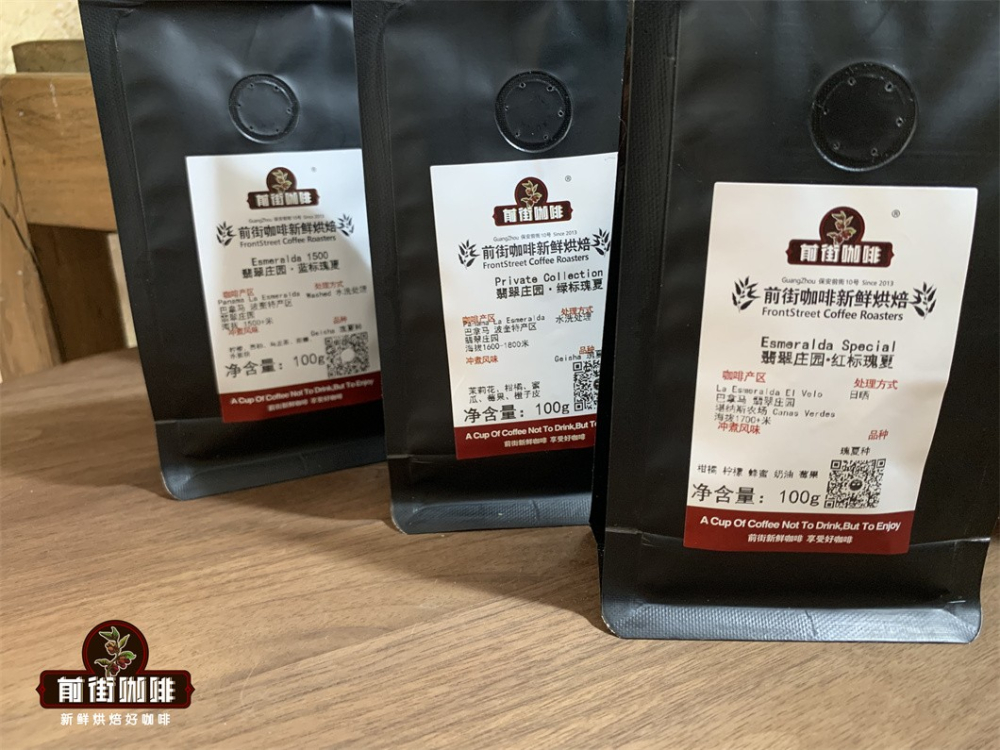
Beans sold by Front Street Coffee: Panama · Hacienda La Esmeralda · Green Label Geisha Coffee Beans
Country: Panama Region: Boquete · Hacienda La Esmeralda Altitude: 1700m Variety: Geisha Processing Method: Natural Flavor: Jasmine / Citrus / Melon / Berries
Hacienda La Esmeralda's Blue Label Geisha
The name corresponding to Blue Label is Geisha 1500, grown at altitudes between 1,400 and 1,500 meters, and blended from Geisha from the three plots of El Velo, Jaramillo, and Canas Verdes. In previous years, this grade offered only washed processing, while this year's Blue Label batch added a natural version.
It is worth noting that since 2021, Hacienda La Esmeralda has discontinued the Blue Label series, and the Geisha produced in that area is now sold under the name Volcanic Rock Geisha, with a flavor basically consistent with the former Blue Label. Front Street has observed that Volcanic Rock Geisha comes only in washed processing, with a taste dominated by light floral notes and fruity sweet-tartness, and a body not as full as the other two brands.

Beans sold by Front Street Coffee: Panama Hacienda La Esmeralda · Blue Label Geisha Coffee Beans (Washed)
Country: Panama Region: Boquete · Hacienda La Esmeralda Altitude: 1400~1500 m Variety: Geisha Processing Method: Washed Flavor: Lemon / Oolong Tea / Cane Sugar / Peach
Hacienda La Esmeralda's Three Major Plots
Finally, Front Street Coffee will further discuss the three major Geisha planting plots mentioned earlier—the estate grades them precisely according to the differences among the Geisha produced in these three places. Below, each of their respective characteristics is introduced one by one.
Under the name of Hacienda La Esmeralda there are a total of 4 core coffee planting areas, among which the three major plots planted with Geisha are Canas Verdes, Jaramillo, and El Velo, and each major plot is further subdivided into different small plots.
Jaramillo
Jaramillo was the first estate purchased by the Peterson family, and also the place where Geisha was first discovered; the average age of the coffee trees in the estate exceeds 15 years. The terrain here is relatively low, with an average upper altitude limit of about 1,700 meters, but the slopes are steep, making harvesting operations somewhat difficult.
The name of this plot comes from the Jaramillo mountain range east of Boquete, with an average annual rainfall of about 4,000 ml, average daytime temperatures between 19–25°C, and average nighttime temperatures of 11–15°C; the air throughout is humid and cool. Jaramillo is subdivided into a total of 6 Red Label plots: Mario, Noria, Reina, Bosque, Buenos Aires, and Caballeriza, which was newly added last year.
Canas Verdes
Canas Verdes is often transliterated in China as 坎纳斯维迪斯, and in Spanish it means "green reeds" or "green fields." Half of the estate's land was purchased together with Jaramillo in 1967; after Geisha won fame in 2004, the Peterson family began gradually acquiring surrounding small planting plots. The entire planting area is located on the eastern slope of Baru Volcano, with a wide altitude range, extending from 1,500 meters all the way to 2,050 meters.
The average annual rainfall here is about 3,500 ml, with average daytime temperatures of 16–23°C and average nighttime temperatures of 10–15°C. The complex and changeable terrain, volcanic soil, and pronounced temperature difference between day and night together create the highly aromatic character of the Geisha here. At present, the Geisha planting area of Canas Verdes contains a total of 11 small plots: Lino, Coronado, Fundador, León, Montaña, Trapiche, Jacinta, Cabaña, Tumaco, as well as Nido and Colga.
El Velo Plot
El Velo is the newest estate purchased by Hacienda La Esmeralda in 2012, has the highest average altitude within the estate, and is also the only area that has undergone fine leveling. In addition to its main focus on Geisha, the estate also grows more than 400 coffee varieties purchased from CATIE, including Laurina, Pacamara, Mocha, SL28, and others, to meet the needs of long-term development and variety exploration. Compared with the other two plantations, El Velo's altitude extends uphill from 1,650 to 1,900 meters, with average annual rainfall of about 4,000 ml, average daytime temperatures of 16–25°C, and average nighttime temperatures of 11–16°C.
The total coffee planting land in the whole area is 50.25 hectares, of which Geisha accounts for 37.9 hectares, subdivided into 7 small plots: Guabo, Portón, Durazno, Mural, (Figs), Buena Vista, guila.
The above is the Geisha-related information on Hacienda La Esmeralda compiled by Front Street. Before every new bean is listed, Front Street conducts a large number of cuppings and brewing experiments, from which it distills a brewing data line with the best flavor, and then shares it with all coffee fan friends. Next, Front Street will present the brewing data for these three Geisha coffees from Hacienda La Esmeralda.
Front Street Coffee Brewing Parameter Suggestions (Panama Hacienda La Esmeralda Geisha):
Front Street recommends using freshly roasted beans for brewing whenever possible, as only then can the coffee's rich flavors be fully appreciated. The beans sent out by Front Street Coffee are all within 5 days after roasting, because Front Street deeply understands that freshness has a profound impact on coffee flavor. "Freshly roasted good coffee" is Front Street's consistent roasting principle, striving to ensure that every customer who places an order receives the freshest coffee. Since the resting period is usually 4–7 days, by the time customers receive the beans, they are right at their flavor peak.
Dripper: Hario V60 Water Temperature: 90°C Dose: 15 grams Coffee-to-Water Ratio: 1:15 Grind Size: Medium-fine grind, referencing China's No. 20 standard sieve, with a passing rate of 80%

The technique used by Front Street Coffee is staged extraction:
First bloom with 30 grams of water for 30 seconds, then pour in a thin stream in circles up to 125 grams and pause; when the water level drops and the coffee bed is about to be exposed, pour again up to 225 grams and stop; when the water level drops again and the coffee bed is about to be exposed, remove the dripper (timing from the start of blooming), with a total extraction time of 2'00".
Flavor Descriptions of the Three Geisha Coffees
[Red Label] Bright aroma, giving off notes of rose and citrus, interwoven with brown rice, berries, and apricot, as well as the sweet fragrance of complex fruit and honey; the juicy body is thick, the flavor layers are rich, and the sweetness is distinct.
[Green Label] The first sip brings intense jasmine floral notes, with fairly high sweetness; you can taste the juicy quality and creamy texture brought by citrus and berries, along with green tea, orange peel, and cantaloupe; the overall layers are rich, and the finish is a lingering floral and citrus note.
[Blue Label] The first sip presents the soft acidity of lemon and grapefruit; as the temperature drops slightly, the sweet aftertaste of oolong tea, honey, and cane sugar emerges one by one, and the mouthfeel is clean and bright.
For professional coffee knowledge exchange and more coffee bean information, welcome to follow Coffee Workshop (WeChat public account cafe_style)
If you need to purchase more specialty coffee beans, welcome to add Front Street Coffee's private WeChat, WeChat ID: kaixinguoguo0925
The above content is compiled by CoffeeHunters, a coffee news website.


