







Does a lighter roast always mean more acidity in coffee?
No. Sourness is not simply a matter of roast level. Green beans already hold malic, citric, tartaric, chlorogenic, and phosphoric acid, and roasting transforms them: sugars and organic acids degrade under heat while formic, acetic, lactic, fumaric, and connic acid form. The biggest shift happens during development after first crack, where acids peak and then fall away.
A cup test of Front Street Papua New Guinea washed Typica, roasted twice, showed the light-to-medium stage carrying the most pronounced sourness, while extremely light roasts turned sweet and soft. For drinkers who enjoy fruity acidity, five single-origin options stand out: Guodingding, Little Tomato, Strawberry Candy, Big Belly Button, and Flower Butterfly, each with variety, processing method, and flavor notes for brewing reference.
Many consumers mistakenly believe that the lighter the coffee is roasted, the more sour it tastes, but in reality the flavor is influenced by the complex interplay of acid transformation and sugars during roasting. This article begins with the inherent organic acids in green beans, sorts out the changing patterns of formic acid, acetic acid, and citric acid before and after first crack, and uses the cup test of Front Street Papua New Guinea washed Typica roasted twice to show that the light-to-medium stage often has the most pronounced sourness, while extremely light roasts instead appear sweet and soft. Then, for readers who enjoy fruity acidity and floral aromas, the Front Street editor reviews five single-origin coffees with floral and fruity notes: Guodingding, Little Tomato, Strawberry Candy, Big Belly Button, and Flower Butterfly, with variety, processing method, and flavor description attached for brewing reference.
In daily store operations, we meet many customers, and quite a few of them find it hard to accept beans with prominent acidity. Generally speaking, coffees with obvious sourness are mostly light roasts, and some extremely light roast creations are indeed so sour that they make people frown, so drinkers form the fixed perception that "the lighter the roast, the stronger the sourness."
But is the truth really so? To answer this question, one must first understand the causes of coffee sourness and how these acids evolve when heated.
●Green beans themselves already contain acidic components such as malic acid, citric acid, tartaric acid, chlorogenic acid, and phosphoric acid.
After entering roasting, sugars and organic acids degrade under high temperature, or new ones such as formic acid, acetic acid, lactic acid, fumaric acid, and connic acid are generated. However, as the roast level increases, these acids continue to be decomposed or dissipated.
Throughout the whole process, the period of greatest change in the types and concentrations of acids is actually the development period starting from first crack. Accordingly, the amount of acid climbs to a peak at some point after first crack, then falls back because of thermal cracking or volatilization.
In fact, at the beginning of first crack, large amounts of formic acid, acetic acid, and the like are produced, reaching a peak by the late stage of first crack and then declining; the citric acid and malic acid that were already present gradually dissipate with the cracking. The former two are bright and pleasant, while the latter two are highly volatile and sharply sour both in aroma and taste, and are irritating when too concentrated.
At the same time, after first crack, sucrose is consumed in reactions. Therefore, the sourness is strongest at light-to-medium roast; extremely light and light roasts, because more sugar remains and total acidity is still low, instead show soft acidity with natural sweetness, and high-sugar green beans can even become intensely sweet at this point.
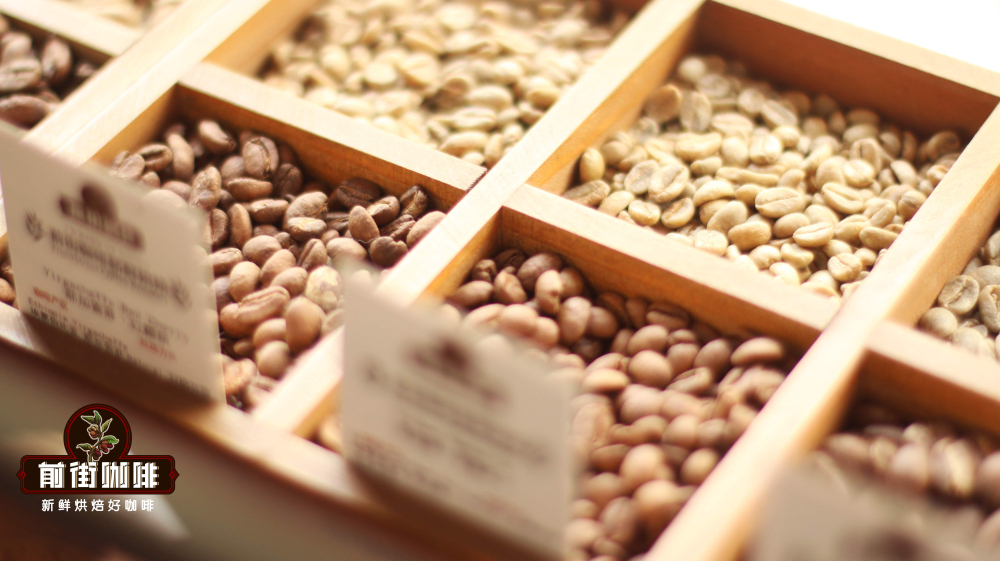
●We took Front Street Papua New Guinea washed Typica and roasted it in two batches, keeping the yellowing turning point and first crack point as consistent as possible, and only extending the development time after first crack.
First batch: dropped 1 minute 20 seconds after first crack at 190.5°C (dense middle stage)
Second batch: dropped 1 minute 40 seconds after first crack at 191.8°C (end of first crack)
Cupping results:
First batch: soft acidity on first sip, sweetness appears quickly; aroma is simple with a slight ginseng-like note.
Second batch: bright and rather high acidity, sweetness arrives late, aroma is complex and also has fruity notes.
It can be seen that light roast is not necessarily more sour; it is the result of interactions among various flavor substances. However, over-light roasting will indeed produce a green, astringent taste, and there is no doubt about that.
●Recommended coffee brands with higher acidity
Fruity acidity and floral aroma are signature flavors of light-to-medium roast and are widely favored. Recently, acid-loving friends asked Front Street which beans naturally carry floral and fruity aromas, so each one is listed and recommended.
1, Bright orange acidity with white flowers—Front Street Guodingding coffee beans
Guodingding Cooperative brings together three hundred small farmers and produces top Ethiopian beans, following traditional washing and praised as a "pure land of Yirgacheffe." When Front Street customers ask for washed fruity notes, baristas often recommend this bean on the shelf. It has no heavy bitterness, with clear citrus-lemon acidity and jasmine aroma, and drinkers easily fall in love with it.
2, Intense berry aroma with cherry tomato acidity—Front Street Kenya Little Tomato coffee beans
For those who like acidity, Front Street recommends this one first; its fruity acidity is hard to match. The varieties SL28 and SL34 are both selected superior strains: SL28 belongs to the Bourbon group and has bright acidity; SL34 is close to Typica and has milder acidity. K72 washing with multiple soaking and rinsing builds clean and solid acidity. Front Street Little Tomato as iced coffee shows deep berry and full cherry tomato aromas, refreshing to drink cold, and is also a great choice for cold brew.
3, Raisins mixed with fruit gummies—Front Street Strawberry Candy
This bean has a special background, blending two producing regions in Central America: Costa Rica honey process and Panama washed Geisha. Front Street uses a medium roast, and brewing reveals orange-honey notes and rounded sweetness; it suits cold brew, pour-over, espresso, and many methods, and is refreshing on the palate.
4, Passion fruit acidity with blueberry sweetness—Front Street Colombia Big Belly Button
In the 2023 WBC finals, Australian competitor Jack Simpson used Big Belly Button to present a juicy feel, attracting attention. Front Street beans are produced at Hacienda La Divisa in Huila, and double anaerobic natural releases floral and fruity aromas; brewing often brings notes of grape, orange, and blueberry.
5, Citrus acidity with honey pomelo tea note—Front Street Flower Butterfly
Flower Butterfly contains Geisha, Caturra, and Catuai, and is produced in Boquete, Panama (where Emerald and Elida are located). Front Street knew that they had long been mixed planted for production, and later separately harvested the three varieties, washed them, and then blended them into bags. Geisha makes up seventy percent, showing grapefruit-citrus and light floral notes, and the washed process conveys a tea-like feel.
The above content is compiled by CoffeeHunters, a coffee news website.


