







How Do You Choose SOE Coffee Beans?
SOE coffee beans are single-origin lots pulled as espresso, short for Single Origin Espresso. They differ from espresso blends in that one origin carries the whole cup, so the flavor of that region shows up directly, and the result depends heavily on roast level, extraction and the bean chosen.
Selection tends toward origins with strong character, such as Ethiopian Yirgacheffe or Sidamo's Huakui, both African and noticeably acidic, while Indonesian Mandheling is used by some shops for its heavier body. Panama Geisha is another origin often cited for floral aroma and juicy fruitiness. Pour-over beans pulled as espresso bring many uncertain variables.
SOE stands for Single Origin Espresso, and its popularity in the specialty coffee scene has continued to climb in recent years. How does it differ from espresso blends? Which beans are suitable for making SOE? This article explores the flavor characteristics, mouthfeel, and bean selection logic of SOE coffee beans: from the suitability analysis of Yirgacheffe, Huakui, and Mandheling, to the impact of roast level on espresso flavor, to why Front Street Coffee has repeatedly experimented but never added it to the menu, and the reasons behind the higher price of a cup of SOE — all answered one by one. The article also includes the actual extraction parameters for Front Street Ethiopia Red Cherry and Warm Sun Blend for enthusiasts to reference and compare.
With the sweep of the third wave specialty coffee movement, single origin coffee is gaining more and more followers: some are captivated by the bright notes of lemon and citrus interwoven in Ethiopian Yirgacheffe, some are fascinated by the rich floral aroma and juicy fruitiness of Panama Geisha, while drinkers who pursue a heavy mouthfeel are often conquered by the extremely high body of Sumatra Mandheling. Today, espresso and SOE single origin coffee have gradually found their way into many people's daily cups.
However, although Front Street has been selling a variety of pour-over coffee beans year-round, SOE has never appeared on the menu. The reason is that when pour-over beans are directly made into espresso — that is, single origin espresso — there are simply too many uncertain variables. Although Front Street does not offer SOE, it does have four blend beans in its lineup, among which the one used for espresso is Warm Sun Blend: with Honduras Sherry as the main body, blended with Yirgacheffe natural Red Cherry at a 7:3 ratio, which is why Front Street's espresso tastes particularly rich and full-bodied.
If you pay close attention, you'll notice that many cafés like to use pour-over beans to showcase the flavor personality of a region. When selecting SOE beans, the tendency is usually toward single origins with extremely distinctive character, such as Ethiopian Yirgacheffe, or Sidamo's star bean Huakui — both from Africa, with quite prominent acidity. Some shops also use Indonesian Mandheling for SOE; because the region uses a unique wet-hulling method to process green beans, the bitterness is significantly amplified after extraction, a taste that many people find hard to accept.
Ultimately, selecting beans for SOE is far more meticulous than one might imagine, and this follows a completely different logic from blend beans. There are two paths for blending: the first is to mix green beans evenly according to a set ratio or target flavor, then send them together into the roaster to roast into roasted beans, which the industry customarily calls "green blending."
The second is to directly blend individually roasted beans according to ratio, which is "roasted blending." The four espresso beans currently offered by Front Street all follow the roasted blending approach. Each bean has its own strengths and weaknesses: if a certain bean produces thin crema after extraction by the espresso machine, it can be paired with a bean rich in crema to compensate; if the extracted espresso is too sour, too bitter, or too sweet, a complementary partner can be found to balance it, ultimately approaching the ideal flavor — isn't that the best of both worlds?
In contrast, SOE, since it uses beans from only a single origin, has no concept of "complementarity" at all — all you can do is strive to highlight the flavor of the origin itself. If your espresso machine parameters and timing are properly calibrated, and you've chosen the right beans, the flavor of that bean can be beautifully presented; but if any step fails, the resulting SOE is doomed to fail, and few would be willing to take a second sip.
So never underestimate a cup of single origin coffee — making a qualified SOE is no easy task. Although Front Street does not sell SOE, it has explored this path countless times: first finalizing the candidate bean list, clarifying the direction to present — whether it's the lemon-citrus acidity of Front Street Yirgacheffe, or the sweetness of Costa Rica's honey-processed Bahía — all of these must be verified step by step by Front Street Coffee's baristas, and then checking whether the final taste matches expectations. Before the recipe is finalized, repeated testing and constant adjustment are indispensable. Precisely because of this, the effort behind every cup of SOE is no simple matter, and its price being often higher than pour-over coffee is entirely reasonable.
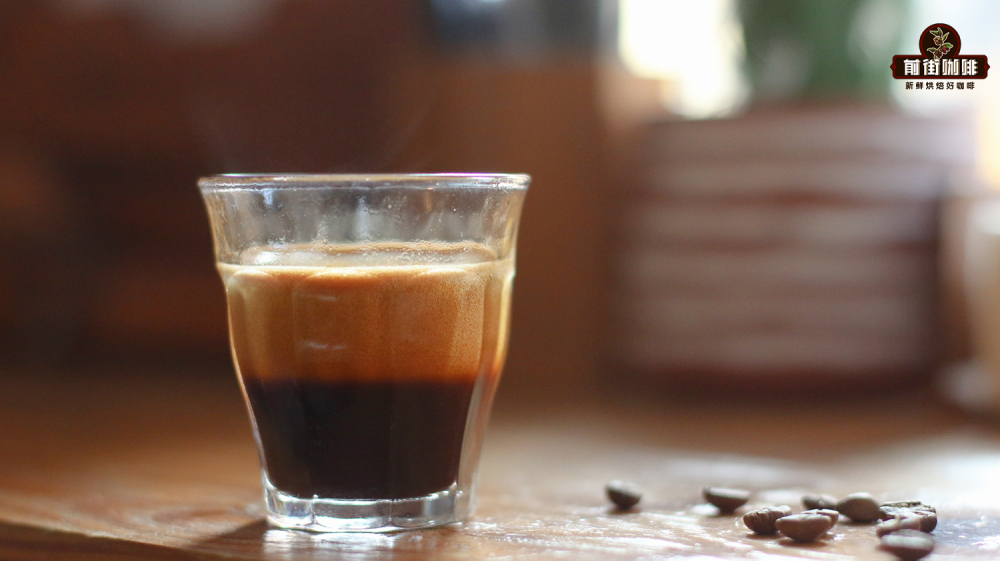
We've also noticed that many cafés like to use Front Street Yirgacheffe for SOE; the extracted floral aroma is particularly clear, and the acidity is on the brighter side, which happens to appeal to enthusiasts who prefer acidity. Another example is the Front Street Ethiopia Red Cherry SOE made with 20 grams of coffee powder extracted into 40 milliliters of coffee liquid in about 27 seconds — the mouthfeel is quite solid and rich, with moderate acidity, and beyond the citrus and berry notes, there's a faint hint of fermented wine aroma, making for an overall impressive performance.
Compared with traditional espresso beans, SOE flavors are harder to extract, and each SOE's extraction parameters, duration, grind size, and dose must all be recalibrated. Front Street also regularly extracts blend beans, such as this 7:3 recipe of Honduras paired with Yirgacheffe natural Red Cherry: 20 grams dose, 28 seconds extraction, yielding 40 grams of coffee liquid. It goes down very smoothly, with clearly distinguishable vanilla and cream notes, interspersed with a faint berry aroma, and a lingering, distinctively sweet finish.
SOE magnifies the personality of the bean exponentially, especially with light-roasted beans — the aroma is intense, and the sweet-tart sensation is more striking. Therefore, when selecting beans, try to go for highly recognizable varieties; otherwise, the resulting espresso will taste flat, lacking both the balance that SOE should have and the stability it should possess.
Roast level also matters greatly for SOE: roast too dark, and the regional terroir of the origin will be largely lost; roast too light, and the beans will sharply amplify the acidity under the high-temperature, high-pressure extraction environment, making the espresso hard to swallow — and if extraction is uneven on top of that, this cup of SOE is basically not worth serving. Of course, Front Street does not agree with claims like "SOE equals specialty coffee" or "SOE must use light-roasted beans" — in Front Street's view, these conclusions are far too absolute. In fact, both Arabica and Robusta can be used to make espresso.
It can be seen from this that an outstanding cup of SOE tests the barista's patience and depth of understanding of bean characteristics. Many specialty shops currently list SOE as a regular item, yet Front Street has never written it into the menu — SOE is extracted directly from single origin beans, and since beans are affected by multiple factors such as weather, cultivation, and roasting, flavors inevitably vary between batches, and stability cannot be guaranteed. This is precisely the root reason why Front Street does not offer SOE coffee.
So, if you've already tried your way through pour-over and espresso, why not give SOE a try — an outstanding cup of SOE will give you a deeper understanding of the flavors of that coffee origin.
The above content is compiled by CoffeeHunters, a coffee news website.


