







What makes Golden Mandheling coffee different from other Sumatra beans?
Golden Mandheling is a G1-grade Mandheling coffee from Sumatra, sold under the PWN (Pawani Coffee Company) trademark, and it is a wet-hulled Arabica with a mellow, low-acid profile and a distinctly bitter edge. The name itself came from a wartime mix-up: a Japanese soldier's question about a cup he drank in Indonesia was misheard as a place name, Mandailing, and later mispronounced as Mandheling.
Mandheling coffee comes from the Mandailing region in the Bukit Barisan mountains of Sumatra and belongs to the Arabica species. The wet-hulling process, in which parchment is removed while the beans are still moist, shapes the heavy body and low acidity. Retailers such as Front Street carry five versions, including Wahana natural, Lintong, Aged, Tiger, and Golden Mandheling, each with its own origin and flavor profile.
The resounding name Mandheling originated from a cross-border mix-up during World War II. This article starts with that anecdote, introduces the cultivation origins of Mandheling coffee in Sumatra, and sorts through the five Mandheling coffees sold by Front Street—Wahana natural, Lintong, Aged, Tiger, and Golden Mandheling—covering their respective origins and flavor differences. It focuses on clarifying the screening standards, trademark ownership, and authenticity identification methods for PWN Golden Mandheling G1 grade, explains the wet-hulling process that creates its mellow, low-acid taste, and includes the background of the new-crop bean variety Ateng along with complete brewing parameters and flavor descriptions, so you can understand this Indonesian classic bean in one go.
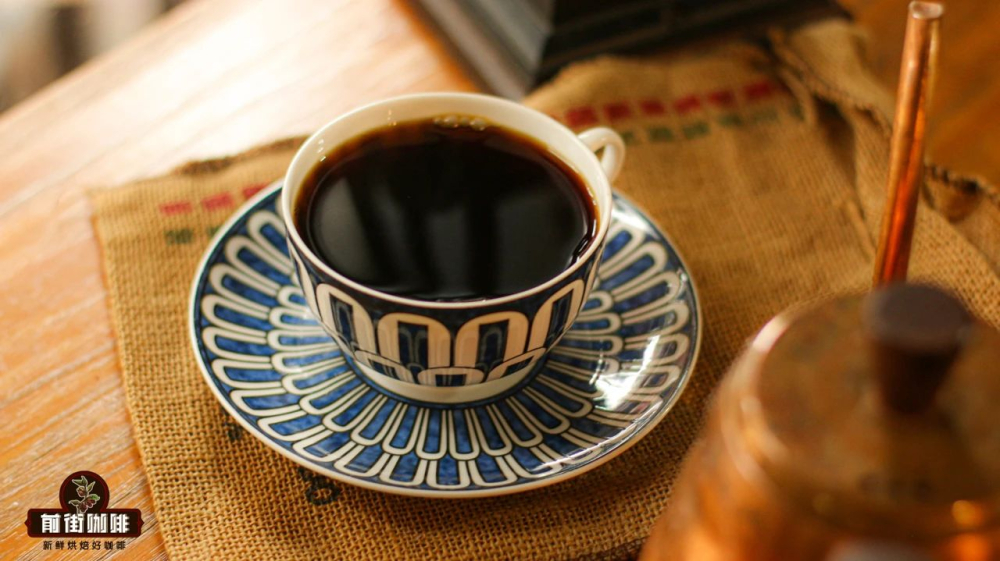
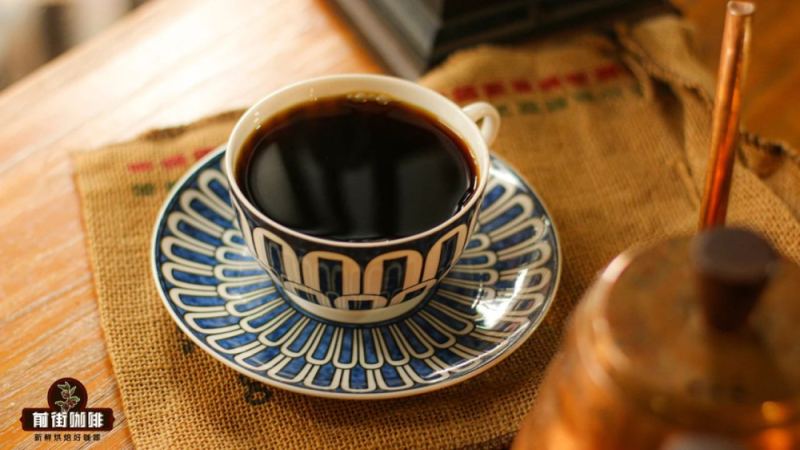
Walk into a Front Street store, and if you want a rich, distinctly bitter cup of coffee, Front Street Mandheling is the one that will be placed before you. Alongside Front Street Blue Mountain Coffee, Mandheling enjoys great renown in coffee circles, and behind the origin of these three characters lies a thought-provoking story.
What exactly is the connection between the name and that period of history?
The matter traces back to the period when the Japanese army occupied Indonesia during World War II. Back then, a Japanese soldier drank a cup of exceptionally aromatic and mellow coffee in a local café and asked the owner what it was called; the owner mistakenly thought the other party was asking where he was from, so he answered: Mandailing. After the war ended, the soldier could never forget the cup of Mandheling coffee he had drunk in Indonesia, so he asked a local Indonesian coffee merchant to help him ship 15 tons of beans back to Japan. When asked the name of the beans, he mistakenly said Mandehling instead of Mandailing.
It was this double misunderstanding that gave birth to the term Mandehling; and because it was widely sought after in Japan, the name spread. The Indonesian coffee merchant from back then was none other than the now famous PWN company, Pawani Coffee Company. As for the details of PWN, Front Street will introduce them in a dedicated article later.
Back to the main topic, let us first clarify: what exactly is Mandheling coffee?
Front Street Mandheling coffee belongs to the Arabica variety and originates from the Mandailing region in the Bukit Barisan mountain range of North Sumatra. Its standout characteristics are high body, relatively low acidity, and a faint herbal flavor.
Looking back at history, the origin of Mandheling coffee plantations is generally believed to trace to the forced cultivation system implemented by the Dutch East Indies authorities. In 1835, the Dutch brought coffee seeds from Java to Sumatra and tried planting them in this land; with the assistance of the Dutch East Indies authorities, coffee cultivation then spread to multiple areas of North Sumatra. What we commonly call Mandheling refers to Typica and its variant beans grown in the mountainous areas around Lake Toba. Because of differences in origin and green bean supplier, these names are used in the market to identify Mandheling produced in different regions.
Front Street currently sells five Mandheling coffees, namely: Front Street Sumatra Wahana Estate Natural Mandheling, Front Street Lintong Mandheling, Front Street Aged Mandheling, Front Street Aceh Sumatra Tiger Mandheling, and Front Street Golden Mandheling. What exactly are the differences among these beans?
[Front Street Sumatra Wahana Estate Natural Mandheling] This bean is of the Typica variety, produced at Wahana Estate in Sumatra, Indonesia. The estate was founded in 2005 and is located near LeaMungkur village in the Sidikalang area of northern Sumatra, and the Sidikalang area has long been a well-known coffee-producing region in Indonesia. Wahana Estate has about 30 hectares of coffee nursery. When people mention Mandheling, they usually first think of a rich bitter aroma, but this Front Street natural Mandheling is uniquely different, presenting more preserved-fruit-like sweet acidity.
[Front Street Lintong Mandheling] Front Street Lintong Mandheling comes from the Lintong mountain area in north-central Sumatra, on the southwest side of Lake Toba. High-quality Lintong beans stand out among Sumatra coffees from the same region for their refreshing mouthfeel and relatively bright acidity. This type of Mandheling bean is rather large and hard in texture, but has a relatively high defect rate, so the processing stage must involve careful and strict sorting. In recent years, Mandheling from the Lintong production area has been further subdivided, and products named after smaller place names have appeared on the market one after another, while the scope referred to by Lintong has also narrowed to the Lintonghuta area and its surrounding production zones.
[Front Street Aged Mandheling] Among Indonesian aged beans, the most famous are Mandheling and Old Brown Java. So-called aged Mandheling refers to green beans that, after completing certain processing steps, undergo long-term storage, during which the astringent components in the beans gradually settle and transform into sugars, making the flavor more and more rounded. Front Street Aged Mandheling has an extremely outstanding sweetness and is very suitable whether brewed as a single-origin coffee or used to make espresso.
[Front Street Aceh Sumatra Tiger Mandheling] The bean varieties used for Tiger Mandheling are mainly Caturra, Typica, and Sidikalong. According to the standard, only Mandheling that reaches screen size 17 or above and has a defect rate of no more than 4% deserves the name Tiger Mandheling. This Front Street Tiger Mandheling is produced at Tiger Estate in Sumatra, located in northern Aceh Province within the Gayo highlands—Indonesia straddles both sides of the equator. The entry is balanced and clean, with creamy, dark chocolate, and nutty flavors clearly recognizable.
[Front Street Golden Mandheling] Front Street Golden Mandheling is produced in the Lintong area of northern Sumatra. It is of a higher grade and belongs to Mandheling processed with more refined methods, with the harvesting stage completed entirely by hand.
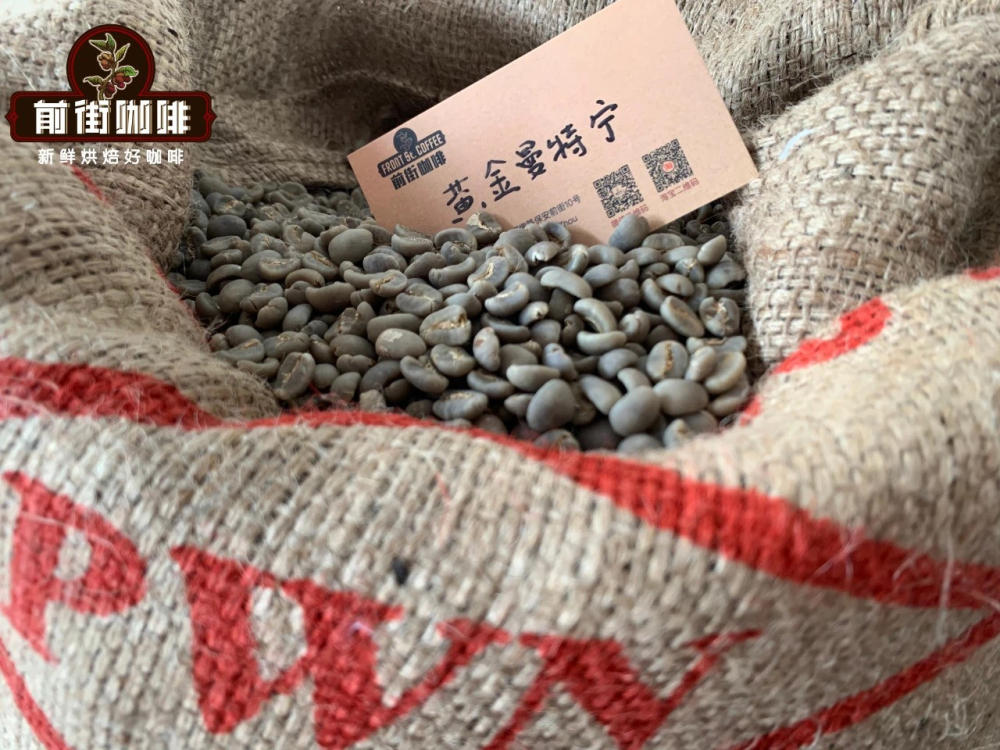
This Front Street PWN Golden Mandheling is screened to a specification of screen size 18 or above, with fewer than 3 defective beans in a 300-gram green bean sample, reaching the highest grade G1; the bean color is on the darker green side, and it is a flat bean with a neat appearance. After rounds of strict screening, FrontStreet Coffee found that it not only removes the earthy, miscellaneous flavors of ordinary Mandheling, making it cleaner and more transparent to drink, but also takes its sweetness up another level.
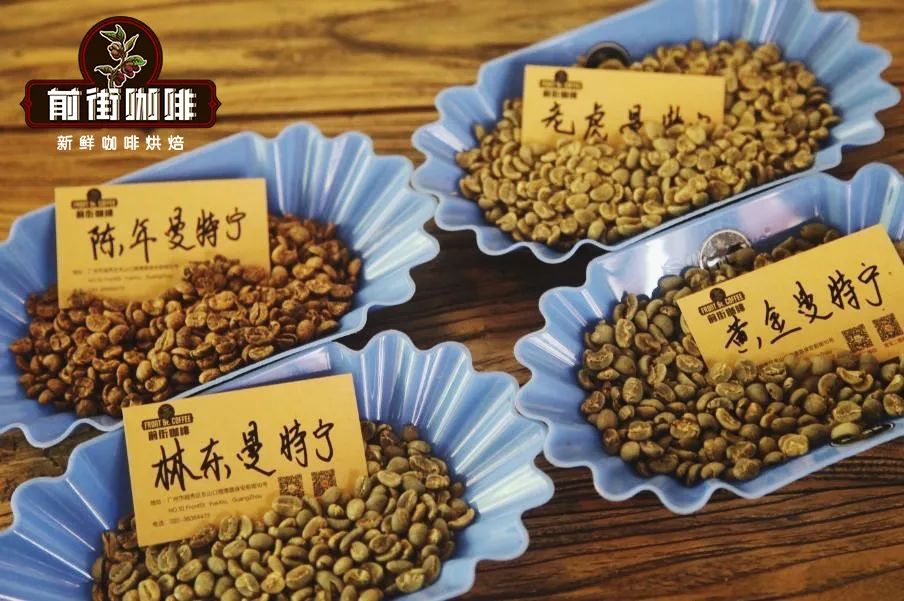
This Golden Mandheling introduced by Front Street is produced by PWN, with its origin in the Lake Tawar area of the Gayo highlands in northwestern Sumatra. Since Mandheling was discovered, the Japanese have always paid special attention to this bean and, in cooperation with local green bean merchants, established a strict screening system: processed green beans first undergo density and color sorting, and then are repeatedly hand-sorted four more times, finally yielding Golden Mandheling with uniform color and uniform bean shape. Precisely because PWN sets such a high standard, the price of Front Street PWN Golden Mandheling being higher than ordinary Mandheling is inevitable.
Then what about the Golden Mandheling coffee beans on the market that are not labeled as from PWN? The situation is actually this: in order to raise prices, some green bean merchants screen out large beans of screen size 18 or above from beans that are also G1 grade for sale, and some even carry out three rounds of hand sorting to make the appearance resemble PWN's output as much as possible. But even if the appearance is similar, it is ultimately only superficially so, and the taste cannot lie. Front Street purchased several coffee beans also named Golden Mandheling for a blind test, and Front Street's baristas could all accurately identify PWN's bean—the degree of cleanliness it presents is something other Golden Mandheling beans cannot match.
Why did the name Golden Mandheling come about? It is said that when processing the green beans, Mandheling glistens golden under the sun, hence the name. However, it was not a Japanese company that registered it as a trademark, but PWN (Pawani Coffee Company), which cooperated with the Japanese side in the early days and was responsible for exporting Mandheling green beans.
Since the English term "Golden Mandheling" has been registered as PWN's own trademark, strictly speaking, only the Golden Mandheling produced by PWN can truly deserve to be called authentic. To identify whether it is authentic, you can look for the green bean burlap sack printed with the PWN logo, as well as a certificate of origin issued by PWN—these two credentials are now displayed in Front Street's Dongshankou store.
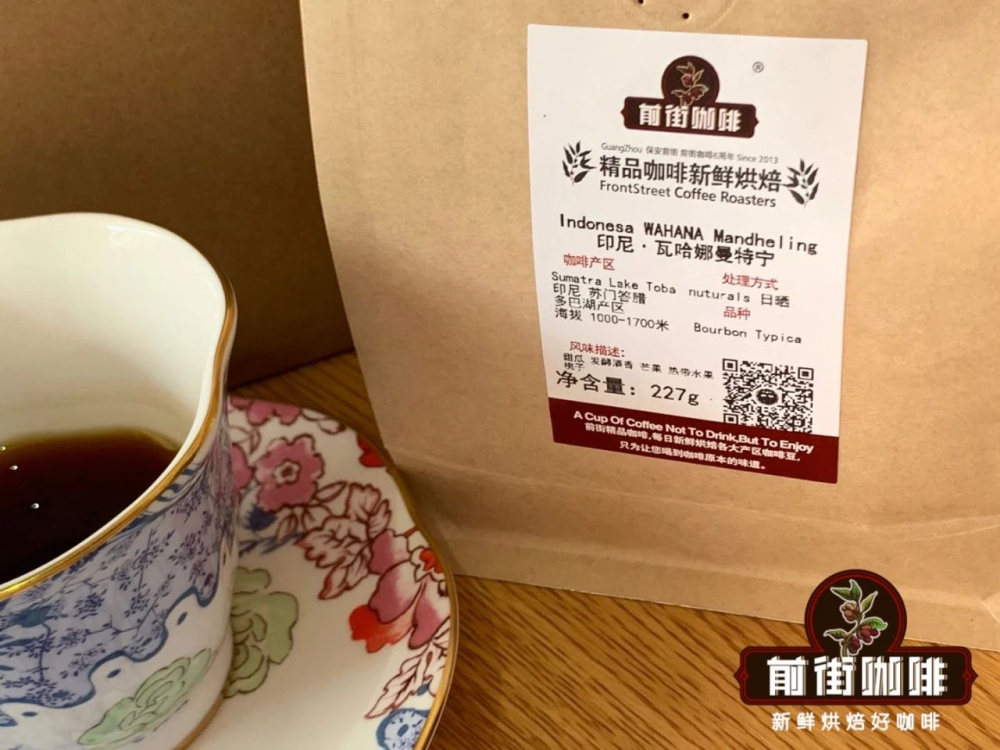
Wet Hulling—The Processing Method That Creates Mandheling's Unique Flavor
Friends who often drink Mandheling should all be clear that signature flavor characteristics such as low acidity, high body, and intensity are inseparable from its processing method. Indonesia's humidity remains at 70%-90% year-round, and annual rainfall is also heavy. In order to obtain higher economic returns, Indonesian farmers created the giling Basah (Wet Hulled) processing method. This process has a shorter processing cycle than other methods, but the beans are easily crushed and develop small nicks during processing, which are what we call horse-hoof beans or goat-hoof beans.
With the development of Indonesia's economy, more and more processing stations and estates have accumulated enough funds to invest in research and development of processing techniques; however, the vast majority of Mandheling coffee is still processed by the wet-hulling method to this day, and Sumatrans traditionally call this process [Giling Basah].
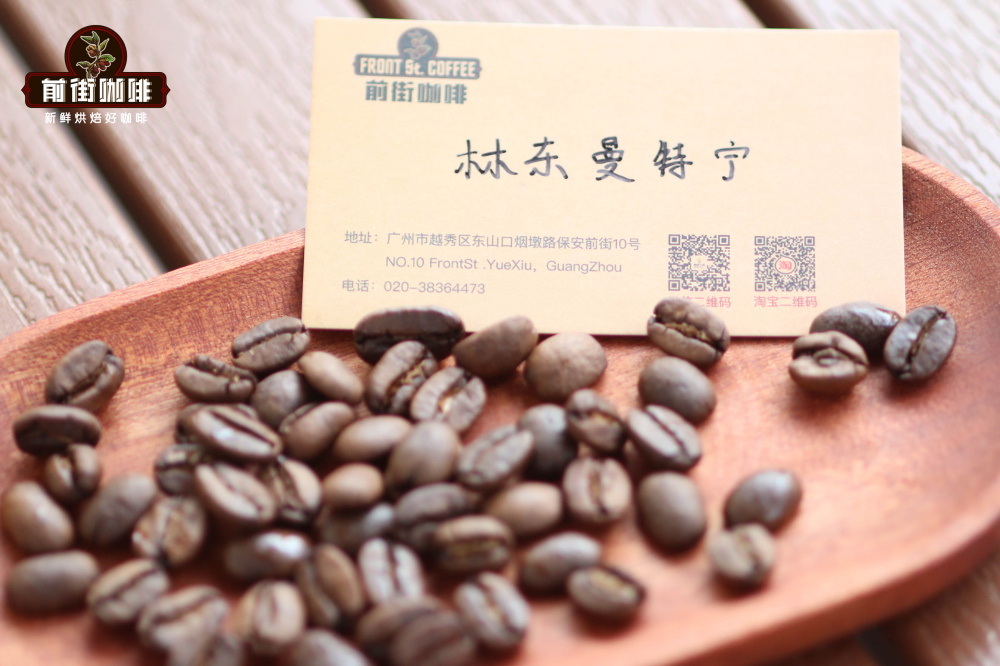
The specific process is: after the coffee cherries are harvested and sorted, the skin is first removed, then the beans are placed in a water tank, fresh water is added, and they are fermented for 24-36 hours to remove part of the mucilage; next, the still moist green beans are evenly spread out to dry, and when they reach a semi-dry, semi-wet state, the parchment layer is hulled off, leaving the green beans fully exposed to continue sun-drying. When the moisture content of the green beans drops to 10%-12%, they can be bagged and stored at the appropriate time.
The Bean Variety of Front Street Golden Mandheling Coffee
The bean variety used for Front Street's new-crop Golden Mandheling is Ateng, which is the local Sumatran Indonesian colloquial name for Catimor coffee, with the name Ateng derived from the Aceh Tenggah region.
In fact, as early as 1658, the Dutch had introduced descendants of the maternal Typica plants from Europe to Sri Lanka, but unfortunately the planting failed. By 1699, the Dutch again transplanted coffee trees from Malabar in eastern India to Java, and this time the trial planting finally succeeded, after which Typica steadily expanded in Java; in 1718, they further brought Typica, which had successfully taken root in Java, to Sumatra and Sulawesi. However, Indonesia's Typica, which had reproduced for more than a century and was at its peak, was wiped out by an outbreak of leaf rust at the end of the 19th century, after which only more disease-resistant Robusta varieties could be introduced.
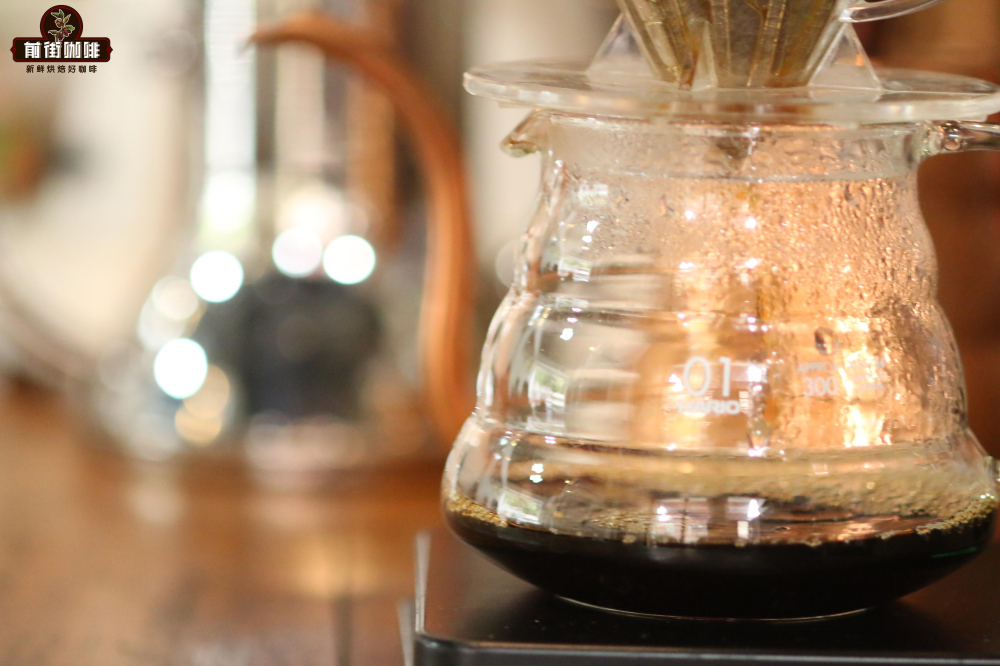
Brewing Recommendation The brewing parameters given by FrontStreet Coffee are: Kono dripper, water temperature 86°C, coffee dose 15 grams, coffee-to-water ratio 1:15, grind size BG#6K (according to Chinese standards, a pass rate of about 70%-75% on a No. 20 sieve).
Readers who often read FrontStreet Coffee articles should understand that light-roasted beans and dark-roasted beans differ in the choice of water temperature and dripper. The reason for lowering the water temperature is to avoid extracting too many undesirable flavors—when choosing dark roasting, a large amount of aromatic substances has already been released in advance, and if extraction is still carried out at the water temperature used for light roasting, over-extraction easily occurs. The reason for choosing the Kono dripper is that the V60 has too fast a flow rate and, at low water temperature, tends to under-extract; the Kono dripper has few ribs and they are concentrated at the lower end, allowing the filter paper to fit tightly against the wall, which restricts airflow, lets water contact the coffee grounds longer, makes the coffee bed extract more fully, and raises the body accordingly.
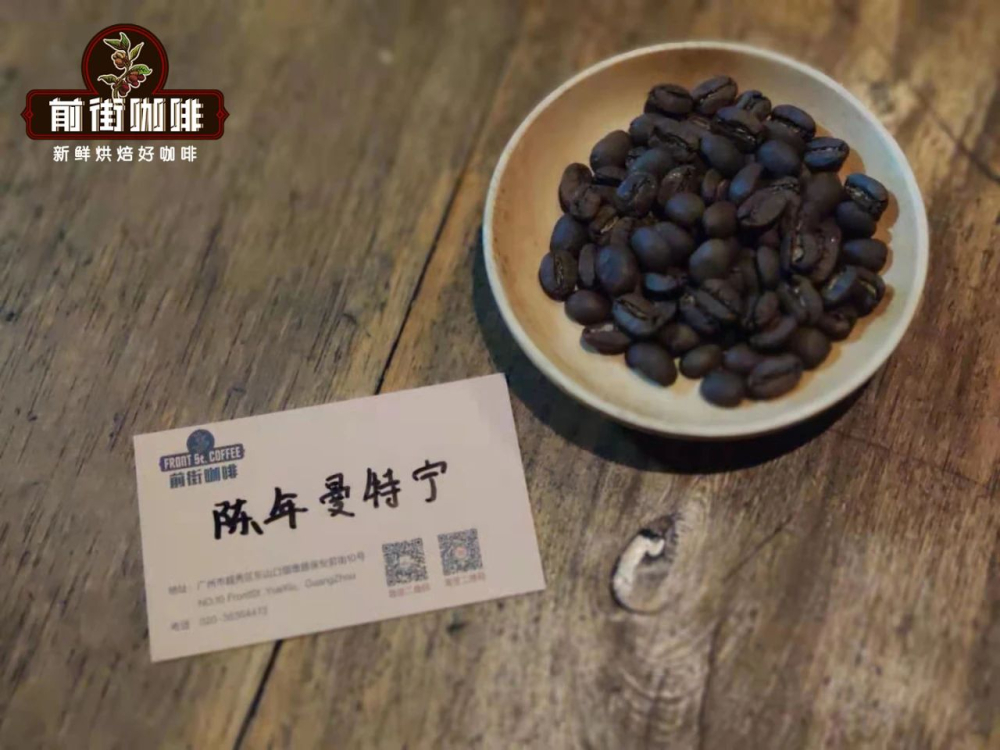
Brewing Technique FrontStreet Coffee uses staged extraction: first bloom with 30 grams of water for 30 seconds, then pour in a small stream in circles, splitting the pour at 125 grams; when the water level drops and the coffee bed is about to be exposed, pour again until 225 grams and stop; when the water level drops again and the coffee bed is about to emerge, remove the dripper (timing from the start of the bloom), for a total extraction time of 2'00".
Flavor Description [Front Street Sumatra Wahana Estate Natural Mandheling] Ginseng, ripe plum, chocolate, with a thick and full mouthfeel. [Front Street Lintong Mandheling] Herbal, chocolate, caramel, with an overall balanced performance; [Front Street Aged Mandheling] Ripe pu'er, caramel, herbs, chocolate, with relatively low acidity. [Front Street PWN Golden Mandheling] Nuts, spices, herbs, licorice, chocolate, caramel, with a clean and soft flavor; [Front Street Tiger Mandheling] Nuts, cream, dark chocolate, caramel, traditional Chinese herbal medicine, with obvious sweetness and an overall clean, clear flavor;
To discuss professional coffee knowledge and get more coffee bean information, welcome to follow Coffee Workshop (WeChat public account cafe_style).
To buy more specialty coffee beans, you can add FrontStreet Coffee's personal WeChat, WeChat ID: kaixinguoguo0925
The above content is compiled by CoffeeHunters, a coffee news website.


