







How does golden mandheling perform in a French press?
The French press rewards medium-dark and dark roasted beans, which emphasize oils and a rich mouthfeel, while medium roasts with moderate fruit acidity bring out tea-like notes and fermented aromas. Because the pot has only a body and a filter mesh, the bean quality, water temperature, and steep time do most of the work in the final cup.
A Starbucks-style approach uses a 1:15 to 1:16 coffee-to-water ratio, a 30-second bloom, and a four-minute steep before pressing. Beans such as Golden Mandheling and Strawberry Candy work well as reference points when matching a roast level to the method. The same pot can also be used to brew tea, which is part of why it is treated as a low-effort option for beginners.
The French press has a simple structure and is easy to operate, yet it best brings out the authentic flavors of high-quality coffee beans, which is why it is often called the representative device for lazy brewing. This article will introduce you to this classic tool originating from France and clarify its real requirements for coffee bean roast levels: medium-dark and dark roasted beans better highlight the oils and rich mouthfeel, while medium roasted beans with moderate fruit acidity can bring out tea-like notes and fermented aromas. The article also uses beans such as Front Street's recommended Golden Mandheling and Strawberry Candy as examples, and fully demonstrates the Starbucks-style French press brewing process, covering key parameters such as a 1:15-1:16 coffee-to-water ratio, 30-second blooming, and four-minute steep, helping you easily brew a good cup of coffee at home.
Today, drinking coffee has long become part of many people's daily lives, and everyone's standards for flavor have risen accordingly—many are no longer satisfied with just tasting it in cafes and instead try brewing it themselves at home. But faced with the dazzling array of brewing devices on the market, which one should beginners start with? Front Street's view is: pour-over coffee has relatively high demands on operational details, while a device often jokingly called the "lazy method" may be the ideal choice for entry-level players. This device is the French press.
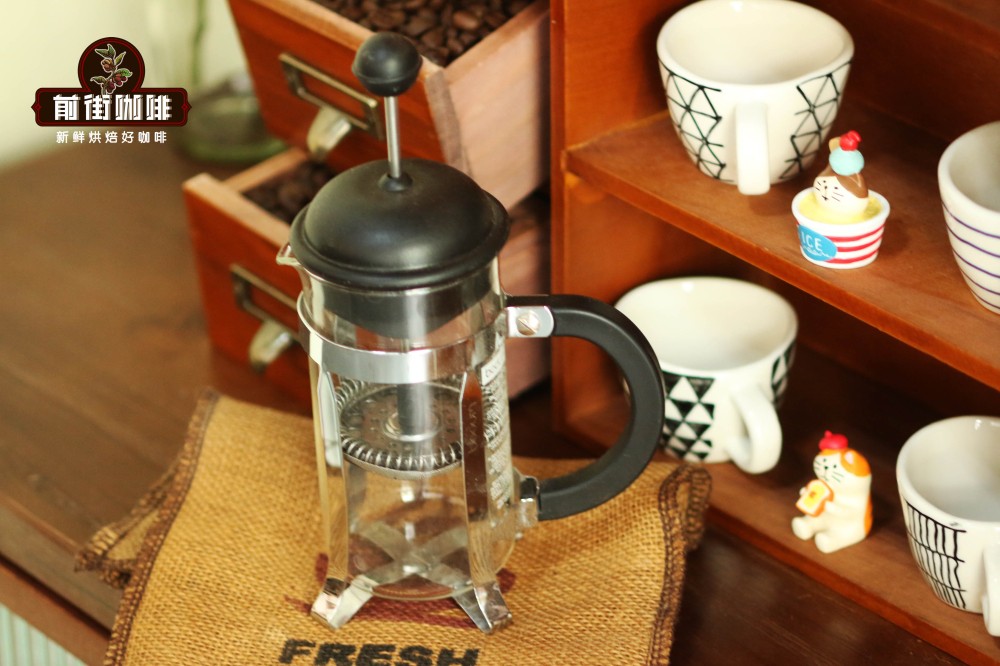
Why has this device earned the name "lazy"? Front Street explains: the French press has a very low operational threshold, yet it is precisely one of the brewing methods that best showcases the strength of high-quality coffee beans. Its structure is quite streamlined—the whole pot consists of only two main parts, the body and the filter mesh, and almost no other auxiliary equipment is needed during preparation. To put it simply, the body is the container that holds the water and coffee grounds, while what truly determines the final flavor is that filter mesh; of course, bean quality and water temperature are also decisive factors. It is precisely for this reason that the French press has long been regarded as synonymous with lazy coffee.
It is worth mentioning that its uses are not limited to coffee—it works just as well for brewing tea. The French press is called French Press in English, and in Chinese it is also known as the French press pot. This device was born in France around 1850; its body is made of heat-resistant glass, paired with a metal filter mesh fitted with a plunger rod, and its overall construction is extremely simple.
Beans on the market cover light roast, dark roast, and medium-dark roast types, and no matter the roast level, pour-over can bring out their flavor advantages. So is the French press equally accepting of everything? Or does it have particular requirements for beans?
Front Street's view is: when brewing with a French press, bean quality directly determines the standard of a cup of coffee, so you must choose specialty-grade high-quality beans. Compared with other devices, one of its major features is that brewing requires neither filter cloth nor filter paper. Because the filter mesh has relatively large pores, it can only block coarser coffee grounds, while retaining a large amount of the coffee's oils, thereby enhancing body and fully presenting the beans' most authentic flavors. In other words, the darker the beans are roasted, the weaker the acidity, the more prominent the bitterness, and the faster the extraction. In theory, it can handle beans of any roast level; however, in actual brewing, medium-dark and dark roasted beans better demonstrate this device's advantages.
The reason is that oils determine the heaviness of coffee's aroma and mouthfeel, which also indirectly confirms: when using a French press to make medium to dark roasted beans, the aroma is more prominent and the mouthfeel is fuller. To experience this style, you can try Front Street PWN Golden Mandheling, Front Street Brazil Queen's Estate, and Front Street Colombia Huila; brewed in a French press, these beans present layers of chocolate, caramel, and cream flavors.
In addition, the French press uses immersion extraction, making it easier to bring out the components in the finish and adding tea-like notes and fermented aromas to the coffee. If you prefer this kind of flavor, you can choose medium roasted beans with moderate fruit acidity such as Front Street Strawberry Candy, Front Street Washed Butterfly, and Front Street Mozart.
Speaking of the familiar coffee chain brand Starbucks, what is unique about the coffee it brews with a French press? Next, Front Street will walk you through an actual run and brew a pot of French press coffee to savor carefully!
Step one: first put the water on to boil.
Step two: grind the beans. The French press requires a relatively coarse grind (medium-coarse level). Front Street recommends a coffee-to-water ratio of 1:15 to 1:16.
Step three: place the French press on an electronic scale, pour 120 grams of hot water directly into the center, and start the timer at the same time.
Step four: take a wooden stirring spoon, or simply use chopsticks, and imitate the motion of rowing a boat, gently stirring back and forth through the coffee bed. At this point the coffee grounds will slowly swell, lasting about 30 seconds, which means letting the coffee bed bloom for 30 seconds.
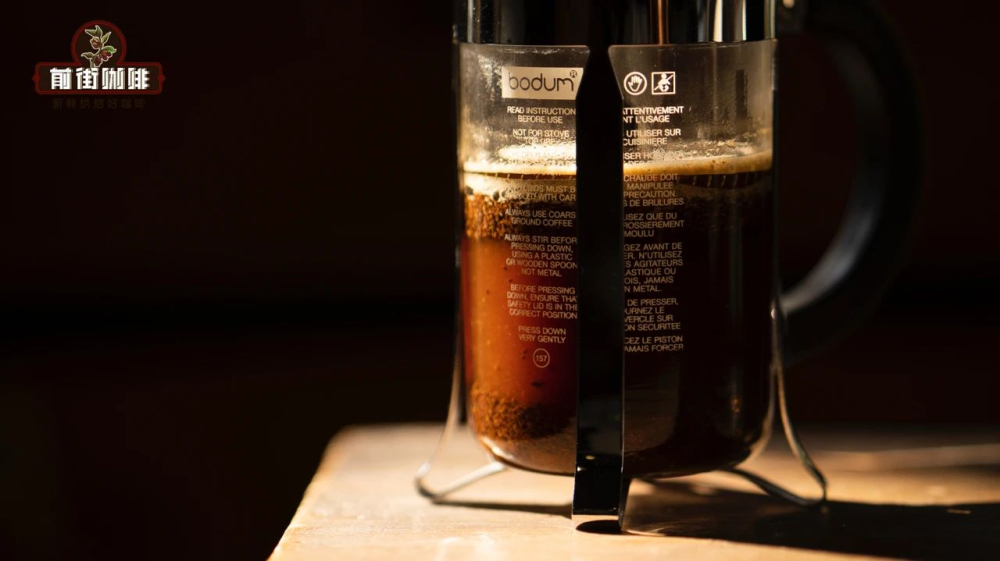
Step five: after the coffee bed has finished expanding, add the remaining hot water to top it up, then put on the lid. At this moment, be sure not to rush to press the filter mesh; you need to wait four minutes, not a single minute can be skipped.
Step six: remove the pot from the electronic scale, then slowly press the filter mesh downward. Pressing down requires about 7 to 9 kilograms of force: if you feel very little resistance, it means the grounds are ground too coarse; if the resistance is very great, it means they are ground too fine. After pressing the filter mesh to the bottom of the pot, immediately pour out the coffee liquid; even a slight delay will cause over-extraction.
Step seven: next comes the enjoyment phase. Pour the coffee into a pre-warmed mug, and remember to rinse your mouth before drinking so as not to interfere with your perception of the coffee's true flavor; the best tasting window for French press output is within 20 minutes. Therefore, if you can finish it within 10 minutes, beans of both roast levels are suitable; if it will take 20 minutes to reach the bottom, dark roasted beans are more recommended.
That is the complete French press brewing process. If anything is still unclear after reading, you are welcome to ask Front Street's baristas—Front Street's store stocks more than 50 kinds of single-origin beans from different producing regions, enough to respond to all your curiosity and exploration of the coffee world.
The above content is compiled by CoffeeHunters, a coffee news website.


