







What Makes an Arabica Bean Different from Robusta?
Commercial coffee divides into three groups: Arabica, Robusta and the rare Liberica. Arabica accounts for more than sixty percent of world production and is generally treated as the higher-quality category. Its green beans are oval, slender and flat, grown at high altitude with stable rainfall and shade. Inside Arabica, the two subspecies with the greatest cultural and genetic value are Typica and Bourbon, which traveled from Ethiopia through Yemen to farms worldwide.
Robusta ranks second in production. It tolerates heat, poor rainfall and disease, and its caffeine content is roughly twice that of Arabica beans, which makes it a practical choice for a quick lift. Plant shape, yield and cultivation needs separate Typica and Bourbon trees, and examples such as Clifton Estate Blue Mountain and South Minas Red Bourbon show how those differences reach the cup.
Have you ever thought about how the world's commercially produced coffee beans mainly fall into three major categories—Arabica and Robusta, plus the relatively rare Liberica. Among them, Arabica firmly holds the top spot with over sixty percent of production and superior quality. This article will introduce the characteristics of these three types of beans one by one, and focus on the two subspecies under Arabica with the greatest cultural and genetic value—Typica and Bourbon: How did they travel from Ethiopia through Yemen to the world? What are the differences between the two coffee trees in plant shape, yield, and cultivation? The article also uses Clifton Estate's Blue Mountain and South Minas Red Bourbon as examples to share brewing methods and cup flavor performance, and finally rounds up star varieties from the Typica family, the Bourbon family, and their hybrids.
Do you usually drink coffee? Have you ever wondered how many kinds of coffee beans exist in the world, and where they are produced? In this issue, Front Street will take everyone to explore the topic of coffee bean varieties. Friends familiar with Front Street Coffee (FrontStreet Coffee) should know that currently the main bean varieties circulating commercially worldwide are three categories: Arabica and Robusta, plus Liberica.
Arabica
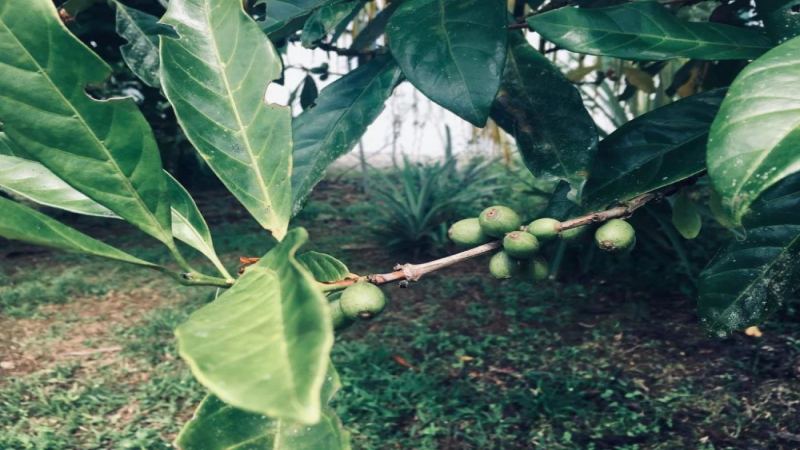
Arabica can be called one of the most well-known and most favored bean varieties, and it is also the largest cultivated category by production, generally regarded as the type with better quality. According to statistics, more than sixty percent of the coffee beans produced worldwide come from Arabica. It is usually cultivated at high altitudes and requires stable rainfall and shaded conditions in the growing region. In appearance, Arabica green beans are oval, slender and flat, with a moderate ratio of acidity to bitterness and a soft, mild aroma.
Robusta
In terms of production, Robusta ranks second in the world. This bean variety has strong vitality, good cold resistance, and can also be immune to many diseases. It is best suited to grow in hot climates with irregular rainfall, and its adaptability to altitude is also quite broad. Compared with Arabica, the caffeine content of coffee beans on Robusta trees is twice that of the former, making it an excellent choice for refreshing the mind. In terms of bean shape, Robusta is also roughly oval, but smaller in size, with more prominent bitterness, while its aroma performance is not as good as Arabica.
Liberica
Liberica beans are one of the hardest bean varieties to find on the market. Its beans are larger than other varieties, and it is also the only coffee bean in the world with an irregular shape. Its aroma is likewise unique; some describe it as having not only a smoky note but also hints of fruit and floral fragrance.
The above briefly sorts out the three major bean varieties. Next, let us focus on the two subspecies under Arabica—Typica and Bourbon. Bourbon and Typica together form the C. arabica coffee group with the greatest cultural significance and genetic value in the world. Historical records show that coffee seeds were first brought from the coffee forests of southwestern Ethiopia to Yemen, and began to be cultivated there as a crop.
Recently completed genetic testing confirms that Bourbon and Typica were precisely the core seeds sent from Ethiopia to Yemen at that time. The descendants bred from these two varieties spread from Yemen to major producing regions around the world, laying the foundation for the modern Arabica cultivation landscape.
The Historical Origins of Typica and Bourbon
Like all Arabica bean varieties, the Typica family is believed to have originated in southwestern Ethiopia. Around the 15th or 16th century, it was introduced to Yemen. By 1700, seeds exported from Yemen had already been planted in India. In 1696 and 1699, another batch of coffee seeds was transported via India's Malabar Coast to the island of Batavia (now Java)—it was precisely these few seeds that gave rise to the unique Typica line we know today.
Documentary records about Bourbon coffee beans show that the French attempted three times, in 1708, 1715, and 1718, to introduce this coffee from Yemen to Bourbon Island (now Reunion Island), and recent genetic research has likewise confirmed this. Among them, only a few plants survived the second introduction, while part of the third introduction successfully established itself. It was not until the mid-19th century that Bourbon coffee left this island and spread to Africa through a French missionary group called the Spiritans.
The Morphology and Cultivation Characteristics of Typica and Bourbon Trees
Typica is a tall tree type, reaching a height of 3.5 to 4 meters. The whole plant is conical, with both the vertical trunk and secondary vertical trunks leaning slightly outward, and the angle between side branches and vertical stems maintained at 50 to 70 degrees. This variety has a very limited yield, but its cup quality is excellent.
Bourbon plants produce 20% to 30% more coffee than Typica, but compared with most varieties, its harvest volume is still on the low side. The conical outline of the Bourbon tree is less obvious than that of Typica, but its secondary branches are more luxuriant; the angle between secondary branches and the main stem is smaller, and the branch nodes on the main stem are arranged more compactly. The leaves are broad with wavy edges. The fruit is small and firm, and the cherries ripen quickly; once exposed to strong wind or rain, they are at risk of falling off. Bourbon performs best at altitudes of 3,500 to 6,500 feet, and its cup quality is equally excellent, comparable to Typica.
What Are the Flavor Differences Between Typica and Bourbon?
Overall, Typica beans give off floral and fruity notes, with a very elegant style. One of the classic representatives recommended by Front Street is the Blue Mountain coffee from Clifton Estate—a very orthodox Typica. When brewing this bean, Front Street Coffee's barista uses a Kono dripper, sets the water temperature at 88°C, and uses a medium-coarse grind. In the first stage, pour 30 grams of hot water for blooming for 30 seconds; in the second stage, pour water to around 125 grams, then wait for the coffee liquid to drip down. When the liquid level drops by half, pour the final stage of water up to 225 grams—equivalent to 15 grams of grounds with 225 grams of water, a coffee-to-water ratio of 1:15.
The entry is smooth and the aroma is full, with quite an excellent sense of balance. The whole cup of coffee shows a light citrus acidity, a smooth mouthfeel, nutty flavors emerging in the middle, and an impression of dark chocolate in the finish.
In the view of Front Street Coffee, Brazil was the first stop for Bourbon varieties landing in South America, and the Bourbon coffee produced there may also be more representative. This Red Bourbon from the South Minas region is processed using the semi-washed method. When brewing, Front Street's barista followed the same parameters as for Blue Mountain coffee. The finished flavor is balanced and shows the typical Brazilian coffee style: prominent nutty and chocolate notes, low acidity, a smooth entry, and a faint tropical fruit aroma lingering around it.
After comparing the two major bean varieties, Typica and Bourbon, you may also want to learn more: under the Typica family and the Bourbon family, what coffee varieties have each derived? Below, Front Street selects a few outstanding members and introduces them one by one. Well-known varieties in the Typica family include:
Maragogype: The beans are unusually large and the plant is tall, so it is often called "Elephant Bean." It usually absorbs the flavor characteristics of the soil in which it is grown into its cup profile.
Pache Comum: A coffee tree type that is relatively small and can achieve higher yields through denser planting. Its cup style can be summarized as smooth and plain.
SL34: This variety was selected in the late 1930s by Kenya's Scott Agricultural Laboratories, and it carries complex layers of citric acidity, a full body, and a clean and sweet finish.
The Bourbon family includes a series of natural mutations:
Caturra: First discovered in Brazil, it is now one of the most economically important coffee varieties in Central America and is often used as a reference standard when comparing with other cultivars. Although its cleanliness and sweetness are not as good as Bourbon's, its acidity is very bright, and its body is at a medium-low level.
Villa Sarchi: A mutant variety derived from Caturra, while Caturra itself is a more direct descendant of Bourbon; it first appeared in Costa Rica in the 1950s. It has elegant acidity, rich fruity aromas, and excellent sweetness.
Gesha: Originating from the Gesha village in Ethiopia, its cup profile is rich and three-dimensional, releasing flower-like aromas and melon-and-fruit-like sweetness. It belongs to the ranks of the world's most expensive coffees, with auction prices reaching as high as $600 per pound, and it is also often used in barista competitions.
There are also some famous hybrids of Typica and Bourbon:
Mundo Novo: The result of natural hybridization between Typica and Bourbon, first discovered in Brazil in 1943 and later introduced to Peru, Guatemala, and Malawi. A high-quality cup of Mundo Novo often has rich sweetness and low acidity.
Pacamara: Developed in El Salvador, it combines the two varieties Maragogipe and Pacas. It is known for its medium to thick body, with a smooth and delicate texture, and flavors ranging from chocolate and butterscotch all the way to sweet citrus notes.
Catuai: Hybridized from Mundo Novo and Caturra, with relatively high acidity. It is a high-yield tree type, and the cherries do not easily fall from the branches, which is a very favorable advantage for regions with frequent strong winds or heavy rain.
If you want to exchange professional coffee knowledge and get more coffee bean information, welcome to follow Coffee Workshop (WeChat public account: cafe_style).
If you want to buy more specialty coffee beans, you can add Front Street Coffee's (FrontStreet Coffee) private WeChat, WeChat ID: kaixinguoguo0925.
The above content is compiled by CoffeeHunters, a coffee news website.


